

The explosion of generative AI has brought a flood of new tools to the market. But while many AI products focus on single tasks like writing blog posts or summarizing notes, AirOps positions itself as a full content orchestration system.
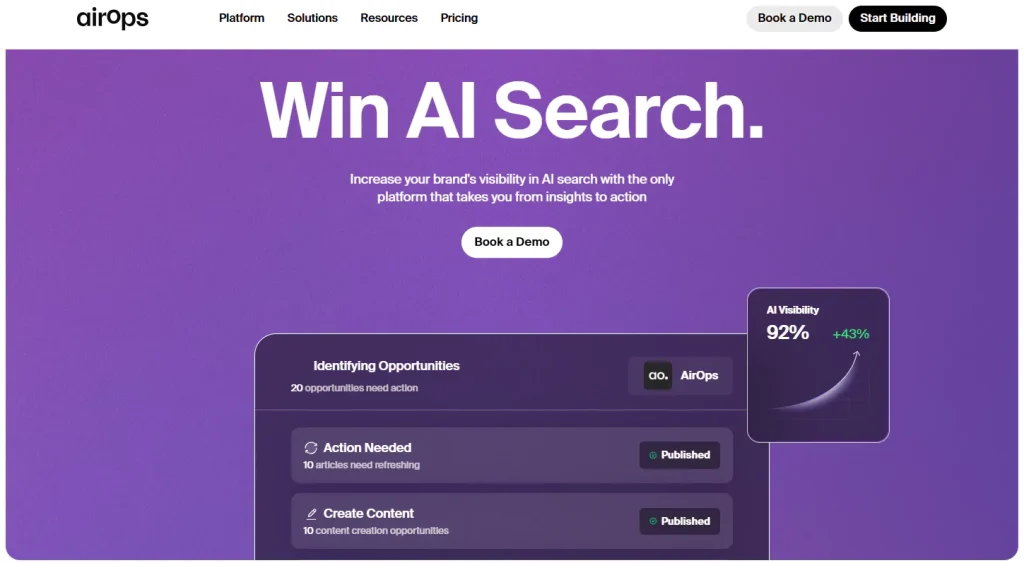
The platform promises to help SEO teams, agencies, and in-house marketers produce more content, faster, without sacrificing brand voice or quality. In this review, we’ll break down AirOps’ core features, share real user feedback, and give a verdict on whether it’s worth the investment.
What is AirOps?
AirOps is a no-code AI workflow platform built for content operations. Instead of being “just another AI writer,” it acts as a control center for generating, editing, and publishing content at scale.
According to the company, AirOps’ mission is to “combine large language models with no-code workflows and human review steps to turn ambitious content strategies into repeatable, efficient systems”.
Key Features
No-Code Workflow Builder

AirOps’ drag-and-drop interface enables teams to automate complex processes, such as researching keywords, drafting outlines, and producing full articles, without requiring code.
Grids Content Planner
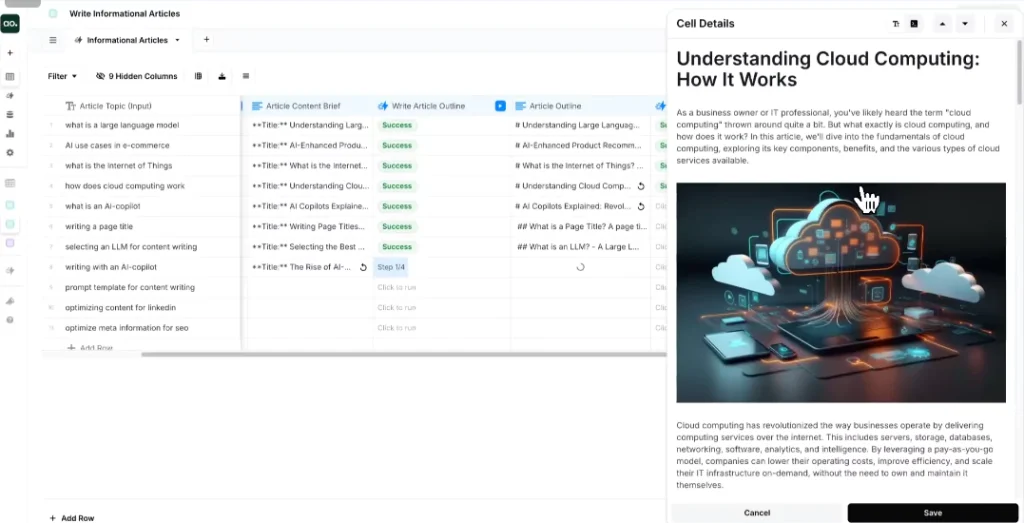
The Grids feature gives users a spreadsheet-style dashboard to plan, assign, and track content. One reviewer called it “an editorial calendar on steroids” because it ties planning directly to workflow execution.
Human-in-the-Loop Reviews

Unlike many AI writing apps, AirOps isn’t fully automated. You can add review checkpoints so drafts pause for editor approval. Combined with Brand Kits, which define tone and voice, this ensures output aligns with your brand rather than sounding like generic AI text.
CMS & Tool Integrations

AirOps integrates directly with CMS platforms like WordPress and Webflow. A G2 reviewer praised this feature: “AirOps helps save time by making content faster… It automates images, and posts directly to WordPress. Great for handling bulk work.”
Answer Engine Visibility Tool

AirOps also offers a free diagnostic that scores your content for AI-driven search readiness. It evaluates freshness, authority signals, schema, and snippet extractability helping brands prepare for visibility in ChatGPT, Bard, Perplexity, and other AI search engines.
What Users Are Saying
Across Product Hunt and G2, sentiment skews strongly positive. Reviewers call AirOps “easy to use & super intuitive… a huge time saver,” and praise that it “automates images, and posts directly to WordPress… great for handling bulk work and keeping things SEO-friendly.”
On Reddit, mentions are generally favorable but more nuanced. Marketers recommend it for scaling blog production, “Try AirOps… we build workflows and craft prompts with the in-built copilot to generate blog posts at scale,” and tinkerers note, “I’ve used AirOps, which is good” when suggesting low-code AI agent tools or shortlisting AI search monitoring tools alongside content automation platforms.
You’ll also see it show up on tool lists from practitioners, “Definitely… AirOps, Clay, Lemlist, Octave and n8n.”
Balanced takes also pop up: one SaaS thread warns that while teams are building SEO workflows with tools “like AirOps and Dify,” Google may tag AI-generated content as low quality, so strategy and human oversight still matter. Another community post positions AirOps among “better options” for certain users, depending on stack and goals.
Pricing

AirOps has a free Solo plan with 1,000 tasks per month and paid plans start at $99/month.
For serious teams, paid Scale and Enterprise plans include unlimited tasks, Semrush integration, and multi-brand CMS support but pricing requires a sales call.
How Much Should You Pay for AI Search Visibility Tracking Tools?
Pros & Cons
Pros
- Huge time savings for content-heavy teams
- Built-in quality controls (Brand Kits + reviews)
- Direct-to-CMS publishing
- Used by brands like Webflow and Ramp
Cons
- Steep learning curve for new users
- Pricing is opaque beyond the free tier
- Not a replacement for SEO strategy
Verdict: Is AirOps Worth It?
For agencies and in-house SEO teams with established workflows, AirOps is worth the investment in 2026. It turns proven content processes into scalable, automated systems, freeing teams to focus on strategy while multiplying output.
But it’s not for beginners. Without solid SEO fundamentals, AirOps won’t guarantee rankings—it just accelerates what you’re already good at.
Alternative: Rankability’s Rankability Reporter
If you want a simpler, SEO-focused option, consider Rankability’s Rankability Reporter.

Instead of building workflows, it zeroes in on how your brand shows up in AI-driven search results (ChatGPT, Google AI Overviews, Perplexity) and gives actionable steps to improve visibility.
It’s a strong alternative to AirOps for teams who want clarity and fast SEO insights without building complex automation.
Final Word
AirOps is a powerful ally for content-driven growth. For the right team, it delivers real ROI in time savings, traffic, and scalability. For others, especially those seeking simplicity, Rankability’s Rankability Reporter may be the smarter choice.
Free GEO Checklist – Download the complete 97-point checklist to optimize your brand for AI-powered search engines like ChatGPT, Gemini, and Perplexity.