

AI assistants and AI SERPs are changing how people discover brands and how teams prove impact. LLM tracking goes beyond blue links to show when, where, and how your brand appears inside assistants (e.g., ChatGPT, Perplexity, Gemini/Google AI Mode, Claude, Copilot) and AI answer surfaces.
The right platform helps you monitor brand mentions, citations/links, sources, and answer quality across engines, so you can diagnose gaps and ship playbooks that lift visibility.
This guide cuts through the noise. You’ll find quick picks, a side-by-side table, and 7 short reviews to help agencies and in-house teams pick a Nightwatch alternative that fits coverage needs, reporting expectations, and budget.
Quick Picks
- Best overall for agencies: Rankability’s AI Analyzer
- Best cross-engine reporting: Peec AI
- Best indie value: LLMrefs
- Best enterprise optimization stack: Scrunch AI
- Best for SE Ranking users (suite fit): SE Ranking’s AI Visibility Tracker
- Best mid-market analytics breadth: AthenaHQ
- Best budget starter: Rankscale AI
Comparison Table
Pricing changes often, so verify on vendor pages before purchase.
| Tool | Best for | Starting price* | Engines/coverage (examples) | Notes |
|---|---|---|---|---|
| Rankability AI Analyzer | Agency-grade reporting & workflows | From $124/mo billed annually (suite)* | ChatGPT, Gemini/AI Mode, Claude, Perplexity, Copilot | White-label, exports, API, team seats; pairs tracking with content optimization |
| Peec AI | Cross-engine reporting & SOV | From €89/mo* | ChatGPT, Perplexity, Claude, Copilot | Clear dashboards; competitive views; steady sampling cadence |
| LLMrefs | Indie value & lean teams | From $79/mo* | ChatGPT, Perplexity, Gemini/AI Mode | Simple UI; essential coverage; fast setup |
| Scrunch AI | Enterprise workflows & governance | From $300/mo* | Major assistants + AI SERPs | Advanced dashboards; roles/permissions; workflow depth |
| SE Ranking – AI Visibility | SE Ranking customers | From $89/mo* | Assistants + AI answer surfaces | Familiar suite UX; slot-in reporting; good for existing SE Ranking stacks |
| AthenaHQ | Mid-market analytics breadth | From $295+/mo (credit-based) | Multi-engine (assistants & AI SERPs) | Competitor tracking, shareable reports, sampling controls |
| Rankscale AI | Budget pilots & solo operators | From $20/mo* (credit-based) | Core assistants | Quick start; essential mention/citation checks; simple exports |
*Starting prices change often – verify current pricing before purchase.
The 7 Best Nightwatch LLM Tracking Alternatives
1. Rankability’s AI Analyzer (Best overall for agencies)
Why it’s a strong Nightwatch alternative
AI Analyzer is built for teams that need reliable AI visibility reporting and client-ready deliverables. It tracks brand mentions/citations across assistants and AI answer surfaces, then pairs those insights with practical optimization workflows.

Stand-out features
- Multi-engine coverage (assistants + AI answer experiences)
- Evidence capture (screens, sources, prompts) to audit results
- White-label reporting, CSV/Slides exports, and API
- Team seats, client views, and project-level permissions
- Integrates with content optimization so insights become action
Ideal for
Agencies and in-house teams that want one place to monitor visibility, generate reports, and translate insights into on-page and knowledge-graph improvements across modern AI Search platforms.
2. Peec AI (Best cross-engine reporting)
Why it’s a strong Nightwatch alternative
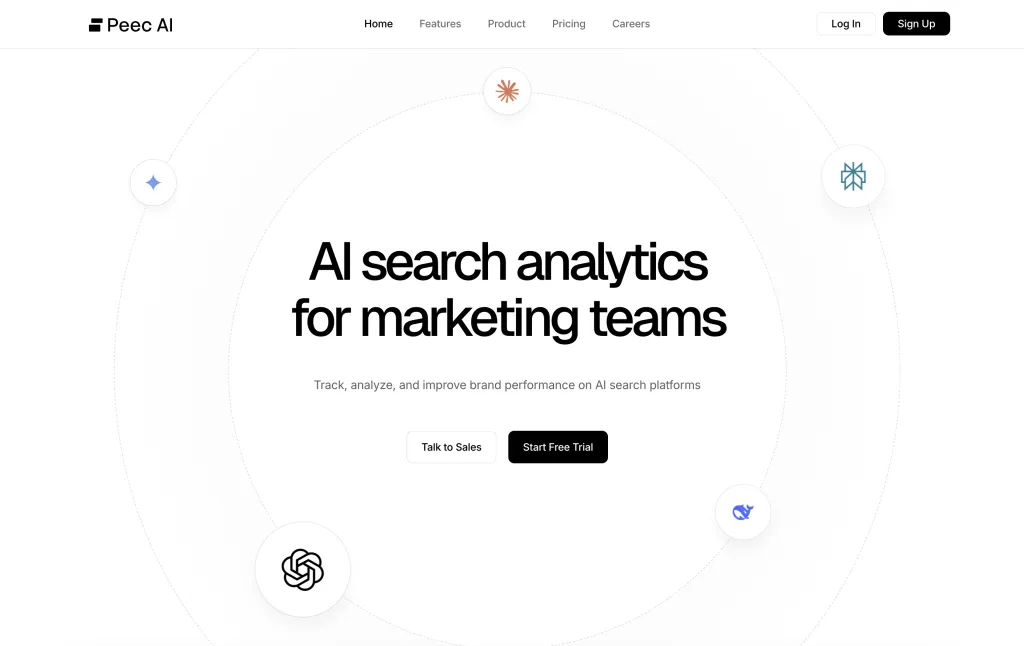
Peec emphasizes coverage breadth and clarity. If your priority is a clean, comparative view of brand vs. competitors across multiple assistants, Peec’s dashboards make it easy to quantify share of voice and track deltas over time.
Stand-out features
- Cross-engine SOV with competitor comparisons
- Consistent sampling cadence for trend accuracy
- Downloadable, shareable reporting for stakeholders
Ideal for
Teams that want a crisp, cross-engine snapshot with minimal setup.
3. LLMrefs (Best indie value)
Why it’s a strong Nightwatch alternative
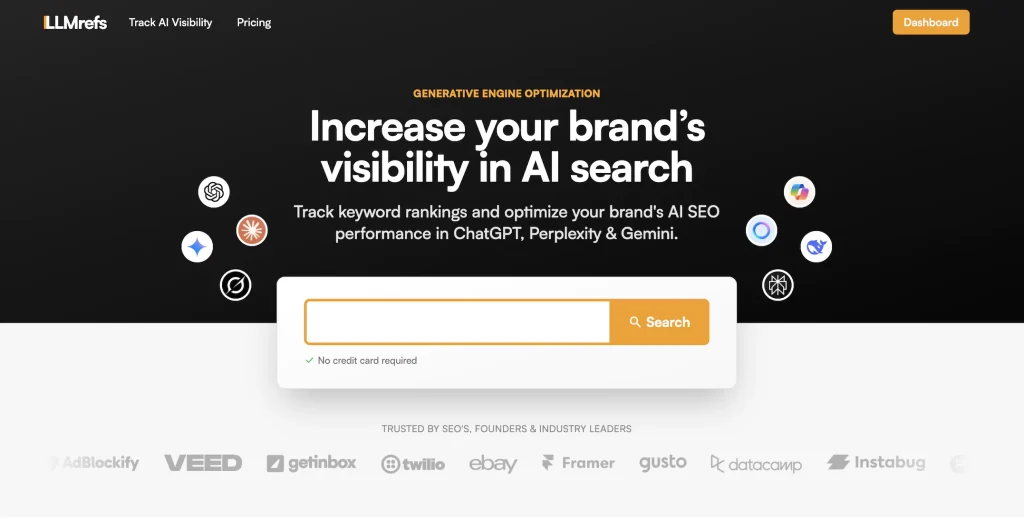
LLMrefs delivers essential tracking at a friendly entry price. It’s lean and focused: get visibility on brand presence across popular assistants, review examples, and share concise reports.
Stand-out features
- Lightweight setup and simple UI
- Core assistant coverage with practical evidence
- Budget-friendly for startups, SMBs, and pilots
Ideal for
Small teams new to AI visibility platforms who want to prove value, then scale.
4. Scrunch AI (Best enterprise optimization stack)
Why it’s a strong Nightwatch alternative
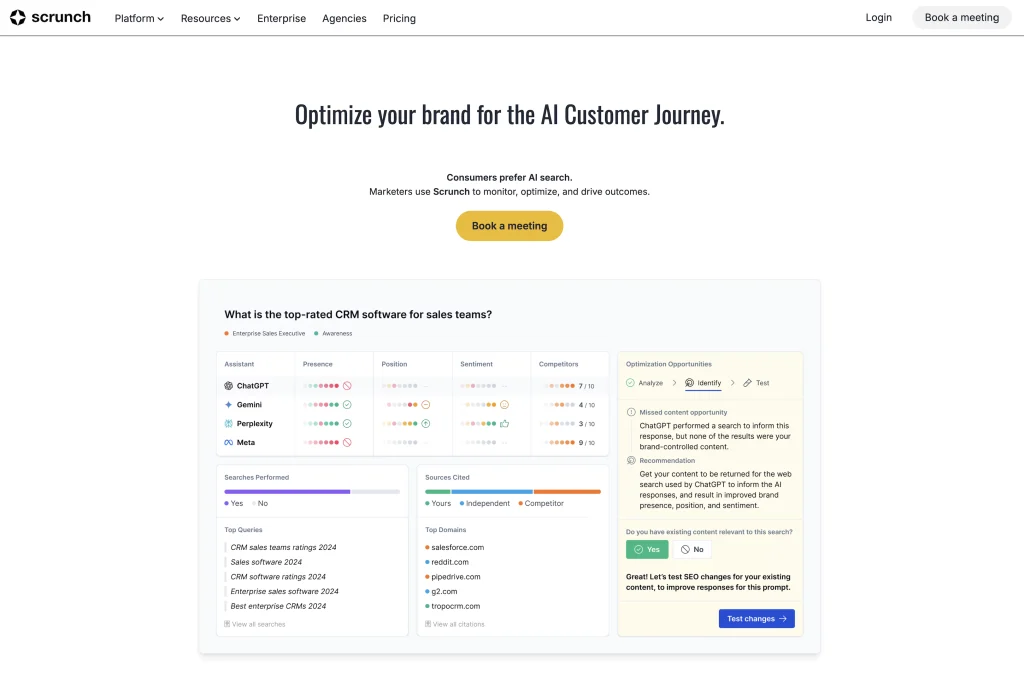
Scrunch targets larger organizations that need depth: granular analytics, governance, and workflows that move insights into remediation (content, entity, and source improvements).
Stand-out features
- Enterprise dashboards and permissioning
- Collaboration and workflow orchestration
- Flexible reporting for exec and practitioner layers
Ideal for
Enterprises with complex org charts and cross-functional stakeholders.
5. SE Ranking – AI Visibility Tracker (Best for SE Ranking users)
Why it’s a strong Nightwatch alternative
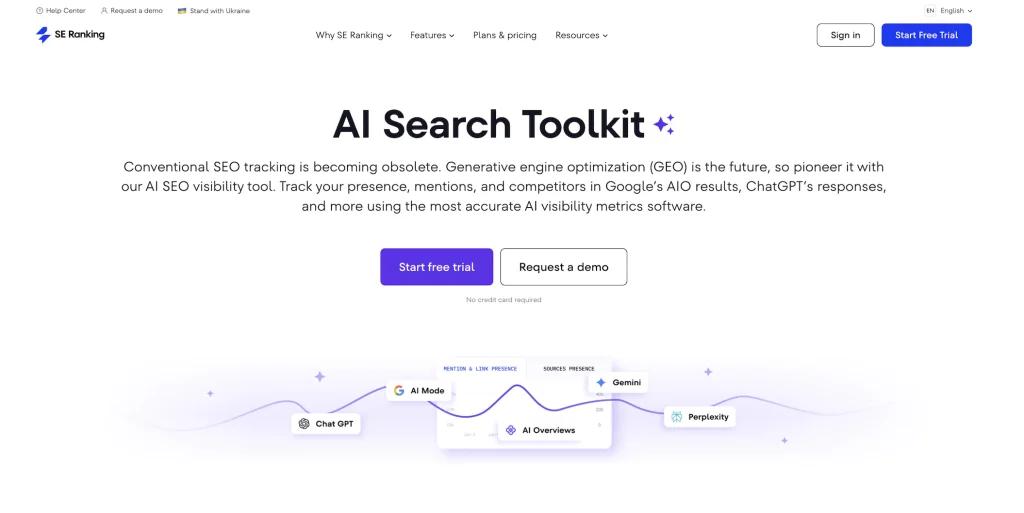
If your stack already runs on SE Ranking, their AI visibility component lets you extend reporting into assistants and AI answers without adding a whole new vendor.
Stand-out features
- Suite-level integration and familiar UX
- Multi-surface checks inside one login
- Reduces change management and onboarding time
Ideal for
SE Ranking customers who want to add AI visibility tracking alongside classic SEO features.
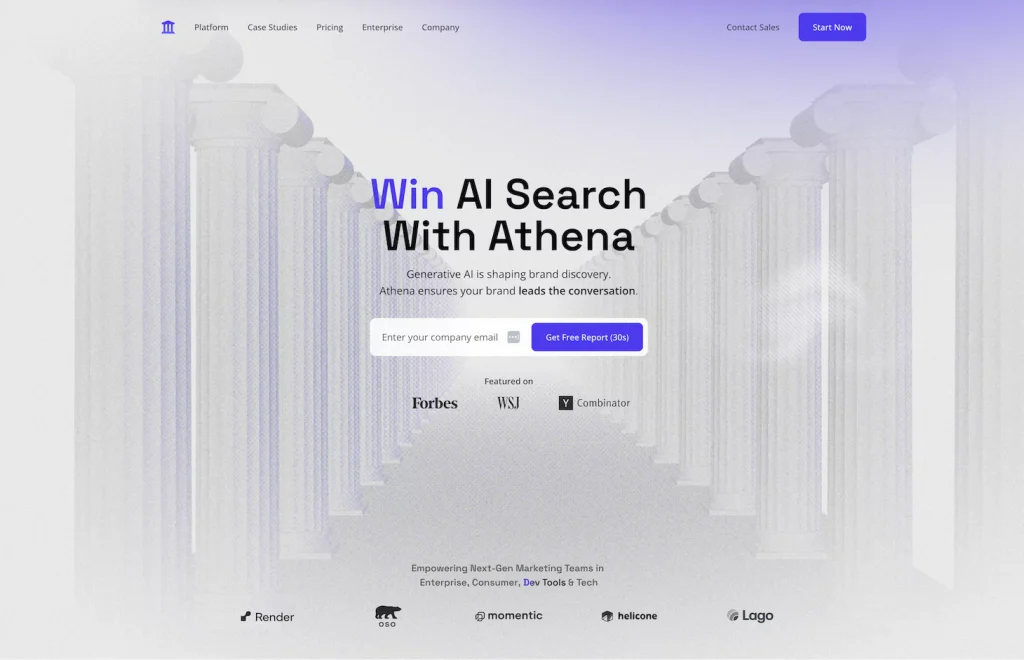
6. AthenaHQ (Best mid-market analytics breadth)
Why it’s a strong Nightwatch alternative
AthenaHQ balances coverage and analysis for teams that have outgrown entry-level tools but aren’t ready for enterprise pricing.
Stand-out features
- Competitive lenses, segmentation, and filters
- Sampling controls and evidence retention
- Shareable links and scheduled reports
Ideal for
Growth-stage companies and agencies needing robust analytics without the enterprise lift.
7. Rankscale AI (Best budget starter)
Why it’s a strong Nightwatch alternative
Rankscale keeps it simple: start tracking quickly, export essentials, and get a read on your baseline before you invest in heavier workflows.

Stand-out features
- Fast onboarding and straightforward monitoring
- Core mention/citation checks across key assistants
- Lightweight exports for stakeholders
Ideal for
Solo operators and early-stage teams running pilots or proof-of-concepts.
How to Choose (Fast Decision Framework)
Coverage first: Confirm the engines, geos, and cadences you care about (assistants + AI answer experiences).
Evidence & auditability: Screenshots, prompts, sources, and repeatable sampling matter, especially for client or exec trust.
Reporting fit: White-label, exports, scheduled sends, and APIs decide whether insights actually ship.
Workflow depth: If you plan to fix issues (content, entities, sources), pick a platform that connects tracking → action.
Budget & seats: Align plan limits with # of brands, segments, and tracked prompts.
FAQs
What’s the difference between AI visibility tracking and classic rank tracking?
Classic rank tracking measures positions in public SERPs; AI visibility tracking measures brand presence and answer quality inside assistants and AI answer experiences.
How often should we sample prompts?
Aim for a steady cadence (e.g., daily/weekly) per engine; consistency matters more than raw frequency.
What counts as a “win”?
Progression from mere mention → citation (with source) → linked inclusion in the final answer, plus improvement in answer quality and correctness.
How do we prove ROI?
Attribute improvements in visibility to downstream metrics: traffic from sources referenced, assisted conversions, improved brand searches, and reduced time-to-answer in support.
Conclusion
If you’re moving off Nightwatch, start with coverage and evidence. Rankability’s AI Analyzer is the easiest all-around fit for agencies that want reliable reporting plus optimization workflows.
Peec AI and AthenaHQ offer strong cross-engine analytics, LLMrefs and Rankscale are great budget on-ramps, and Scrunch/SE Ranking fit enterprise and suite-centric teams. Run a 30-day pilot with clear success metrics, coverage, evidence quality, and reporting adoption, then standardize with the platform that best matches your stage and stack.
Free GEO Checklist – Download the complete 97-point checklist to optimize your brand for AI-powered search engines like ChatGPT, Gemini, and Perplexity.