

As artificial intelligence transforms how people search for information, brands face a new challenge: how to ensure visibility in AI-generated answers from ChatGPT, Google’s AI snapshots, and Claude.
Writesonic’s Generative Engine Optimization (GEO) tool emerges as a pioneering solution, offering marketers the first dedicated platform to track and optimize their presence in AI-driven search results.
What Makes GEO Stand Out
Writesonic GEO addresses a critical gap in the digital marketing landscape. While traditional SEO tools excel at tracking web search rankings, they weren’t designed for the AI search era.

As one early adopter noted, “traditional SEO tools simply aren’t built for this new AI search layer,” making GEO’s focused approach particularly valuable.
The platform operates like “Ahrefs, but for AI platforms like ChatGPT and Google’s AI Overviews,” according to Writesonic’s founder. This comparison resonates with marketers who understand the parallel between traditional search engine optimization and this emerging field of AI answer optimization.
Key Features That Deliver Value
Multi-Platform AI Tracking
GEO monitors brand mentions across major AI search platforms, including ChatGPT, Google Gemini, and Claude. This comprehensive coverage ensures brands don’t miss opportunities in any major AI ecosystem.
Competitor Benchmarking

The tool provides comparative analysis, showing how your brand’s AI visibility stacks up against competitors. SEO expert Eli Schwartz found these insights “quite useful” when testing GEO on Grammarly, discovering the brand appeared in 85% of relevant AI answers with 77% positive sentiment.
Actionable Recommendations
Beyond tracking, GEO provides specific suggestions for improving AI visibility, helping content teams optimize their materials for better AI citation rates.
AI Crawler Analytics
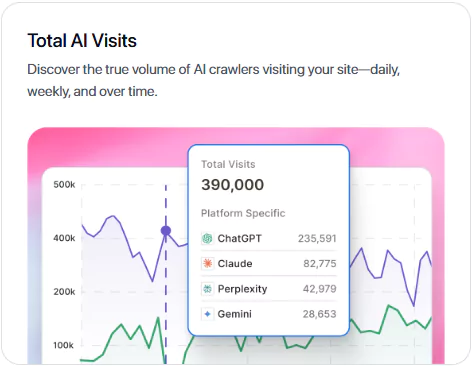
A unique feature tracks when AI bots like OpenAI’s GPTBot visit your website, providing insights into which content pieces are being considered by generative models.
Real-World Impact and User Success Stories
Early adopters report eye-opening discoveries about their AI presence. One Product Hunt user realized they had “minimal visibility on AI platforms” and immediately began improving their content strategy based on GEO’s insights.
The tool’s analytics have proven particularly valuable for agencies conducting client audits. Marketers appreciate having concrete data about AI mention frequency and sentiment – metrics that represent “a whole new way to think about visibility and reputation.”
Several users have likened GEO’s emergence to early‑2000s SEO efforts, highlighting how being an early mover in AI search optimization can offer advantages similar to those first–mover SEO adopters once enjoyed.
Addressing the Challenges
While GEO has received enthusiastic praise, it’s important to acknowledge the inherent challenges in AI search optimization. Some SEO professionals point out that large language models can produce different answers with identical prompts, making traditional ranking concepts less stable than web search results.
However, GEO’s focus on mention frequency and source citation patterns provides actionable insights even within this variable environment. The tool emphasizes trends and patterns rather than claiming precise ranking positions, which appears to be a more realistic approach to AI optimization.
Pricing and Accessibility Considerations

Some long-time Writesonic customers have expressed concerns about feature access and pricing tiers. As with any evolving platform, it’s worth evaluating whether the GEO features align with your current plan and budget requirements.
How Much Should You Pay for AI Search Visibility Tracking Tools?
The Competitive Landscape
GEO enters a growing market of AI visibility tools. While established SEO platforms like Semrush and Ahrefs are beginning to add AI-related features, Writesonic’s dedicated focus gives it a current advantage in depth and specialization.
For businesses seeking Writesonic GEO alternatives in this space, tools like Rankability’s AI Analyzer also offer insights into AI search performance, providing additional options for brands exploring this new optimization frontier.

Looking Forward
GEO represents a pivotal shift in how brands approach AI-driven search. As marketers adapt to platforms like ChatGPT, Claude, and Google Gemini influencing consumer discovery, tools like GEO are being recognized as foundational for future visibility strategies.
Early adopters highlight the tool’s ability to surface blind spots in AI visibility, quantify brand mention rates, and guide content optimization efforts. Writesonic’s own blog describes Generative Engine Optimization as “a whole new layer of SEO” and emphasizes that optimizing for AI-generated answers will become just as crucial as optimizing for traditional web rankings.
While the AI search landscape continues to evolve, the growing attention around GEO indicates that AI visibility optimization is quickly moving from experimental to essential. Brands that invest early are positioning themselves ahead of the curve.
Final Verdict
Writesonic GEO earns recognition as one of the pioneering tools in the AI tracking space. While the field itself is still evolving, GEO provides valuable insights that help brands prepare for an increasingly AI-driven search landscape.
For marketers ready to explore AI search optimization, GEO offers a comprehensive starting point with multi-platform tracking, competitor insights, and actionable recommendations. As the ecosystem matures, tools like GEO will likely become as essential as traditional SEO platforms are today.
Free GEO Checklist – Download the complete 97-point checklist to optimize your brand for AI-powered search engines like ChatGPT, Gemini, and Perplexity.