

If you’re looking for cognitiveSEO alternatives, you’re probably trying to solve a very specific problem: publishing and updating content that consistently hits topical coverage, matches search intent, and clears a repeatable quality bar across writers and clients.
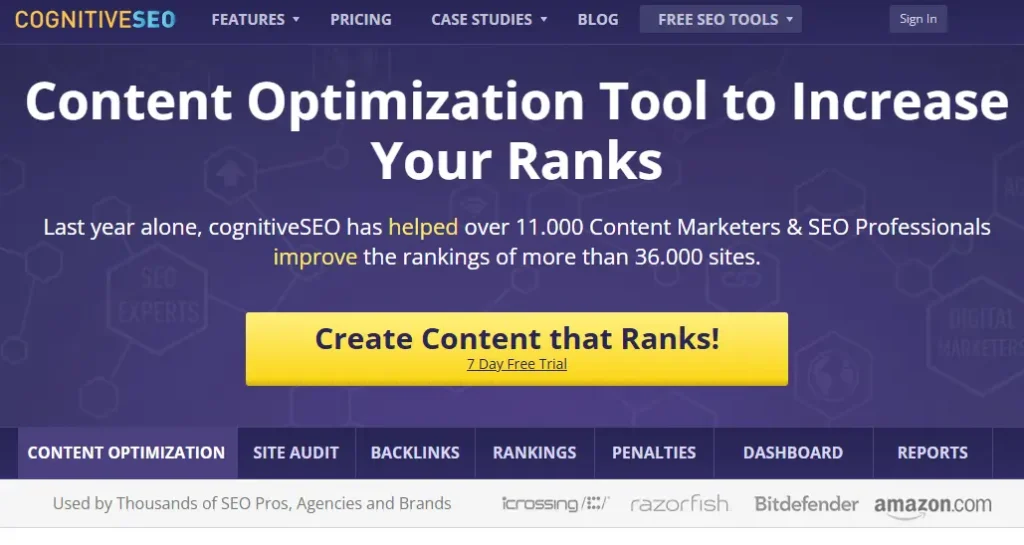
cognitiveSEO can work well for some teams, but many people eventually want a tool that’s more purpose-built for content workflows, with clearer in-editor guidance, stronger brief-to-draft-to-refresh processes, and easier standardization across lots of URLs.
Below are seven strong alternatives focused on content optimization.
Quick Picks (TL;DR)
- Best overall for agencies: Rankability
- Best “score as you write” editor: Surfer SEO
- Best research + briefs combo: Frase
- Best for enterprise editorial teams: Clearscope
- Best for deep content strategy: MarketMuse
- Best for simple briefs + refresh workflows: Dashword
- Best budget semantic optimizer: NeuronWriter
What We Looked For (and Why It Matters)
Real optimization depth, not just surface-level suggestions: SERP analysis, semantic coverage guidance, and scoring that helps teams close real gaps without turning content into keyword soup.
Briefs and workflows: A system that moves from keyword to outline to draft to optimization, so teams don’t get stuck juggling docs, spreadsheets, and messy handoffs.
Collaboration and integrations: Google Docs, WordPress, and team-friendly collaboration that makes it easier to scale output across writers, editors, and SEO specialists.
Pricing that scales with production: Starting tiers that make sense for content volume, with limits and seats that don’t punish growth.
Track record: Tools that have been adopted by real teams long enough to show what they’re good at and where they fall short.
Comparison Table: cognitiveSEO Alternatives
Starting prices change often, so verify on vendor pages before purchase.
| Tool | Best for | Starting price* | AI & Search Coverage | Notes |
|---|---|---|---|---|
| Rankability | Agencies that need a standardized optimizer across many clients and pages | $149/mo | Google SERPs + modern AI search visibility workflows | Built for repeatable production and QA, not just one-off audits |
| Surfer SEO | Teams that want a simple “score-as-you-write” editor | $99/mo | Google SERPs + AI features and AI visibility tracking | Very approachable UX and strong workflow integrations |
| Frase | Lean teams that want SERP research, briefs, and optimization in one place | $45/mo | Google SERPs | Great for moving from research to outline fast |
| Clearscope | Editorial teams that want precise recommendations and consistent grading | $129/mo | Google SERPs | Clean interface and high-quality term guidance |
| MarketMuse | Strategy-led teams that care about topical depth and planning across a site | $99/mo | Google SERPs | Strong for content strategy, gap analysis, and prioritization |
| Dashword | Teams that want clean briefs, optimization, and refresh workflows | $39/mo | Google SERPs | Simple to use, strong for maintaining older content |
| NeuronWriter | Budget-conscious teams that still want NLP-style optimization | $19/mo | Google SERPs (broad language support) | Affordable and flexible, UI can feel less premium |
*Starting prices change often – verify current pricing before purchase.
Alternatives
1. Rankability
What it is
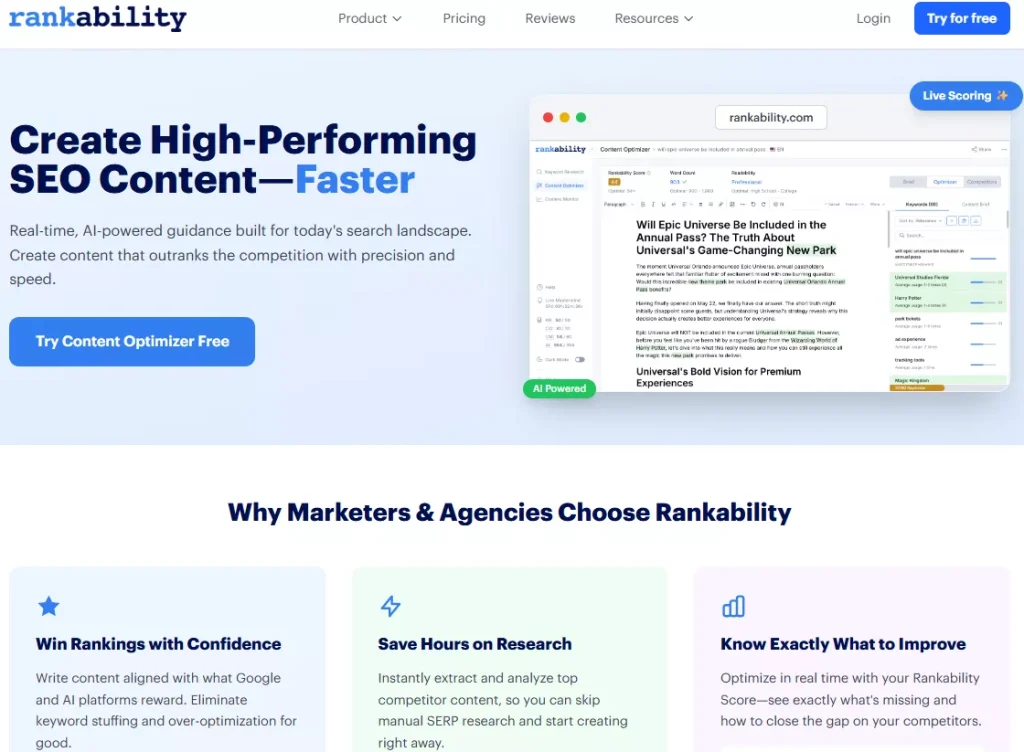
Rankability is a content optimization platform designed for teams that need consistent outcomes at scale, especially agencies producing content across multiple clients.
Who it’s best for
- SEO and digital marketing agencies managing multiple writers and editors
- Teams that want a consistent QA standard before publishing
- Operators who care about repeatable processes, not one-off content tweaks
Standout content optimization features
- Real-time scoring and clear gap detection for topical coverage
- Brief-to-draft workflow that fits how agencies ship content
- Standardization layer for “what good looks like” across many pages
Why it’s a strong cognitiveSEO alternative
If you’re using cognitiveSEO but you’re fighting quality variance, rewrites, and inconsistent coverage, Rankability is built to systemize production so your team can ship faster with fewer revision cycles.
Potential downside: If you only optimize a couple pages per month, you might not need an agency-grade workflow tool.
2. Surfer SEO
What it is
Surfer is one of the most popular content optimization tools because it’s easy to adopt and works well in day-to-day writing workflows.

Who it’s best for
- Content teams that want simple, in-editor guidance
- Agencies that need fast onboarding for writers
- Marketers who want optimization without heavy process overhead
Standout content optimization features
- Content Score that updates as you write
- Clear term usage guidance and structure suggestions
- Strong integrations that fit common writing and publishing flows
- Optional AI features for accelerating drafts and revisions
Why it’s a strong cognitiveSEO alternative
Surfer tends to win when your priority is adoption. Writers can understand what to do quickly, which often matters more than having the most complex feature set.
Potential downside: Some teams can fall into “score chasing” if they don’t pair it with editorial standards.
*Note: Surfer SEO was acquired, marking a notable shift for one of the most popular content optimization platforms. If you’re evaluating Surfer as part of your stack, here’s what the acquisition could mean for the product, pricing, and roadmap.
3. Frase
What it is
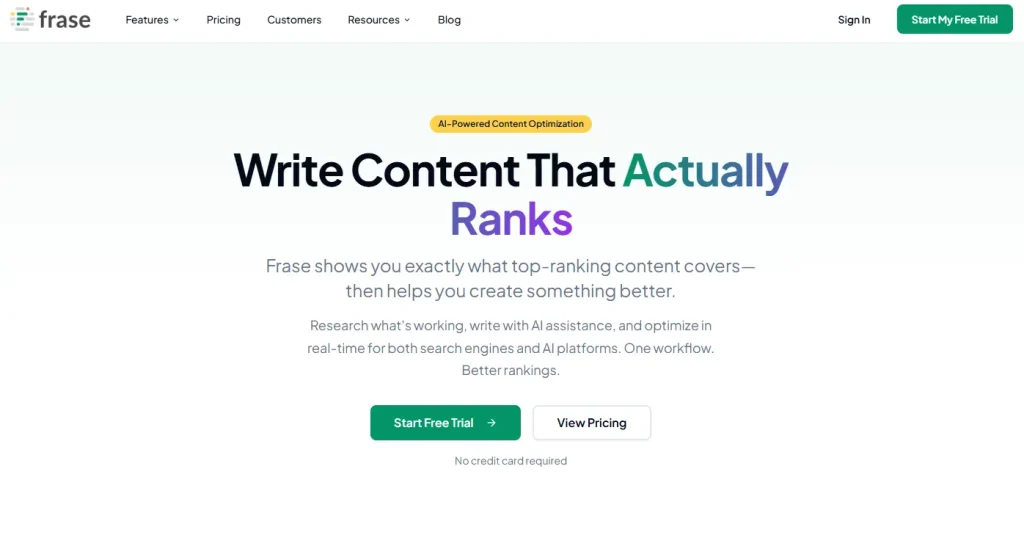
Frase combines SERP research, brief building, and a content editor in a way that’s friendly for lean teams.
Who it’s best for
- Solo creators and small teams
- SEO generalists who want research + optimization in one tool
- Anyone who wants faster outlining and drafting
Standout content optimization features
- SERP research that helps shape the outline quickly
- Brief generation to speed up content planning
- In-editor optimization guidance to close coverage gaps
Why it’s a strong cognitiveSEO alternative
If you want to move from “keyword to publish” quickly, Frase is often a better fit than broader SEO suites. It’s a practical choice when speed and simplicity matter.
Potential downside: Advanced teams might outgrow it if they need deeper standardization across many stakeholders.
4. Clearscope
What it is
Clearscope is a premium content optimizer known for clean UX, reliable recommendations, and a grading system that makes expectations clear.

Who it’s best for
- Editorial teams that want consistency and clarity
- In-house content orgs with established writing standards
- Teams that want strong recommendations without complexity
Standout content optimization features
- Simple A–F style grading that’s easy to standardize
- Strong term suggestions that support intent-aligned coverage
- Content inventory style workflows (depending on plan and setup)
Why it’s a strong cognitiveSEO alternative
If your team wants a “gold standard” optimizer with minimal fluff, Clearscope is a great choice. It’s especially strong when you need editorial alignment between SEO and writers.
Potential downside: Price is higher than most alternatives.
5. MarketMuse
What it is
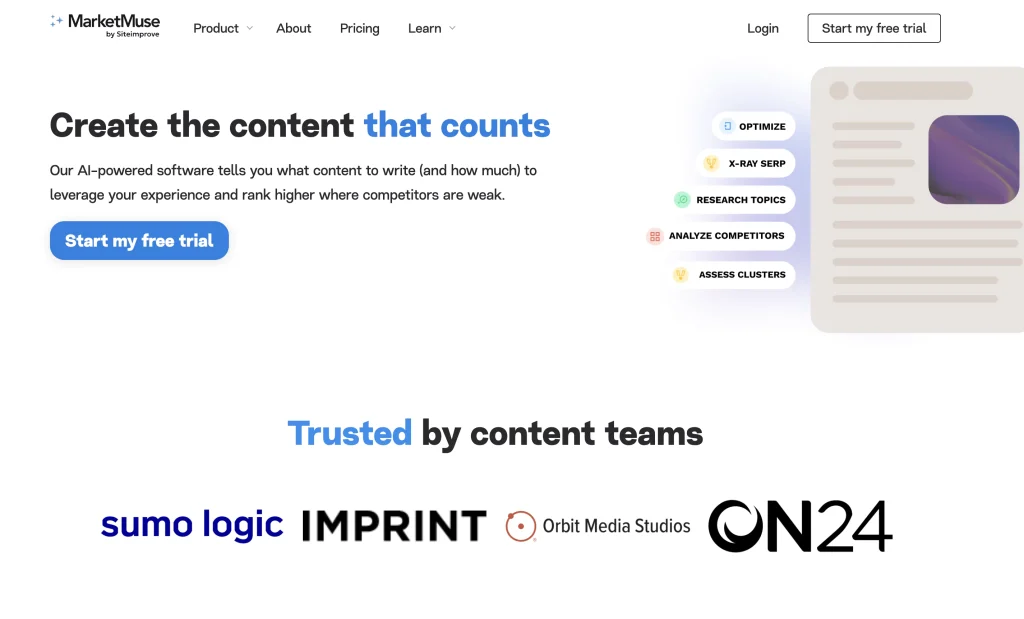
MarketMuse is more strategy-forward than most content optimizers. It’s built for teams that want to improve topical authority and plan content across an entire site.
Who it’s best for
- Content strategists and SEO leads managing large sites
- Teams building topic clusters and long-term roadmaps
- Orgs that care about prioritization, not just optimization
Standout content optimization features
- Topic modeling and gap analysis for deeper coverage
- Content planning and prioritization support
- Brief and optimization workflows aimed at authority-building
Why it’s a strong cognitiveSEO alternative
If cognitiveSEO feels too tactical for what you’re trying to accomplish, MarketMuse shines at the strategy layer: what to write, what to update, and what matters most.
Potential downside: Higher learning curve, and it’s not the simplest writer-first editor.
6. Dashword
What it is
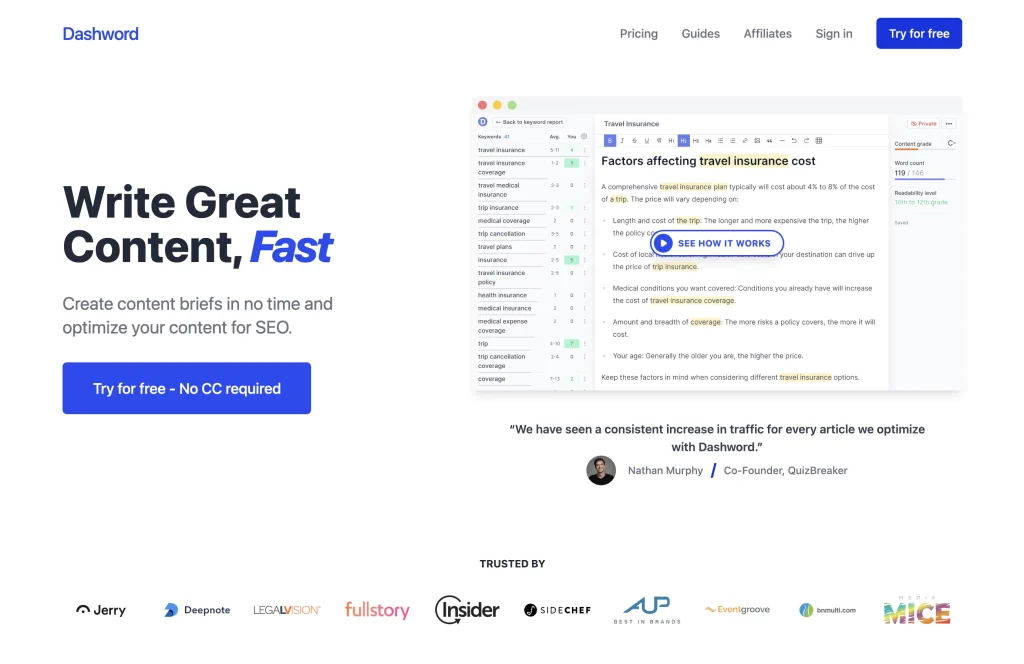
Dashword is a lightweight optimizer that emphasizes briefs, clarity, and maintaining performance over time.
Who it’s best for
- Teams that want clean workflows without complexity
- Agencies that need an easy-to-repeat brief template
- Content managers who do lots of refresh work
Standout content optimization features
- Straightforward brief creation and optimization guidance
- Good fit for content refresh sprints and ongoing maintenance
- Easy to operationalize without extensive training
Why it’s a strong cognitiveSEO alternative
Dashword is a solid choice when you want a simple system your team will actually stick with, especially for keeping older content updated.
Potential downside: Power users may want more advanced analysis and customization.
7. NeuronWriter
What it is
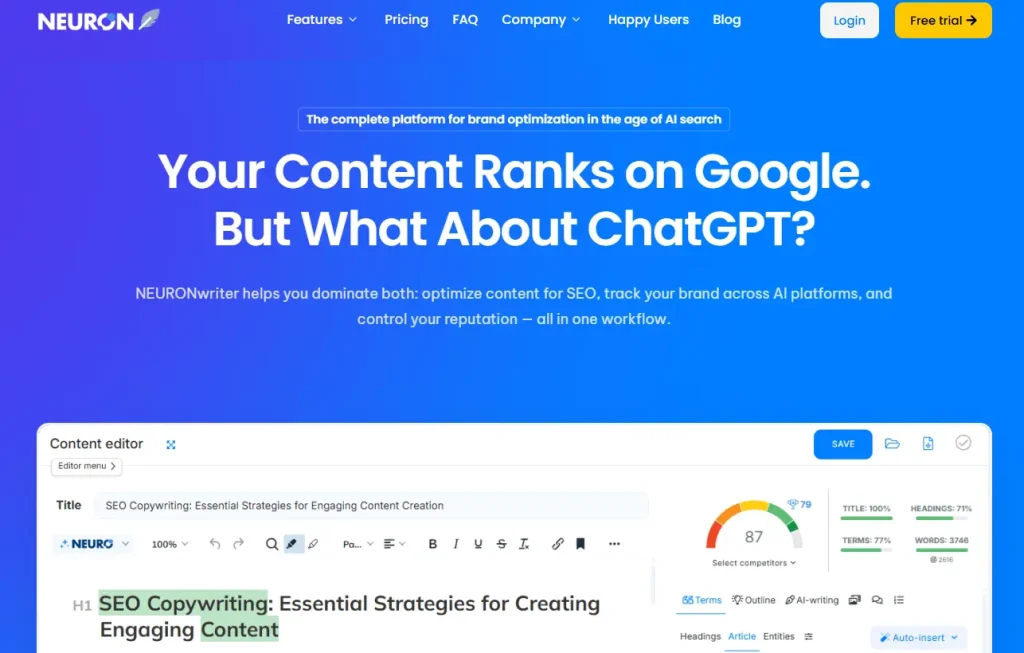
NeuronWriter is a budget-friendly tool that provides NLP-style optimization guidance and broad language support.
Who it’s best for
- Small businesses and solo SEOs on a tight budget
- Teams producing content in multiple languages
- Anyone who wants basic optimization guidance without premium pricing
Standout content optimization features
- Term and topical guidance to close coverage gaps
- Flexible for multilingual workflows
- Affordable entry point compared to many competitors
Why it’s a strong cognitiveSEO alternative
If cost is the deciding factor, NeuronWriter can get you a lot of the core “optimize the draft” functionality without the premium price tag.
Potential downside: UI and workflow polish can feel behind higher-end tools.
How to Choose the Right Option
- If you’re an agency and need a repeatable production + QA system: Rankability
- If you want the easiest editor for writers to adopt: Surfer SEO
- If you want precise recommendations and clean editorial alignment: Clearscope
- If you want research + briefs + optimization in one affordable tool: Frase
- If you’re building topical authority across a large site: MarketMuse
- If you want simple briefs and content refresh workflows: Dashword
- If budget and multilingual support matter most: NeuronWriter
Conclusion
The best SEO content optimization software isn’t the one with the longest feature list. It’s the one your team will use consistently to ship better pages with fewer rewrites and clearer standards.
If you’re replacing cognitiveSEO because you want a more scalable content production system, start by narrowing your choice based on workflow: writer-first simplicity, editorial precision, or strategy-led planning. And if you’re an agency trying to standardize optimization across many clients, Rankability is worth a closer look.