

Search Atlas Content Genius is positioned more like a guided workflow that blends research, drafting, and optimization inside a broader SEO suite. That can be a win if you want a single platform for lots of SEO tasks.

But if your main goal is faster, clearer, editor-first optimization that’s easy to operationalize across writers, many teams prefer a dedicated content optimizer. Below are seven strong alternatives that keep the focus on content quality, coverage, and rankings.
Quick Picks (TL;DR)
- Best overall (agencies): Rankability
- Best “score-as-you-write” editor: Surfer SEO
- Best for editorial consistency: Clearscope
- Best research → brief → optimize workflow: Frase
- Best for topic modeling and strategy: MarketMuse
- Best for refresh workflows and monitoring: Dashword
- Best budget-friendly optimizer: NeuronWriter
What We Looked For (and Why It Matters)
When comparing AI SEO content optimization tools, the difference isn’t “who has the most features.” It’s who helps your team publish better pages with less back-and-forth.
- Recommendation quality: Are the suggestions actually relevant, or just noisy term lists?
- Workflow speed: Can you go brief → draft → optimize quickly without context switching?
- SERP alignment: Does it reflect what’s ranking, including structure and intent?
- Collaboration: Can editors and writers work smoothly together?
- Scaling: Are limits predictable as volume increases?
- Refresh support: Do you get inventory, monitoring, or a clear update rhythm?
Comparison Table
Pricing changes often, so verify on vendor pages before purchase.
| Tool | Best for | Starting price* | AI & Search Coverage | Notes |
|---|---|---|---|---|
| Rankability Content Optimizer | Agencies that need a reliable optimizer workflow | $149/mo | Google-focused optimization + agency workflow; supports bridging to AI search visibility | Dual NLP approach, real-time scoring, built for multi-client workflows |
| Surfer SEO | Fast “score-as-you-write” optimization | $119/mo | Google optimization + AI visibility tracking features | Great UX and integrations; can get pricey as you add volume and extras |
| Clearscope | Editorial teams that want consistent grading | $129/mo | Google optimization + AI search visibility positioning | Clean keyword guidance and team-friendly setup; premium tiers jump quickly |
| Frase | Research + briefs + optimization in one place | $45/mo | SERP research + content production + AI visibility features | Strong value for the full workflow; recommendations can feel lighter than premium tools |
| MarketMuse | Deep topic modeling and content strategy | $99/mo | Strategic planning + optimization across large inventories | Excellent for prioritization and topical depth; heavier learning curve |
| Dashword | Keeping content fresh with monitoring style workflows | $39/mo | Google-focused optimization + upkeep workflows | Great for refresh and reporting; straightforward and lightweight |
| NeuronWriter | Budget semantic optimization | $23/mo | Google-focused optimization with NLP-style coverage | Great value and multilingual support; UI and guidance aren’t as polished as premium tools |
*Starting prices change often – verify current pricing before purchase.
The Alternatives
1. Rankability
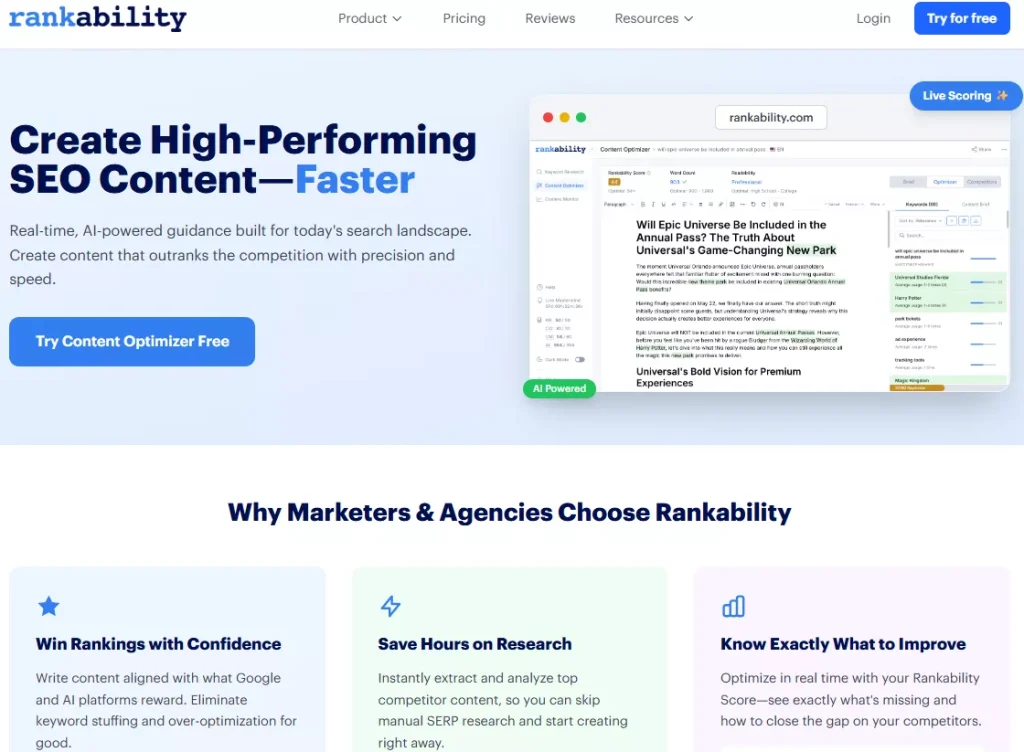
Rankability is built around an editor-first optimization loop that’s easy to standardize across multiple writers, clients, and campaigns.
Why teams switch from suite-style tools
- You get a tighter “optimize the draft” experience rather than a broad platform quota model
- Plans map more cleanly to content production (optimizers, briefs, monitored pages)
Standout strengths
- Real-time scoring that’s designed to be operational, not overwhelming
- Strong brief-to-optimization workflow for repeatable production
- Agency-friendly structure for managing multiple projects cleanly
Good fit if: you manage client work or publish at scale and want a predictable optimization process you can run weekly.
2. Surfer SEO
Surfer is popular because it makes optimization feel simple and immediate. You write, the score updates, and you can move quickly.

Where it’s strong
- Very fast editor experience for writers
- Strong ecosystem and integrations (great for teams that live in docs and CMS workflows)
- Helpful for teams that want a clear, gamified path to “done”
Watch-outs
- The true cost can rise as you scale documents and add-ons
- Some teams feel the term lists can get noisy if you’re not disciplined
Good fit if: you want the smoothest writing experience and quick wins with minimal onboarding.
*Note: Surfer SEO was acquired, which could impact things like product direction, pricing, and how quickly features evolve. If you’re evaluating Surfer long-term, it’s worth understanding what changed after the deal and what it might mean for your workflow.
3. Clearscope
Clearscope is built for teams that care about repeatable quality and grading discipline. It’s less “do everything” and more “do the core optimization job really well.”

Where it’s strong
- Clean recommendations that editors can enforce
- Consistent grading that helps standardize outcomes across writers
- Solid for editorial workflows that demand predictability
Watch-outs
- Entry pricing is higher than many lightweight tools
- Less about end-to-end production and more about on-page optimization and governance
Good fit if: you have multiple writers and want a consistent bar for what “optimized” means.
4. Frase
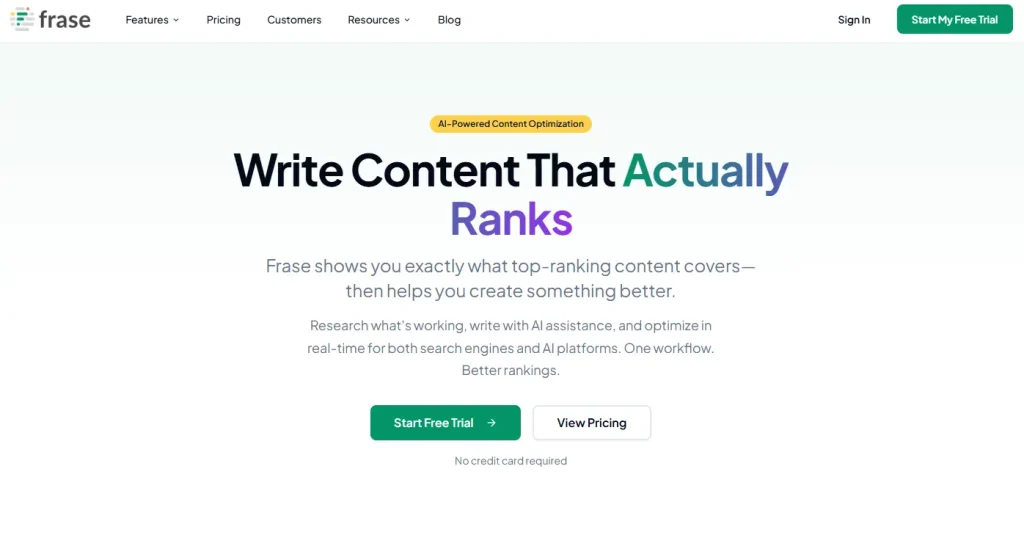
Frase shines when you want to reduce research time and keep everything inside one tool, especially for smaller teams.
Where it’s strong
- SERP research and brief creation are fast
- Great value for teams that want a single place to plan, draft, and refine
- Flexible for marketers who want a “get it shipped” workflow
Watch-outs
- Recommendations can feel less precise than premium, optimizer-first platforms
- You may still need a strong editor to ensure quality and accuracy
Good fit if: you want an affordable, all-in-one content workflow without paying enterprise pricing.
5. MarketMuse
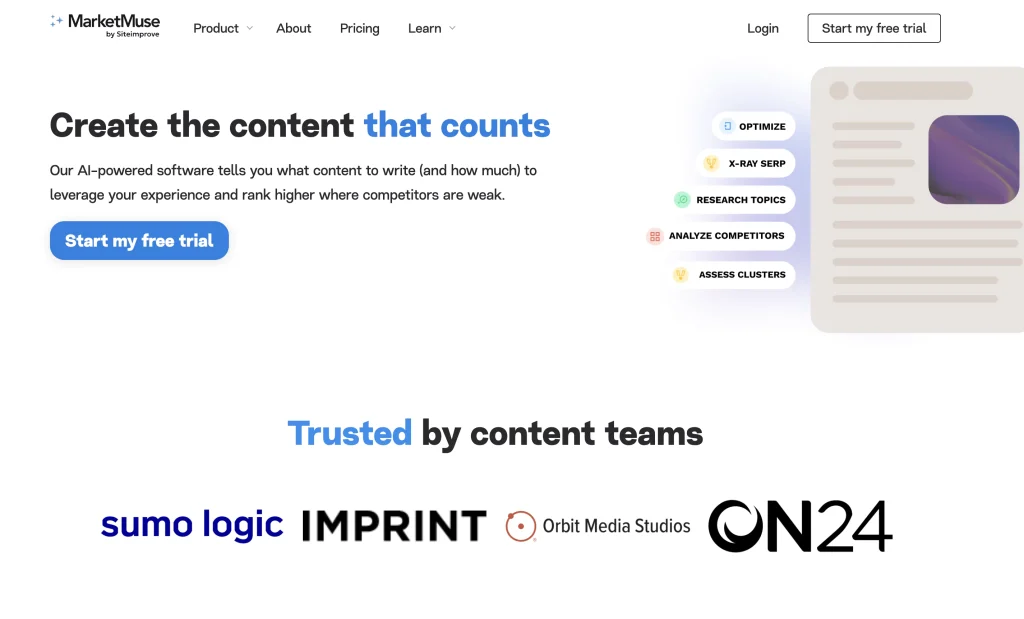
MarketMuse is less “editor toy” and more “content strategy engine.” It’s built to help you decide what to publish, what to improve, and what to prioritize across a site.
Where it’s strong
- Topic modeling that supports deeper coverage and topical authority
- Prioritization tools that help you focus on the highest-impact opportunities
- Strong for larger sites managing lots of content
Watch-outs
- More complexity and a steeper learning curve
- Best value shows up when you’re managing inventory, not just individual pages
Good fit if: you’re running a content program that needs strategy, prioritization, and topical depth across many URLs.
6. Dashword
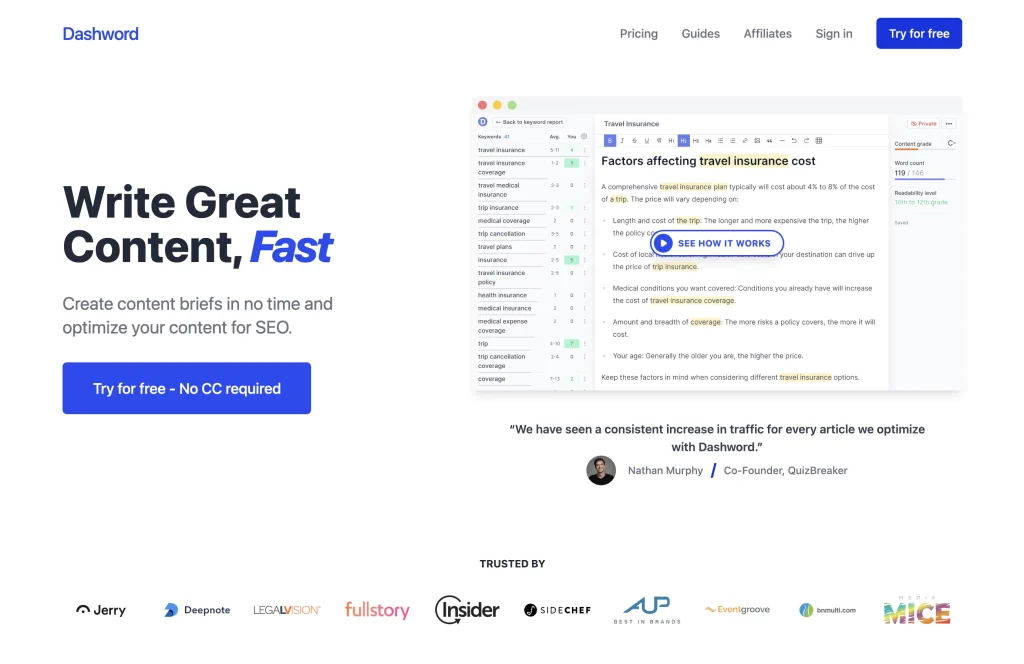
Dashword is a practical choice if you care about keeping existing content performing, not just creating new pages.
Where it’s strong
- Clean briefing and optimization flow that’s easy to implement
- Helpful for content upkeep and reporting
- Lightweight and easy to onboard writers
Watch-outs
- Not as feature-heavy as some premium suites
- Best for teams that want simple clarity over advanced complexity
Good fit if: your biggest ROI comes from updating and improving content you already have.
7. NeuronWriter
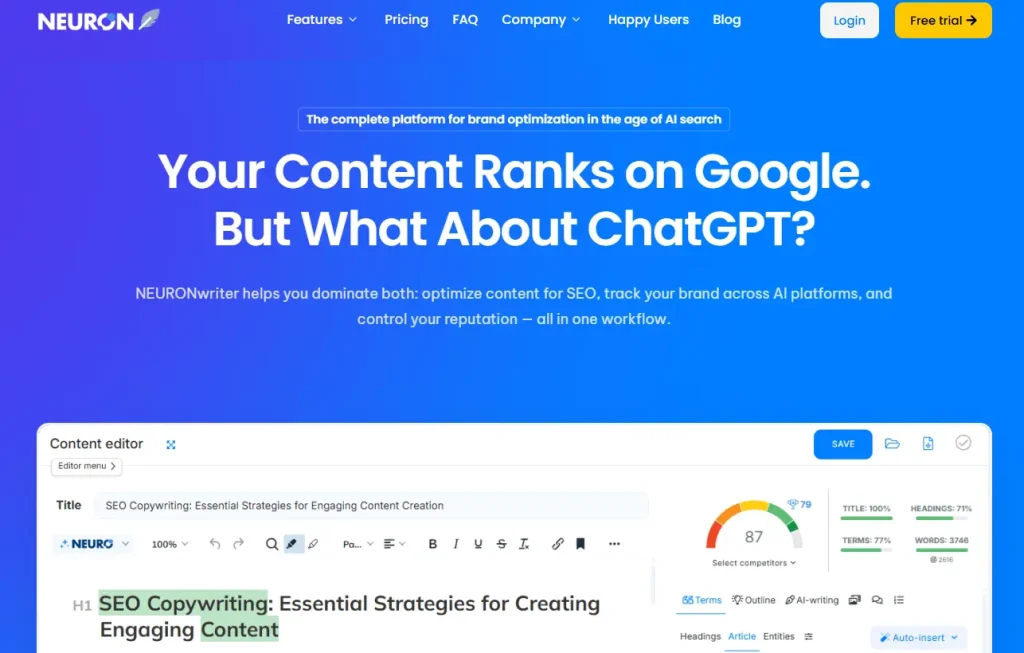
NeuronWriter is a strong low-cost option for semantic coverage and optimization guidance, especially if budget is the biggest constraint.
Where it’s strong
- Strong value for the price
- Works well for basic SERP-driven coverage improvement
- Helpful multilingual support for broader use cases
Watch-outs
- The interface and recommendation experience aren’t as refined as premium tools
- You’ll get more out of it if your team already understands optimization best practices
Good fit if: you want “good enough” optimization guidance at a price that’s easy to justify.
How to Choose the Right Alternative
- You publish at scale or manage clients: prioritize workflow consistency and multi-project management (Rankability, Clearscope)
- You need writers to move fast: prioritize editor usability and real-time scoring (Surfer, Rankability)
- You care about editorial standards: prioritize grading consistency and governance (Clearscope)
- You need research + briefs built-in: prioritize SERP research workflows (Frase)
- You need strategy, not just edits: prioritize topic modeling and prioritization (MarketMuse)
- You want budget-friendly semantic coverage: prioritize value and simplicity (NeuronWriter)
Conclusion
If you like the idea of Search Atlas Content Genius but want a more focused, editor-first optimization experience, any of the tools above can be a strong step forward.
For teams that care most about repeatable execution and agency-ready workflows, Rankability is often the cleanest upgrade path because it keeps the optimization loop tight while still supporting a broader, scalable process.