

Seobility is a strong all around SEO toolkit, especially for crawling, auditing, and monitoring. But if your main goal is improving on page relevance, tightening topic coverage, and shipping content that ranks, you’ll usually want a tool built specifically for content optimization.

Below are seven Seobility alternatives that focus on content briefs, real time scoring, and SERP driven recommendations.
Quick Picks (TL;DR)
- Best overall for agencies: Rankability
- Best “score as you write” experience: Surfer SEO
- Best for editorial quality and consistency: Clearscope
- Best value all in one (research + brief + optimize): Frase
- Best for strategy, topic planning, and content inventory: MarketMuse
- Best lightweight briefs + optimization: Dashword
- Best budget semantic optimizer: NeuronWriter
What We Looked For (and Why It Matters)
Choosing a Seobility alternative for content optimization isn’t about “more keywords.” It’s about shipping pages that match intent, cover the topic thoroughly, and are easy for writers to execute consistently. Here’s what we evaluated:
- SERP driven recommendations: If the tool isn’t grounded in what’s already ranking, it’s easy to optimize in the wrong direction.
- Coverage guidance (topics, terms, entities): Strong optimizers help you fill meaningful gaps, not just sprinkle related words.
- Real time scoring and usability: Writers need feedback while they’re working, not after the draft is done.
- Brief quality: A good brief reduces rewrites by setting the right structure, headings, and must cover sections upfront.
- Workflow fit for teams: Sharing, collaboration, and repeatable processes matter if multiple people touch the content.
- Updates and content refresh support: The best tools help you improve existing pages, not just publish new ones.
- Value for the price: Entry tools can work, but only if the usage limits and workflow friction don’t slow you down.
Quick comparison
Pricing changes often, so verify on vendor pages before purchase.
| Tool | Best for | Starting price* | AI & Search Coverage | Notes |
|---|---|---|---|---|
| Rankability | Agencies that want briefs, live optimization, and scalable workflows | $149/mo | Google + AI search visibility workflows | Dual NLP approach and built for multi client operations |
| Surfer SEO | Teams that want the fastest score as you write experience | $99/mo | Google focused (plus AI writing features) | Excellent editor UX with strong integrations |
| Clearscope | Editorial teams that care most about recommendation quality and consistency | $129/mo | Google focused (plus AI drafting features) | Premium grading and workflow for serious content ops |
| Frase | Small teams that want research, briefs, and optimization in one place | $45/mo | Google + optional AI search tracking features | Great value for research to publish workflows |
| MarketMuse | Strategy led teams doing topic planning and inventory driven improvements | $99/mo | Google focused | Strong for planning, prioritization, and depth decisions |
| Dashword | Marketers who want straightforward briefs and practical optimization | $39/mo | Google focused | Clean brief builder and simple optimization workflow |
| NeuronWriter | Budget semantic optimization with broad language support | €19/mo | Google focused (plus AI writing features) | Affordable, solid NLP coverage guidance |
*Starting prices change often – verify current pricing before purchase.
1. Rankability
Rankability is built for teams that want a SERP led workflow from brief to publish to ongoing improvements, without juggling multiple tools.
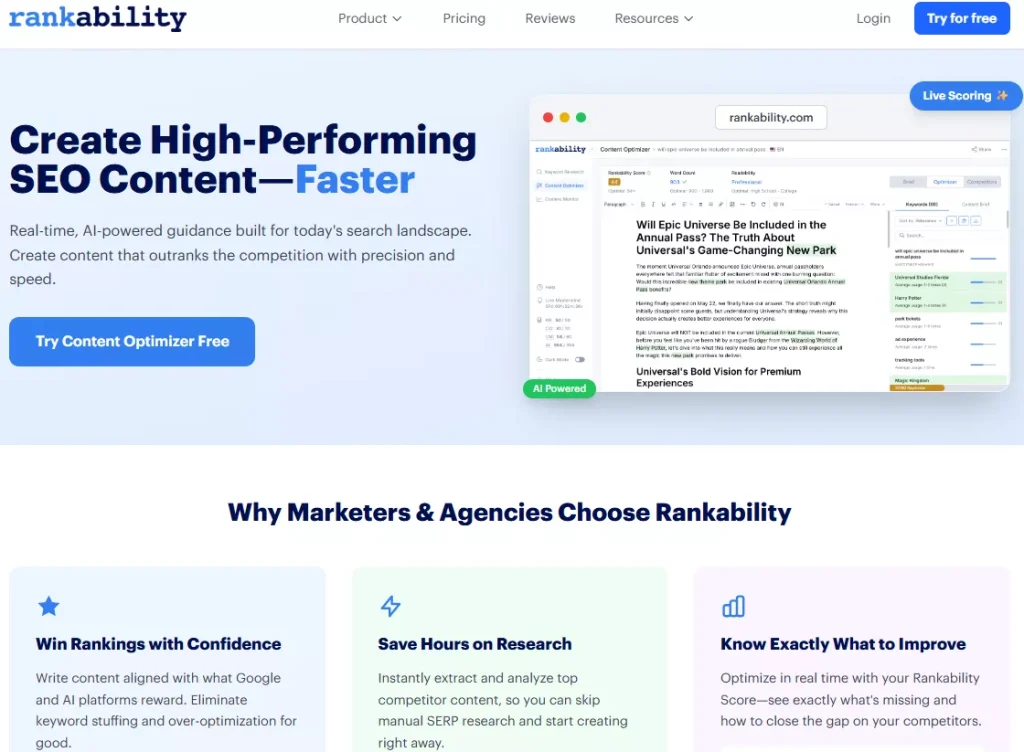
It pairs real time optimization scoring with semantic coverage guidance so writers and editors can see what’s missing while they work.
Best for
- SEO and digital marketing agencies managing multiple clients
- Teams that want a consistent optimization standard across writers
Standout features
- Real time content scoring with clear gap driven recommendations
- Brief to draft to optimize workflow designed for repeatable production
- Agency friendly organization for managing multiple campaigns and clients
- Add ons and workflows that connect content to broader search visibility work
Pros
- Built for scale and repeatability, not just single page edits
- Strong guidance for coverage gaps and relevance
- Designed around agency workflows
Cons
- More premium than entry level tools
- You’ll get the most value if you publish consistently
2. Surfer SEO
Surfer is popular because it makes optimization feel simple. You write or paste a draft into the editor, then work through term and coverage recommendations as the score updates.

For teams that want a straightforward “optimize inside one editor” workflow, Surfer is often the easiest transition from a general SEO tool.
Best for
- Content teams that want quick, clear, in editor guidance
- Agencies that need writers to follow a consistent scoring process
Standout features
- Live content score and suggested terms while writing
- Content audits for existing pages (plan dependent)
- Strong workflow integrations for writing and publishing environments
Pros
- Very fast to adopt
- Clear scoring system that writers understand quickly
- Strong day to day usability
Cons
- Lower tiers can feel limiting if you publish at high volume
- Some capabilities are packaged as add ons or higher tier features
Surfer SEO was recently acquired, which may affect its product roadmap, pricing, and support over time.
3. Clearscope
Clearscope is the “quality first” option. It’s known for strong recommendation accuracy and a grading approach that helps keep editorial standards consistent across a team.

If you’re publishing content that needs to meet a high bar for relevance and clarity, Clearscope is often a top pick.
Best for
- Editorial teams and agencies focused on consistency and precision
- Content operations that want standardized grading and governance
Standout features
- Content grading and term guidance tied to top ranking pages
- Workflow features for teams that manage content at scale
- Optional AI assisted drafting capabilities (plan dependent)
Pros
- Excellent recommendation quality
- Strong for maintaining consistent standards across writers
- Built for teams, not just solo operators
Cons
- Premium pricing compared to lighter tools
- Can be more than you need if you only optimize occasionally
4. Frase
Frase combines SERP research, brief generation, and optimization in one workspace.
It’s especially attractive for small teams because it reduces the time spent toggling between tools during research and outlining.
Best for
- Solo creators and small teams that want an all in one workflow
- Marketers who want to move from research to brief to optimization quickly
Standout features
- SERP research and brief creation
- Content optimization recommendations tied to competitor coverage
- AI assisted drafting tools that can speed up early drafts
Pros
- Strong value for the feature set
- Saves time during research and briefing
- Good balance of usability and capability
Cons
- Recommendation depth can feel lighter than premium tools
- Best results still require human editing and judgment
5. MarketMuse
MarketMuse is less about “fix this one draft” and more about “build topical authority intentionally.”
It’s a fit for teams that want to plan clusters, identify gaps across an inventory, and prioritize what to update or create based on strategic impact.
Best for
- Larger sites and teams managing lots of content
- Strategists who need prioritization and topic modeling, not just on page edits
Standout features
- Topic modeling and gap analysis
- Inventory level insights to guide updates and new content
- Briefing and optimization that ties into a broader plan
Pros
- Excellent for planning and prioritization
- Strong for cluster and authority strategies
- Helps teams decide what matters most, not just what to add
Cons
- Can feel heavy if you only want quick optimization guidance
- Learning curve is higher than “editor only” tools
6. Dashword
Dashword is a clean, lightweight option for content briefs and practical optimization.
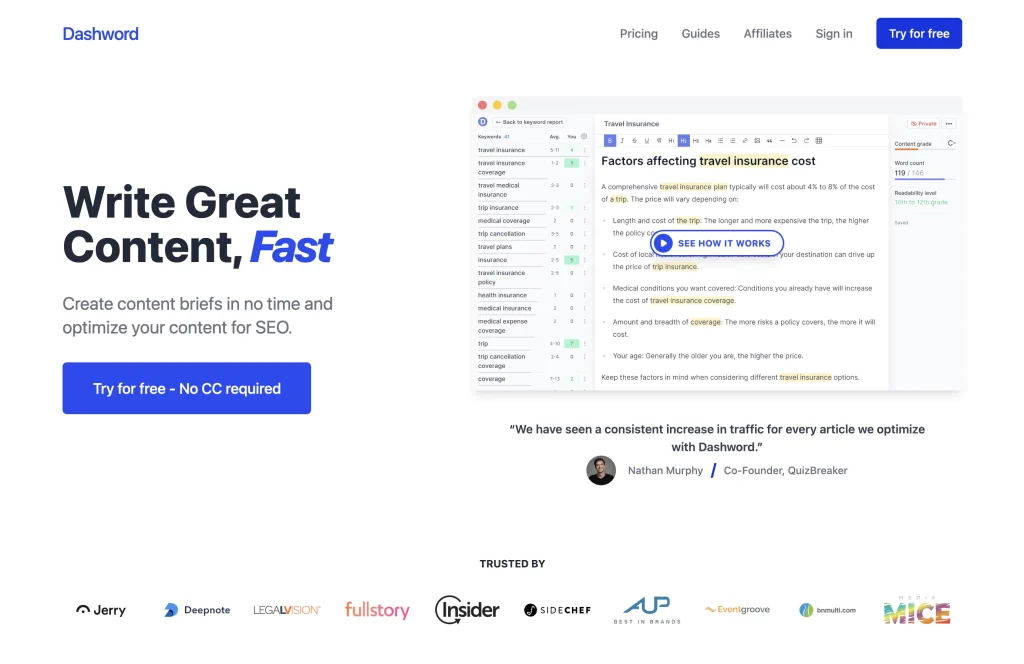
If you want straightforward recommendations without a complex interface, it’s an easy tool to roll out to writers.
Best for
- Content marketers who want a simple brief to optimize workflow
- Teams that want clarity over complexity
Standout features
- Brief builder based on top ranking content patterns
- Simple optimization guidance that’s easy to follow
- Helpful workflow for producing and maintaining content
Pros
- Easy to use and easy to teach
- Fast briefing workflow
- Good fit for teams that want “just enough” optimization
Cons
- Less depth than premium content intelligence platforms
- Advanced strategy and planning features are not the main focus
7. NeuronWriter
NeuronWriter is a budget friendly semantic optimizer that focuses on NLP coverage and SERP driven guidance.
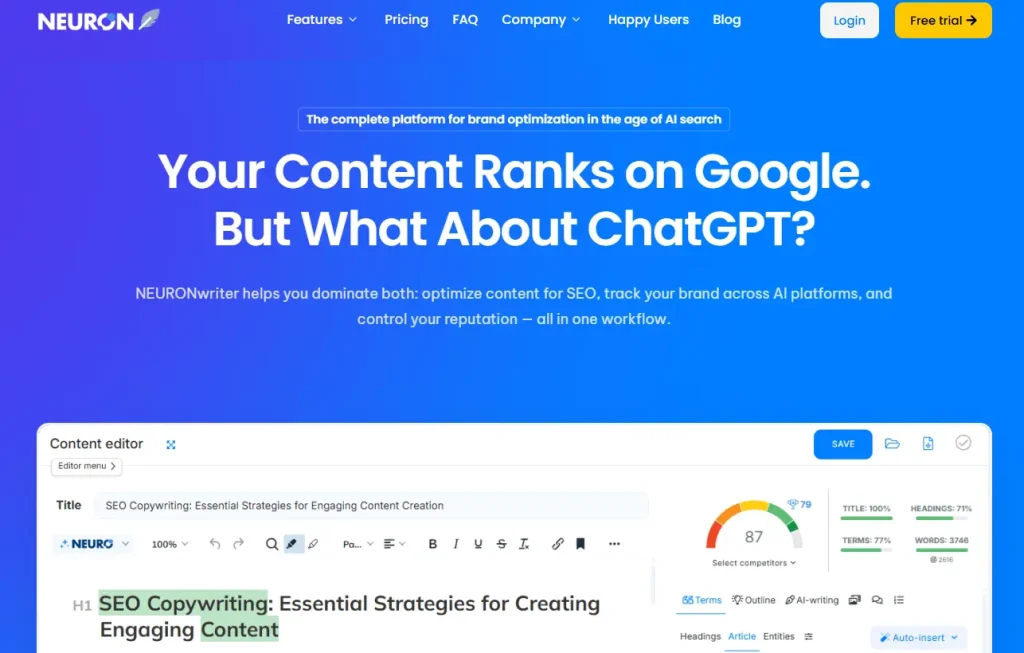
It’s popular with smaller teams because it’s affordable while still delivering useful coverage recommendations.
Best for
- SMBs and bloggers optimizing content on a budget
- Teams that need multi language support
Standout features
- Semantic and NLP based term and topic recommendations
- SERP analysis to guide coverage
- AI assisted drafting options depending on plan
Pros
- Affordable starting point
- Solid semantic optimization guidance
- Strong language support for international sites
Cons
- UI and workflow polish can be less refined than premium tools
- Collaboration features depend on plan and setup
How to choose the right content optimization tool
If you want a simple way to pick, use this checklist. You’ll end up with the top SEO content optimization software for your needs by matching the tool to your workflow:
- You publish at scale or manage clients: prioritize workflow, consistency, and multi project management.
- You need writers to move fast: prioritize editor usability and real time scoring.
- You care about editorial standards across a team: prioritize recommendation quality and grading consistency.
- You need strategy, not just edits: prioritize topic modeling, inventory analysis, and prioritization.
- You’re budget constrained: prioritize “good enough” semantic coverage plus a workflow you’ll actually use.
FAQs
Is Seobility a content optimization tool?
Seobility is primarily an SEO audit and monitoring platform. It can support on page improvements, but dedicated content optimization tools are designed to produce briefs, guide coverage, and score drafts in real time for faster iteration.
Do these tools replace keyword research?
Some include research and briefing, but most are strongest after you already have a target query and intent. Many teams pair a content optimizer with a separate keyword discovery process.
Should I optimize new content or update existing pages first?
If you already have pages ranking on page two or three, updating existing content often produces faster wins. If you’re building a new topic cluster, new pages can be the better long term play. Many teams do both: quick updates for early results, then new content for compounding growth.
What matters more: a content score or topic coverage?
Topic coverage and intent alignment matter more than chasing a perfect score. Use the score as a guide, but focus on satisfying the query, covering key subtopics, and improving clarity and usefulness.
Conclusion
If Seobility is your main tool today, adding a dedicated content optimizer is one of the fastest ways to improve rankings without guessing what to change.
Choose based on your workflow needs and publishing volume, then commit to one process your team can repeat. If you want an agency oriented option that combines briefing and real time optimization in one platform, Rankability is worth a look.