

If you started with Writerzen for keyword discovery, topic clustering, and building content briefs, it can start to feel cramped once you’re producing content at higher volume, collaborating with a team, or trying to tighten on-page performance in competitive SERPs.

Below are seven alternatives that focus on SERP-led planning, semantic coverage, and repeatable workflows, so you can go from keyword to brief to optimized draft without duct-taping five different tools together.
Quick Picks (TL;DR)
- Best overall for agencies: Rankability
- Best “score as you write” editor: Surfer SEO
- Best research + briefs workflow: Frase
- Best for enterprise editorial teams: Clearscope
- Best for deep content strategy: MarketMuse
- Best all-in-one AI writer + SEO suite: Scalenut
- Best budget semantic optimizer: NeuronWriter
What we looked for (and why it matters)
- Real on-page SEO depth: SERP analysis, semantic/topic recommendations, and scoring that actually pushes topical coverage (not just “more words”).
- Briefs and workflows: A clean path from keyword → outline/brief → writing → optimization.
- Collaboration and integrations: Google Docs, WordPress, sharing, comments, and team-friendly permissions.
- Pricing that scales: Reasonable limits as volume grows, without surprise costs.
- AI search readiness: Even if you’re primarily optimizing for Google, more tools are baking in AI visibility features or prompt-based tracking.
Quick Comparison Snapshot
| Tool | Best for | Starting price* | AI & Search Coverage | Notes |
|---|---|---|---|---|
| Rankability | Agencies that want a SERP-led optimizer plus repeatable workflows | From $199/mo | Google SERP-led scoring, briefs, and optimization workflows; also includes AI search features inside the platform | Built for multi-client production, not just solo writing |
| Surfer SEO | Teams that want a live content score while writing | From $79/mo | Google SERP analyzer + NLP terms + content score; add-on or higher tiers may include AI writing features | Fastest “optimize in-editor” experience for many teams |
| Frase | Research → brief → draft → optimize in one workspace | From $39/mo | SERP research + brief builder + optimizer; also offers AI platform tracking on some plans | Strong value if you want a single research-to-content flow |
| Clearscope | Editorial teams that want precision and clean collaboration | From $129/mo | Keyword and topic suggestions driven by top-performing content; Docs and WP workflows | Premium pricing, premium simplicity |
| MarketMuse | Strategy-led teams that need topic modeling and planning | From $99/mo | Topic modeling + content scoring + inventory analysis; less “live editor” and more “content intelligence” | Best when you’re managing a large library of content |
| Scalenut | All-in-one suite for clusters, drafting, and optimization | From $39/mo | SERP-based guidance + NLP terms + AI writing; some plans include AI search monitoring features | Good for teams that want one tool to do most of the work |
| NeuronWriter | Budget-friendly semantic SEO optimization | From $23/mo | SERP analysis + semantic terms + AI writing credits; integrations vary by plan | Great bang for the buck, but UX can feel less polished |
*Starting prices change often and may differ by billing cycle (monthly vs annual). Always verify current pricing before purchase.
The alternatives
1. Rankability
Rankability is built as an agency-grade content optimization workflow: research, brief, write, optimize, and then keep improving content over time.
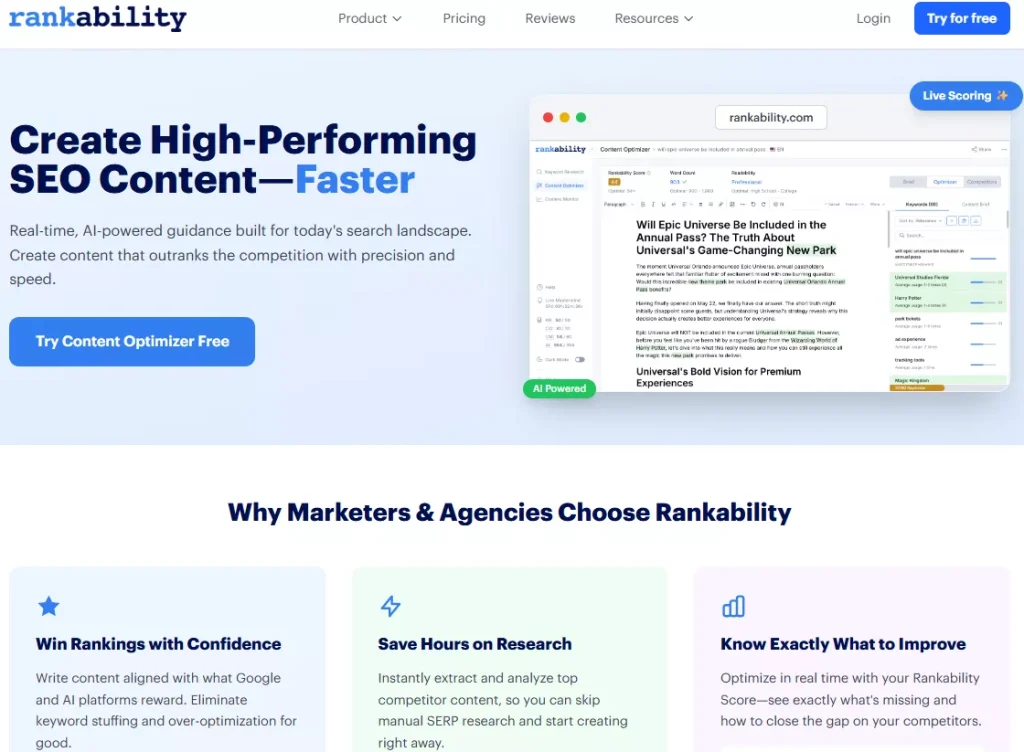
If Writerzen is your “planning and brief” hub, Rankability is the “production and optimization” hub that turns those briefs into pages that actually compete.
Where it improves on Writerzen
- Real-time optimization guidance while writing, so you don’t have to bounce between a brief and a separate scoring tool.
- Workflow consistency, which matters if multiple writers, editors, and strategists touch the same process.
- Built for multi-client operations, with a structure that’s easier to standardize across accounts and deliverables.
Watch-outs
- If you only need keyword clustering and basic briefs, it may be more tool than you need.
Good fit if: You run an agency or content team and want one place to standardize briefs, writing, and on-page optimization at scale.
2. Surfer SEO
Surfer SEO stays popular because it makes optimization feel straightforward: open the editor, write or paste your draft, and watch a live score update as you add missing coverage.

If you like Writerzen’s structure but want more “in-the-moment” optimization feedback, Surfer is often the simplest jump.
Where it improves on Writerzen
- Live scoring and term guidance directly inside the writing flow.
- Content audits for updating existing pages, not just planning new ones.
- Integrations that help writers work inside familiar tools (depending on your workflow).
Watch-outs
- Heavy usage can get expensive as you scale, especially if you lean on add-ons.
Good fit if: You want the fastest path from draft → optimized page with minimal setup.
Note: Surfer was acquired recently, which may impact pricing, product direction, and support over time.
3. Frase
Frase is a strong alternative if your biggest pain is time spent on SERP research and briefing.
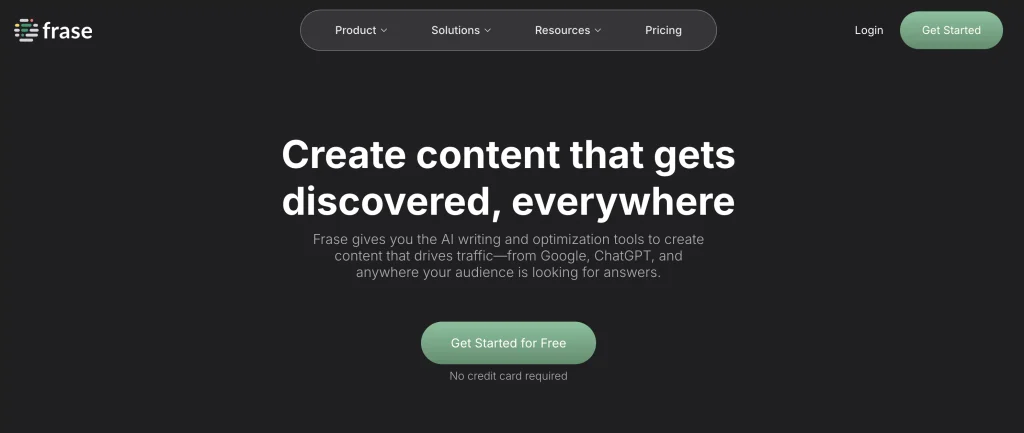
You plug in a query, it summarizes the landscape, helps you build a brief, and gives you a place to draft and optimize. It’s less “enterprise editorial” than Clearscope and less “strategy modeling” than MarketMuse, but it’s very practical.
Where it improves on Writerzen
- SERP research and brief creation inside the same workspace as writing, so the handoff is smoother.
- A unified workflow that reduces tool switching for small teams.
- Solid entry pricing for solo creators and lean teams.
Watch-outs
- If you want the most rigorous, high-confidence term recommendations, you may prefer Clearscope or a more agency-focused workflow like Rankability.
Good fit if: You want an affordable research-to-publish pipeline without stitching together multiple tools.
4. Clearscope
Clearscope is the “clean and precise” option. It’s built for teams that care about editorial quality and clarity, with recommendations that don’t feel noisy.

If Writerzen helped you organize what to cover, Clearscope helps you polish coverage and relevance with a simple grading approach.
Where it improves on Writerzen
- Very streamlined optimization experience geared toward professional writers and editors.
- Collaboration-friendly workflows that map well to editorial review.
- Inventory support (depending on plan) for managing optimization across many pages.
Watch-outs
- Pricing is premium, and it’s not trying to be an all-in-one suite.
Good fit if: You have an established content operation and want accuracy and editorial simplicity more than “do everything” features.
5. MarketMuse
MarketMuse is less about live editing and more about building topical authority across a site.
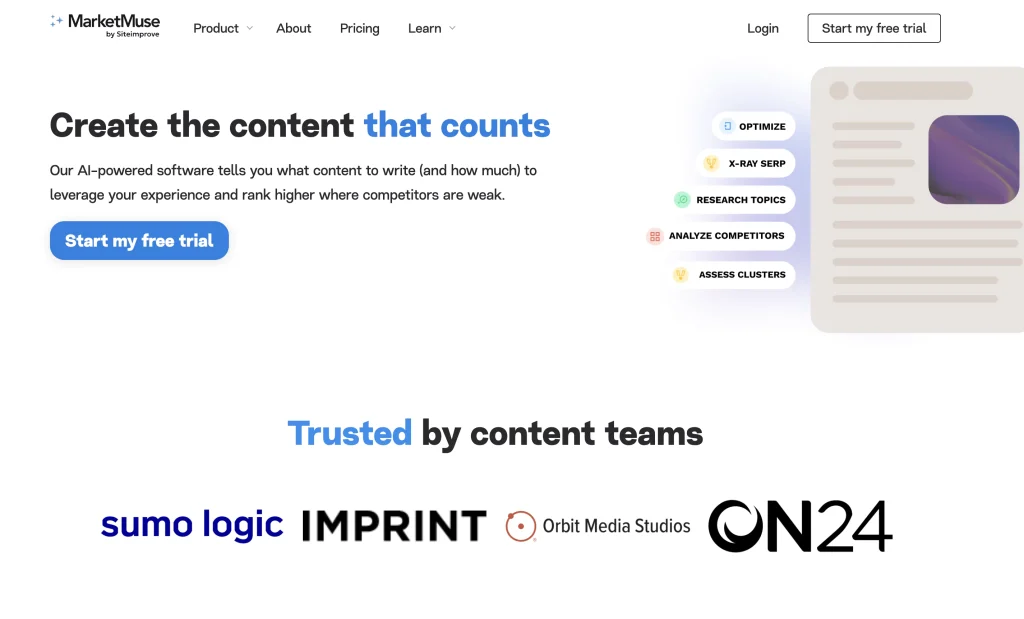
If Writerzen is your starting point for topic discovery, MarketMuse goes deeper into prioritization: what to create next, what to improve, and where you’re thin.
Where it improves on Writerzen
- Topic modeling and authority-building planning, not just page-level checklists.
- Inventory-level insights for teams managing dozens or hundreds of pages.
- Strategic prioritization so you spend time on the content most likely to move the needle.
Watch-outs
- It can feel like a “content strategy workbench,” which is amazing for strategists but sometimes heavy for writers who just want a simple editor.
Good fit if: You manage a large site and need to plan content at the portfolio level, not just optimize one page at a time.
6. Scalenut
Scalenut is the “one suite” choice: clustering, drafting, optimization, and workflow tools bundled together.

If you like Writerzen’s all-in-one feel but want stronger draft-to-optimization rails and more built-in execution, this is the lane.
Where it improves on Writerzen
- AI drafting plus SEO guardrails, so content doesn’t drift off-topic.
- Cluster-driven workflows that can connect planning to production.
- A single workspace for teams that don’t want a fragmented stack.
Watch-outs
- You’ll still need humans editing for quality and brand voice, especially if you generate first drafts inside the tool.
Good fit if: You want one platform that covers planning, drafting, and on-page optimization without adding more tools.
7. NeuronWriter
NeuronWriter is the budget option that still takes semantic optimization seriously.
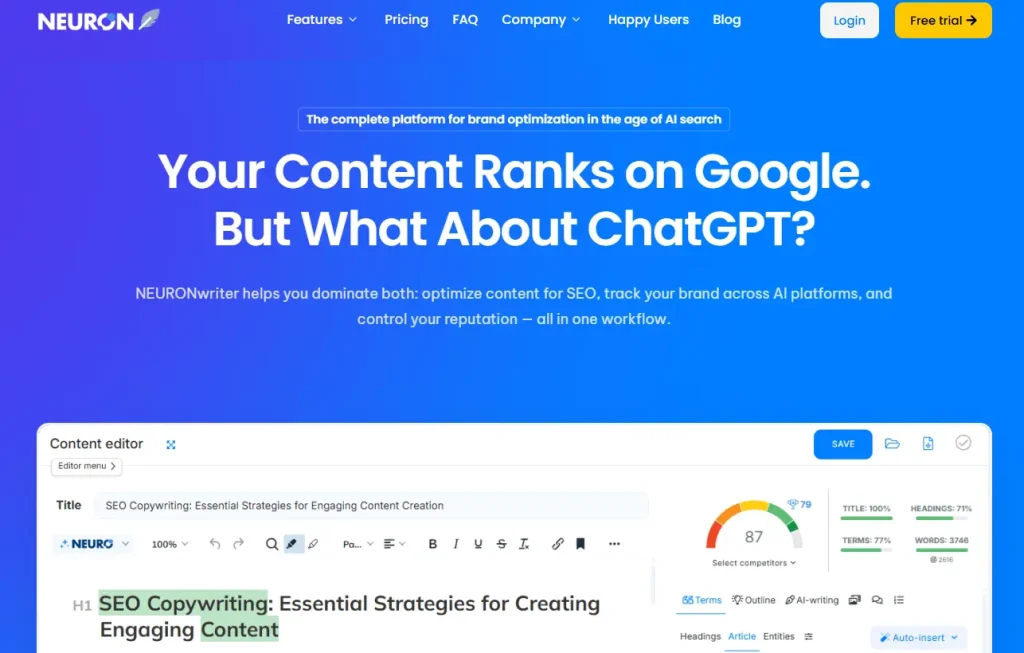
It’s a great upgrade path if Writerzen’s optimizer feels limited and you mostly want better topic coverage guidance without committing to enterprise pricing.
Where it improves on Writerzen
- Affordable semantic optimization with practical SERP-driven guidance.
- Useful extras like internal link suggestions and integrations (plan-dependent).
- Good for multilingual or niche use cases where you want lots of iterations without huge cost.
Watch-outs
- UI polish and workflow ergonomics may not feel as smooth as the premium tools.
Good fit if: You want low-cost content optimization with solid semantic guidance and you’re fine with a more utilitarian interface.
When should you switch from Writerzen?
You’re probably ready to move if one or more of these is true:
- You’re spending too much time moving between tools (briefs in one place, writing in another, scoring somewhere else).
- You need live optimization feedback while writing, not just planning and briefs.
- Your team needs repeatable, scalable workflows across clients, writers, and editors.
- You’re updating older pages and want a clearer “what to improve” system, not only net-new briefs.
How to choose the right alternative
- Choose Rankability if you want an agency workflow that standardizes production and makes it easier to deliver the best tools for SEO content optimization across many pages and clients.
- Choose Surfer if you want the most direct “score as you write” experience.
- Choose Frase if you want research + briefs + drafting in one clean workflow at a lower starting cost.
- Choose Clearscope if editorial precision and collaboration matter more than price.
- Choose MarketMuse if you need topic strategy, prioritization, and authority-building across a large site.
- Choose Scalenut if you want an all-in-one suite for clusters, drafting, and optimization.
- Choose NeuronWriter if budget is tight but you still want semantic optimization that’s stronger than basic checklists.
Conclusion
Writerzen is a solid planning and briefing tool, but most teams eventually need a tighter loop between research, writing, and optimization. If you want a straightforward upgrade, Surfer and Frase are easy transitions.
If you’re running content at scale, Clearscope or MarketMuse can justify the cost. And if you want an agency-ready workflow that connects optimization with execution, Rankability is worth a look.