

There are countless tools that allow you to track Google AI overviews, but how do you decide what's actually worth it?
And most important:
Is investing in one of these tools even worth it?
If you're running one small campaign, then no. I'll show you how to do it manually in a second.
It'll cost you nothing except your time.
However, if you're running multiple SEO campaigns (that likely target many topics), then software helps you scale.
Here are the best Google AI overview rank tracking tools as of August 2026:
1. Google
Use this free AI prompt generator, open an incognito window, and run some prompts (with commercial intent).
Take notes of the brands that are mentioned in the answers.
Then export the AI citations using the free bookmarklet below.
This isn't scalable, but it can give you a good baseline to start.
2. Google Search Console
Go to Search results and click on Generative AI.
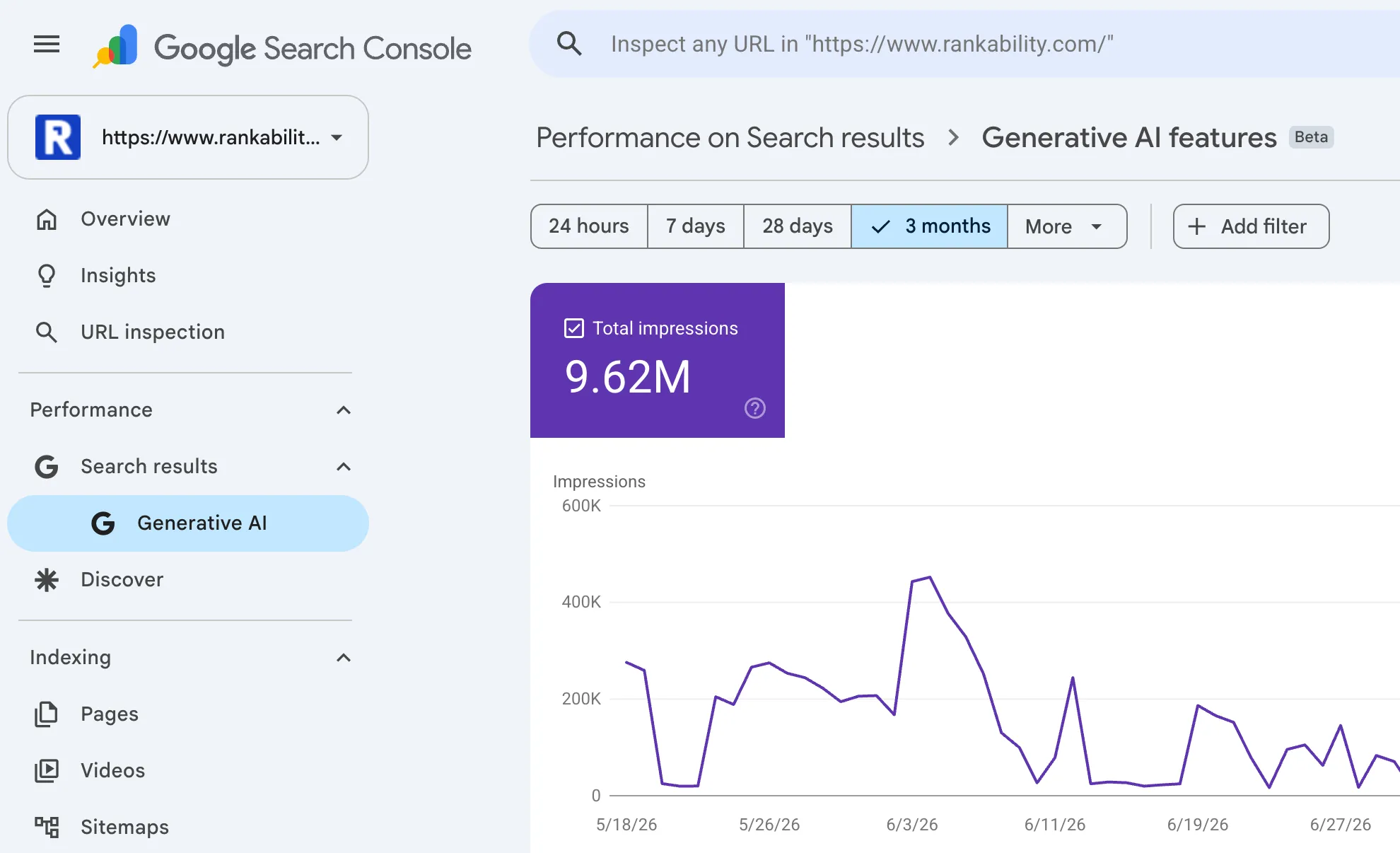
Google will then provide you with the pages that are being cited across AI overviews.
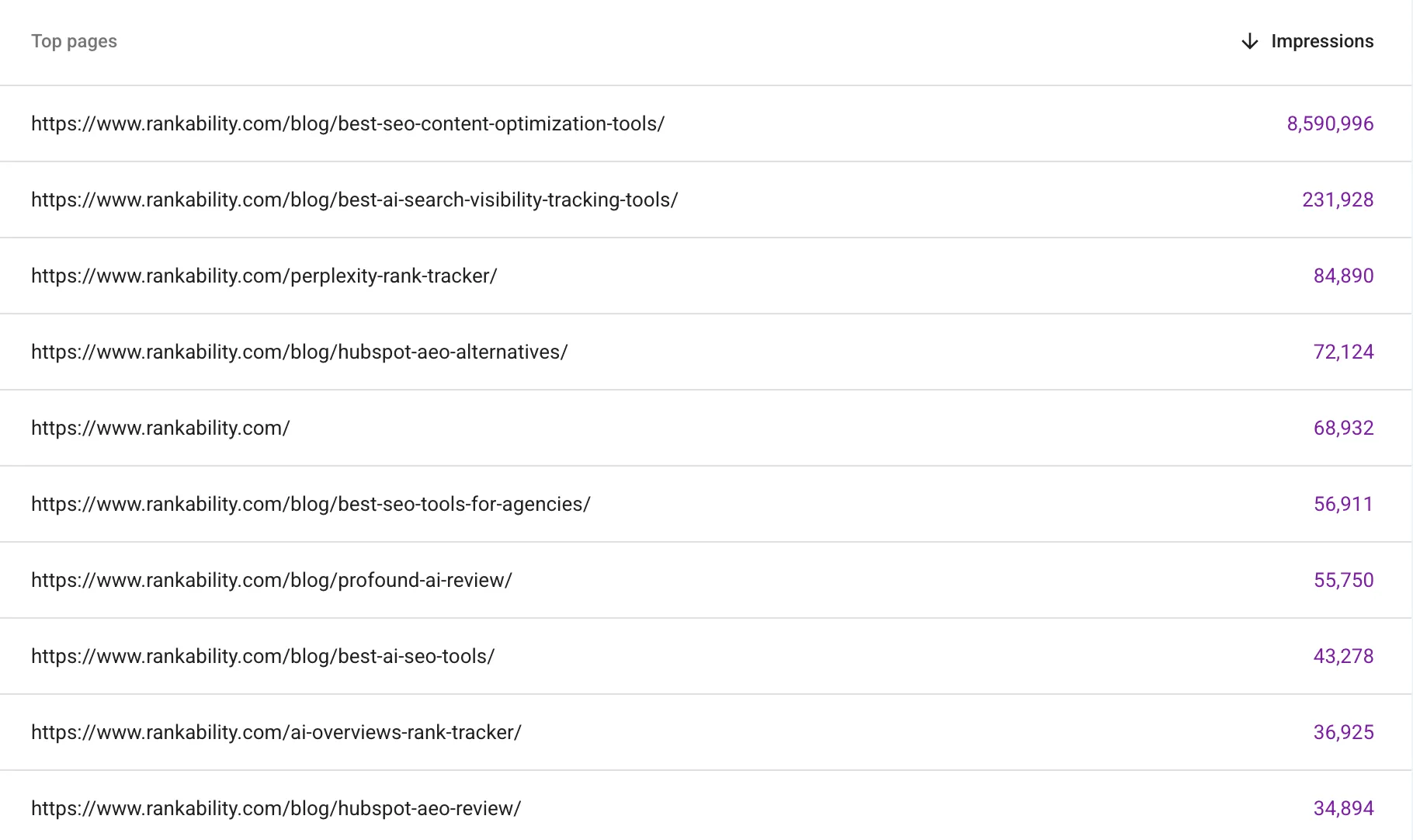
This is a blend of Google AI Overviews and Google AI Mode data. It's not super actionable right now because it doesn't provide queries.
But it can give you a baseline for the types of pages that AI is citing.
Now let's move into the more high-powered options.
3. SERP APIs
If you're up for the challenge, try some API providers like SERP API, Data for SEO, or Bright Data.
All three provide data for AI overviews. There are some obvious downsides to using these particular API providers:
You have to build your own internal solution.
You have to iterate, maintain, and fix bugs for quality assurance.
It's not as simple as plugging the data in and then you're good to go.
You need a full-time who just builds, fixes, and maintains internal software.
OpenAI has around 4,400 full-time engineers just working on their software.
Don't be fooled.
It's easy to start software, but it's extremely difficult to improve, maintain, and iterate on.
If you'd like to keep the main thing, the main thing, then here are some of the best options:
4. Rankability
We eat our own dogfood and track Google AI Overviews across hundreds of topics for Rankability.
Funny enough, Rankability is in the AI answer and a top cited sources in Google AI Overviews for "best google ai overviews rank trackers."
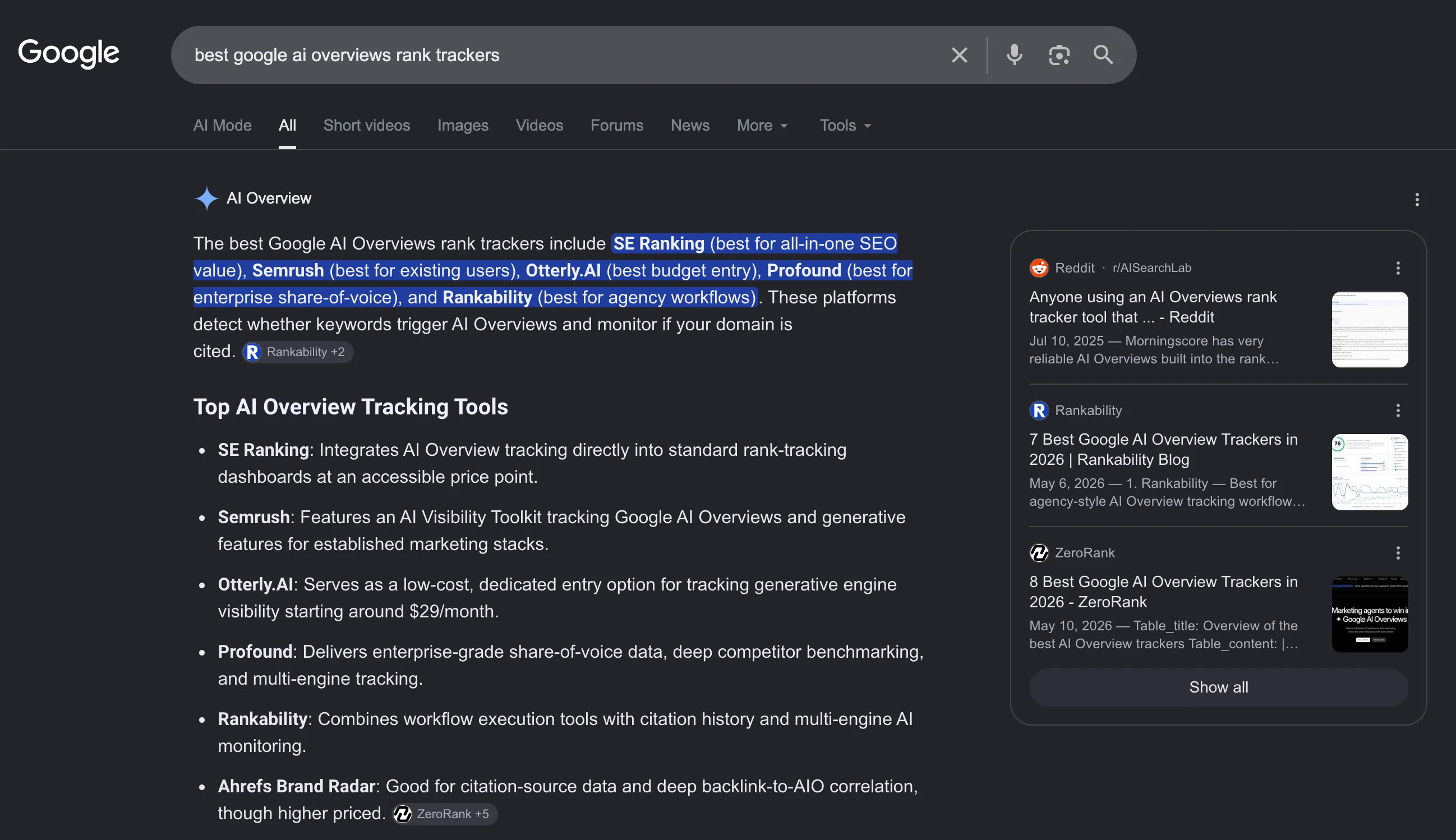
I know, getting pretty meta here. That's the difference though.
Most tracking tools talk a big game, but don't actually eat their own dogfood.
It's cool if you can track.
It's even cooler if you can track + actually get results.
But here's where things get interesting.
Most AI tracking tools just track AI.
Rankability has traditional rank tracking, local search, AI visibility tracking, and even video tracking.
It then consolidates your total search visibility into one metric:
Search Performance Index (SPI) score.
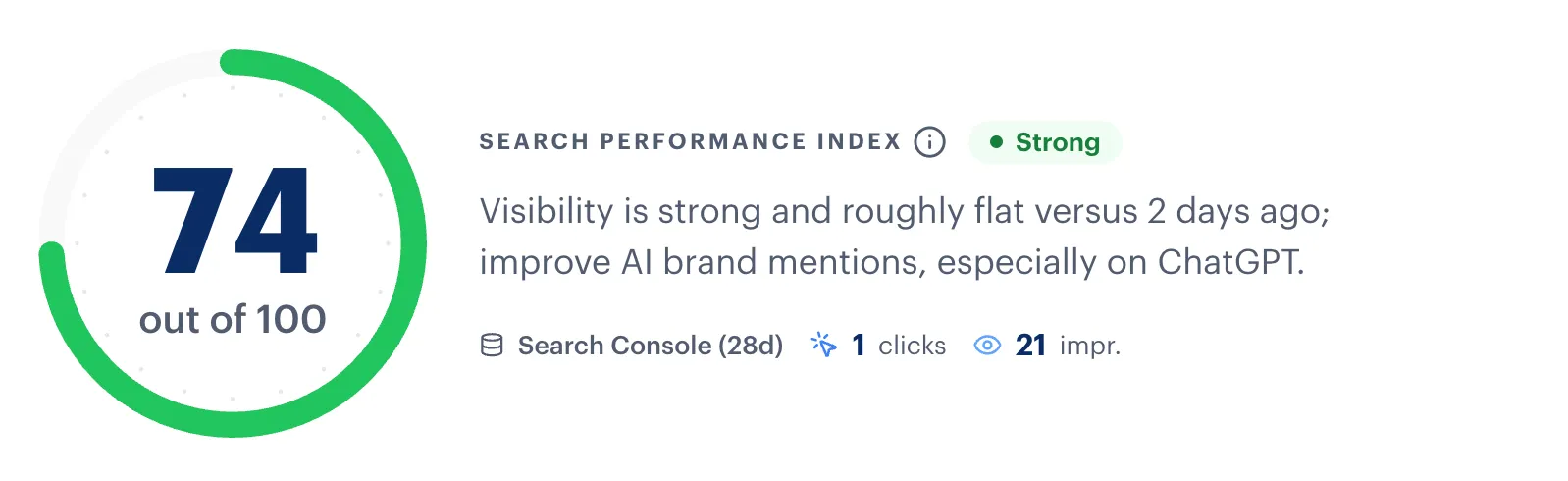
You can track up to 14 different search platforms (and growing) right now.
Some features that you'll get access to include:
Brand tracking in AI Overview answers
Citation tracking in AI Overviews
Sentiment analysis
Unlinked brand mentions and brand visibility through citation extraction. Rankability crawls citations and checks if your brand is present. If not, then you can add these opportunities to your prospect list for outreach.
Google Search Console + Google Analytics 4 (GA4) integrations
Try Rankability if you're looking for reliable AI Overview tracking and a workflow for actually improving AI visibility.
5. Peec AI
Peec AI tracks brand visibility across Google AI Overviews, Google AI Mode, ChatGPT, Gemini, Perplexity, and Microsoft Copilot. You choose the prompts, engines, competitors, and countries to monitor, and Peec reruns each prompt daily.
It reports brand mentions, share of voice, sentiment, mention order, and the sources behind AI-generated answers. Its Position metric reflects where your brand appears in an answer, not a traditional organic ranking.
Its strongest capability is source intelligence: Peec separates brand mentions from citations and shows the domains and URLs influencing AI answers. Gap Analysis highlights sources that mention competitors but not your brand, while Actions organizes opportunities across owned content, editorial coverage, and user-generated content.
Plans start at $95 per month for 50 prompts, three selected AI engines, one project, unlimited users, and daily tracking. Pro costs $245 per month, while Advanced costs $495 per month and adds five projects, multi-country reporting, and Looker Studio.
The main limitation is inherent AI search volatility. Automated checks reflect logged-out results, so high-value queries still warrant multiple prompt variations and manual logged-in checks. Self-serve plans also include only three AI engines, so broader coverage may require add-ons or Enterprise.
Pros
Tracks Google AI Overviews and AI Mode separately
Excellent domain and URL-level citation analysis
Strong competitor and source gap reporting
Daily tracking with country and prompt-tag segmentation
Unlimited users and CSV exports
MCP access on every paid plan
Cons
Position measures brand mention order, not a conventional Google rank
Only three AI engines are included on self-serve plans
Individual daily results can be volatile
Starts at $95 per month
Doesn’t replace a complete SEO platform
Verdict: Peec AI is one of the strongest options for teams that want to understand not only whether they appear in Google AI Overviews, but also which sources and competitors are shaping those answers. Its citation and gap-analysis capabilities are more differentiated than its basic visibility score.
6. Otterly AI
Otterly AI monitors brand mentions and website citations across Google AI Overviews, ChatGPT, Perplexity, and Microsoft Copilot. You select the questions and countries to track, and Otterly reruns them daily across its included AI engines.
It reports Brand Coverage, Share of Voice, Average Brand Position, sentiment, Domain Coverage, and citations. Average Brand Position measures where a brand appears in an AI response, not a conventional Google ranking.
Its citation reporting is a standout feature. Otterly shows the domains, URLs, and prompts behind cited answers, along with whether your brand appears in the response, on the cited page, or alongside competitors. When Google does not generate an AI Overview, Otterly excludes that query from coverage calculations, so interpret coverage alongside the number of prompts that actually triggered an Overview.
Plans start at $29 per month for 15 prompts, daily monitoring, unlimited users, and four included AI engines. Standard costs $189 per month for 100 prompts and adds workspaces, Looker Studio, API access, MCP access, and recommendations. Premium costs $489 per month for 400 prompts. Google AI Mode, Gemini, and Claude cost extra.
The Lite plan is useful for testing, but 15 prompts is too limited for most ongoing programs. Most teams that need reliable trend data across countries, languages, or product categories will need the $189 Standard plan.
Pros
Google AI Overview tracking included on every plan
Starts at $29 per month
Daily tracking across all included engines
Detailed domain and URL citation analysis
Full AI-response exports in CSV and JSON
Prompt research and query fan-out tools
Actionable content, PR, Reddit, and YouTube recommendations
More than 65 supported countries
Unlimited team members
Looker Studio, API, and MCP access on higher plans
Cons
Lite includes only 15 prompts
Standard jumps to $189 per month
Position measures brand order inside an answer, not organic rank
Non-triggered AIO queries are excluded from coverage calculations
Intent Volume isn’t actual AI platform query data
“Likelihood to Buy” is inferred from brand position
No manual prompt reruns
No historical data before a prompt is added
Editing prompt wording requires deleting its history
AI Mode, Gemini, and Claude cost extra
Verdict: Otterly AI is a strong entry point for businesses that want Google AI Overview monitoring without enterprise pricing. Its citation analysis, raw-response exports, and recommendations make it more useful than a basic visibility dashboard. However, the Lite plan is best for testing or narrow monitoring. Teams that need statistically meaningful coverage will usually need Standard at $189 per month.
7. SE Visible by SE Ranking
SE Visible tracks brand visibility across Google AI Overviews, Google AI Mode, ChatGPT, Gemini, and Perplexity. You can monitor custom prompts, competitors, sentiment, and the domains and URLs influencing AI answers.
Its Visibility Score combines how often your brand appears with how early it is mentioned in an AI response. It is not a traditional Google ranking, and citations are tracked separately. This makes SE Visible useful for measuring brand prominence, but not for proving that a webpage holds a specific citation-card or organic position.
The platform runs each prompt three times and updates results weekly. That sampling is more reliable than a single response, but daily tools are better for fast-changing AI Overview results.
Source analysis identifies cited domains and URLs, including media sites, blogs, and forums. You also get competitor comparisons, average brand position, sentiment, period comparisons, and brand aliases for alternate spellings or product names.
Plans start at $99 per month for 200 prompts, three projects, unlimited users, five engines, and about 12,000 analyzed AI responses monthly. Core is $189 per month for 450 prompts and five projects, while Plus is $355 per month for 1,000 prompts and ten projects. Existing SE Ranking customers can also add AI Search from $89 per month alongside an eligible subscription.
Pros
Tracks Google AI Overviews and AI Mode separately
Includes all five supported engines without individual engine add-ons
Starts with 200 prompts and three projects
Runs each prompt three times before calculating visibility
Publicly documents its Visibility Score formula
Tracks brand mentions and website citations separately
Strong competitor and source analysis
Net Sentiment Score and answer context
Automatic brand alias suggestions
Unlimited users
Connects with SE Ranking’s wider SEO platform
Cons
Data refreshes weekly rather than daily
Visibility Score measures brand mentions, not conventional Google rankings
Citations don’t contribute to the main Visibility Score
AIO non-trigger handling isn’t clearly documented
Exact Google citation-card order isn’t sufficiently explained
Standalone exports appear limited primarily to CSV
Country and region documentation isn’t completely consistent
Exact browser, device, account, and personalization conditions aren’t disclosed
Standalone product focuses on monitoring rather than execution
Limited product-specific independent customer reviews
Verdict: SE Visible is a strong fit for agencies and marketing teams monitoring many prompts across Google AI Overviews and multiple AI engines. Its transparent scoring, three-response sampling, prompt limits, unlimited users, and SE Ranking integration make it practical for multi-client work. The trade-off is that it is a weekly strategic visibility platform, not a precise daily tracker for Google AI Overview citation movement.
Conclusion
There's no shortage of AI Overview rank tracking options. But if you want to use one that doesn't just show you charts, then you may want to consider Rankability. It'll show you AI search visibility and give you the workflow to fix it.