

Choosing a local SEO platform is mostly a workflow decision disguised as a software decision. For agency owners and in-house marketing leads comparing the best local SEO tools, the real question is which platform can prove local pack movement, support multi-location SEO, and fit the reporting expectations tied to ROI.
This roundup focuses on tools that solve distinct local SEO jobs: local rank tracking, geo-grid tracking, listings management, citation building, review management, reputation management, and white-label reporting. The quick answer is that Rankability is the strongest agency-first pick because it combines local intent pages, grid rank tracking, organic rankings, AI visibility, and API-driven reporting in one operating model.
We prioritized tools that help teams measure proximity, relevance, and prominence instead of relying on vague visibility claims. That matters because a local SEO software stack only becomes valuable when it can support repeatable agency workflows, defend results in client reviews, and scale across locations without fragmenting data.
| Tool | Best for | Starting Price | Key Strength |
|---|---|---|---|
| Rankability | Agencies needing local intent pages, grid tracking, and AI visibility | Contact for pricing | White-label reporting, API access, and before-and-after grid comparison |
| BrightLocal | All-in-one local audits, citations, and reporting | From $29/mo | Broad local SEO workflows with audits, rank tracking, and reporting |
| Semrush Local | Listing sync and local tracking inside Semrush | Contact for pricing | Local SEO features integrated with the wider Semrush suite |
| Whitespark | Citation building and citation audits | Contact for pricing | Specialist citation workflows and local SEO focus |
| Moz Local | Listings distribution and duplicate suppression | Contact for pricing | Straightforward listings hygiene for multi-location brands |
| Local Falcon | Google Maps geo-grid tracking | Contact for pricing | Shareable map-based visibility diagnostics |
| Local Dominator | Local SERP tracking and competitive local insights | Contact for pricing | Local rank tracking and competitive visibility monitoring |
| SE Ranking | Budget-friendly SEO suite with local tracking | Contact for pricing | Broad SEO coverage for in-house marketing teams |
| Birdeye | Review generation and reputation management | Contact for pricing | Reputation operations and messaging at scale |
1. Rankability — Best for Agencies Scaling Local Pages, Grid Tracking, and AI Visibility
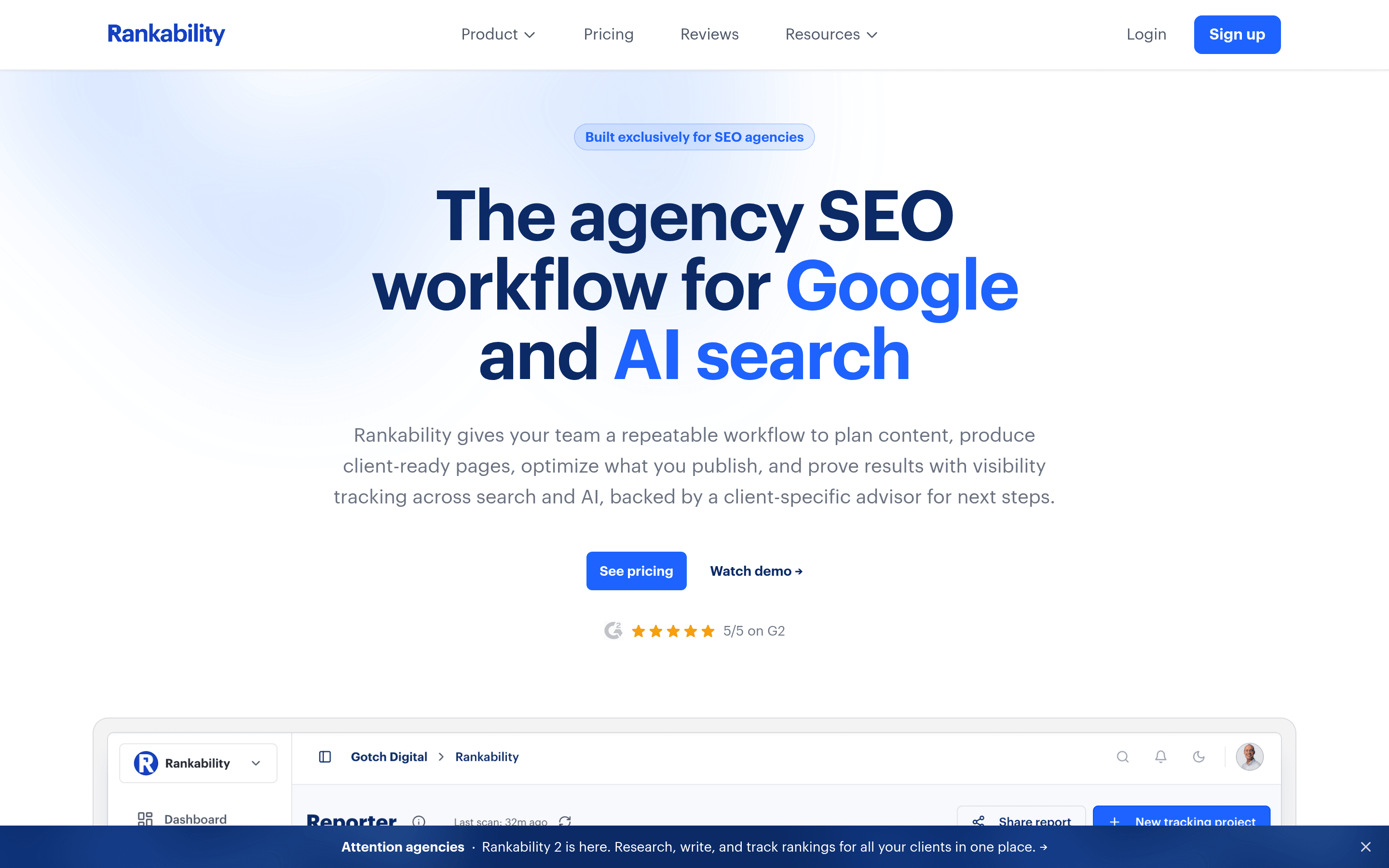
Rankability is purpose-built for agencies that need to publish local intent pages and connect those pages to measurable ranking outcomes. That positioning matters because most local SEO tools either track visibility or manage listings, while Rankability is designed around the agency need to create, measure, and report local search performance in one system.
Its strongest differentiator is how it combines local pack rankings, traditional organic rankings, and AI performance tracking across all major AI platforms with local grid tracking across a service area. For agencies selling outcomes, grid comparison between a benchmark and a new grid creates before-and-after reporting that is easier for clients to understand than a single ranking snapshot.
Key features:
- Local grid tracking for Google Maps visibility across a service area
- Grid comparison for benchmark versus new grid before-and-after reporting
- Tracking for local pack rankings, organic rankings, and AI visibility across all major AI platforms
- 100% white-label reporting built for agency workflows
- API connection for reporting that lets you build custom dashboards with Rankability data
Pricing: Contact for pricing
Ideal for: SEO agencies and multi-location marketers that need scalable location pages plus defensible reporting.
Bottom line: If your team needs local intent pages, grid rank tracking, and white-label reporting with API flexibility, Rankability is the most agency-aligned platform in this list.
2. BrightLocal — Best for All-in-One Local Audits, Citations, and Client Reporting
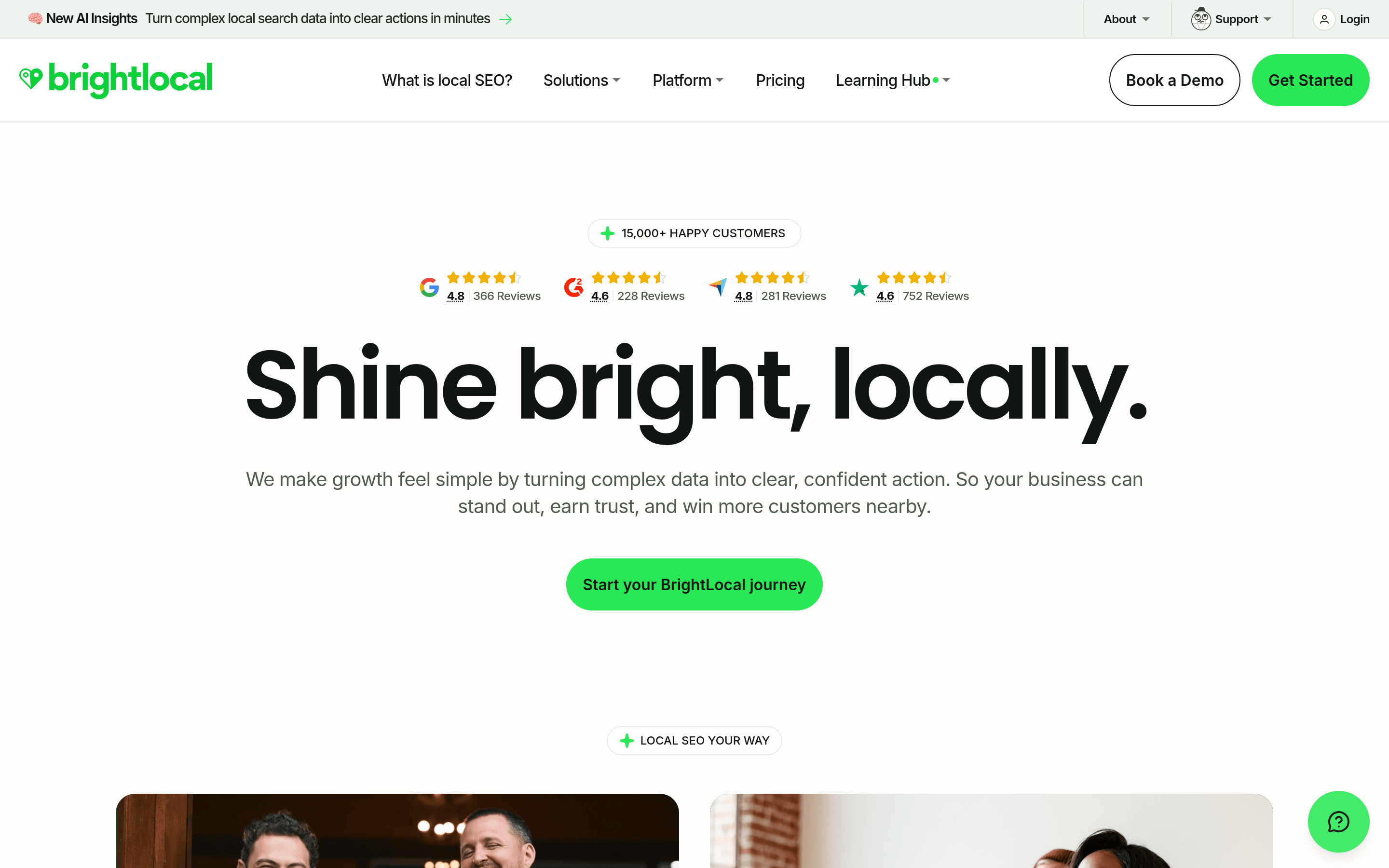
BrightLocal remains one of the most practical local SEO tools because it covers the daily operating tasks agencies actually perform: local SEO audit work, citation monitoring, local rank tracking, and recurring reporting. That breadth matters for SMB-heavy portfolios, where operational efficiency often matters more than having the deepest feature set in any single category.
The platform’s pricing structure is also clearer than many competitors. BrightLocal offers Track at $29 per month, Manage at $37 per month, and Grow at $44 per month, which gives agencies a predictable path from rank tracking into listings and review management without forcing an enterprise contract.
Key features:
- Local rank tracking for up to 100 keywords and four competitors
- Local SEO audit tools for site, Google Business Profile, and competitor benchmarking
- Citation accuracy monitoring and opportunity discovery
- Geo-grid map visualization for local rankings on selected keywords
- Client-ready reporting and recurring exports
Pricing: Track: $29/mo; Manage: $37/mo; Grow: $44/mo
Ideal for: Agencies that want one platform for audits, citations, rank tracking, and reporting across multiple SMB clients.
Our take: BrightLocal is a dependable all-rounder when you need one subscription to support audits, citations, and reporting without overcomplicating the stack.
3. Semrush Local — Best for Listing Sync and Local Tracking Inside a Full SEO Suite
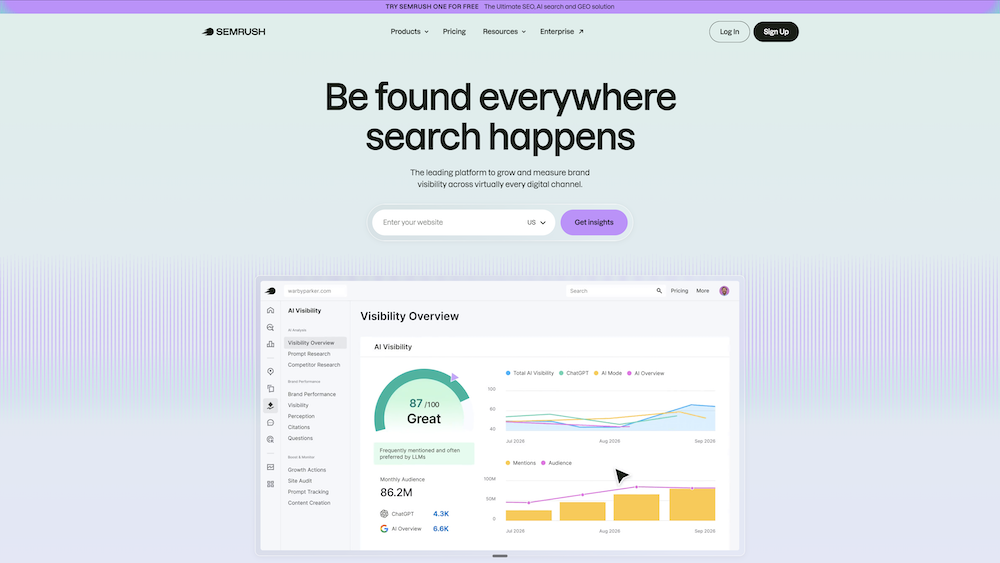
Semrush Local is the cleanest option for teams that already live inside Semrush and want local SEO capabilities without adding another primary platform. That integration matters because local campaigns rarely operate in isolation, and combining listings management with keyword research, competitive analysis, and broader SERP monitoring reduces reporting fragmentation.
Its value is highest when the broader Semrush ecosystem is already part of the workflow. Semrush Local can support listings distribution, local visibility tracking, and Google Business Profile monitoring, but the strategic advantage is that local data sits beside on-page SEO, site audit findings, and competitor intelligence rather than in a disconnected tool.
Key features:
- Listings management and distribution, with coverage varying by market
- Local rank tracking and visibility monitoring
- Google Business Profile monitoring and reputation-related insights
- Access to Semrush keyword research and competitive analysis tools
- Integrated reporting within the wider Semrush environment
Pricing: Contact for pricing
Ideal for: In-house marketing teams and agencies already using Semrush that want local add-ons without managing another major platform.
Why it stands out: Semrush Local is strongest when suite consolidation matters more than having a specialist local SEO software stack.
4. Whitespark — Best for Citation Building and Local Citation Audits
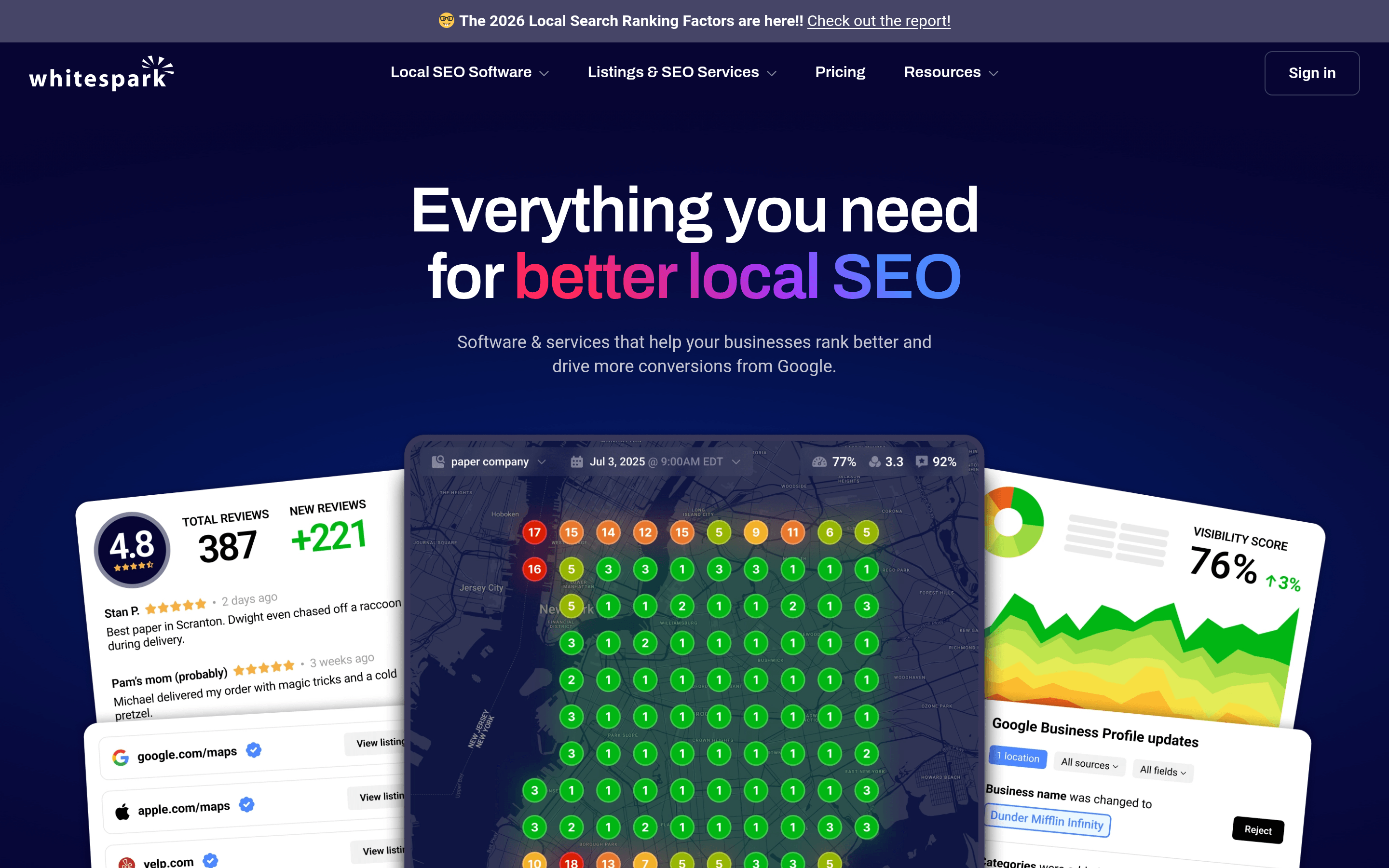
Whitespark is a specialist choice, and that specialization is exactly why it belongs on serious local SEO shortlists. Citations are not the whole ranking equation, but in many local categories they still influence trust, data consistency, and discoverability, especially when business information is fragmented across directories.
Agencies often use Whitespark for citation audit work, citation building, cleanup, and ongoing maintenance rather than as a full replacement for broader local SEO software. That distinction matters because Whitespark is most useful when citations are a defined deliverable in your SOPs, not when you need a full suite for reporting, reviews, and site optimization.
Key features:
- Citation finder and citation audit workflows
- Managed citation building services
- Local rank tracking by market or location
- Local competitor citation and visibility research
- Support for multi-location citation consistency processes
Pricing: Contact for pricing
Ideal for: Agencies that sell citation cleanup and citation building services or work in citation-sensitive verticals.
Worth noting: If citations are a formal part of your local SEO process, Whitespark remains one of the most focused tools available.
5. Moz Local — Best for Straightforward Listings Distribution and Duplicate Suppression
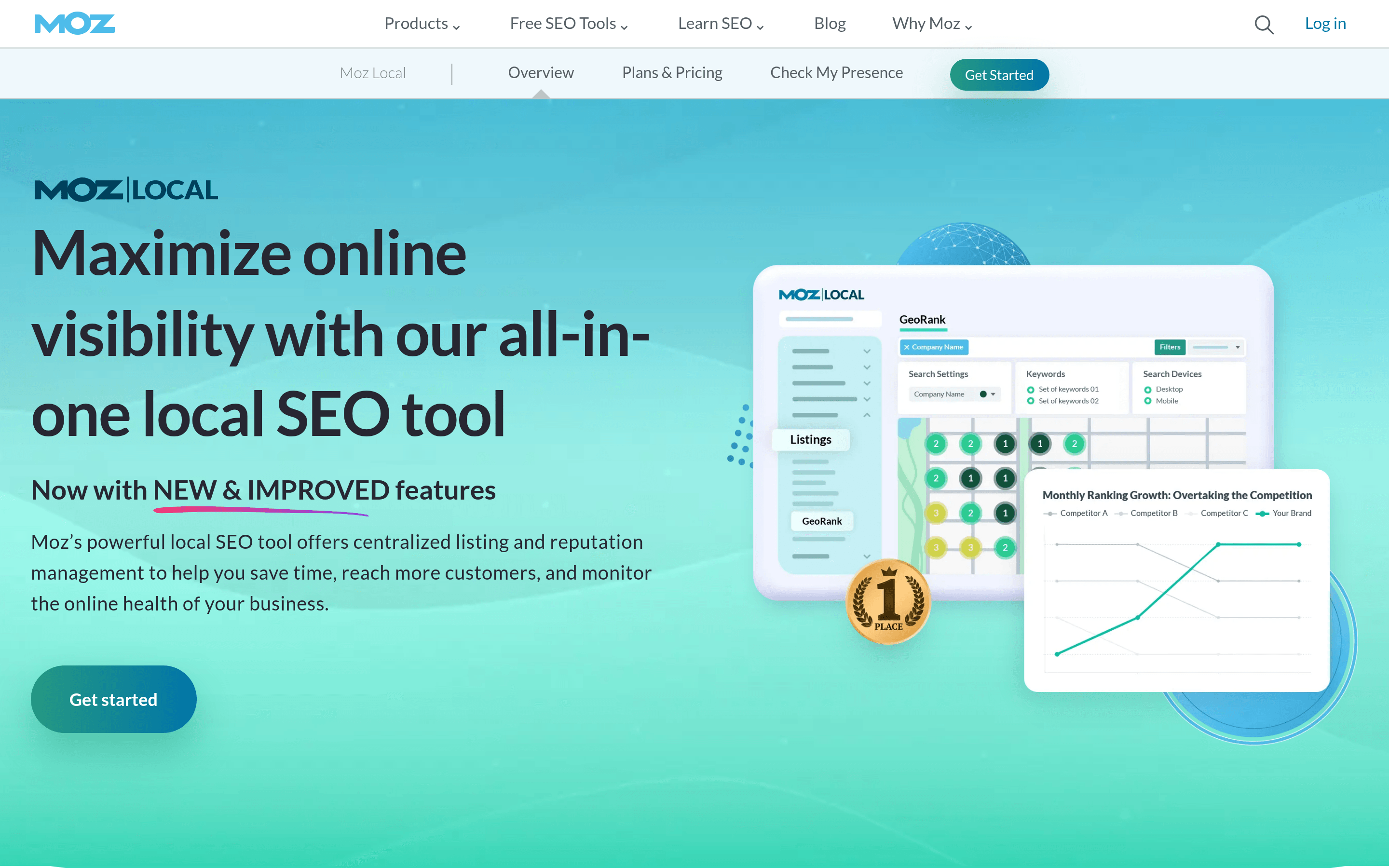
Moz Local is built for listings hygiene rather than full-spectrum SEO management, and that narrower scope is a strength for many brands. Listings distribution, NAP consistency monitoring, and duplicate suppression solve operational problems that can quietly undermine Google Business Profile trust and local discoverability.
This tool makes the most sense when your organization already has separate systems for rank tracking, on-page SEO, and reporting. Multi-location businesses often do not need another analytics-heavy platform for every user, but they do need a reliable process for keeping business data accurate across directories and reducing duplicate listing conflicts.
Key features:
- Listings distribution across key directories and data sources
- Duplicate listing detection and suppression workflows
- NAP consistency monitoring
- Location-level reporting and status tracking
- Exports and integrations for multi-location operations
Pricing: Contact for pricing
Ideal for: Multi-location businesses that want reliable listings management without adopting a full local SEO suite.
The verdict: Moz Local is a strong operational pick when listings accuracy is the main need and the rest of your SEO stack already exists elsewhere.
6. Local Falcon — Best for Google Maps Geo-Grid Rank Tracking and Shareable Visuals
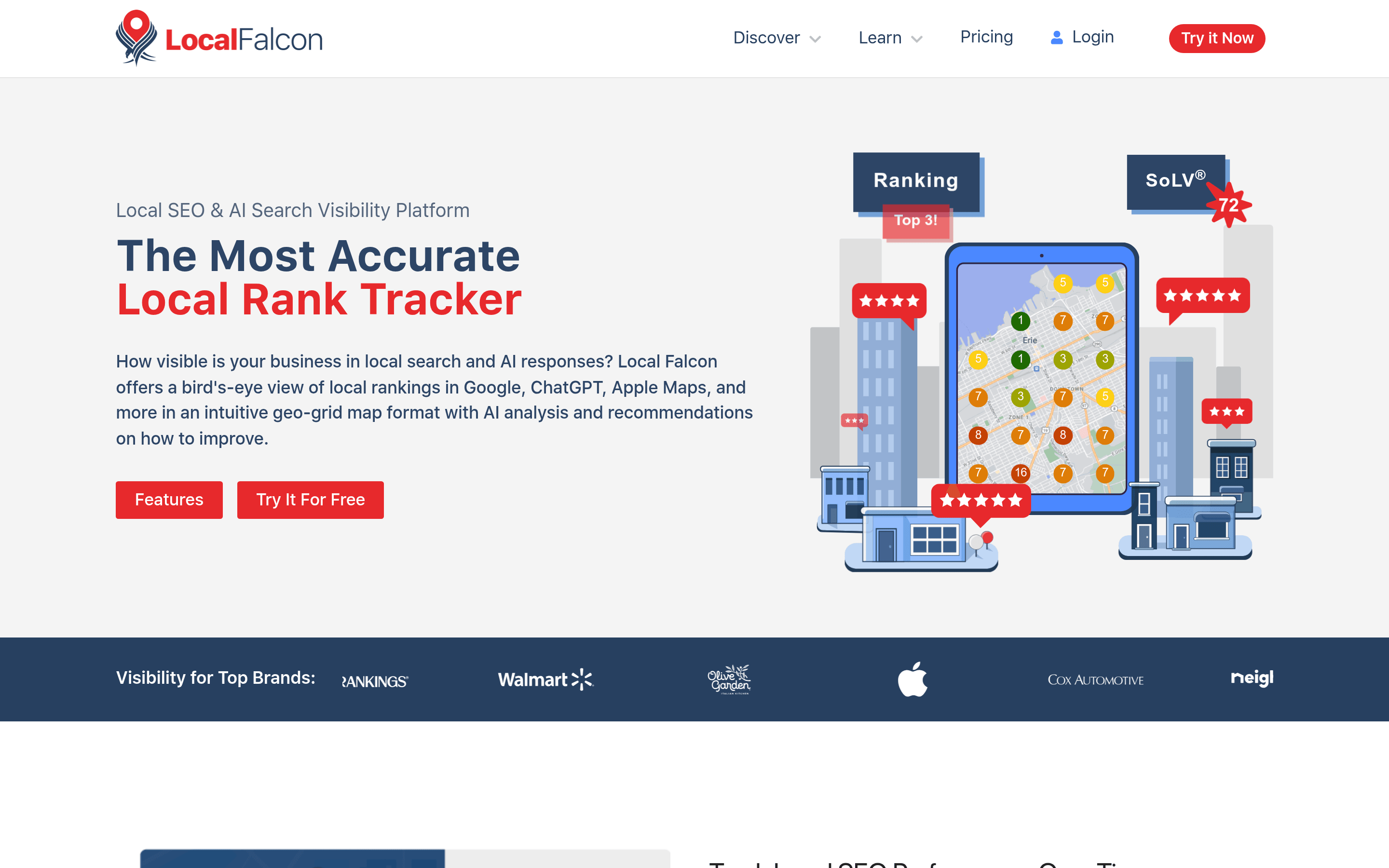
Local Falcon is a specialist geo-grid tracking platform focused on Google Maps visibility across a defined area. That focus matters because standard local rank tracking usually reflects one point in space, while geo-grid tracking exposes how proximity affects visibility across neighborhoods, ZIP codes, or service areas.
For agencies, that makes Local Falcon especially useful in diagnostics and stakeholder communication. A visual grid can reveal whether poor performance is caused by weak relevance signals, low prominence, or simple distance decay, which is often more actionable than a generic rank report.
Key features:
- Geo-grid tracking for Google Maps rankings
- Scheduled scans and historical comparisons
- Shareable reports and map-based visuals
- Multi-location tracking and competitor comparisons
- Keyword-level and point-in-grid visibility insights
Pricing: Contact for pricing
Ideal for: Agencies that need to prove local pack improvements with map-based evidence.
Best if you need: A dedicated grid rank tracking tool to show exactly where Maps visibility is strong, weak, or improving.
7. Local Dominator — Best for Local SERP Tracking and Competitive Local Insights
Local Dominator appears often enough in agency comparisons that it deserves consideration as a shortlist tool, especially for teams evaluating alternatives to the more established names. Its positioning centers on local visibility tracking and competitive monitoring, which are core needs in local SEO, but buyers should validate the current feature set directly with the vendor.
That caution is important because reporting depth, white-label options, and supported search surfaces can vary over time. For agencies standardizing a stack, the right question is not whether a platform can track rankings, but whether it fits existing agency workflows for exports, client reporting, and multi-location execution.
Key features:
- Local rank tracking for local pack and organic results
- Competitive visibility monitoring
- Location-based reporting with white-label options
- Multi-location local SEO workflows
- Export options for agency reporting
Pricing: Contact for pricing
Ideal for: Agencies that want another local-focused tracker to compare against BrightLocal and dedicated grid tools.
Our take: Local Dominator is worth including in vendor research, but validate reporting depth and workflow fit before standardizing on it.
8. SE Ranking — Best for Budget-Friendly SEO Suite With Local Rank Tracking
SE Ranking is a broader SEO platform rather than a local-first specialist, but it earns a place here because many smaller teams need one practical system that covers rank tracking, site audit work, keyword research, and reporting. That matters for in-house marketing leads who cannot justify separate subscriptions for every SEO function.
Its local value depends on how much depth you need. SE Ranking can support location-targeted tracking and broader SEO execution, but it is usually a better fit for organizations that need acceptable local rank tracking alongside on-page SEO and competitive analysis rather than advanced listings management or reputation management.
Key features:
- Rank tracking with location targeting
- Site audit and on-page SEO checks
- Competitor research and keyword research tools
- Reporting and scheduled exports
- Team permissions and access controls by plan
Pricing: Contact for pricing
Ideal for: In-house marketing teams and smaller agencies that need broad SEO coverage with local tracking at a manageable cost.
The verdict: SE Ranking is a pragmatic option when budget discipline matters more than having the deepest local SEO feature set.
9. Birdeye — Best for Review Generation, Reputation Management, and Messaging
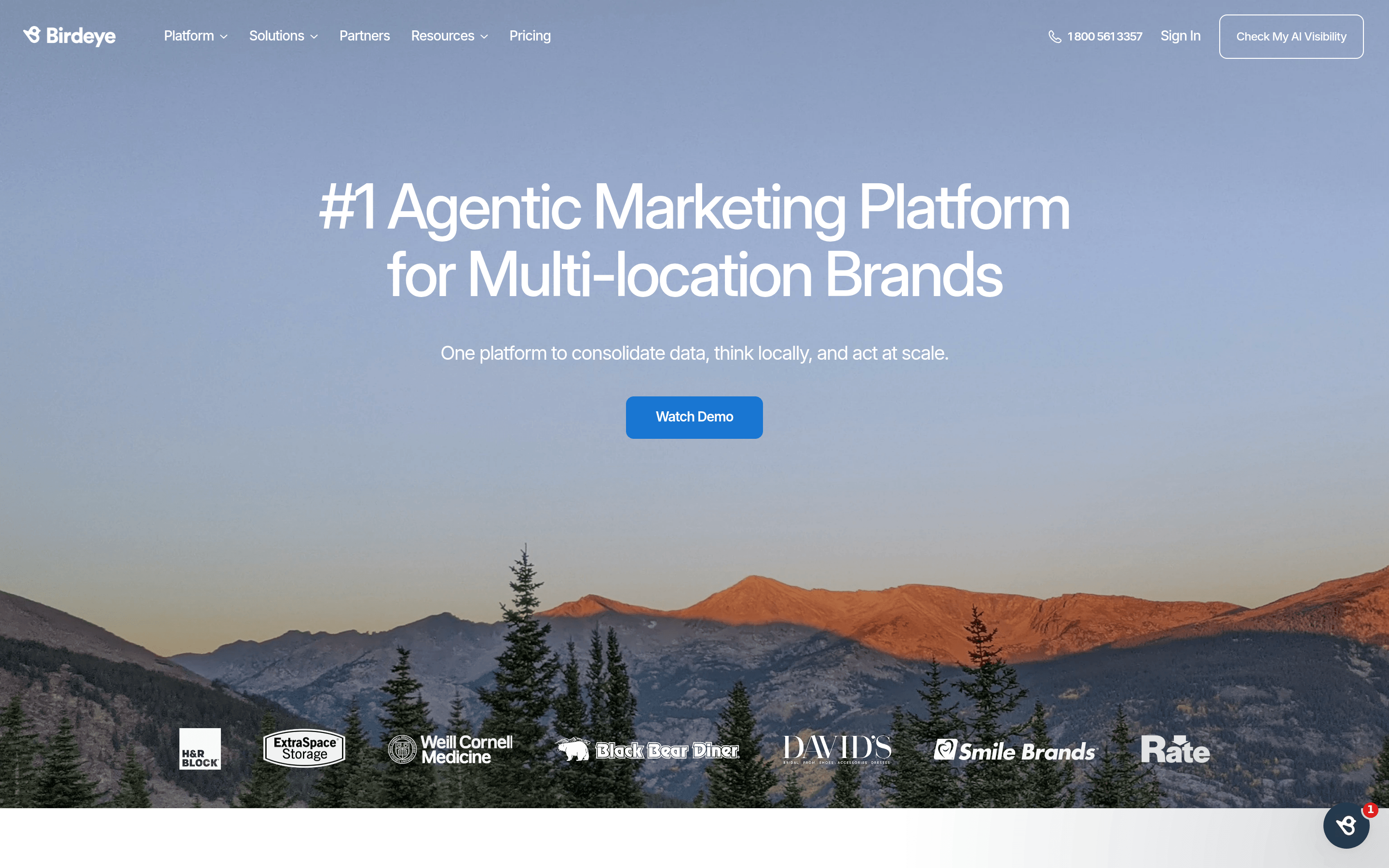
Birdeye is not a replacement for rank tracking or technical local SEO, but it addresses a major performance lever that many SEO stacks underweight: reputation operations. Review monitoring, review generation, response workflows, and messaging all influence conversion behavior, and strong review management can reinforce local prominence signals over time.
This makes Birdeye especially relevant for multi-location brands with governance needs. Once dozens or hundreds of locations are involved, the challenge is no longer collecting reviews occasionally but enforcing process, permissions, and reporting consistency across the business.
Key features:
- Review monitoring and response workflows
- Review generation campaigns through email or SMS
- Centralized inbox and messaging features
- Location-level reputation reporting
- Integrations with CRM and business systems
Pricing: Contact for pricing
Ideal for: Multi-location brands and agencies that need scalable reputation management and review operations.
Why it stands out: Birdeye is built for reputation management at scale, where process control matters as much as review volume.
How We Chose the Best Local SEO Tools
We evaluated these platforms against the jobs local SEO teams actually need to complete: measuring local pack and organic rankings, managing listings, handling citations, monitoring reviews, and producing reporting that stakeholders can trust. A local SEO tool only makes this list if it adds clear value to agency workflows or in-house marketing operations rather than duplicating generic SEO software.
Proof of impact ranked first because agencies need before-and-after reporting that clients can understand. Tools that support grid comparison, local rank tracking, white-label reporting, and historical retention are easier to defend in performance reviews than tools that only show isolated ranking snapshots. Operational fit also mattered heavily because multi-client execution breaks weak software quickly — permissions, templates, exports, API availability, and multi-location scalability determine whether a platform can support real delivery, not just demos.
Pricing models vary widely across local SEO software, so buyers should confirm whether billing is per location, per seat, per keyword, per scan, or per credit. That detail affects margin planning directly, especially for agencies packaging listings distribution, review management, or geo-grid tracking into retainers. You should also verify country coverage, white-label limits, data freshness, and onboarding support before committing — a tool can look strong in a feature matrix and still fail your process if directory coverage is weak in your market or if the API is too limited for custom dashboards.
FAQs
What are the best local SEO tools for agencies?
For agencies, prioritize tools with multi-client workflows, white-label reporting, and defensible local pack measurement. Rankability is a strong agency-first option for local intent pages plus grid, organic, and AI visibility tracking. BrightLocal is a solid all-in-one alternative for audits, citations, and recurring client reporting.
What is the best tool for tracking Google Maps rankings?
A geo-grid tracker is typically best because it shows visibility across the service area, not just one point. Local Falcon is a dedicated grid tracker, while Rankability includes local grid tracking plus before-and-after grid comparison and white-label reporting.
Do I need a listings management tool for local SEO?
If you manage multiple locations, see inconsistent NAP data, or deal with duplicates, a listings tool can save significant time and reduce errors. Moz Local and Semrush Local are common choices, but directory coverage varies by country and plan.
How much do local SEO tools cost per month?
Pricing commonly ranges from tens of dollars per month for entry-level rank tracking to per-location pricing for listings tools, with reputation platforms often requiring custom quotes. Always confirm whether pricing is per location, per keyword, per credit, or per seat.
What should I look for in a local SEO tool?
Look for reliable local pack and organic tracking (ideally grid-based), listings and citation workflows if needed, review and reputation features, and reporting that matches your stakeholder needs. For agencies, white-label options and API access are major differentiators.
What’s the difference between geo-grid tracking and standard rank tracking?
Standard rank tracking usually measures one location point, while geo-grid tracking shows visibility across a mapped service area. That makes a grid tool like Local Falcon or Rankability better for diagnosing proximity effects and explaining local pack movement to clients.
Conclusion
If you run an agency and need one starting recommendation, begin with Rankability. It is the most complete fit for agencies that need to create local intent pages, measure local pack and organic rankings, track AI visibility across all major AI platforms, and deliver white-label reporting that clearly ties work to ROI.
If you want a broader all-in-one platform for audits, citations, and recurring client reporting, BrightLocal is the safest general recommendation. If your team already relies on Semrush, Semrush Local is the logical consolidation play because it keeps local SEO inside the same research and reporting environment. For specialized needs, Whitespark leads on citation building, Local Falcon leads on grid diagnostics, and Birdeye leads on reputation management at scale.
The right choice depends less on feature volume than on the job you need done. Agencies usually benefit most from platforms that prove impact with grid comparison and white-label reporting, while in-house teams often get more value from simpler listings, reputation, or suite-based tools. Choose the platform that matches your reporting obligations before comparing feature lists.