

Content Harmony is a solid content workflow platform for research, content briefs, and planning. When comparing Content Harmony alternatives, most teams are usually looking for deeper content optimization, lower pricing, broader SEO platform coverage, or a simpler editorial workflow.
The right replacement depends on where your bottleneck sits. Some teams need stronger page-level optimization and content score feedback, while others need better content strategy, AI writing, reporting, or collaboration across agency teams and in-house SEO teams.
If you mainly use Content Harmony for briefs, one type of tool will fit best. If you need an all-in-one platform for content research, optimization workflow, rank tracking, and reporting, the shortlist changes quickly.
Quick Picks
If you want the fastest shortlist, start here.
- Best overall for content planning: Rankability
- Best for on-page optimization: Surfer SEO
- Best for AI-assisted briefs and drafting: Frase
- Best for enterprise content strategy: MarketMuse
- Best for editorial quality and clean optimization: Clearscope
- Best for broader SEO platform value: SE Ranking
What We Looked For
We compared these alternative tools using the criteria that matter most for SEO teams, content marketers, and agencies managing real production workflows.
- Brief quality: We looked at how well each tool supports content briefs, search intent analysis, competitor outlines, and practical direction for writers.
- SERP coverage: We considered how each platform handles SERP analysis, competitor insights, and whether it reflects current search behavior across Google and, in some cases, AI search.
- Optimization workflow: We checked for content optimization depth, content grading, term recommendations, optimization score feedback, and support for updating existing pages.
- Team usability: We reviewed how easy each platform is for agency teams, small teams, editors, and in-house SEO teams to adopt without slowing down production.
- Reporting and collaboration: We prioritized tools that make collaboration easier through sharing, exports, reporting, integrations, or workflow support for multiple stakeholders.
- Pricing clarity: We noted whether pricing is transparent, whether a starting price is available, and whether the tool offers clear value for the budget.
Comparison Table
Here is a quick comparison table before the full reviews.
| Tool | Best for | Starting price* | AI & Search Coverage | Notes |
|---|---|---|---|---|
| Rankability Copywriter | Agencies needing planning, optimization, and reporting | $49/mo* | Google and AI search tracking across multiple platforms | Built as the agency SEO workflow for Google and AI search |
| Surfer SEO | Optimization-first teams | See website | Traditional and AI-driven search visibility workflow | Strong for live content editing and SERP-driven recommendations |
| Frase | AI briefs and drafting | $49/month | Google and 8 AI platforms | Good mix of content brief generator, AI writing, and optimization |
| MarketMuse | Enterprise content strategy | See website | Search-focused strategy and topic modeling | Strong for topic clusters, content gaps, and prioritization |
| Clearscope | Editorial teams and clean optimization | $129/month | Google and AI chatbot visibility | Premium but very writer-friendly |
| SE Ranking | Broader SEO platform value | See website | Traditional SEO plus AI visibility support | Useful if you also need site audit and rank tracking |
| Scalenut | AI-heavy production workflows | See website | AI visibility tracking and SEO optimization | Good for speed-focused teams using AI writing |
| Dashword | Simple optimization and brief support | $99/month | Search-focused optimization and monitoring | Lightweight workflow with competitor insights |
*Pricing can change over time, so verify the current starting price and plan limits on each vendor website.
Best Content Harmony Alternatives Reviewed
1. Rankability Copywriter
Why it's a strong Content Harmony alternative: Rankability is the best overall pick if you want a direct replacement that goes beyond content planning into execution and proof. It gives agencies a repeatable content workflow to research, write, optimize, and track client content performance across Google and AI search.
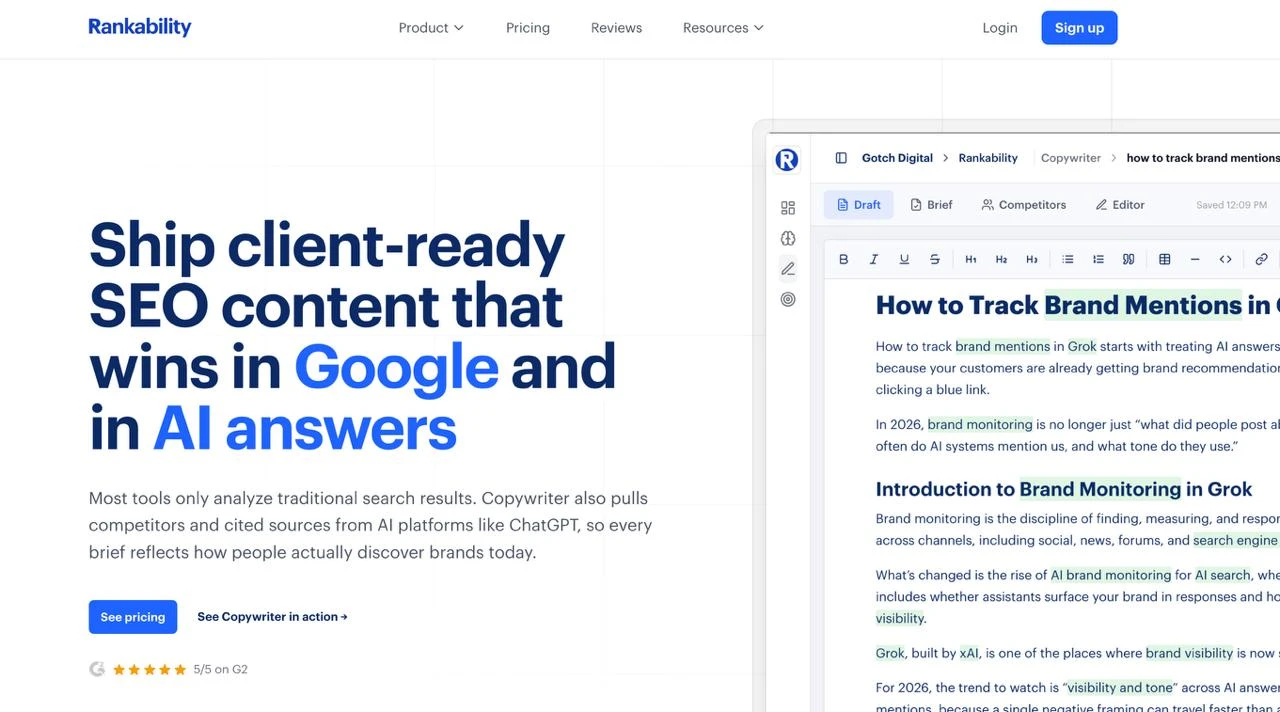
It stands out because the platform is built exclusively for SEO agencies rather than general content teams. That makes it especially useful when you want to move from keyword research and content briefs into optimization, revisions, reporting, and client-facing workflows without switching between separate tools like Semrush, Conductor, or standalone editors.
Best for: Agencies and SEO teams that need a balanced mix of planning, optimization, and workflow speed.
Standout features:
- Researcher for multi-source keyword discovery, competitor gap analysis, and keyword pipeline building
- Copywriter for AI- and Google-informed briefs and drafts grounded in client knowledge bases
- Optimizer with content score guidance and prioritized checklists based on real competitors
- Reporter and Advisor for visibility tracking, weekly plans, and client-specific recommendations
Practical note: Choose Rankability if you want the closest all-around replacement for Content Harmony but need stronger execution after the brief. It is especially practical for agency teams managing multiple clients and needing white label reporting, API access, and a single workflow.
2. Surfer SEO
Why it's a strong Content Harmony alternative: Surfer SEO is a strong option if your main reason for switching is deeper on-page optimization. It is widely used for live editing, SEO recommendations, and content score feedback that helps writers improve pages while they work.

Compared with Content Harmony, Surfer SEO is less centered on research-heavy brief creation and more focused on page-level optimization. That makes it appealing when your team already has a briefing process and wants sharper SERP-driven recommendations inside the content editor.
Best for: Teams focused on content optimization after the brief is approved.
Standout features:
- Content editor with live content score and term recommendations
- SERP analyzer for competitor-based optimization insights
- Audit workflows for improving existing pages
- Coverage for traditional search and AI-driven search environments
Why teams choose it: Surfer SEO is often easier to justify when optimization is the core use case. If your biggest need is improving drafts and published pages, it can be a better fit than a planning-first platform.
3. Frase
Why it's a strong Content Harmony alternative: Frase is a practical choice for smaller teams that want content research, AI briefs, drafting, and optimization in one interface. It helps reduce manual research time by analyzing top competitors and turning that input into usable content briefs quickly.
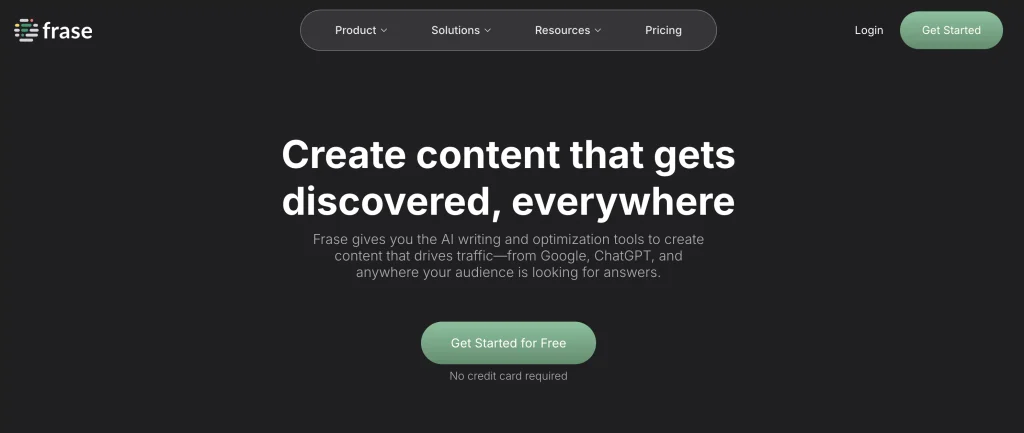
It is usually chosen for speed and ease of use rather than deep strategic modeling. If you need a content brief generator with AI writing support and enough SEO optimization to keep production moving, Frase covers a lot without feeling too heavy.
Best for: Solo marketers, lean content teams, and agencies producing briefs at scale.
Standout features:
- AI brief generation based on top competitor analysis
- Question and topic extraction for search intent coverage
- Content editor with real-time SEO and GEO scoring
- AI writing, site audits, publishing tools, and visibility tracking
User reviews angle: Frase tends to appeal to teams that want to cut research time and speed up draft creation. More advanced SEO teams may still want a separate strategy layer for deeper content planning and portfolio decisions.
4. MarketMuse
Why it's a strong Content Harmony alternative: MarketMuse is the enterprise-leaning choice for larger teams managing a broad content library. Its strength is not just building individual briefs, but identifying content gaps, topic clusters, and authority opportunities across a full site.
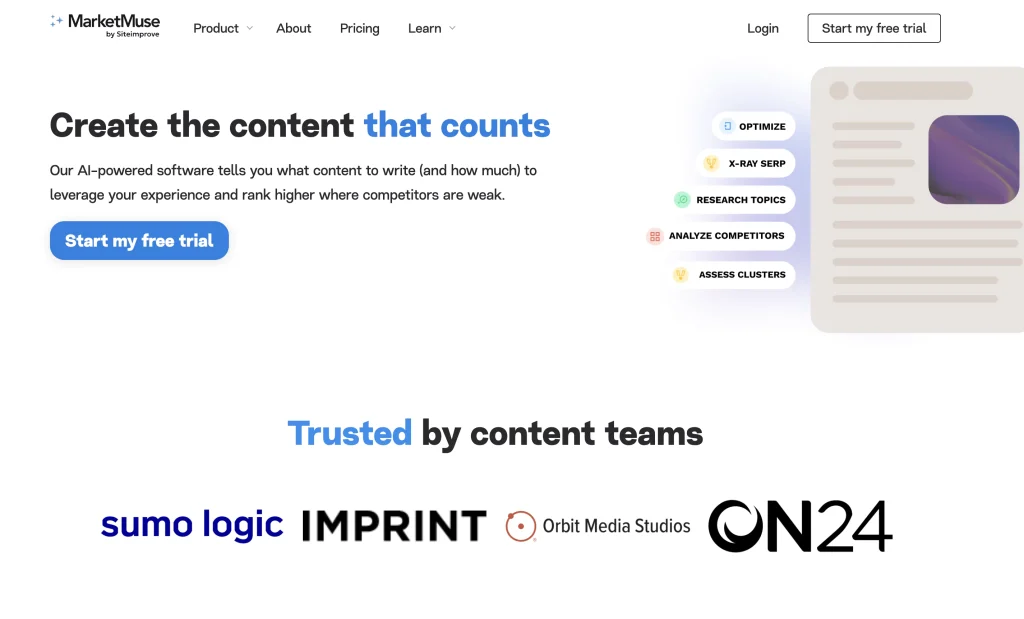
That makes it a different kind of replacement from Content Harmony. If your priority is long-term content strategy, portfolio planning, and deciding what to update or create next, MarketMuse offers more strategic depth than most page-focused tools.
Best for: In-house teams managing large content libraries and long-term authority building.
Standout features:
- Content inventory analysis to find quick wins and gaps
- Topic modeling and topic authority planning
- Competitor content gap analysis
- Personalized difficulty scoring and prioritization support
What to expect: MarketMuse usually asks for more time to learn and is often a higher-cost option. The upside is stronger strategic value for mature teams that need planning at scale rather than only page-level optimization.
5. Clearscope
Why it's a strong Content Harmony alternative: Clearscope is a strong fit when you care most about editorial quality and a clean optimization workflow. It is premium priced, but many teams value how easy it is for writers and editors to use consistently.
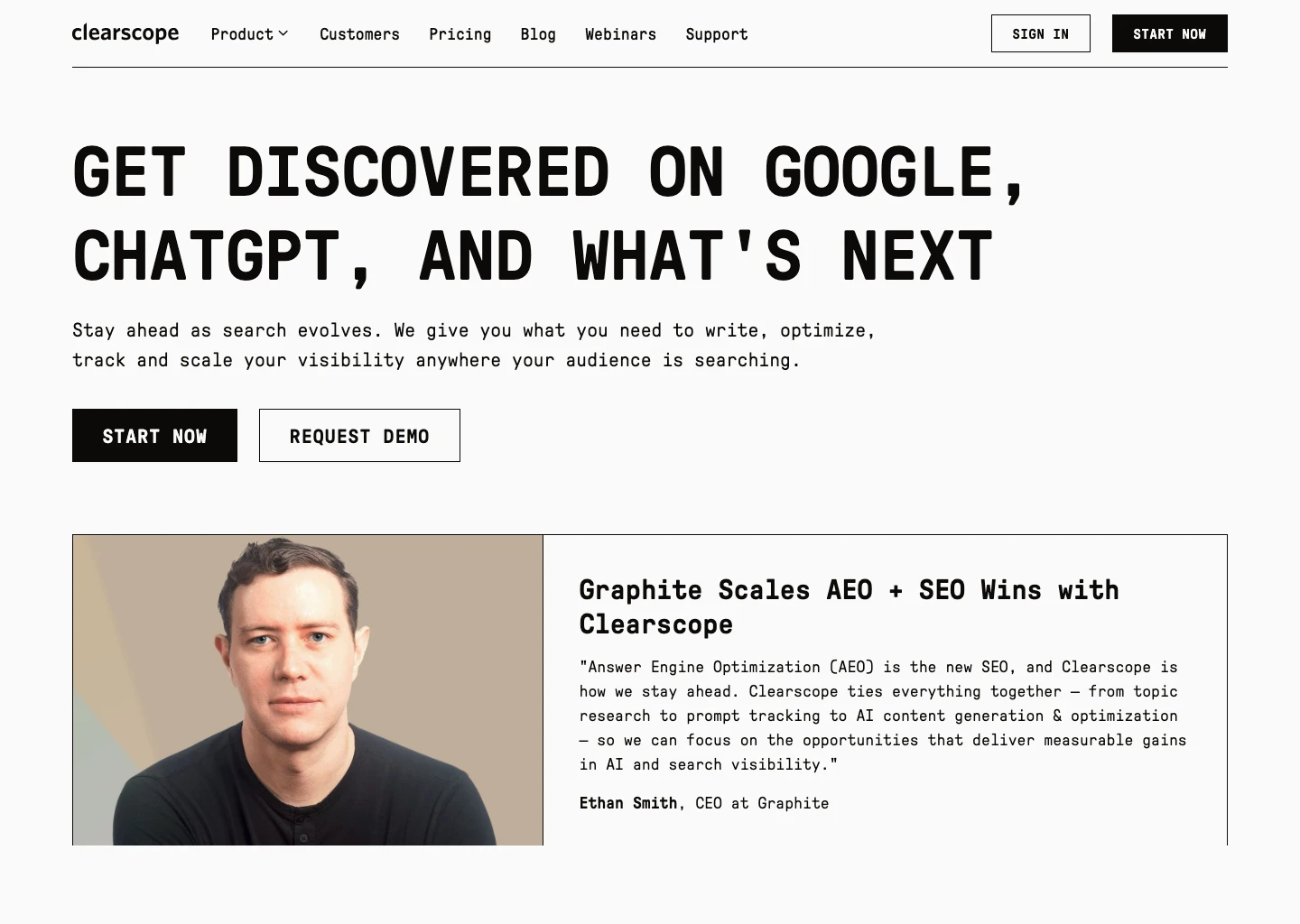
Compared with broader content marketing tools, Clearscope stays focused on readable optimization guidance. That simplicity can be a real advantage when SEO teams need adoption from editors who do not want a cluttered interface.
Best for: Editorial teams that want polished optimization guidance without a cluttered UI.
Standout features:
- Content grading and term recommendations in a clean content editor
- Deep search intent analysis and topic exploration
- Collaboration tools with unlimited sharing and exporting
- Visibility tracking across Google and AI platforms
Reporting note: Clearscope works well when SEO and editorial teams need a shared system that people will actually open and use. It is not the broadest SEO platform, but its workflow is easy to maintain.
6. SE Ranking
Why it's a strong Content Harmony alternative: SE Ranking is a broader SEO platform alternative for teams that want more than content planning. It combines content tools with keyword research, rank tracking, and site audit capabilities, which can reduce the need for extra subscriptions.

It is less specialized in content briefs than platforms built around briefing and optimization alone. Still, it offers strong value if your team wants one place for core SEO work instead of stacking multiple tools.
Best for: Teams wanting one subscription for content and core SEO tasks.
Standout features:
- Rank tracking for ongoing visibility measurement
- Keyword research tools for planning and discovery
- Content features within a broader SEO workflow
- Site audit capabilities for technical and content support
Budget note: SE Ranking can be cost-effective for small teams and agencies that care about value. If you need an all-in-one platform more than a dedicated optimizer, it deserves a close look.
7. Scalenut
Why it's a strong Content Harmony alternative: Scalenut is built for teams that want AI-heavy content workflows alongside optimization support. It is designed to help you plan, create, optimize, and track content while also monitoring AI visibility and prompt coverage.

Its appeal is speed. If your team is trying to increase output with AI writing and topic support, Scalenut can streamline production more than a manual briefing-first workflow.
Best for: Teams prioritizing AI-assisted production and optimization in one platform.
Standout features:
- AI writing workflows with built-in article creation support
- SEO content editor and GEO scoring
- Topic clustering support and keyword planning
- AI visibility tracking, content audit, and backlink-related tools
When it's the right fit: Scalenut makes sense when content velocity matters more than highly manual brief building. You should still review output carefully, especially if editorial quality is a top priority.
8. Dashword
Why it's a strong Content Harmony alternative: Dashword is a lighter-weight option for teams that want straightforward content brief support and optimization without a complex setup. It is especially appealing for freelancers, small teams, and marketers who want to move fast.
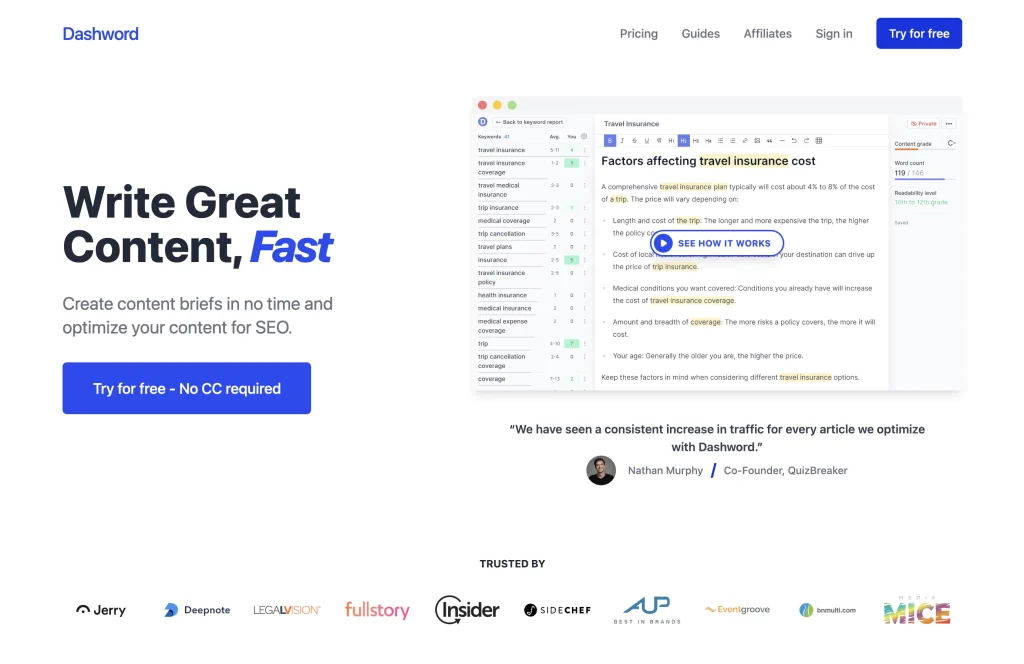
Compared with heavier platforms, Dashword keeps the workflow simple. You can build briefs from competitor outlines, optimize content in real time, and monitor performance without a steep learning curve.
Best for: Freelancers, small teams, and marketers who want a clean optimization workflow.
Standout features:
- Content Brief Builder using competitor outlines and research
- Real-time optimization scoring with keyword, FAQ, and topic suggestions
- Content monitoring with traffic alerts and keyword reports
- Google Docs add-on plus higher-tier API and SSO options
Consider if you value: Dashword is a good pick if you want simplicity and lower-friction adoption. It is less suited to enterprise teams that need deeper content strategy, advanced reporting, or broad SEO platform coverage.
How to Choose the Right Content Harmony Alternative
Use your workflow bottleneck as the decision point.
If you want the closest all-around replacement for content planning plus optimization, choose Rankability. If your main need is on-page optimization and live scoring, choose Surfer SEO or Clearscope.
If you want AI briefs and drafting help, choose Frase or Scalenut. If you want a broader SEO platform with rank tracking, keyword research, and site audit features, choose SE Ranking.
If you manage a large content library and care about topic authority, content gap analysis, and long-range planning, choose MarketMuse. If you want a simpler content workflow with brief support and optimization recommendations, Dashword is a practical fit.
Match the tool to the part of the workflow that slows your team down most. More features do not always mean more value if they do not solve your actual process problem.
What If You Used Content Harmony for Content Optimization Instead?
If you mainly used Content Harmony to improve existing pages rather than build content briefs, a dedicated optimizer may be the better replacement. Surfer SEO, Clearscope, and Dashword are usually stronger fits for teams that care most about optimization score feedback, term recommendations, and editor-friendly page updates.
If your use case was more strategic and planning-focused, the answer changes. Rankability is stronger when you want planning, optimization, and reporting in one system, while MarketMuse is better suited to larger teams making content strategy decisions across many pages.
Conclusion
Content Harmony remains a credible option for planning and briefing, but it is not the best fit for every workflow. Some teams need deeper content optimization, some need AI writing, and others need a broader SEO platform that also covers reporting, site health, or collaboration.
Rankability is the top overall alternative because it gives you a repeatable, end-to-end workflow from research and briefs to optimization and proof across Google and AI search. It is especially strong for agencies that want fewer tool handoffs and a more consistent process.
Surfer SEO, Frase, MarketMuse, Clearscope, SE Ranking, Scalenut, and Dashword each win in narrower situations. The best next step is to shortlist two or three tools based on workflow, pricing, and how your team actually creates SEO content day to day.
Need Better Briefs Without Extra Workflow Drag?
If Content Harmony feels too briefing-heavy for the way your agency actually ships work, compare Rankability pricing with our broader breakdown of the best SEO tools for agencies. If your main bottleneck is optimization after the brief, this guide to the best SEO content optimization tools is the better next step.
FAQs
Is There a Better Alternative to Content Harmony?
Yes, depending on what you need most. Rankability is the best overall alternative for balanced planning and optimization, while Surfer SEO, Frase, and MarketMuse are stronger for specific use cases.
Which Content Harmony Alternative Is Best for Agencies?
Rankability is the strongest fit for many agencies because it combines research, briefs, optimization, reporting, and AI search tracking in one workflow. Frase and SE Ranking are also solid options if you need lower-cost production or broader SEO coverage.
What Tool Is Best for Content Briefs and Optimization?
Rankability is the best all-around option for both content briefs and content optimization. If optimization matters more than briefing depth, Surfer SEO or Clearscope may be a better fit.
Are There More Affordable Alternatives to Content Harmony?
Often yes, depending on plan limits and team size. Frase, Dashword, and SE Ranking are commonly considered more budget-friendly options, but you should compare current pricing and usage caps directly.
Do Any Content Harmony Alternatives Include AI Writing?
Yes. Frase and Scalenut are the clearest options if you want AI writing built into the content workflow, and Rankability also includes AI- and Google-informed briefs and drafts for agency use.