

MarketMuse is a mature platform for content strategy, topic modeling, content inventory, and optimization. It has earned a strong place in enterprise SEO and content operations because it helps teams plan coverage, identify gaps, and improve topic depth across large sites.
If you are comparing MarketMuse alternatives, the usual reason is not that MarketMuse is weak. It is that your team may need a different workflow fit, a lower starting price, easier content briefs, faster draft optimization, simpler collaboration, or better value for a smaller in-house team or agency workflow.
This guide compares eight practical options for different use cases. Instead of forcing a single winner for everyone, it focuses on which tool makes the most sense based on how you actually produce SEO content, manage drafts, and run your content workflow.
Quick Picks
If you want the short version, start here. These picks reflect different priorities rather than a single universal choice.
- Best overall for content optimization: Rankability
- Best for content briefs and editorial workflow: Content Harmony
- Best for simple on-page optimization: Clearscope
- Best for fast AI-assisted drafting and optimization: Frase
- Best for budget-conscious users: WriterZen
- Best for agencies choosing between enterprise-style options: MarketMuse
What We Looked For in MarketMuse Alternatives
A good alternative should help you publish better content faster, not just give you more dashboards. These were the buying criteria that matter most in real SEO workflow decisions.
Evaluation Criteria
- Content optimization quality: How useful the content scoring, NLP guidance, topic coverage, and term recommendations are when writers are working inside real drafts.
- Brief creation and research: Whether the platform helps you build content briefs, outlines, SERP analysis, and content requirements without heavy manual competitor research.
- Workflow and collaboration: How well the tool supports writers, editors, strategists, approvals, and repeatable editorial workflow across content teams.
- AI and search coverage: Whether AI writing or AI content generation features are paired with search intent, ranking pages, and SERP-driven recommendations.
- Pricing and scalability: How accessible the starting price is, plus whether the value for money still holds as usage, seats, or clients grow.
- Ease of adoption: How quickly your team can start using the platform without a steep learning curve or long team adoption period.
MarketMuse Alternatives Comparison Table
The table below gives you a quick comparison snapshot before the detailed listings. It is meant to narrow your shortlist, not replace hands-on testing.
| Tool | Best for | Starting price* | AI & Search Coverage | Notes |
|---|---|---|---|---|
| Rankability Copywriter | Agencies and teams that want an end-to-end optimization workflow | $199/month | Strong SEO and AI search coverage with research, optimization, reporting, and tracking | Best overall for execution-focused teams |
| Content Harmony | Brief creation and structured editorial workflow | See website | Strong research, search intent, competitor research, and content grading | Excellent for content briefs and collaboration |
| Clearscope | Simple on-page optimization for writers and editors | $129/month | Strong optimization, topic exploration, AI drafting, and content tracking | Clean writer experience with low friction |
| Frase | Fast AI writing plus optimization | $49/month | Strong AI writing, SERP research, optimization, and AI visibility tracking | Good fit for speed and volume |
| Surfer SEO | SEO-led teams focused on SERP-driven optimization | See website | Strong optimization and AI search workflow positioning | Widely used Content Editor workflow |
| Semrush SEO Writing Assistant | Teams already using Semrush | See website | Moderate to strong coverage inside a broader SEO stack | Best when consolidation matters |
| Dashword | Lean teams that want a simpler optimization workflow | $99/month | Good brief builder, optimization, monitoring, and AI Writer support | Easy to adopt and collaboration-friendly |
| WriterZen | Budget-conscious users needing research plus planning | $75 one-time for Keyword Research | Good keyword research, topic discovery, clustering, and AI support | Value-oriented option for smaller teams |
\*Pricing can change. Verify current plans, limits, and free trial availability on each vendor site before purchase.
The Best MarketMuse Alternatives
1. Rankability Copywriter
Why it's a strong MarketMuse alternative: Rankability is the best overall choice if you want practical content optimization tied closely to rankings, execution speed, and agency workflow. It gives you a repeatable path from keyword research and brief creation to optimization, reporting, and AI search tracking, without the heavier feel that some enterprise SEO platforms bring.
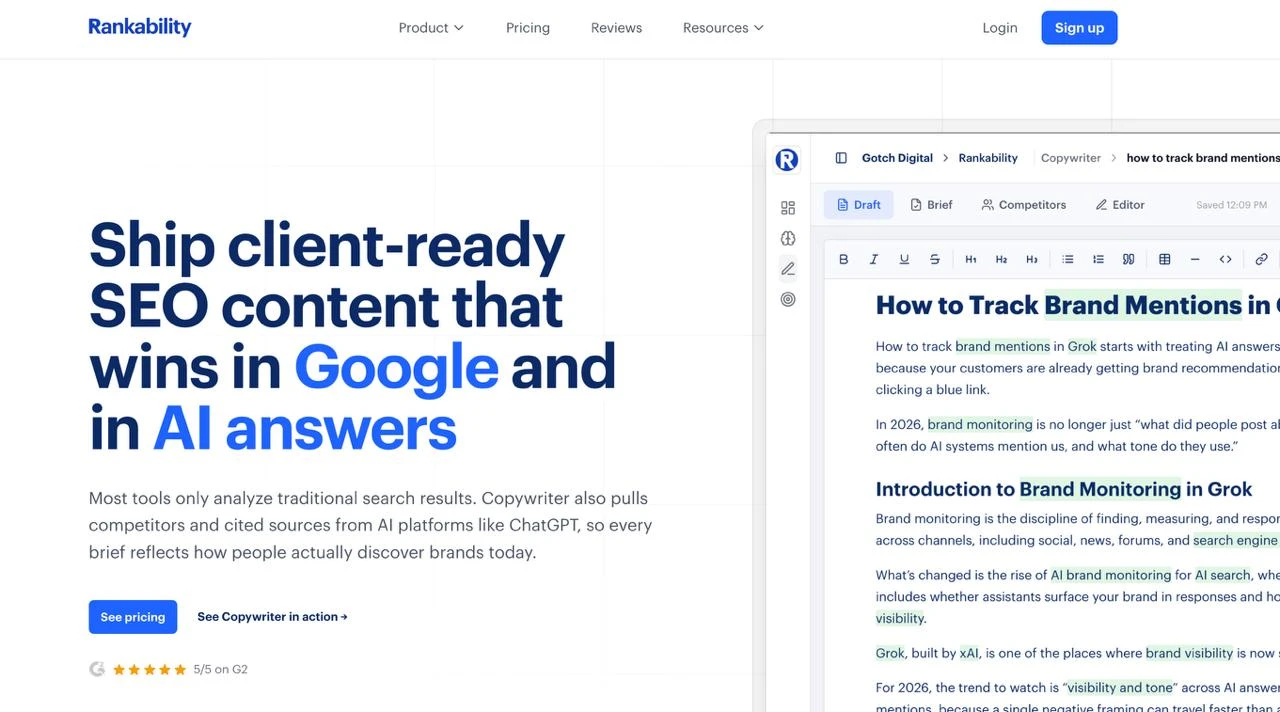
It is especially strong if your team cares about what to do next, not just what topics exist. The platform combines multi-source keyword research, competitor gap analysis, AI- and Google-powered briefs, content scoring against ranking pages, and visibility tracking across traditional search and AI platforms like ChatGPT and Gemini.
Best for: Agencies, consultants, freelancers, and in-house teams that want actionable content optimization without enterprise complexity.
Standout features:
- Researcher for keyword research, keyword clustering, and competitor research with client-ready exports
- Copywriter for AI-supported content briefs and drafting grounded in client knowledge bases
- Optimizer with content scoring against competitors and prioritized optimization recommendations
- Reporter and Advisor for white label reporting, AI visibility tracking, and weekly next-step planning
Practical note: Rankability is the strongest place for most readers to start because it balances optimization depth, workflow fit, and reporting well. If your top need is deep content inventory management or broader strategic modeling across a very large enterprise site, MarketMuse may still hold an edge there.
2. Content Harmony
Why it's a strong MarketMuse alternative: Content Harmony stands out when your bottleneck is planning rather than polishing. If your writers lose time because briefs are inconsistent, competitor analysis is manual, or stakeholders need a clearer process, this platform can tighten the entire editorial workflow.
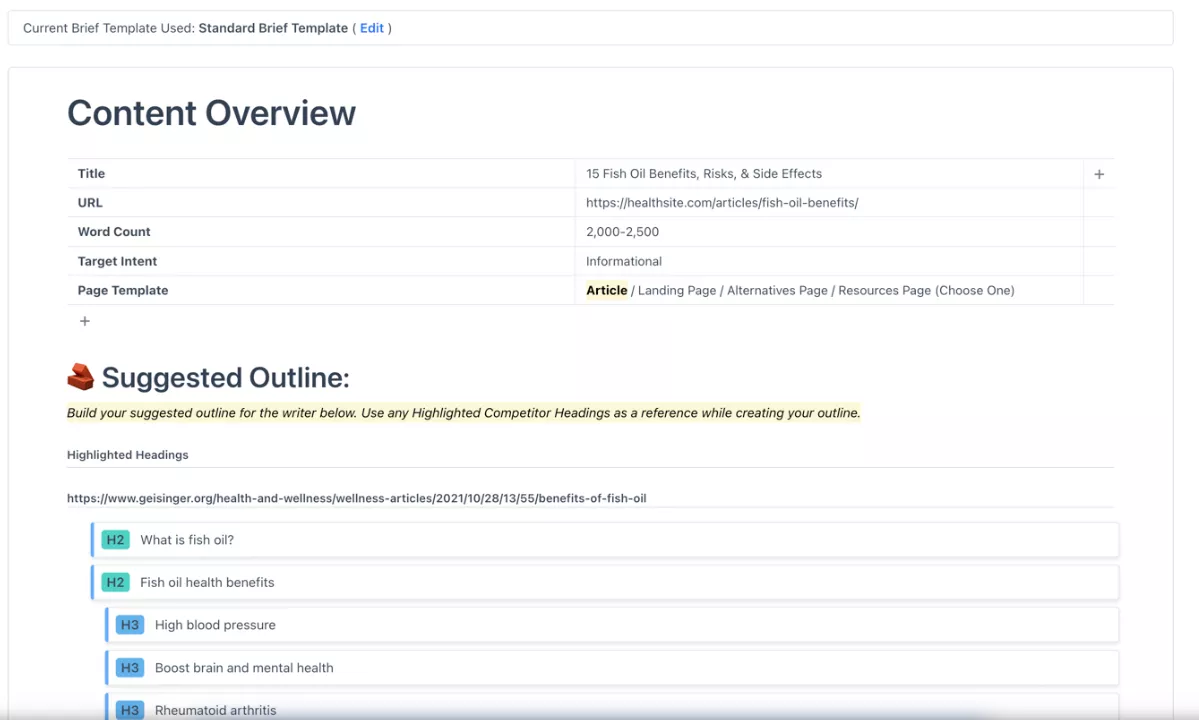
Its biggest strength is how it structures research before drafting starts. You get keyword research, competitor content structure analysis, search intent evaluation, authoritative source inputs, and standardized brief builder outputs that reduce guesswork for writers and editors.
Best for: Agencies and content teams that produce many content briefs and need a repeatable workflow.
Standout features:
- Robust brief builder with standardized, shareable content briefs
- SERP analysis, competitor research, and search intent support
- AI-driven content grading for topic comprehensiveness
- Content requirements that can include structure, sources, and visual guidance
Why teams choose it: Content Harmony is often the better fit when planning quality has a bigger impact than editor scoring alone. If you used MarketMuse heavily for content planning and briefing, this is one of the first tools to test.
3. Clearscope
Why it's a strong MarketMuse alternative: Clearscope is a focused option for teams that want reliable on-page optimization with very little friction. It is often favored by writers and editors who want a polished Content Editor, clear content grade feedback, and straightforward term recommendations without a crowded interface.
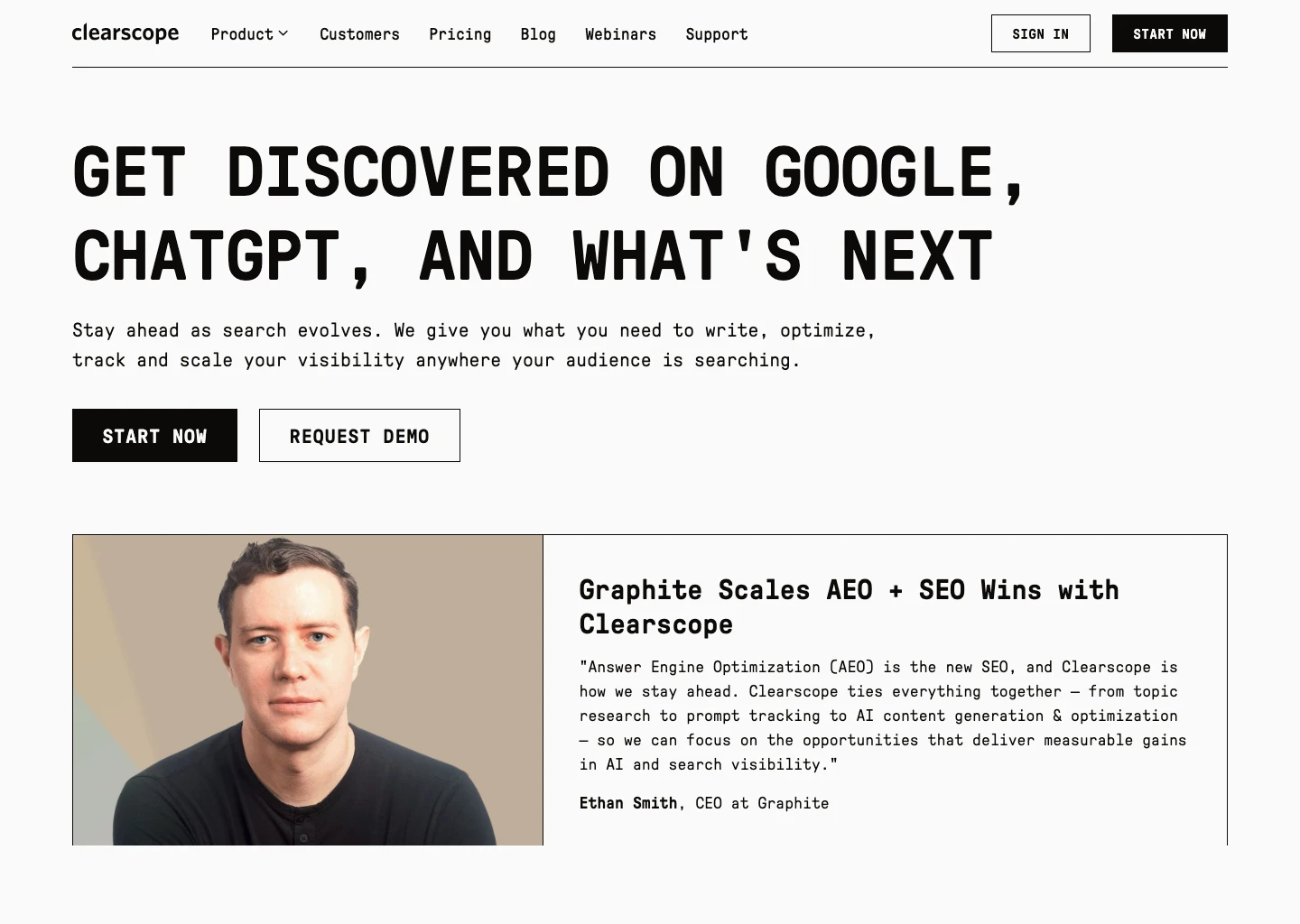
The platform also extends beyond single drafts with topic exploration, search intent analysis, content inventory support, and published content tracking. That makes it a solid fit if you want usability first, while still keeping enough depth for ongoing optimization workflow and content refresh work.
Best for: Teams that want straightforward on-page optimization and a polished writer experience.
Standout features:
- Clear content grade and optimization recommendations inside the editor
- Easy-to-read term recommendations and topic coverage guidance
- AI drafting and editing support to speed up production
- Content inventory and content performance monitoring for published content
User reviews angle: Clearscope is widely liked for ease of use and a low learning curve. It is not always the cheapest option, but many teams accept that trade because adoption tends to be simple.
4. Frase
Why it's a strong MarketMuse alternative: Frase is a practical fit for teams that want research, outlines, AI writing, optimization, and tracking in one place. It is especially useful when speed matters, production volume is high, and you want fewer handoffs between research and drafting.

The platform combines SERP research, competitor analysis, question research, content gap analysis, AI Agent workflows, and real-time SEO and GEO scoring. For smaller teams, freelancers, or marketers who need to move quickly, that all-in-one setup can be easier to manage than a heavier content strategy platform.
Best for: Small teams, freelancers, and marketers who want AI-assisted drafting plus optimization.
Standout features:
- AI Agent for research, AI content generation, optimization, and publishing tasks
- SERP-based brief and outline builder workflows
- Real-time content scoring with topic suggestions
- AI visibility tracking across Google and multiple AI platforms
What to expect: Frase can be faster to work with than more strategy-heavy platforms. You still need editorial judgment, especially when using AI-generated drafts for pages that need strong brand voice or subject matter accuracy.
5. Surfer SEO
Why it's a strong MarketMuse alternative: Surfer SEO is one of the most common alternatives for teams that want SERP-driven recommendations and a familiar optimization workflow. It is built for execution, iteration, and side-by-side comparisons across pages, which makes it useful for SEO-led teams and agencies managing many drafts.

Its appeal comes from a data-driven Content Editor, optimization guidance tied to search results, and a broader focus on visibility across both traditional and AI-driven search environments. It also benefits from a large user base and educational ecosystem, which can help with onboarding.
Best for: SEO-led teams that want optimization guidance tied closely to SERP analysis.
Standout features:
- Content Editor with content scoring and optimization recommendations
- SERP analyzer inputs and topical term guidance
- Support for content audits and refresh workflows
- AI search positioning and educational resources through Surfer Academy
Reporting note: Surfer SEO is easy to standardize across multiple pages and clients, which helps agencies compare drafts consistently. If your team likes process discipline and repeatable checks, it is a sensible shortlist option.
6. Semrush SEO Writing Assistant
Why it's a strong MarketMuse alternative: Semrush SEO Writing Assistant makes the most sense when you already use Semrush for keyword research, SEO reporting, audits, and content marketing planning. The value is not only in the writing assistant itself, but also in keeping your optimization workflow inside a broader SEO stack.

That matters for teams that do not want another dedicated optimization tool to manage. If your keyword targets, reporting, and competitor analysis already live in Semrush, using SEO Writing Assistant can keep research and execution closer together.
Best for: Teams already invested in Semrush for keyword research, audits, and SEO reporting.
Standout features:
- SEO Writing Assistant for real-time scoring and optimization feedback
- Integration with broader Semrush keyword research and content marketing tools
- Readability and originality checks
- Practical workflow fit inside an established SEO platform
Budget note: This can be cost-effective if Semrush is already part of your stack. If you only need a dedicated optimization tool with a stronger editor experience, other options may deliver better value for money.
7. Dashword
Why it's a strong MarketMuse alternative: Dashword is a simpler, more focused option for teams that want actionable optimization data without feature overload. It combines brief creation, content scoring, monitoring, and collaboration in a way that feels approachable for smaller teams.

It also supports both new content and legacy content work, which matters if your SEO workflow includes regular content refresh projects. The platform's Content Brief Builder, automated reports, AI Writer, and content monitoring make it useful for lean teams that need practical outputs more than deep enterprise SEO layers.
Best for: Lean content teams that want an easy content optimization workflow.
Standout features:
- Content Brief Builder using competitor outlines and research inputs
- Real-time optimization with keyword, FAQ, and topic suggestions
- Content monitoring with rank tracking, traffic trend alerts, and automated page import
- Collaboration features such as multi-user seats, bulk reports, API access, and SSO on higher plans
When it's the right fit: Dashword works well when ease of use and fast team adoption matter more than advanced strategic modeling. It is a strong middle ground for teams that want optimization plus maintenance support.
8. WriterZen
Why it's a strong MarketMuse alternative: WriterZen is a good fit for marketers who want keyword research, topic discovery, keyword clustering, and content creation support in one platform at a more accessible entry point. It bridges research and production well for smaller teams that need broader planning help, not just a premium editor.

Its strengths are especially clear if you are still building topical authority across topic clusters and need a Keyword Research Tool plus writing support in one place. That makes it appealing for budget-conscious users who want to connect content planning with execution.
Best for: Budget-conscious marketers who need both keyword discovery and content planning support.
Standout features:
- Topic Discovery, Keyword Explorer, and Keyword Planner for content strategy
- Content Creator for researching and building articles
- AI Assistant for drafting support
- Team collaboration, Domain Analysis, and a plagiarism checker
Consider if you value: WriterZen is worth a look if keyword ideation and topic clusters matter as much as draft optimization. It is less of a pure premium optimization editor, but it offers broad utility for smaller content teams.
How to Choose the Right MarketMuse Alternative
The right choice depends on what you used MarketMuse for most often. If your goal is to self-select quickly, use this need-based shortlist.
Need-Based Shortlist
If you want the best overall balance of optimization guidance, reporting, and usability, start with Rankability. It is especially strong for agencies and teams that need one workflow for research, briefs, optimization, content refresh work, and proof of performance.
If your main pain point is building detailed content briefs and managing editorial workflow, look at Content Harmony first. It is one of the best fits when planning quality drives output quality.
If you want the cleanest optimization interface for writers and editors, choose Clearscope. It keeps the process simple and makes content scoring easy to act on.
If you need AI drafting plus optimization in one workflow, shortlist Frase. It is a practical option when speed and production volume are central to your process.
If your team is SEO-first and wants SERP-driven recommendations, compare Surfer SEO and Rankability. Both are useful for execution-focused teams, though Rankability adds a broader agency SEO workflow and AI search reporting layer.
If you already pay for a larger SEO suite, Semrush SEO Writing Assistant may be the most practical fit. It is often less about feature depth alone and more about stack consolidation.
If you want a simpler tool with lower friction, review Dashword. If budget and keyword discovery matter most, consider WriterZen.
What if You Used MarketMuse for Content Strategy?
Some buyers use MarketMuse less for draft scoring and more for content strategy, content planning, content inventory management, and site-wide prioritization. In that case, choosing an alternative requires a slightly different lens because not every optimization tool is built to replace strategic planning depth.
How the Recommendation Changes
If strategy and briefing are the priority, move Content Harmony higher on your shortlist. It is one of the closest fits for research-heavy content briefs, search intent work, and repeatable planning workflows.
If optimization and content refreshes drive ROI, keep Rankability, Clearscope, or Surfer SEO near the top. Those tools are stronger when the main goal is improving existing pages, producing better drafts, and creating a repeatable optimization workflow.
If your team needs all-in-one research plus drafting speed, Frase becomes more attractive. If your strategy is tied closely to a broader SEO stack, Semrush can also make sense because keyword research, reporting, and execution stay connected.
No single alternative mirrors every MarketMuse strength in exactly the same way. The smarter buying move is to prioritize the capability you use most, then test whether the editor experience, collaboration model, and reporting fit your team.
Conclusion
MarketMuse remains a credible choice for teams that need mature content strategy and topic modeling. Still, the best alternative depends on whether you care most about optimization depth, content briefs, ease of use, AI writing, collaboration, or budget.
For most readers, Rankability is the best place to start because it gives you a practical end-to-end workflow for research, writing, optimization, reporting, and AI search visibility. Content Harmony is a strong pick for planning-heavy teams, Clearscope is excellent for clean optimization, and Frase stands out when speed and AI-assisted production matter most.
Before you buy, verify current pricing, check plan limits, and test the editor experience with a real article. The right choice is the one that fits your team process, improves content performance, and gets used consistently.
Need Strategy Depth Without MarketMuse Complexity?
If you want enterprise-style strategy without the usual overhead, start with Rankability pricing and then review the wider field of the best SEO tools for agencies. If your decision is still mostly about optimization workflow, the next useful comparison is our roundup of the best SEO content optimization tools.
FAQs
What is the best alternative to MarketMuse?
For most teams, the best starting point is Rankability because it balances optimization guidance, workflow, and reporting well. Content Harmony, Clearscope, and Frase are also strong depending on whether you prioritize briefs, editor simplicity, or AI drafting.
Is there a cheaper alternative to MarketMuse?
Yes. Frase, WriterZen, and often Dashword can offer a lower entry cost than MarketMuse. The tradeoff is that feature depth, content inventory support, and enterprise strategy layers may vary by plan.
Which MarketMuse alternative is best for agencies?
Rankability is the strongest fit for many agencies because it supports research, optimization, reporting, and client workflows in one system. Content Harmony is also a good agency choice when repeatable brief creation and collaboration are the main priorities.
What is the closest tool to MarketMuse?
It depends on your use case. For optimization, Clearscope and Surfer SEO are common comparisons, while Content Harmony is often closer for briefing, planning, and structured workflow support.
Do I still need keyword research if I use a content optimization tool?
Usually, yes. Content optimization improves drafts, topic coverage, and on-page optimization, but keyword research is still needed to choose targets, understand search intent, and prioritize opportunities.