

Our top pick: Rankability. We recommend it as the best overall OtterlyAI alternative for agencies that need content execution, AI search visibility, and client reporting in one workflow.
Publisher disclosure: Rankability publishes this guide and is one of the products compared. The order reflects our editorial recommendation for agency workflows.
OtterlyAI gives teams a quick on-ramp to AI visibility tracking, but many brands outgrow it when they need broader engine coverage (ChatGPT, Perplexity, Gemini, Claude, Google AI Overviews/AI Mode), citation transparency, and agency-grade reporting.
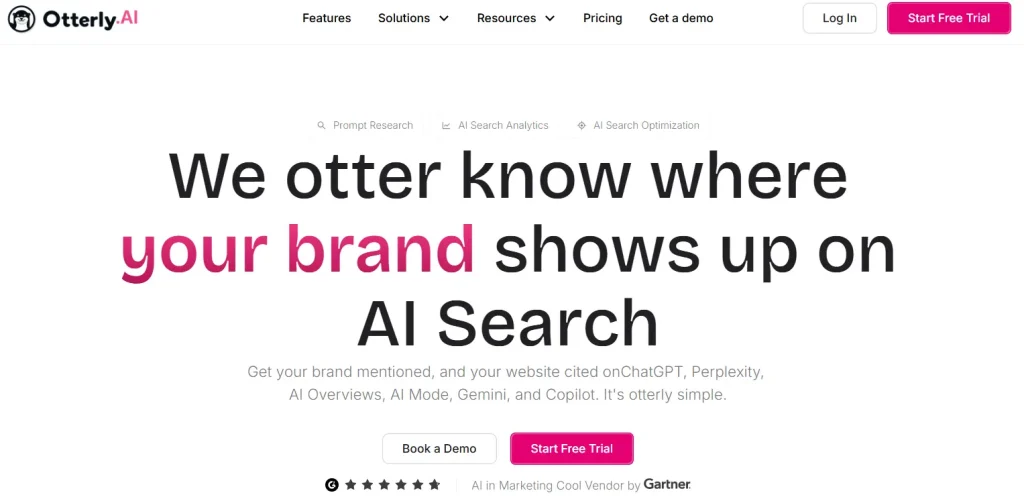
This guide compares seven credible OtterlyAI alternatives across engine coverage, sampling cadence, exportability, and starting price so you can choose the right stack for monitoring and improving brand presence across the top AI search platforms.
Quick Picks (TL;DR)
- Best overall for agencies: Rankability
- Best cross-engine reporting: Peec AI
- Best budget starter: LLMrefs
- Best mid-market analytics depth: AthenaHQ
- Best enterprise optimization stack: Scrunch AI
- Best for SE Ranking users: SE Ranking’s AI Visibility Tracker
- Lowest-cost starter: Rankscale AI
What We Looked For (and why it matters)
- Engine coverage & refresh cadence across ChatGPT, Perplexity, Google (AI Overviews/AI Mode), Gemini, Claude, Copilot, etc.
- Citation fidelity & storage to audit sources and prioritize fixes.
- Actionability & GEO workflows (diagnose → brief → update → re-test) so insights become wins, a hallmark of the best LLM optimization tools for AI visibility.
- Collaboration at scale (seats, RBAC, exports/API, white-label).
- Price-to-value aligned to cadence and prompt volume.
Quick Comparison Table
| Alternative | Best fit | Compare |
|---|---|---|
| 1. Rankability | Best Overall for Agencies | See plans |
| 2. Peec AI | Best cross-engine reporting | Read comparison |
| 3. LLMrefs | Best budget starter | Read comparison |
| 4. AthenaHQ | Best mid-market analytics depth | Read comparison |
| 5. Scrunch AI | Best enterprise optimization stack | Read comparison |
| 6. SE Ranking’s AI Visibility Tracker | Best for SE Ranking users | Read comparison |
| 7. Rankscale AI | Lowest-cost starter | Read comparison |
The 7 Best OtterlyAI Alternatives (in-depth)
1. Rankability — Best Overall for Agencies
Rankability is our #1 OtterlyAI alternative for agencies that need to act on AI visibility findings. It combines tracking with research, content creation, optimization, and client reporting, so your team can move from a missing mention or citation to a page improvement and measure what changes.
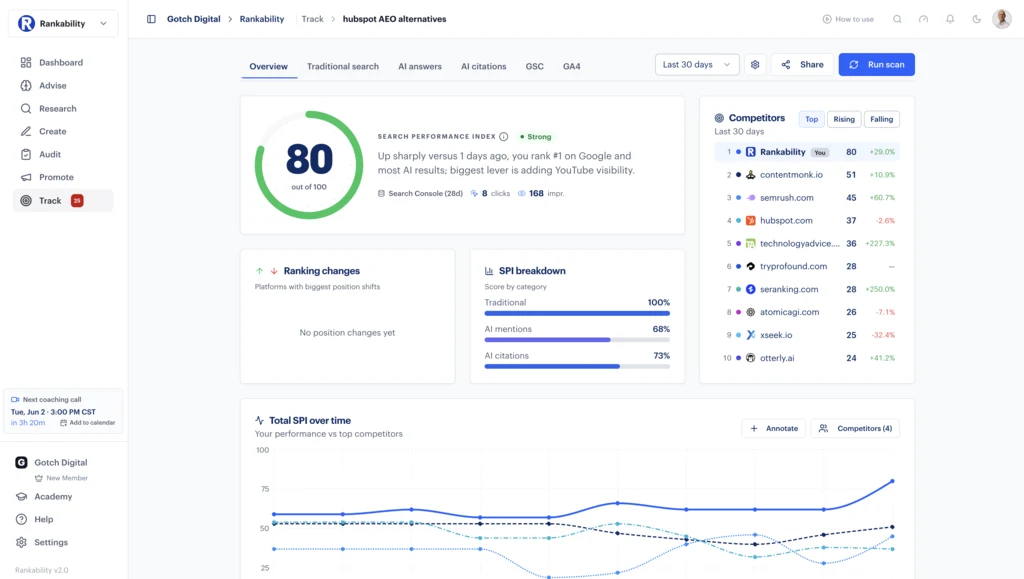
Why it fits agency work: Each client has a separate workspace for its business knowledge, content, and measurements. Your team can use client sources to guide a brief or draft, review the work, and deliver it through your publishing process.
Key features:
- Research and content: Find topics, prepare briefs, create drafts, and optimize existing pages using the client’s context.
- AI and traditional search tracking: Inspect available rankings, AI answers, brand mentions, and cited sources in Tracker. Review the underlying answers before drawing conclusions.
- Client reporting: Share results through agency-branded reports and PDF exports. Connected Google Search Console and Analytics data can add context when those integrations are configured.
- Team workflow: Organize work across client accounts, with human review before publication.
Pricing: Compare current plans for content, tracking, and audit allowances. Choose capacity based on the work you deliver across your clients.
Best for: Agencies that want research, content execution, visibility tracking, and reporting in one platform.
Consider before switching: A specialist may suit a team that needs only one narrow task. Test Rankability with a client campaign and check the evidence, editorial workflow, and reporting against your requirements.
Get started with Rankability or book a demo.
2. Peec AI – Best cross-engine reporting
Where it shines: Clean dashboards for brand performance across AI engines with solid SOV, citation/source analysis, and exportable datasets. Excellent if you want reliable monitoring without adopting a larger SEO suite.
Considerations: Costs scale with prompt volume and add-ons (e.g., Gemini/AI Mode). Validate sampling methodology if you need statistical confidence.
3. LLMrefs – Best budget starter
Where it shines: A pragmatic on-ramp to AI visibility with a proprietary “LLMrefs Score,” weekly (or daily on Pro) trend reports, and competitor benchmarks handy KPI for leadership comms. Freemium lowers the friction to try.
Considerations: Smaller dataset and lighter guidance than enterprise platforms; best as a starter or supplementary tracker.
4. AthenaHQ – Best mid-market analytics depth
Where it shines: Robust SOV metrics, source intelligence, and modeling designed for teams that want more than monitoring. Founded by ex-Google/DeepMind talent; pricing skews premium with credit-based usage.
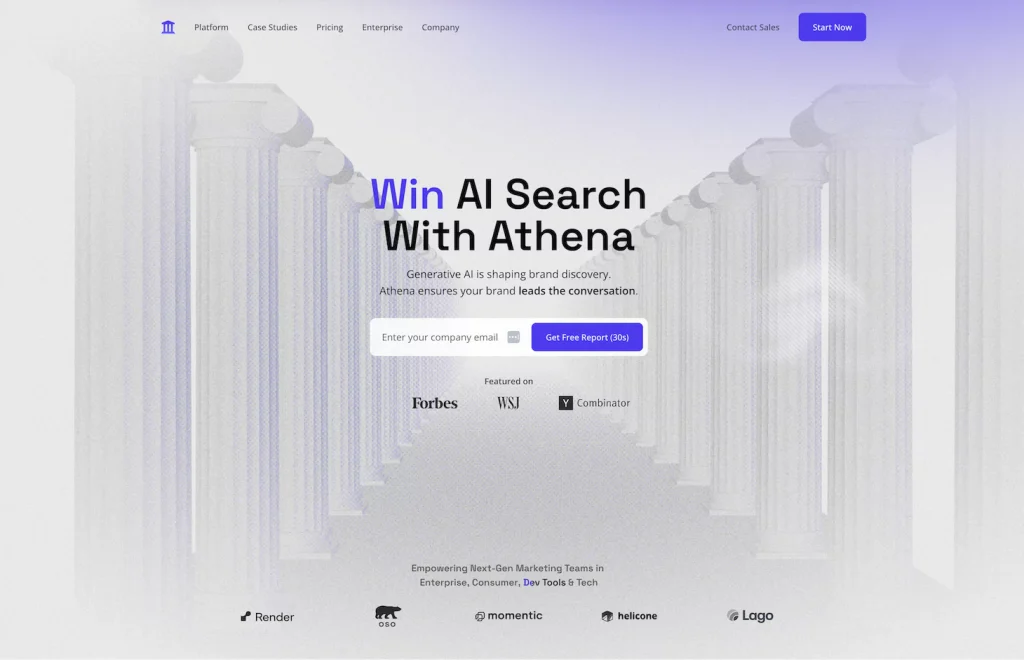
Considerations: Credits can burn fast if you track too broadly; align prompts tightly to commercial outcomes.
5. Scrunch AI – Best enterprise optimization stack
Where it shines: Positions GEO as monitor → optimize, with misinformation detection, journey mapping, and the AXP layer that serves AI-readable brand data, useful when you need to influence what LLMs can cite. Strong fit for enterprise teams driving quantifiable visibility lifts.
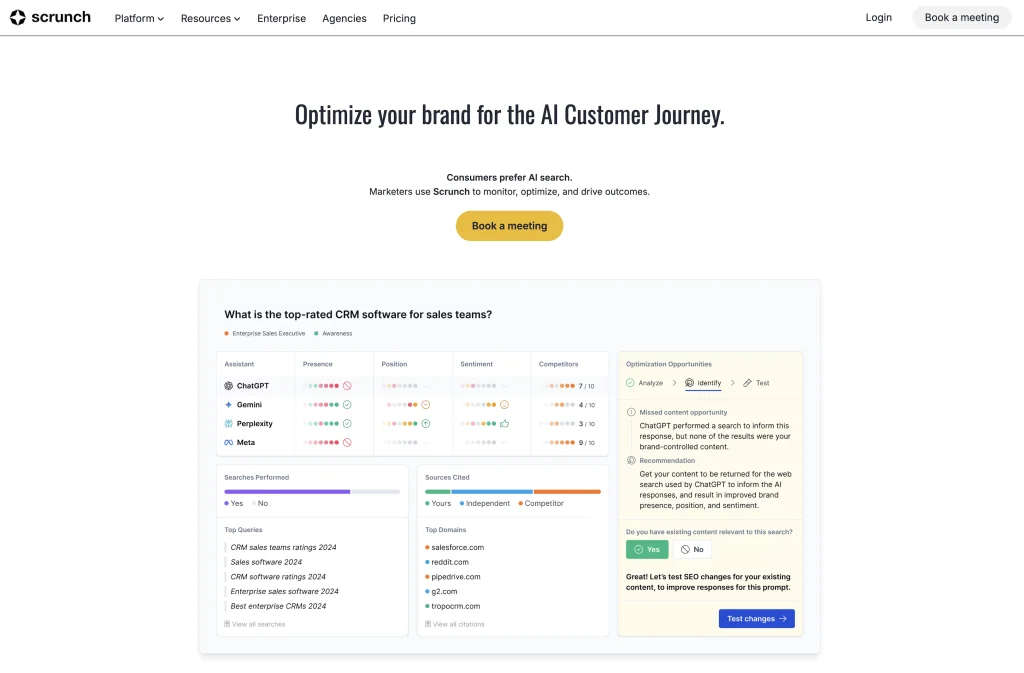
Considerations: Premium pricing and rollout cadence for AXP; can be overkill for lean teams.
6. SE Ranking’s AI Visibility Tracker – Best for SE Ranking users
Where it shines: If your org already lives in SE Ranking, the AI Overviews/AI Mode modules plus a unified tracker for ChatGPT/Gemini/Perplexity give you a consolidated stack and quick adoption. The “No-cited” feature is great for content ideation and competitor steal-outs.
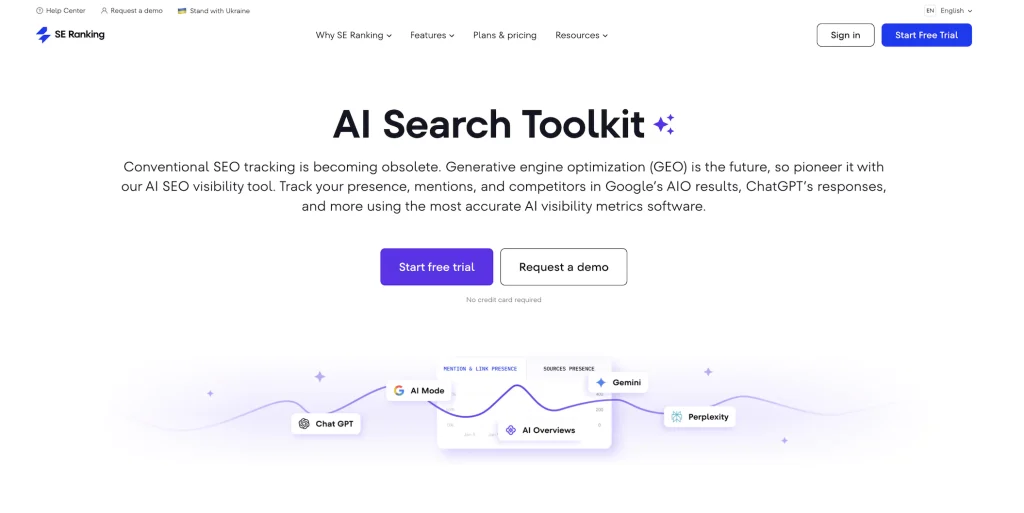
Considerations: Roadmap details and prompt allowances vary by plan; treat measurements as directional due to LLM variability.
7. Rankscale AI – Lowest-cost starter
Where it shines: An affordable way to monitor daily/hourly prompts across the majors, track citations/domains, sentiment, and run AI readiness audits, nice coverage at indie pricing.
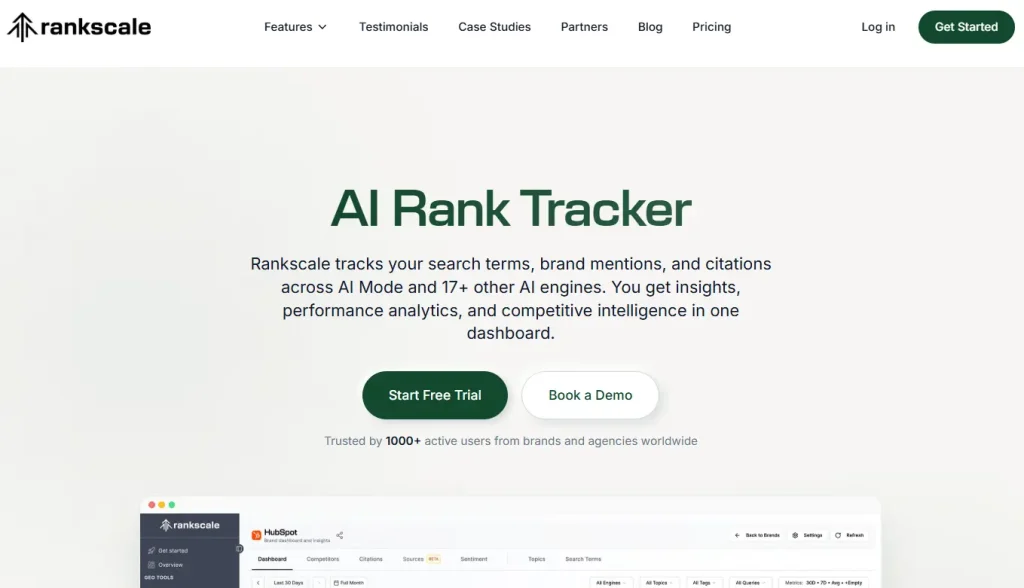
Considerations: Data-rich and a bit technical; great if you’re comfortable with more granular analytics.
How to Choose (Decision Guide)
- Need monitoring + optimization in one workflow? Rankability.
- Want clean cross-engine reporting with exports? Peec AI
- Tight budget/on-ramp KPI? LLMrefs or Rankscale AI.
- Deeper analytics & modeling (mid-market): AthenaHQ.
- Enterprise change-management + infrastructure: Scrunch AI.
- Already on an SEO suite: SE Ranking’s AI Visibility.
FAQs
Do these replace classic SEO rank trackers? No, use both. Classic SERPs still feed training/retrieval pipelines, and visibility there correlates with citations in assistants. How often should we refresh prompts? Weekly baseline; move to daily on volatile or revenue-critical topics. What’s “good” SOV? Directional; benchmark against your top competitors and target steady gains in cited sources over time.
Final Word
If OtterlyAI helped you start measuring AI visibility, the tools above will help you operationalize it, moving from “are we visible?” to “how do we win?” Across these options, you’ll find the monitoring, exports, and fix-workflows you need to build a measurable, repeatable AI visibility program.
Free GEO Checklist – Download the complete 97-point checklist to optimize your brand for AI-powered search engines like ChatGPT, Gemini, and Perplexity.
Compare the Cost for Your Agency
Compare the same client count, content workload, tracked queries, reporting access, and billing period across vendors. Check current prices directly; entry plans and add-ons may cover different work. Review Rankability plans against the capacity your agency needs.