

Semrush’s AI Toolkit is a solid starting point for AI search visibility. If you want deeper GEO workflows, broader engine coverage, or more agency-friendly pricing and seats, these seven alternatives are worth a look.
How we evaluated: engine coverage (ChatGPT, Gemini, Claude, Perplexity, Google AI Overviews and AI Mode), methodology transparency and sampling cadence, actionability from insight to fix, collaboration and scale, and price-to-value. Always verify pricing and plan limits at publish.
TL;DR quick picks
- Best overall for agencies: Rankability – Rankability Reporter
- Best cross-engine monitoring: Peec AI
- Best indie value: LLMrefs
- Best enterprise optimization stack: Scrunch AI
- Deep enterprise analytics and dashboards: Profound
- Growth-stage GEO with alerts: AthenaHQ
- Best suite-style alternative: SE Ranking – AI Visibility
Comparison table
Pricing changes often, so verify on vendor pages before purchase.
| Tool | Best for | Starting price* | Engines/coverage (examples) | Notes |
|---|---|---|---|---|
| Rankability Reporter | Integrated “see it → fix it” GEO inside content workflows | From $124/mo (annual plan) | ChatGPT, Gemini, Claude, Perplexity, Google AI Overviews/AI Mode, Copilot | Prompt testing & citation mapping; ties to content optimizer; confirm seats/prompts per tier. |
| Peec AI | Cross-engine monitoring with alerts & competitor diffs | From $89/mo (Starter) | ChatGPT, Perplexity, Gemini, Claude | Clean dashboards; costs can scale with prompt volume/regions. |
| LLMrefs | Budget-friendly indie tracker & A/B tester | $79/mo (Pro) | ChatGPT, Gemini, Perplexity | CSV exports; utilities incl. A/B tester & llms.txt; indie footprint—check SLAs. |
| Scrunch AI | Enterprise monitoring + optimization infra (AXP) | From $300/mo | ChatGPT, Gemini, Perplexity, Meta AI; Google AIO/AI Mode | SOC 2, SSO, Data API; enterprise rollout. |
| Profound | Enterprise analytics, dashboards & benchmarking | From $499/mo (Lite) | ChatGPT, Perplexity, Google AIO | Deep SOV & citations; premium budget. |
| AthenaHQ | GEO platform with alerts & competitor tracking | From $295+/mo | ChatGPT, Perplexity, Google AIO/AI Mode, Gemini, Claude, Copilot, Grok | Action guidance; credits model; request details. |
| SE Ranking AI Visibility | Suite alternative with multiple AI visibility modules | From $89/mo add-on | Google AI Overviews, AI Mode, ChatGPT (+ Perplexity/Gemini roadmap) | Confirm which AI modules are included and plan limits. |
*Starting prices change often—verify current pricing before purchase.
The 7 best Semrush AI Toolkit alternatives
1. Rankability Reporter
Best overall for agencies
Rankability connects AI search tracking across AI search engines directly to the work your team already does. You can test priority prompts, compare answer citations, and hand off fixes to the Content Optimizer and keyword workflows in the same stack.

This creates a tight loop from monitoring to diagnosis to optimization, which is often where suites fall short.
- Highlights: prompt-level testing, citation mapping, competitive views, direct tie-ins to content briefs and on-page fixes
- Best for: agencies and in-house teams that want a closed loop from “see it” to “fix it”
- Keep in mind: Analyzer availability, seat count, and prompt allowances vary by tier
2. Peec AI
Best cross-engine monitoring
Peec focuses on AI search analytics for marketing teams. It helps you identify the prompts that matter, monitor mentions across assistants, and organize sources and citations so you can understand why an answer did or did not include your brand.
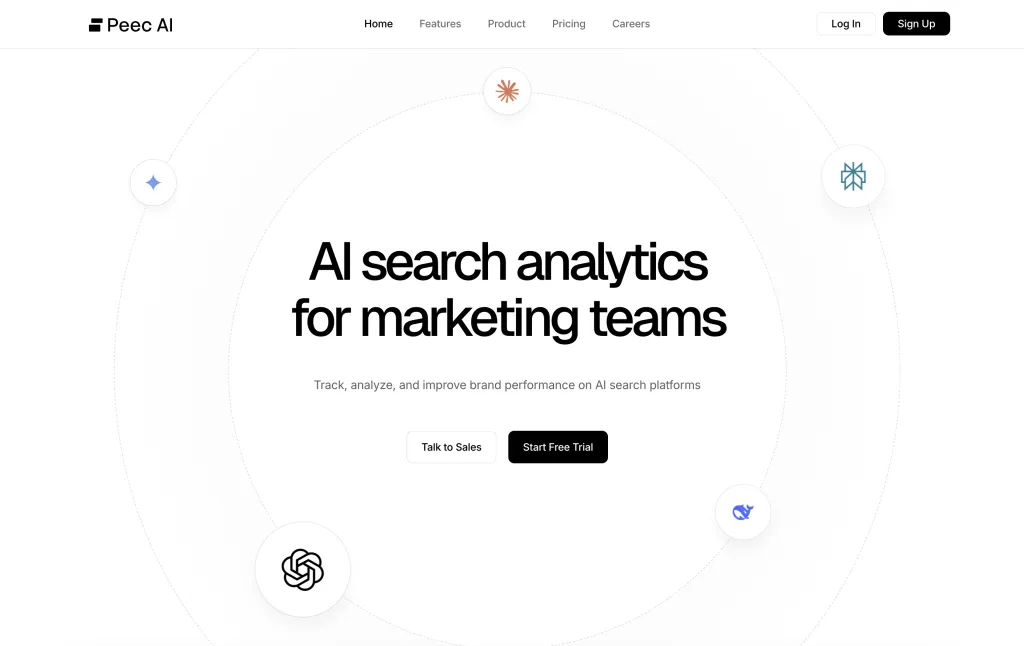
- Highlights: clean reporting, brand and citation views, straightforward workflow for non-technical stakeholders
- Best for: teams that want fast cross-engine visibility without heavy setup
- Keep in mind: price and limits can hinge on prompt volume and regions, model TCO before rollout
3. LLMrefs
Best indie value
LLMrefs blends live keyword tracking with a proprietary score and handy utilities like an AI content A/B tester and LLMs.txt generator.
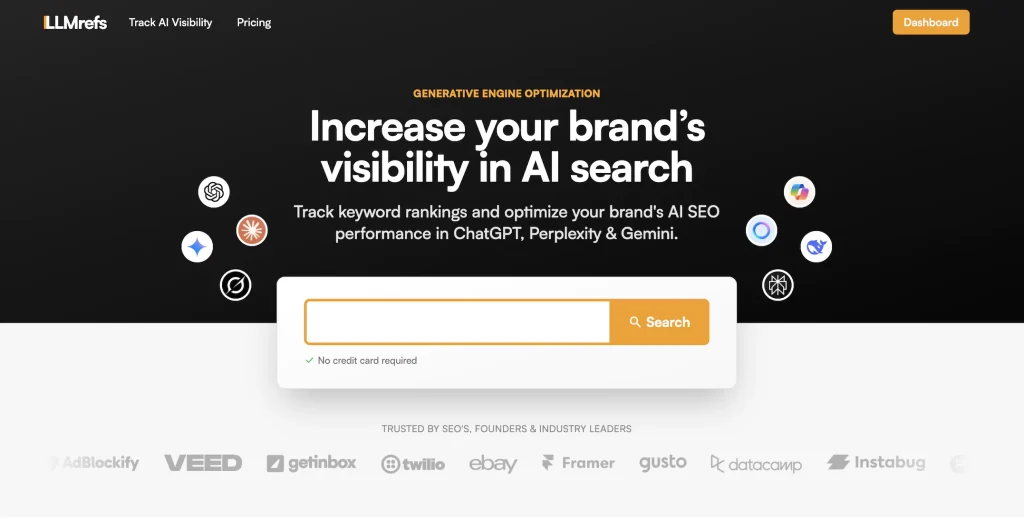
The Pro tier is priced for small teams that still want exports and basic scale.
- Highlights: transparent low pricing, CSV exports, fast iteration for startups
- Best for: indie teams, startups, and SMBs experimenting with GEO
- Keep in mind: smaller footprint than enterprise platforms, check support expectations
4. Scrunch AI
Best enterprise optimization stack
Scrunch goes beyond monitoring. Its Agent Experience Platform gives you a structured, AI-readable content layer that aligns answers with your approved sources.
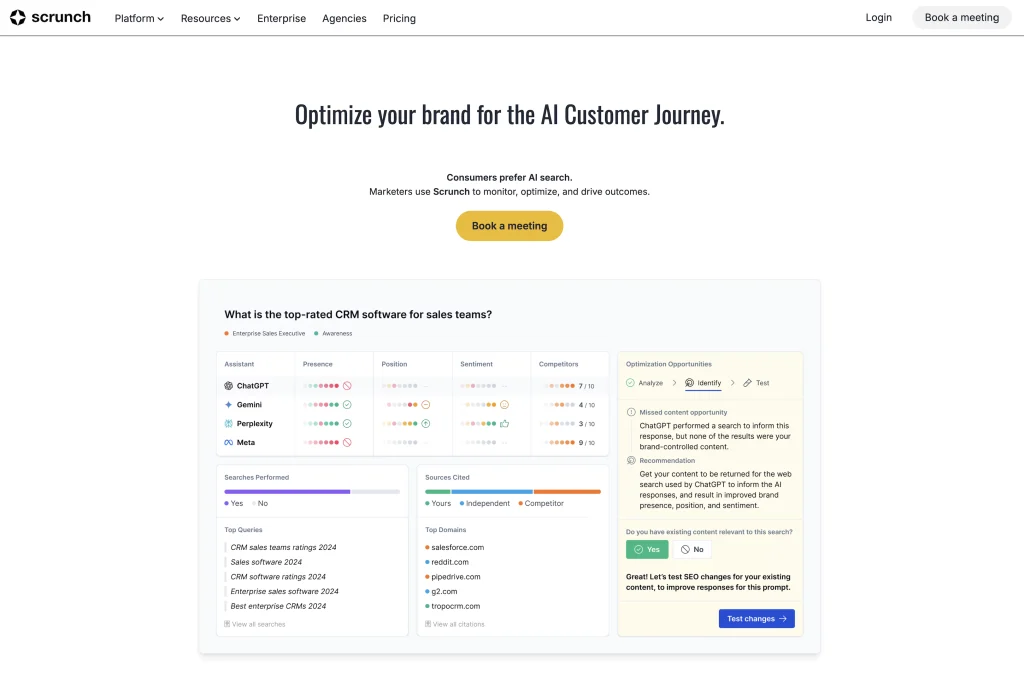
Add enterprise capabilities like SSO, SOC 2 posture, and a Data API, and you get both visibility and the infrastructure to influence it.
- Highlights: optimization infrastructure plus monitoring, enterprise security and scale
- Best for: brands that need to actively shape how assistants answer, not only measure it
- Keep in mind: sales-assisted deployment and enterprise pricing
5. Profound
Deep enterprise analytics and dashboards
Profound runs structured prompt sets across assistants and turns the data into shareable analytics for leadership.
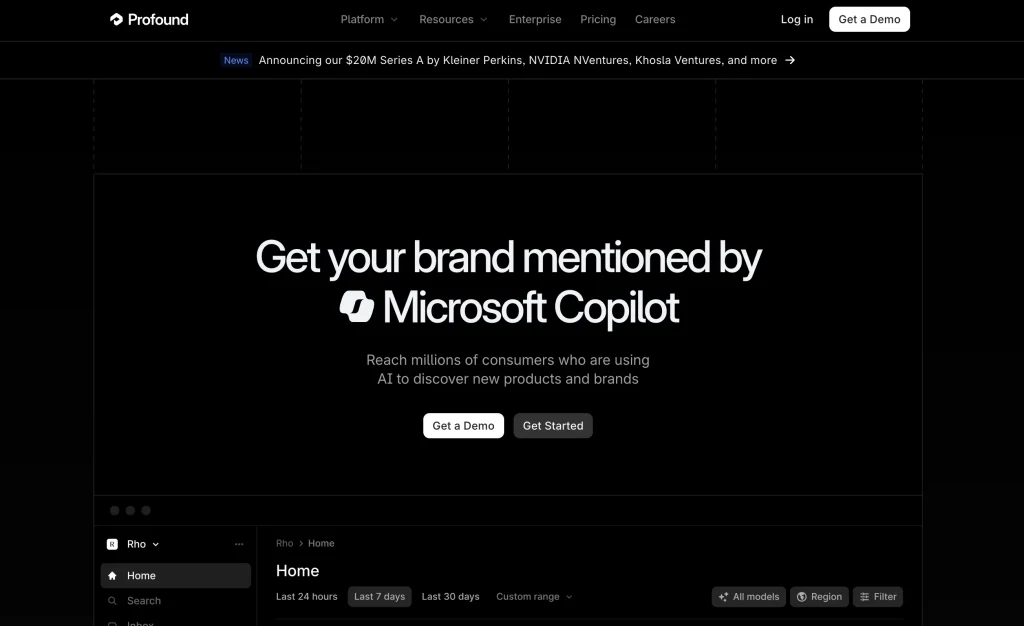
Expect detailed reporting on brand presence, citations, sentiment, and competitive trends. It is well suited for organizations that need defensible benchmarks.
- Highlights: robust dashboards, benchmarking, competitive visibility over time
- Best for: enterprise teams with analytics requirements and multiple stakeholders
- Keep in mind: premium budget, align KPIs and owners before implementation
6. AthenaHQ
Growth-stage GEO with alerts
AthenaHQ positions as a GEO platform with competitor monitoring, alerting, and action guidance.
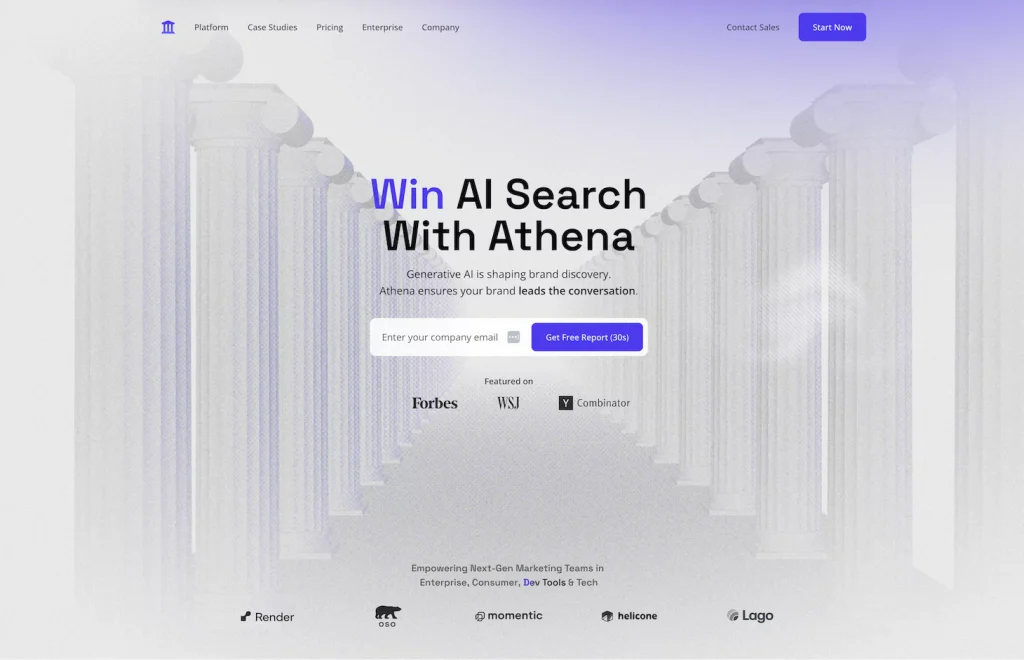
It fits mid-market teams that want actionable playbooks without standing up a heavy enterprise stack.
- Highlights: guidance for what to fix next, competitor alerts, mid-market fit
- Best for: growth-stage teams that need execution support
- Keep in mind: contact sales for pricing and sampling details
7. SE Ranking
Best suite-style alternative
SE Ranking offers multiple AI search modules that function as AI search visibility tracking tools inside a broader SEO suite.
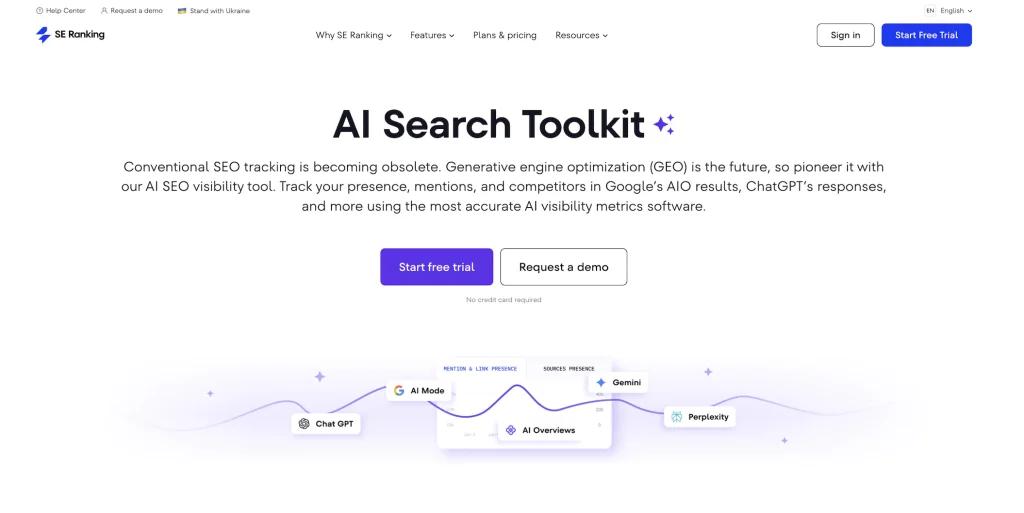
If you prefer an all-in-one platform, it is the closest suite-style peer to Semrush with competitive SMB and agency pricing.
- Highlights: AI Visibility, AIO Tracker, AI Mode Tracker, ChatGPT Visibility inside a full SEO suite
- Best for: teams that want a single vendor for traditional SEO and AI search
- Keep in mind: confirm which AI modules are included on your plan and at what limits
Semrush’s AI Toolkit vs these alternatives at a glance
- Scope: Semrush centralizes AI Visibility, Brand Performance, and Monitoring in a suite. Alternatives range from focused trackers like LLMrefs and Peec to enterprise platforms with optimization layers like Scrunch and Profound.
- Actionability: Semrush surfaces where you appear. Rankability and Scrunch put more emphasis on turning findings into improved, AI-readable content or faster on-page fixes.
- Pricing and seats: Semrush is licensed via toolkits. LLMrefs posts transparent low pricing. SE Ranking offers lower suite entry pricing. Enterprise tools like Profound and Scrunch are sales-assisted.
- Coverage: All vendors market coverage of the top assistants. Verify your priority engines and sample cadence. Ask how often they refresh, how they store results, and how exports work.
How to choose
- Map your surfaces. List the engines that matter for your brand and regions. Shortlist tools that natively track those surfaces.
- Decide cadence and scale. Weekly is a good start. Increase to daily for competitive or seasonal themes. Model prompts, seats, brands, and countries.
- Plan actionability. If you need to fix content quickly, favor stacks that connect insights to content briefs and on-page improvements, or that provide an AI-readable layer.
- Budget sanity check. Compare total cost of ownership, not just sticker price. Include sampling limits, exports, and seat roles.
FAQs
Is Semrush’s AI Toolkit good enough for GEO?
It is a capable entry point if you already live in the Semrush suite. If you need optimization infrastructure or a tighter link from visibility insights to content fixes, combine it with Rankability or Scrunch.
What is the difference between AI visibility tracking and traditional rank tracking?
AI visibility tracks whether and how assistants mention your brand, as well as what they cite. Traditional rank tracking measures blue links on search results pages.
How often should we re-sample prompts?
Weekly is a healthy baseline. Move to daily for competitive themes, launches, or crisis monitoring. Match cadence to the speed of change in your market.
Conclusion and next step
If you want an integrated “see it to fix it” GEO workflow, start with Rankability Reporter. Pair it with one of the specialists above based on your scale, reporting needs, and budget.
Free GEO Checklist – Download the complete 97-point checklist to optimize your brand for AI-powered search engines like ChatGPT, Gemini, and Perplexity.