

TL;DR: The Semrush AI Toolkit is a capable, agency-friendly way to see how ChatGPT, Gemini, Perplexity, and Google AI Overviews talk about your brand — share of voice, sentiment, and the topics that trigger a mention. At roughly $99/month per domain on top of a Semrush subscription, it is best for established brands and agencies already living in Semrush. If you want tighter data transparency and a faster path from “where am I invisible” to “fixed it,” pair or replace it with a dedicated AI-search tool like Rankability.
If you run an agency, the real question about the Semrush AI Toolkit isn’t “what does it do?” — it’s “is it worth it for tracking client AI visibility across multiple brands, and what else should you compare before you commit?” This review answers both.
Semrush’s AI Toolkit, a recent addition to its robust SEO platform, is designed to help marketers navigate the evolving landscape of AI-driven search.
By analyzing how large language models (LLMs) like ChatGPT and Google’s AI perceive and mention brands, the toolkit offers insights into market share, sentiment, and query topics.
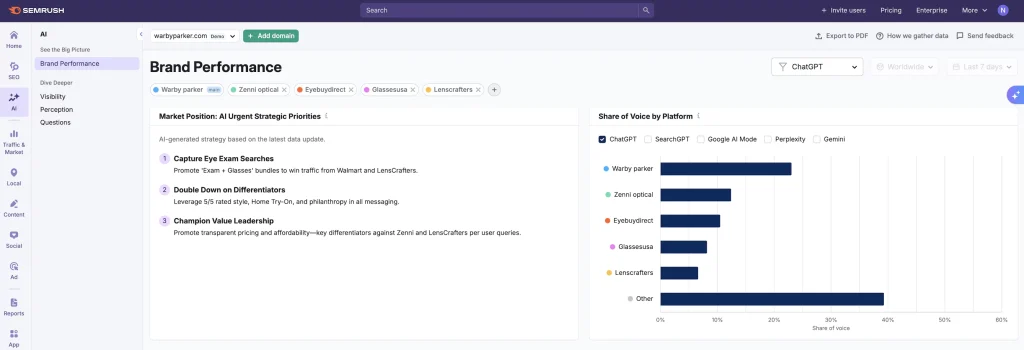
Priced at approximately $99 per month per domain, it aims to deliver strategic value for SEO professionals, content marketers, and agencies looking to understand their brand’s AI footprint.
Let’s dive in.
What is Semrush’s AI Toolkit?
The Semrush AI Toolkit stands out for its innovative approach to SEO in an AI-driven world. As search engines increasingly integrate AI-generated answers, understanding how brands appear in these responses is becoming critical.
Users appreciate Semrush’s early move into this space, noting, “Semrush saw the rise of AI searches coming” and praising its attempt to quantify brand presence in LLMs.
Semrush’s AI Toolkit has several features like: Business Landscape reports (AI market share/visibility), Brand & Marketing reports (sentiment analysis), Audience & Content reports (query themes), and AI-generated recommendations—offer a unique lens into how AI platforms position brands.
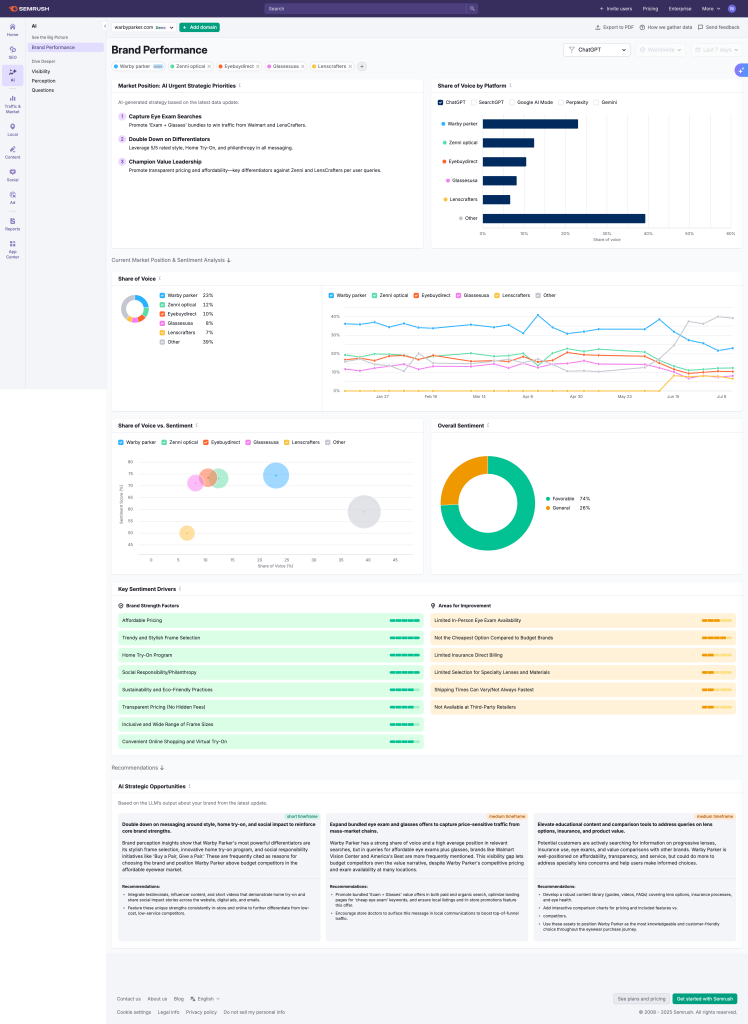
For businesses with a strong online presence, the toolkit has delivered meaningful insights.
For instance, an agency reported a 90% positive sentiment score, validating their content and PR efforts: “If AI perceives our brand positively, it’s likely customers do too.”
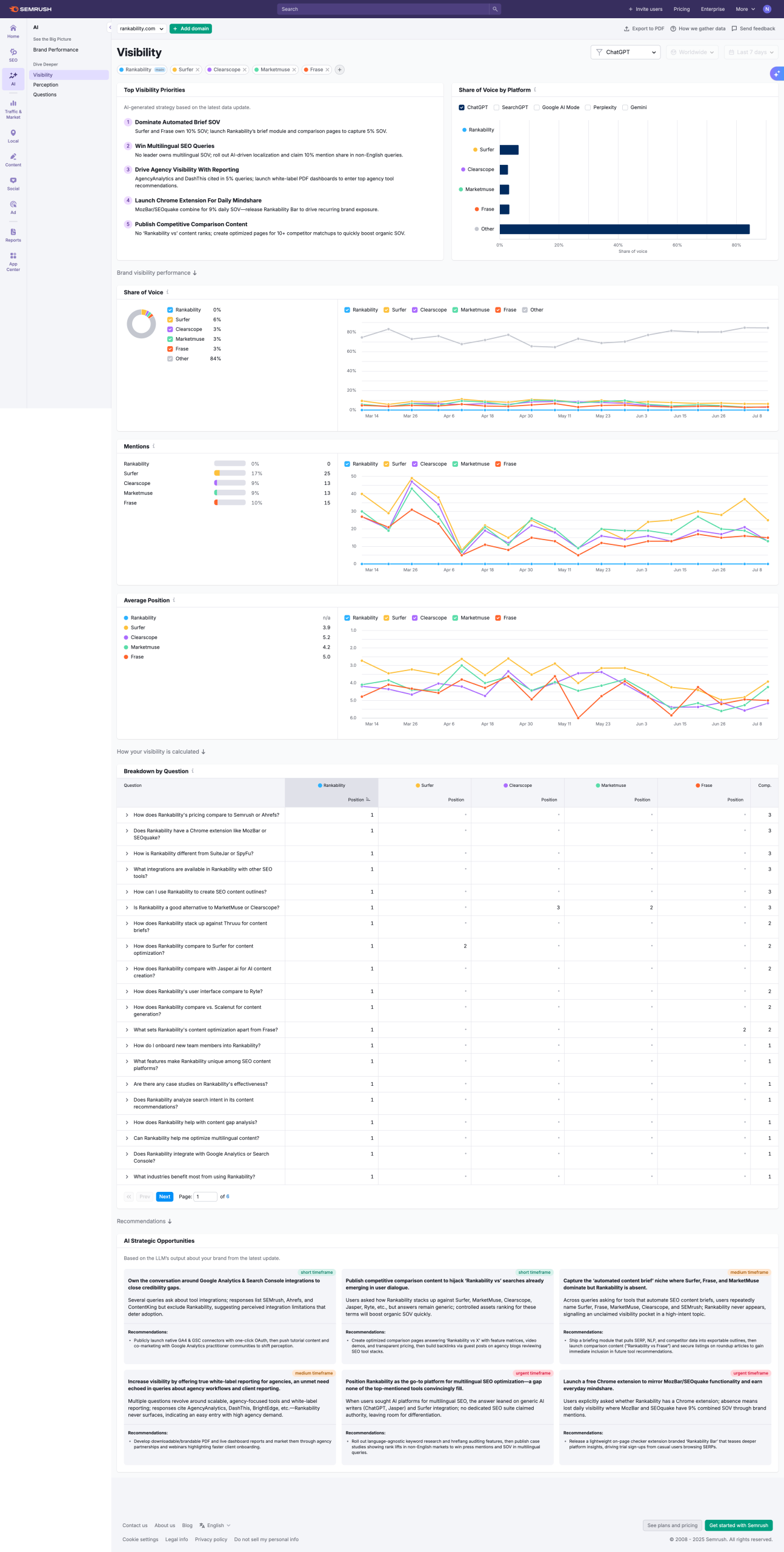
Others have discovered unexpected opportunities, such as identifying new competitors or content gaps highlighted by AI queries.
These success stories showcase the toolkit’s ability to provide a macro-level view of AI visibility, which is particularly valuable for agencies preparing client reports or pitches.
The integration with Semrush’s My Reports feature, allowing users to generate presentation-ready slides, has also been a time-saver for professionals looking to showcase AI-driven insights.
User-Friendly Features with Room to Grow
The toolkit’s dashboard is intuitive, consolidating data from multiple AI platforms into a single interface. Users have praised the sentiment analysis for distilling complex AI outputs into clear metrics, such as top positive or negative brand topics.
One marketer highlighted its ability to uncover competitors they hadn’t considered, calling the expanded competitor analysis (up to 50 competitors) “neat” for strategic planning.
For agencies, the ability to produce quick AI-powered audits for clients adds a modern edge to deliverables, demonstrating a forward-thinking approach to SEO.
However, user feedback also points to areas needing improvement.
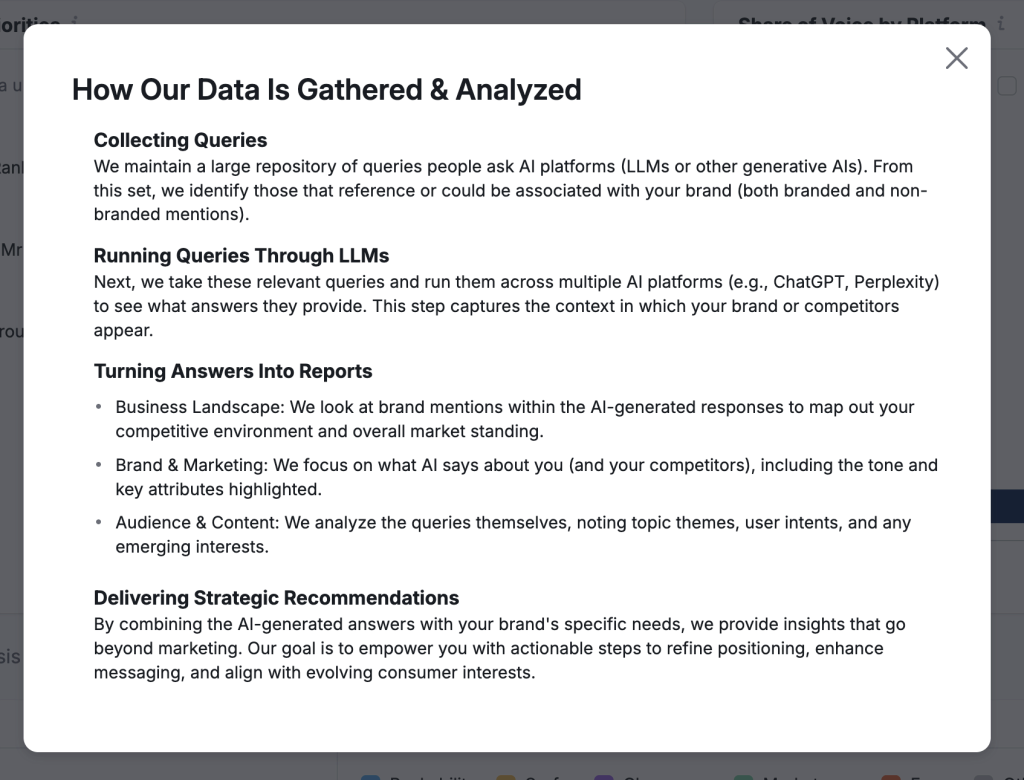
Semrush’s AI Toolkit Methodology
The toolkit’s data accuracy has drawn scrutiny, with some users questioning the methodology behind metrics like market share and sentiment.
For example, Emily Murrah noted volatile local market share data, swinging from 100% to 0% in weeks, with unclear definitions of terms like “local.”
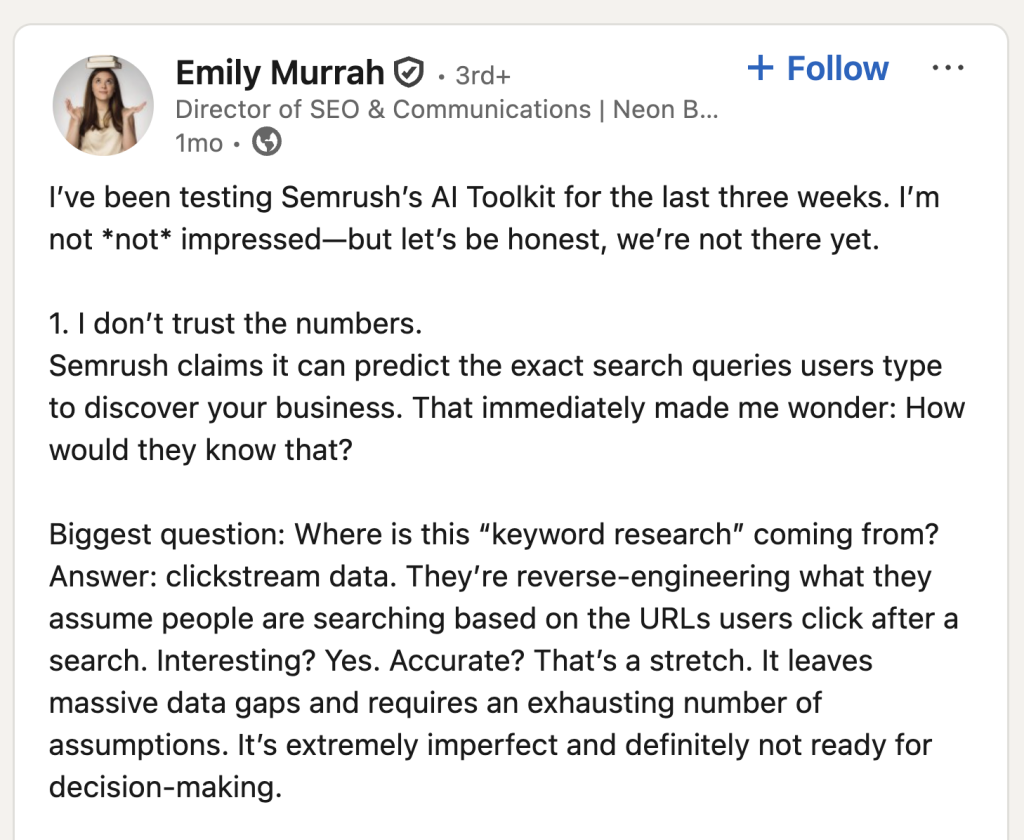
Others reported that the toolkit generated detailed reports for obscure brands with minimal LLM presence, raising concerns about data validity.
The lack of transparency in how Semrush sources its data—relying on simulated rather than real user queries—has led to skepticism, with one reviewer calling it “probabilistic guesswork.”
Additionally, the AI-generated recommendations, while promising, often feel generic.
Suggestions like “improve onboarding” or “increase market awareness” lack the specificity needed for actionable strategies, prompting some users to compare them unfavorably to direct ChatGPT outputs. Smaller brands, in particular, report limited utility, as the toolkit struggles with sparse data, sometimes producing erratic or speculative results.
How the Semrush AI Toolkit Tracks AI Visibility (the AEO Angle)
Answer Engine Optimization (AEO) — also called Generative Engine Optimization (GEO) — is the practice of earning mentions and citations inside AI-generated answers, not just blue links. The AI Toolkit is Semrush’s attempt to measure that new surface, and understanding how it does so tells you whether the data is trustworthy enough to act on.
Under the hood, the toolkit reports across three families:
- AI Visibility / Business Landscape — your estimated share of voice against up to 50 competitors across large language models.
- Brand Performance — sentiment analysis that splits the positive and negative topics assistants associate with your brand.
- Audience & Content — the prompts and query themes that surface (or omit) your brand, plus AI-generated recommendations.
Two things matter for AEO buyers: which engines are covered (ChatGPT, Gemini, Perplexity, and Google AI Overviews, with Claude added more recently) and how the data is sampled. Semrush models brand presence with simulated prompts rather than live user sessions, which is why some reviewers question how representative metrics like “local market share” really are. Treat the numbers as directional trend data, not a precise audit, and verify high-stakes findings by prompting the assistants yourself.
For a wider view of the category, see our roundup of the best alternatives to Semrush for AI search visibility tracking.
Semrush AI Toolkit Pricing (2026): What It Costs and What Is Included
Here is how Semrush AI Toolkit pricing breaks down for most buyers:
- AI Toolkit add-on: about $99/month per domain, billed on top of your existing Semrush subscription.
- It is not standalone: you need an active Semrush plan (Pro from ~$139.95/mo, Guru ~$249.95/mo, or Business ~$499.95/mo) before you can add it, so the real entry cost is the plan plus the add-on.
- Per-domain scaling: tracking multiple brands or clients multiplies the $99 line item, which is what makes agencies model total cost of ownership carefully.
- What you get: AI Visibility, Brand Performance and sentiment, Audience & Content reports, up to 50 competitors, and shareable report slides.
Pricing changes often, so confirm the current numbers on Semrush before you buy.
At $99 per month per domain, the Semrush AI Toolkit is a premium add-on, and users expect significant value to justify the cost. While some say it’s “peanuts for actual businesses making money,” many others find the ROI lacking.
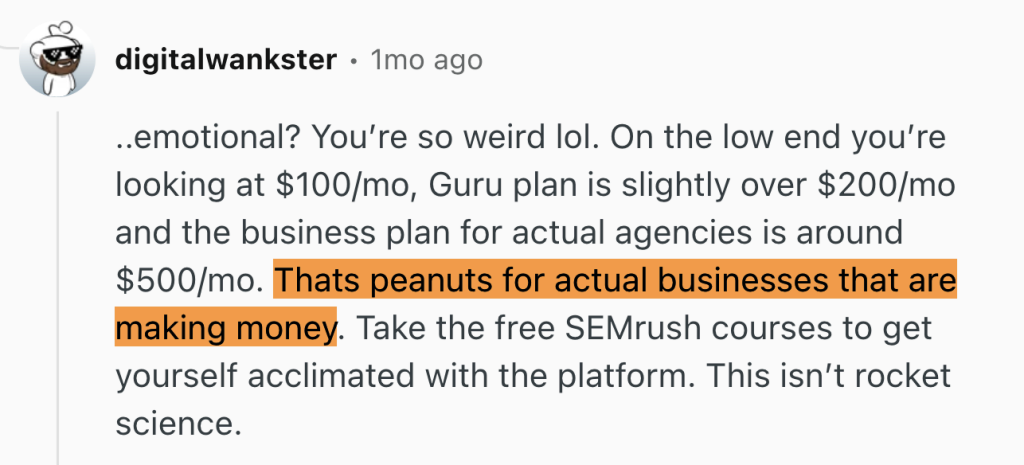
An agency CMO remarked, “I can’t say this tool is worth $99/month… not for a startup and not for a big brand either.” Several users canceled subscriptions after short trials, citing insufficient value.
How Much Should You Pay for AI Search Visibility Tracking Tools?
The high cost has fueled comparisons to Semrush AI Toolkit alternatives, with some users noting that manual queries to LLMs like ChatGPT can yield similar insights for free. Others rely on traditional SEO tools like Ahrefs or Moz for core tasks, questioning the need for an AI-specific add-on.
However, Semrush’s continuous updates, such as adding support for Claude and expanding competitor analysis, suggest potential for improvement, which could enhance its value over time.
What Reviewers Say on G2, Capterra, and TrustRadius
Semrush as a platform is one of the most-reviewed SEO tools anywhere, earning consistently high marks (typically in the mid-4-star range) from thousands of reviews on G2, Capterra, and TrustRadius. That track record is part of why the AI Toolkit gets the benefit of the doubt.
The AI Toolkit itself is newer, so dedicated reviews are thinner. Read across platforms and the same themes repeat:
- Praised: easy setup inside an existing Semrush account, clear sentiment dashboards, and client-ready reporting.
- Criticized: opaque methodology, volatile metrics for smaller or local brands, and recommendations that can feel generic.
- Recurring verdict: strong for established brands and agencies; harder to justify at $99/domain for small sites with little LLM presence.
Because AI Toolkit-specific ratings are still forming, weight hands-on trials and recent reviews over headline star scores when you evaluate it.
Rankability: The AI-Search Visibility Alternative
For those seeking a more refined or cost-effective solution, Rankability emerges as a strong contender. This tool focuses on delivering precise, data-driven insights into AI search performance, with an emphasis on transparency and actionable recommendations.
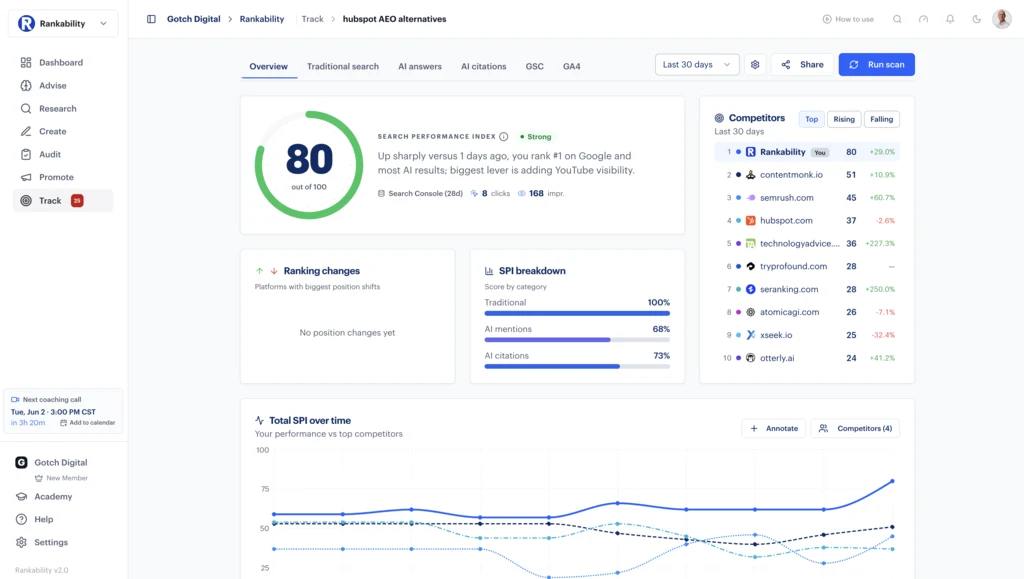
Unlike Semrush’s toolkit, Rankability provides clearer explanations of its data sources and methodologies, addressing a key pain point for Semrush users. It also offers tailored insights for both small and large brands, making it a versatile option for businesses of all sizes.
While Semrush excels in broad SEO capabilities, Rankability’s specialized approach to AI-driven analytics offers a streamlined alternative for marketers prioritizing accuracy and ROI.
If your main goal is AI-search visibility specifically, Rankability’s AI module tracks how ChatGPT, Gemini, Perplexity, and Google AI Overviews cite your brand, then connects each gap straight to a content brief and on-page fix — so you close the loop from “where am I missing” to “shipped,” instead of stopping at a dashboard.
Conclusion
Semrush’s AI Toolkit is a bold step into the future of SEO, offering a glimpse into how AI-driven search impacts brand visibility. Its strengths—intuitive dashboards, sentiment analysis, and client-friendly reporting—make it a valuable tool for established brands and agencies looking to stay ahead of the curve.
However, challenges like data transparency, generic recommendations, and limited utility for smaller brands temper its appeal. At $99 per month, the toolkit faces high expectations, and many users feel it falls short in its current form.
For those hesitant to commit, Rankability offers a compelling alternative, providing transparent and actionable insights at a potentially lower cost. Still, Semrush’s ongoing improvements and pioneering spirit suggest the toolkit could evolve into a game-changer.
For now, it’s a promising tool best suited for well-established brands or agencies willing to experiment with AI-driven SEO while verifying insights against other sources.
Free GEO Checklist – Download the complete 97-point checklist to optimize your brand for AI-powered search engines like ChatGPT, Gemini, and Perplexity.
For the bigger picture, read our complete Semrush review, or see how the platforms stack up in our Rankability vs Semrush comparison.