
Enterprise SEO buyers rarely struggle to find rank tracking software; they struggle to find a platform that can survive multi-site SEO, executive reporting, and cross-market governance without collapsing into spreadsheet cleanup. When evaluating the best rank trackers for enterprise SEO, the real issue is not whether a tool can record positions, but whether it can turn volatile search data into a reporting system that a marketing lead, an analyst, and a client can all trust.
This roundup is built for enterprise SEO teams, SEO agency owners, and in-house marketing leads managing large keyword sets, multiple brands, or local and national visibility at the same time. The quick answer is Rankability Tracker as the top pick, because its Search Performance Index unifies traditional search, local pack, AI answers, AI citations, and video search into one number — which is far closer to how enterprise search exposure actually works in 2026 than a classic blue-link position log.
The list below prioritizes scale, segmentation, reporting depth, governance, and modern visibility coverage. It also reflects a practical reality most enterprise teams already know: rank tracking only becomes strategic when it supports decisions, not just screenshots, so this list favors platforms that help you explain performance to stakeholders rather than simply export position charts.
| Tool | Best for | Starting Price | Key Strength |
|---|---|---|---|
| Rankability Tracker | Enterprise teams tracking Google and AI search visibility | From $97/mo; plan limits | SPI score unifies traditional, local, AI, citation, and video visibility — with API (Agency Pro) |
| Nozzle | Data-heavy enterprise SERP analysis | $49/month (annual) | Deep customizable SERP capture and filtering |
| STAT Search Analytics | High-volume keyword tracking and share of voice | $720/month (6,000 keywords) | Stable market-level visibility reporting at scale |
| Semrush | Rank tracking plus competitive research in one suite | Pro: $139.95/month | Strong linkage between rankings and competitor intelligence |
| Ahrefs | Linking rank performance to backlinks and content | Lite: $129/month | Clear connection between ranking movement, links, and content gaps |
| seoClarity | Enterprise reporting and SEO workflow integration | Research & Content: $2,500/month | Enterprise dashboards, AI search tracking, and workflow integration |
| BrightEdge | Executive stakeholders and large-scale SEO governance | Custom (typically $30K–$130K/year) | Governance-friendly reporting for large organizations |
| Conductor | Cross-team SEO collaboration and reporting | Custom (median ~$49K/year) | Unified AI and search visibility with strong stakeholder alignment |
| SEOmonitor | Forecasting and proving SEO ROI | ~$105/month (usage-based) | Forecast-led reporting for budgeting and performance narratives |
| Similarweb | Blending rank signals with market and traffic intelligence | $125/month (annual) | Competitive market context beyond isolated rankings |
1. Rankability Tracker — Best for unified enterprise visibility tracking
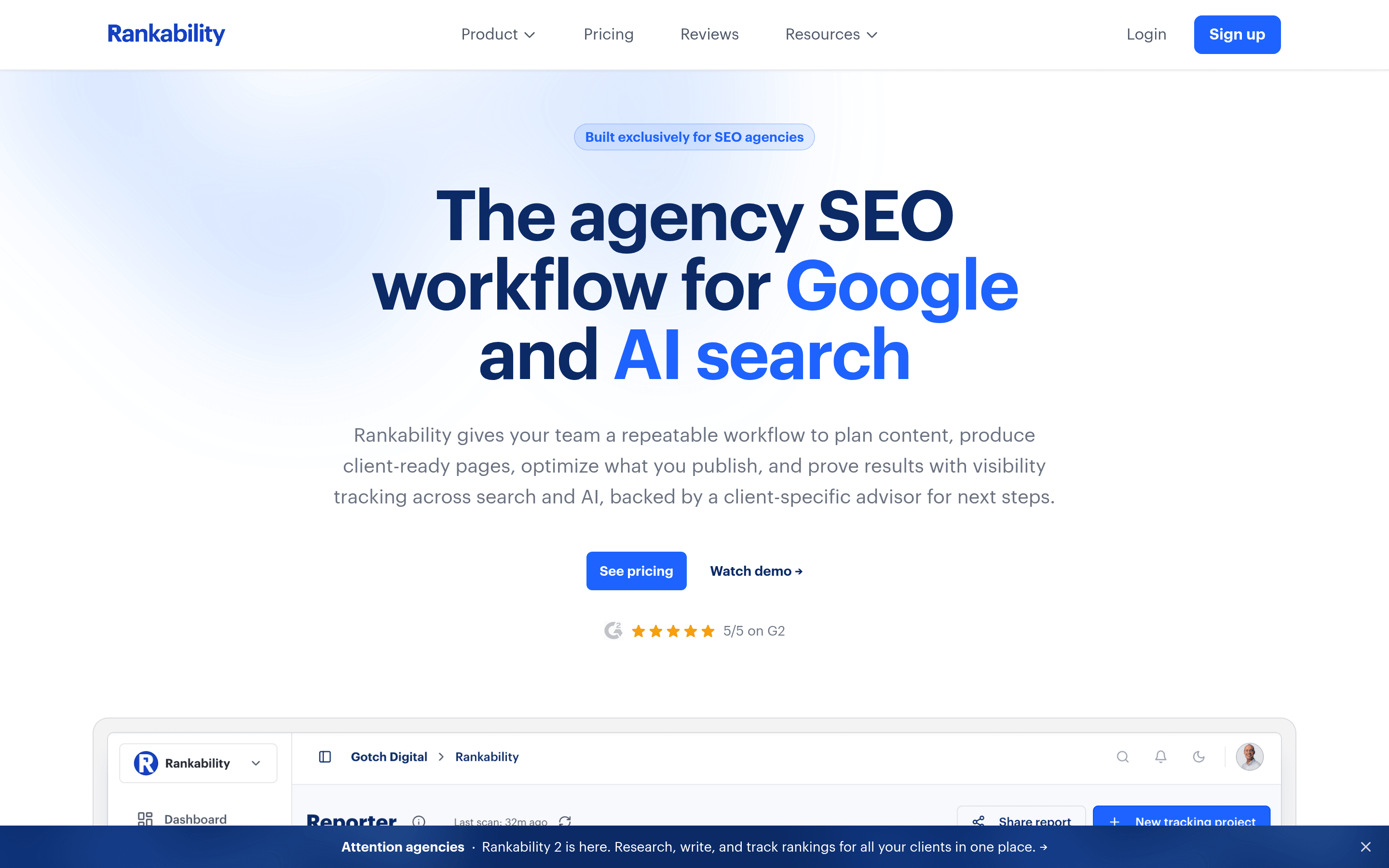
Rankability Tracker leads this list because of its SPI, or Search Performance Index — a composite visibility metric that combines traditional SERP rankings, local pack results, AI answers, AI citations, and video search into a single score for reporting. That matters because enterprise teams now report across desktop rankings, mobile rankings, hyper-local data, and constant ranking volatility, and a single unified metric removes the executive confusion caused by fragmented channel-by-channel reporting.
For an SEO agency owner or a marketing lead, Rankability fits the operational reality of multi-client, multi-location tracking better than tools built only for keyword position logs. A platform that connects multi-location tracking, stakeholder dashboards, competitor benchmarking, and agency workflow reporting gives leadership a more usable KPI than separate charts for local rank tracking, branded terms, and blended Google surfaces.
Key features:
- SPI (Search Performance Index) roll-up across traditional search, local pack, AI answers, AI citations, and video results
- AI search reporting across major AI answer engines alongside classic rankings
- Segmenting by market, location, device, and intent to isolate enterprise-level trends
- Executive-ready dashboards with white-label reporting for agency delivery
- Competitor visibility benchmarking across multiple search surfaces
- API access for piping SPI and ranking data into internal dashboards, BI tools, and custom pipelines — a must-have for enterprise reporting stacks
Pricing: Starter is $97/month, Agency $297/month, and Agency Pro $497/month. Annual totals are $970, $2,970, and $4,970. All paid plans include unlimited client workspaces, unlimited team members, branded reports, and API/MCP access. Content allowances are 20, 80, and 160 projects per month; tracked AI query allowances are 100, 300, and 500, respectively, across all 11 included AI platforms. Google keyword tracking and Local Pack scans have separate allowances. Gotch Inner Circle is included with Agency Pro annual plans. Get Started.
Ideal for: Enterprise SEO teams and agencies that need a single visibility metric to manage multi-surface search performance at scale.
Bottom line: Use Rankability Tracker when leadership wants one enterprise KPI that reflects how search visibility actually shows up in 2026.
2. Nozzle — Best for data-heavy enterprise SERP analysis
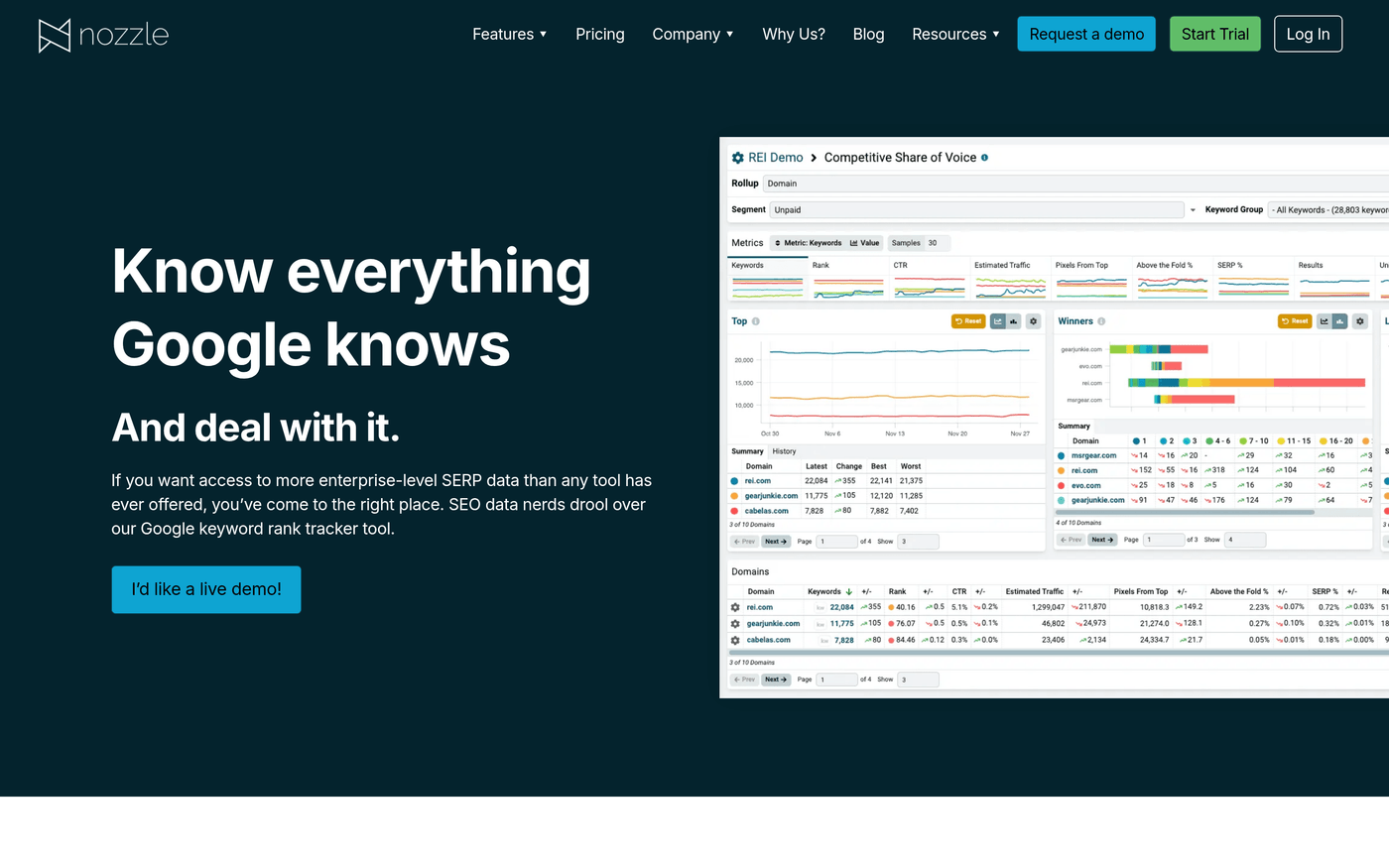
Nozzle is a SERP-first platform known for deep, configurable rank tracking and unusually flexible filtering, which makes it attractive to teams that want the raw search landscape rather than a simplified scorecard. Its value comes from historical rank data, device targeting, SERP feature detail, and the ability to inspect AI search visibility patterns at a level many broader suites do not prioritize.
Enterprises choose Nozzle when they manage a large keyword portfolio and need granular segmentation by tag, market, or intent for analyst workflows. The tradeoff is operational, not conceptual: Nozzle rewards teams that can handle data volume, scheduled reports, and implementation discipline, so expect a steeper learning curve than with all-in-one platforms.
Key features:
- Deep SERP data capture with configurable result types and SERP features
- Advanced segmentation by tags, intent, device, and market
- Shareable dashboards for stakeholders and analysts
- Competitor tracking at scale with visibility comparisons
- Exports and API-style access for custom analysis
Pricing: Published plans start at $49/month billed annually ($59 monthly) for 10,000 SERPs, scaling to $4,999/month for 1.5M SERPs. Pricing is SERP-based, so cost tracks keyword count, refresh frequency, devices, and locations.
Ideal for: Enterprise SEO teams that prioritize raw SERP data depth and custom analysis over all-in-one suite simplicity.
Our take: Pick Nozzle if your team lives in dashboards, filters, and SERP feature diagnostics.
3. STAT Search Analytics — Best for high-volume keyword tracking and share of voice
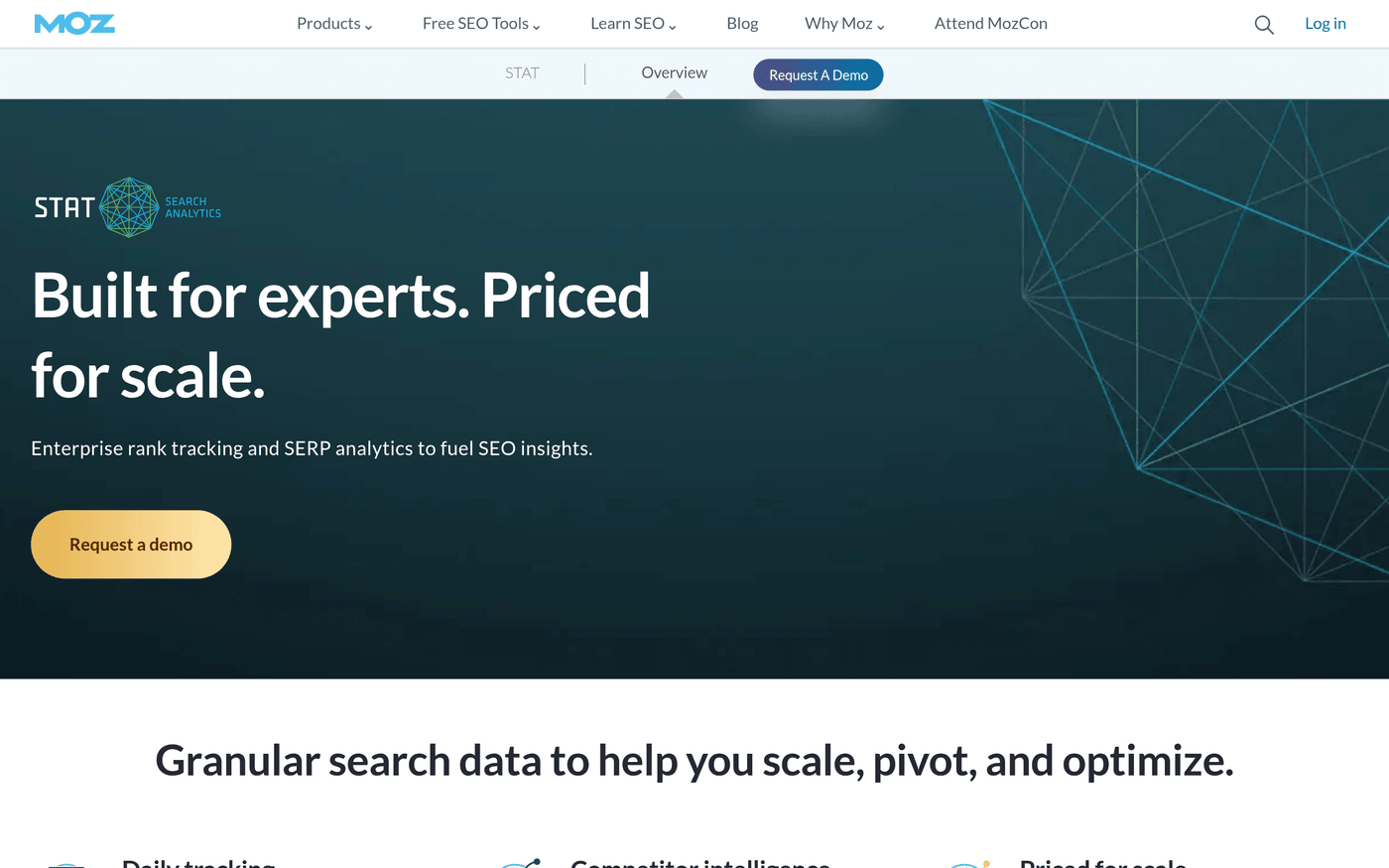
STAT Search Analytics is an enterprise search visibility platform used by SEO teams to track rankings and analyze visibility at serious keyword volume. Its strength is not novelty but consistency, because market-level reporting and repeatable share-of-voice views are often more useful to enterprise stakeholders than isolated keyword wins.
Agencies and in-house teams use STAT when they need segmentation, scheduled reporting, and category-level visibility reporting that scales cleanly across brands and markets. It is often strongest when paired with another platform for technical SEO, content ideation, or backlink analysis, which reflects an important enterprise truth: best-in-stack rank tracking and best-in-stack workflow execution are not always the same purchase.
Key features:
- High-volume keyword tracking with segmentation and tagging
- Share of voice and visibility reporting for categories and competitors
- SERP feature tracking to quantify blended results impact
- Scheduled reporting for multi-stakeholder distribution
- Integrations and exports for BI and analytics workflows
Pricing: Starts at $720/month for 6,000 keywords (about $0.12 per keyword), with custom enterprise quotes at higher volumes. Per-keyword cost decreases as volume scales.
Ideal for: Teams managing massive keyword portfolios who need stable, repeatable reporting.
Why it stands out: STAT shines when you need market-level visibility metrics, not just keyword-by-keyword rank checks.
4. Semrush — Best for rank tracking plus competitive research
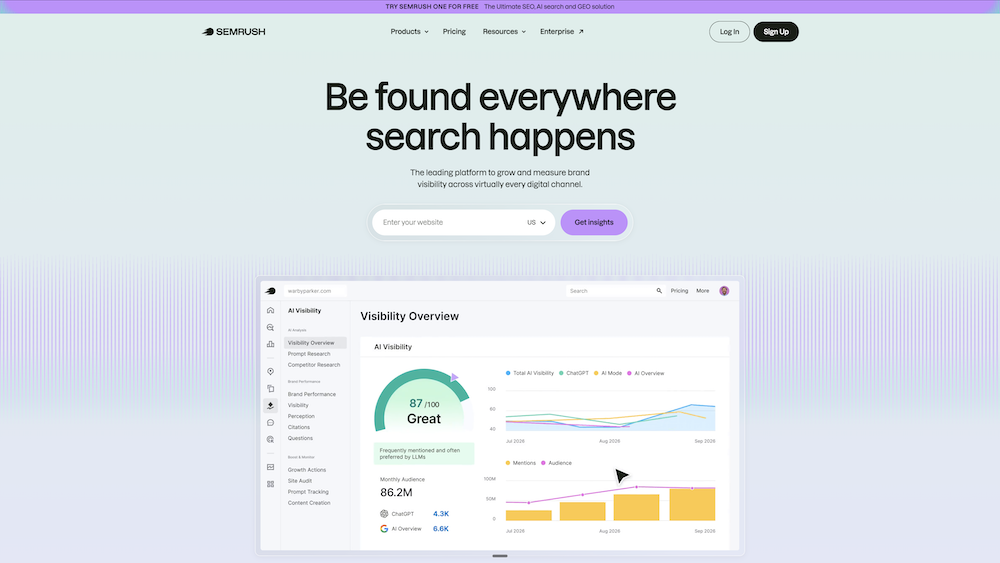
Semrush works best when rank tracking is only one part of a broader competitive workflow that includes keyword research, domain analysis, and planning. That integrated model matters for agencies and growth teams because ranking changes are easier to explain when the same interface also shows competitor movement, topic opportunity, and SERP feature shifts.
Its enterprise fit comes from multi-project management, recurring reports, and cross-channel context that helps marketing leads connect SEO movement to broader search strategy. Buyers should still validate mission-critical keywords against more SERP-capture-oriented tools, because Semrush’s data model is highly useful for strategy but may not satisfy every analyst who wants maximum query-level diagnostic depth.
Key features:
- Position tracking with device and location targeting
- Competitor visibility comparisons and share-of-voice-style views
- SERP feature tracking to measure blended SERP exposure
- Reporting templates for recurring stakeholder updates
- Keyword and domain research to connect ranking movement to strategy
Pricing: Pro: $139.95/month; Guru: $249.95/month; Business: $499.95/month
Ideal for: Agency owners who want rank tracking tightly coupled with competitive research and planning.
Worth noting: Semrush is best when rankings are part of a broader competitive and content workflow, not a standalone KPI.
5. Ahrefs — Best for connecting rankings to backlinks and content
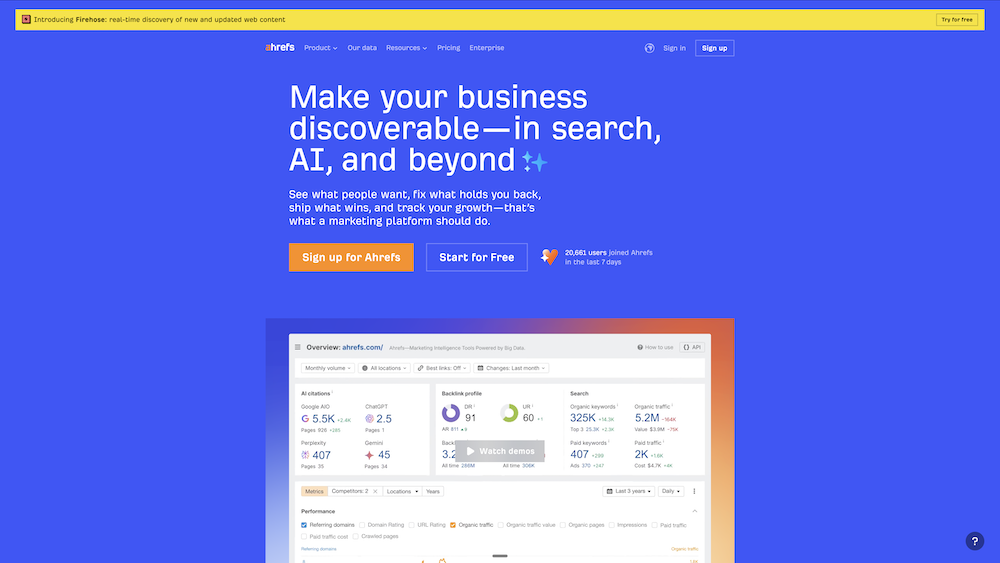
Ahrefs is strongest when a team wants rank tracking in the same environment as backlink intelligence, competitor gap analysis, and content research. That combination matters because enterprise SEO rarely asks only “what moved”; it usually asks “what changed in authority, content coverage, or competitor pressure that caused the move.”
For in-house marketing leads, Ahrefs is useful when ranking diagnostics need to turn quickly into action on links, content refreshes, or topic expansion. The main buying consideration is granularity, because enterprise reporting often requires location and device segmentation standards that should be matched carefully against stakeholder expectations — if its tracking model comes up short, our guide to switching from Ahrefs to Rankability covers the migration path.
Key features:
- Rank tracking tied to keyword research and content discovery
- Competitor comparisons to find visibility wins and losses
- SERP overview context to interpret ranking movement
- Backlink insights to connect authority changes to rank shifts
- Exports for agency reporting and internal analysis
Pricing: Lite: $129/month; Standard: $249/month; Advanced: $449/month; Enterprise: $1,499/month
Ideal for: In-house marketing leads who want ranking movement explained through links and content strategy.
The verdict: Choose Ahrefs when you need ranking data that immediately connects to link and content actions.
6. seoClarity — Best for enterprise reporting and workflow integration
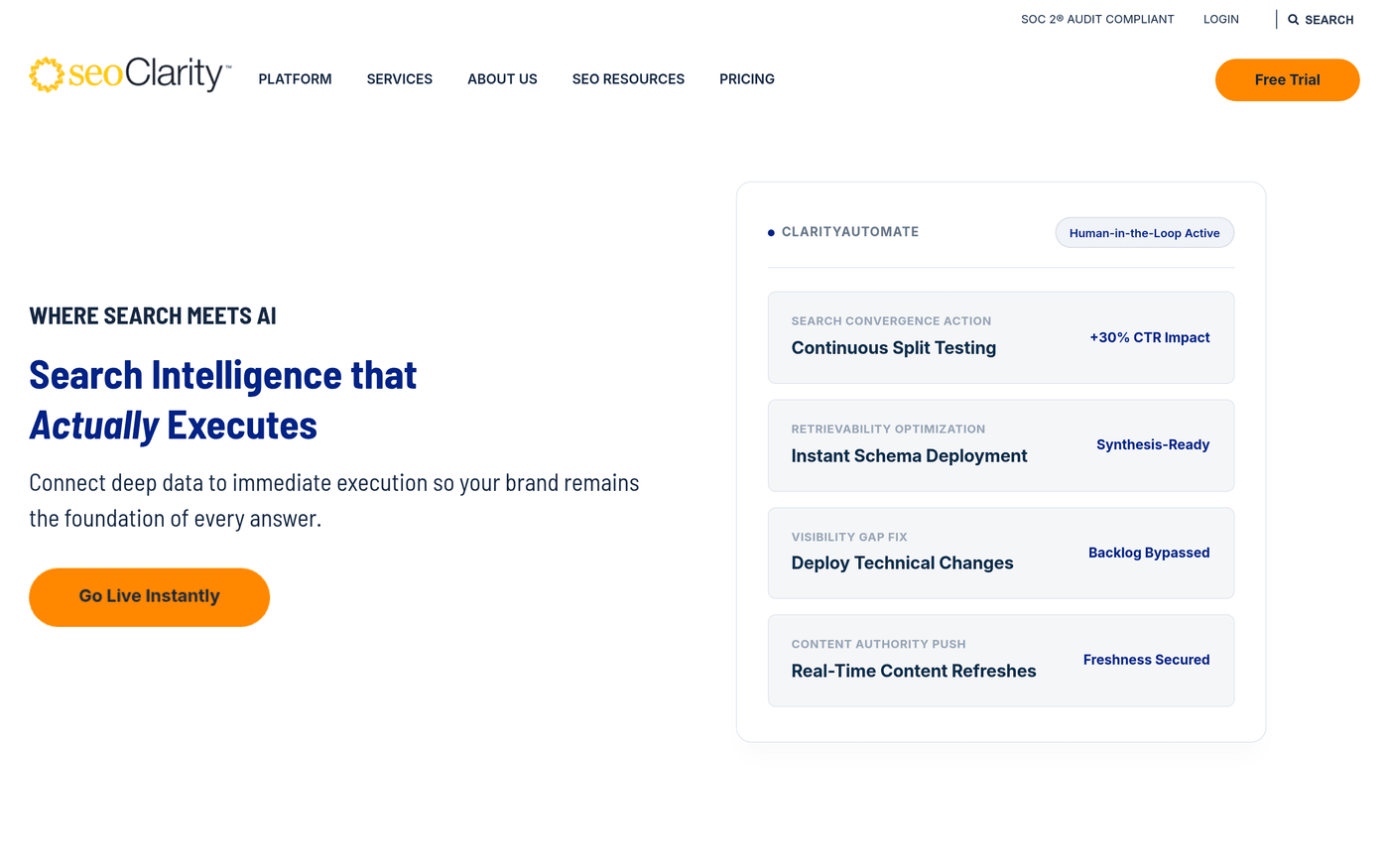
seoClarity is an enterprise SEO platform where ranking analysis sits inside a broader AI-powered SEO workflow for brands, agencies, and global teams. Its practical advantage is that data freshness, AI search tracking, and reporting live alongside technical SEO, log file analysis, content support, and API integrations, which reduces the handoff friction common in fragmented stacks.
Large organizations adopt seoClarity when they need dashboards for multiple stakeholder groups, multi-brand reporting, and governance controls such as roles and permissions. The buying lens here should focus on operational fit, because a platform this broad creates the most value when ranking insights need to move directly into team workflows rather than remain trapped in analyst-only reports.
Key features:
- Enterprise-grade ranking analysis and visibility reporting
- Dashboards designed for cross-functional stakeholders and multi-brand reporting
- Keyword segmentation and tagging for large portfolios
- Workflow support for turning insights into tasks
- API integrations for ranking data, keyword research, and content analysis
Pricing: Research & Content: $2,500/month; Technical SEO: $3,200/month; Enterprise: $4,500/month
Ideal for: Organizations that need rank tracking embedded in an enterprise SEO operating system.
Best if you need: seoClarity fits when ranking insights must flow directly into enterprise reporting and execution.
7. BrightEdge — Best for executive stakeholders and SEO governance
BrightEdge is one of the most established enterprise SEO platforms, serving a large share of the Fortune 100. Its appeal is less about analyst-level experimentation and more about creating a controlled reporting environment that aligns SEO data with business reviews, leadership dashboards, and repeatable KPIs.
That makes BrightEdge a better fit for mature programs with defined reporting cadences, multi-site structures, and internal controls around access and process. Enterprise software selection often fails when teams buy for feature breadth but ignore adoption discipline, and BrightEdge is typically strongest where governance itself is part of the requirement.
Key features:
- Enterprise visibility reporting aligned to business outcomes
- Multi-site and multi-brand tracking structures
- Role-based access and governance-friendly workflows
- Competitive insights for category-level monitoring
- Dashboards and reporting for leadership consumption
Pricing: Quote-based on annual contracts, with no published list prices. Procurement benchmarks put typical deals between roughly $30K and $130K per year depending on tracked keywords, domains, and seats.
Ideal for: Large organizations that need standardized rank reporting and governance across teams.
Bottom line: BrightEdge makes sense when reporting rigor and enterprise governance matter as much as the ranking data itself.
8. Conductor — Best for cross-team SEO collaboration
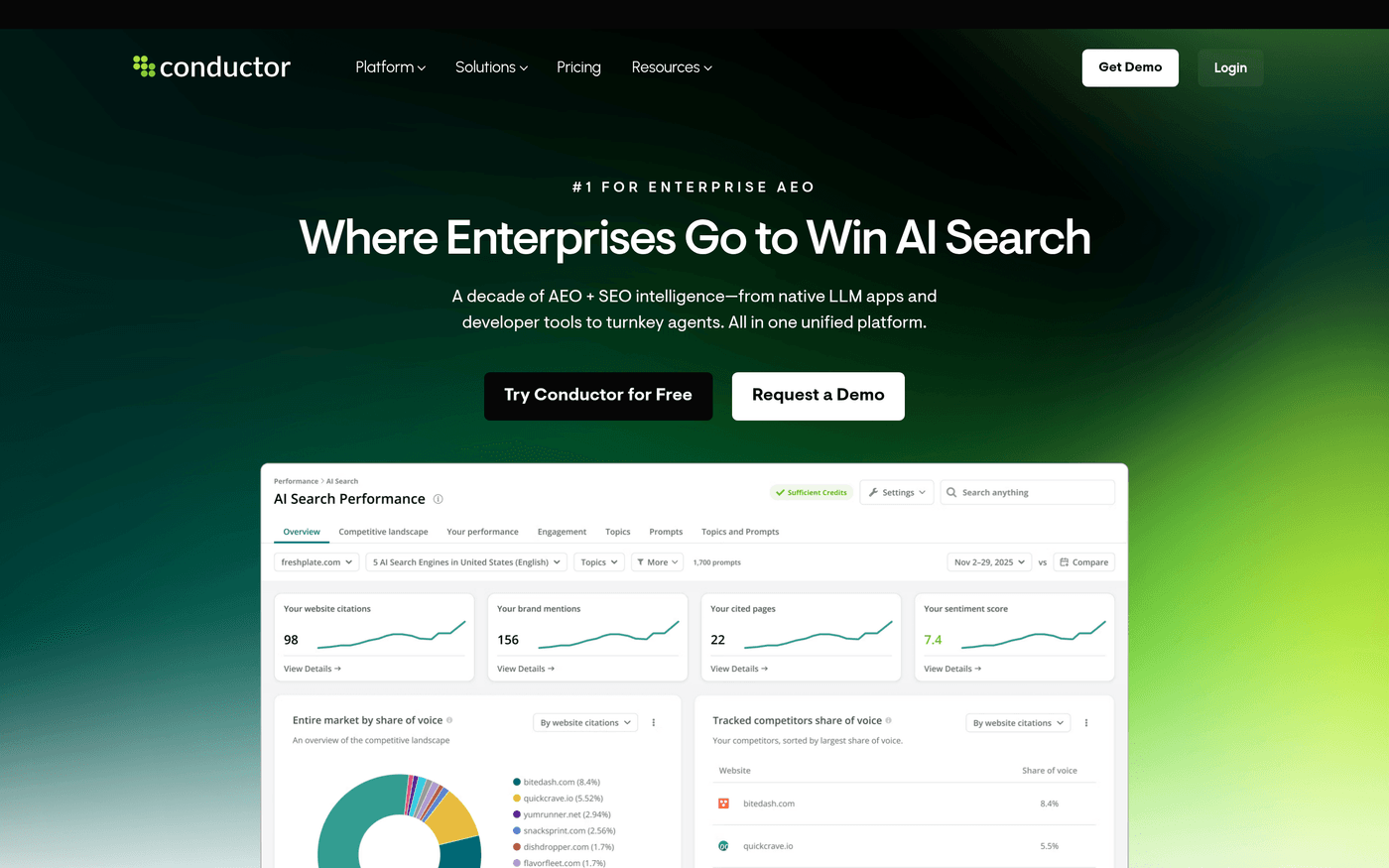
Conductor is enterprise-focused and often selected by organizations that need SEO reporting to drive adoption across content, web, and marketing teams rather than remain isolated inside one specialist function. Its current positioning around AI and search visibility across platforms such as ChatGPT, Gemini, Copilot, and traditional search reflects a broader market shift toward blended discovery reporting.
For agencies and in-house teams, Conductor fits best when the challenge is organizational alignment, not just data collection. A platform that combines AI visibility tracking, content workflows, and real-time site monitoring can help standardize execution, which is often the hidden bottleneck in enterprise SEO performance.
Key features:
- Rank tracking and visibility reporting for enterprise programs
- Dashboards tailored for different stakeholder groups
- Collaboration workflows to operationalize insights
- Segmenting by brand, category, and intent themes
- Reporting outputs designed for recurring business reviews
Pricing: Quote-based on annual contracts, with published procurement data showing a median around $49K per year. Deals range from roughly $27K for single-domain deployments to $180K+ for large enterprise programs.
Ideal for: Marketing leads who need SEO reporting that drives alignment across multiple teams.
Our take: Conductor is a strong pick when internal adoption and stakeholder communication are the real bottlenecks.
9. SEOmonitor — Best for forecasting and proving SEO ROI
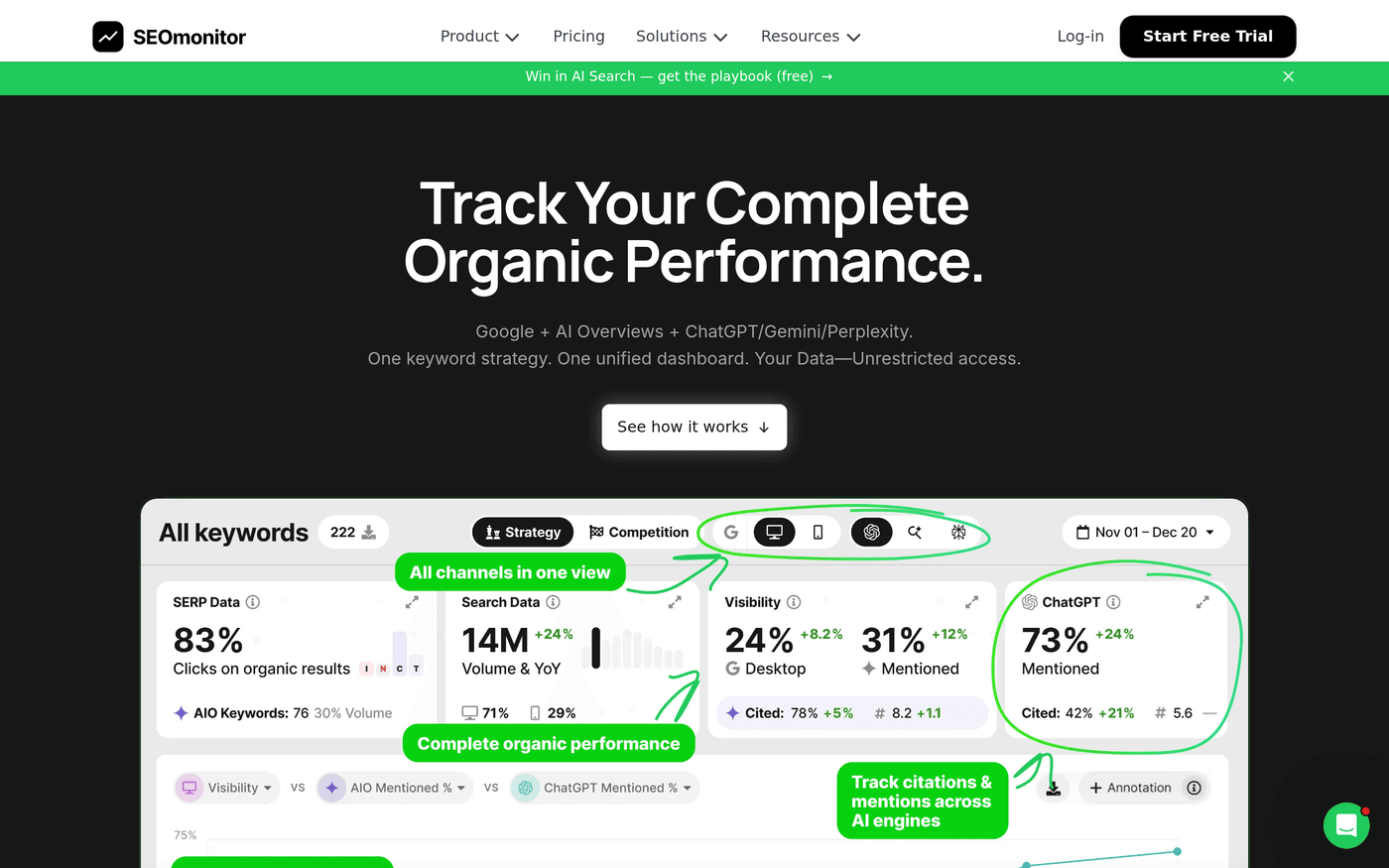
SEOmonitor is especially relevant for teams that need rank tracking to support SEO forecasting, budget defense, and performance narratives tied to business outcomes. That positioning matters because enterprise leaders rarely approve investment based on position changes alone; they want a model that connects visibility movement to opportunity, prioritization, and expected return.
For agencies, SEOmonitor can also help standardize client reporting around outcomes rather than disconnected metrics. If you are weighing it against neighboring platforms, our roundup of the best SEOmonitor alternatives for agencies compares it directly against several tools on this list.
Key features:
- Rank tracking designed to support performance narratives
- Forecasting and planning support for budgets and pitches
- Competitor monitoring for share-of-voice context
- Reporting outputs for client and leadership updates
- Keyword segmentation for category-level insights
Pricing: Usage-based, starting around $105/month, charged per 1,000 keywords tracked daily. API, Google Sheets, and Looker Studio access are included in the dynamic subscription.
Ideal for: Agencies and in-house teams that need to defend budgets with forecast-backed reporting.
Why it stands out: SEOmonitor is built for teams who must translate rankings into ROI conversations.
10. Similarweb — Best for blending rank signals with market intelligence
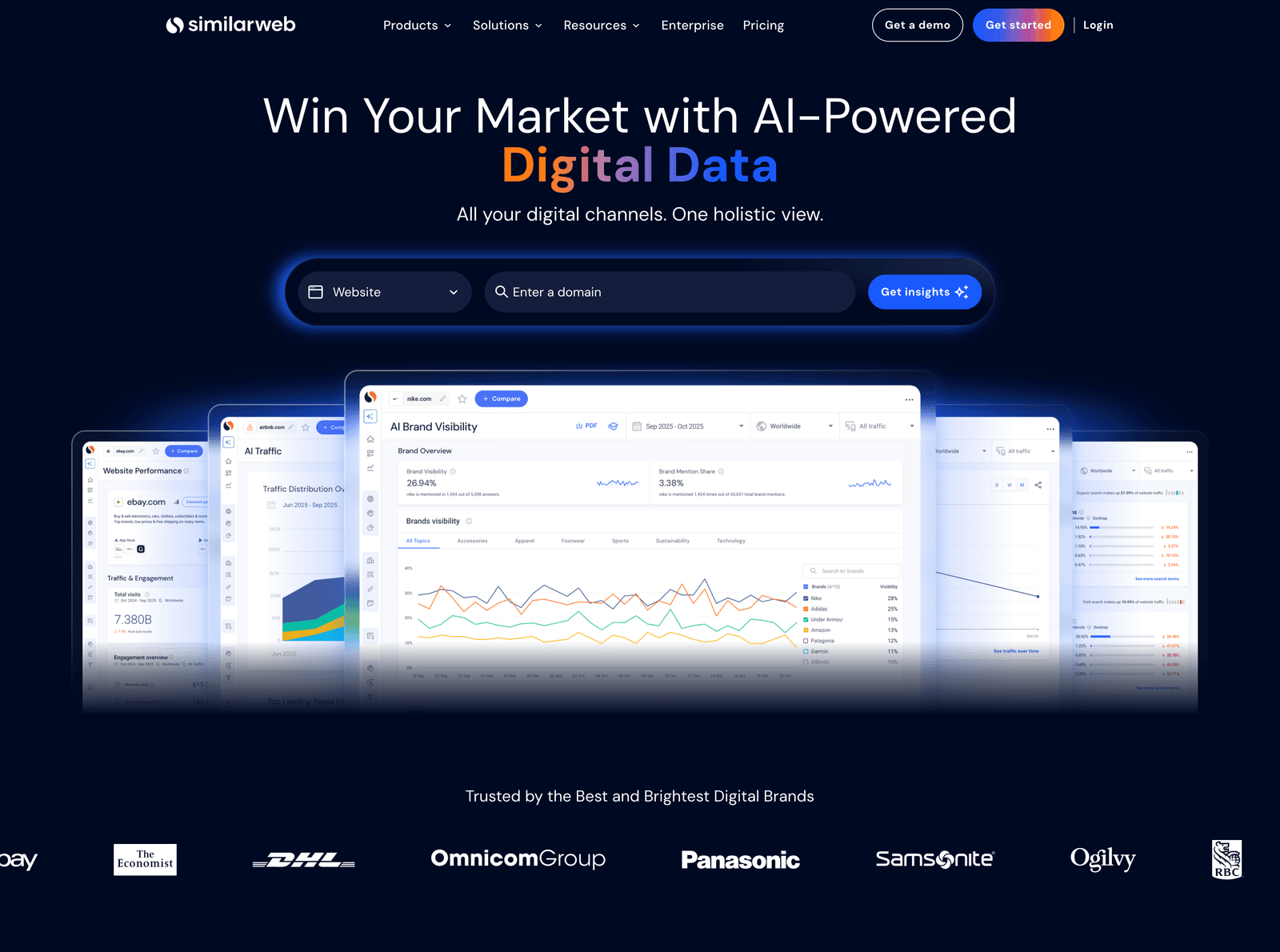
Similarweb is not just a rank tracker; it is a broader digital intelligence platform that helps enterprises interpret SEO performance within market, traffic, and competitor context. That distinction matters because ranking changes can look dramatic inside a tool but prove strategically minor once category demand, channel share, and rival movement are considered together.
It earns a place in enterprise stacks when teams need to triangulate ranking movement with market trends and competitor visibility rather than rely on a single keyword set. In practice, Similarweb is often most useful as a contextual layer that validates whether SEO gains are translating into broader competitive momentum.
Key features:
- Competitive intelligence to contextualize ranking movement
- Market and category benchmarking for enterprise planning
- Visibility insights that complement dedicated rank trackers
- Stakeholder-friendly dashboards for leadership
- Exports for internal reporting packs
Pricing: Self-serve Web Intelligence plans start at $125/month billed annually ($199 monthly). Enterprise packages are modular and custom-quoted by team and use case.
Ideal for: Enterprise teams that need rankings plus market-level competitive context.
Worth noting: Similarweb is most valuable as a companion to your primary rank tracker, not necessarily a replacement.
How We Chose the Best Enterprise Rank Trackers
This list is limited to 10 platforms because enterprise buyers usually need a shortlist, not an exhaustive directory. The selection focused on tools that can support scale, governance, and multi-surface visibility, which is a different standard from lightweight rank checkers built for freelancers or single-site operators.
We evaluated each platform on six factors: keyword capacity and scale, data depth (SERP features, competitor comparisons, change history), enterprise operations (roles, permissions, multi-brand structures, exports, API access), reporting automation, modern visibility coverage, and workflow fit. Consumer-grade apps, single-keyword checkers, and tools with weak reporting structures or unclear data provenance were excluded.
We also weighed how each platform reflects the current shape of search. Google rankings still matter, but local pack performance, AI answer visibility, and citation presence now influence enterprise discoverability, so platforms that measure those surfaces — or unify them into one metric — earned stronger placement.
FAQs
What is enterprise rank tracking software?
Enterprise rank tracking software monitors large keyword portfolios across locations and devices, then adds segmentation, governance, and reporting layers. Its real value is turning raw rankings into stakeholder-ready visibility reporting for multi-site or multi-brand programs.
How much do enterprise SEO rank trackers cost?
Pricing usually scales with tracked keywords, locations, refresh frequency, seats, and API or export access. Enterprise platforms also price around reporting complexity and governance needs, which is why two teams tracking similar keyword counts can receive very different quotes.
Which is better for enterprise rank tracking: Nozzle or STAT?
Nozzle is often the better fit for teams that want deeper, more customizable SERP-level analysis. STAT is usually stronger for high-volume tracking and repeatable share-of-voice reporting across markets and regions.
Do enterprise rank trackers track local pack rankings?
Many do, but support varies widely by platform and by how location is defined. Confirm whether the tool supports local pack reporting, geo-targeting precision, ZIP or coordinate-based tracking, and local visibility segmentation before committing.
How should enterprise teams report rankings in the AI search era?
Report rankings alongside blended visibility metrics that include SERP features, local pack presence, and, where supported, AI answers and AI citations. The most credible reporting ties those changes to actions taken and business KPIs, not just position movement.
Conclusion
The strongest choice depends less on brand familiarity and more on what your organization is trying to measure. Rankability Tracker leads for unified KPI reporting because its SPI model reflects how enterprise search exposure now spreads across traditional rankings, local pack, AI answers, AI citations, and video — one score your executives, analysts, and clients can all read the same way.
If your priority is raw SERP diagnostics, Nozzle stands out; if it is high-volume share-of-voice reporting, STAT is built for exactly that. Semrush and Ahrefs make sense when rank tracking should live inside a broader research workflow, while seoClarity, BrightEdge, and Conductor fit organizations where governance and cross-team execution are central.
Start by deciding whether your team needs one visibility metric or one diagnostic engine, and choose the platform that matches your reporting audience before comparing feature lists. If a unified, modern roll-up is what leadership is asking for, get started with Rankability.