
Rank tracking data no longer means ten blue links. Keyword positions now spread across Google organic results, the local pack, AI answers, AI citations, and video modules, and the APIs that feed agency dashboards have to keep up.
When you compare the best rank tracking APIs in 2026, the real question is which provider can deliver reproducible position data across locations, devices, and modern visibility surfaces without creating reporting chaos.
This roundup is for SEO agency owners, in-house marketing leads, and engineering-minded teams that need programmatic rank data for client reporting, internal dashboards, or custom pipelines. The quick answer is Rankability as the top pick, because its Search Performance Index (SPI) turns fragmented rank signals across traditional search, local pack, AI answers, AI citations, and video search into one reporting metric while still fitting agency-grade API workflows.
The APIs below were evaluated on practical criteria: accuracy and reproducibility, geo and device targeting precision, SERP feature coverage, architecture (batch versus real-time), schema stability, reliability, and total cost by workload. An API is only useful if its output survives production, so this list favors providers whose data holds up in recurring client reporting rather than one-off demos.
| API | Best for | Starting Price | Key Strength |
|---|---|---|---|
| Rankability | Unified SEO and AI search visibility reporting | From $497/mo (Agency Pro) | SPI score unifies traditional, local, AI, citation, and video visibility |
| DataForSEO | High-volume batch rank tracking | Pay-as-you-go: $50 minimum deposit | Asynchronous architecture for large workloads |
| SerpApi | Developer-friendly SERP parsing | Developer: $75/month | Consistent JSON and strong uptime |
| Bright Data | Hard-to-get SERPs at scale | Custom pricing | Proxy-backed collection across difficult locales |
| SearchApi | Synchronous rank checks and fast iteration | Developer: $40/month | Real-time requests with precise geo controls |
| Similarweb | Rankings paired with market intelligence | Contact for pricing | Datasets and integrations for executive context |
| SE Ranking API | SEO platform users needing API access | Business: $259/month | Suite-based reporting automation |
| Zenserp | Simple SERP-to-rank pipelines | Contact for pricing | Lightweight implementation |
| Scale SERP | Budget-aware SERP collection | Contact for pricing | Broad coverage for cost-sensitive monitoring |
| SerpWow | Multi-location SERP snapshots | Contact for pricing | Clean snapshots for comparison and audits |
| Scrapingdog | Quick keyword rank extraction | Contact for pricing | Accessible endpoints for simple use cases |
1. Rankability — Best for unified SEO and AI search visibility reporting
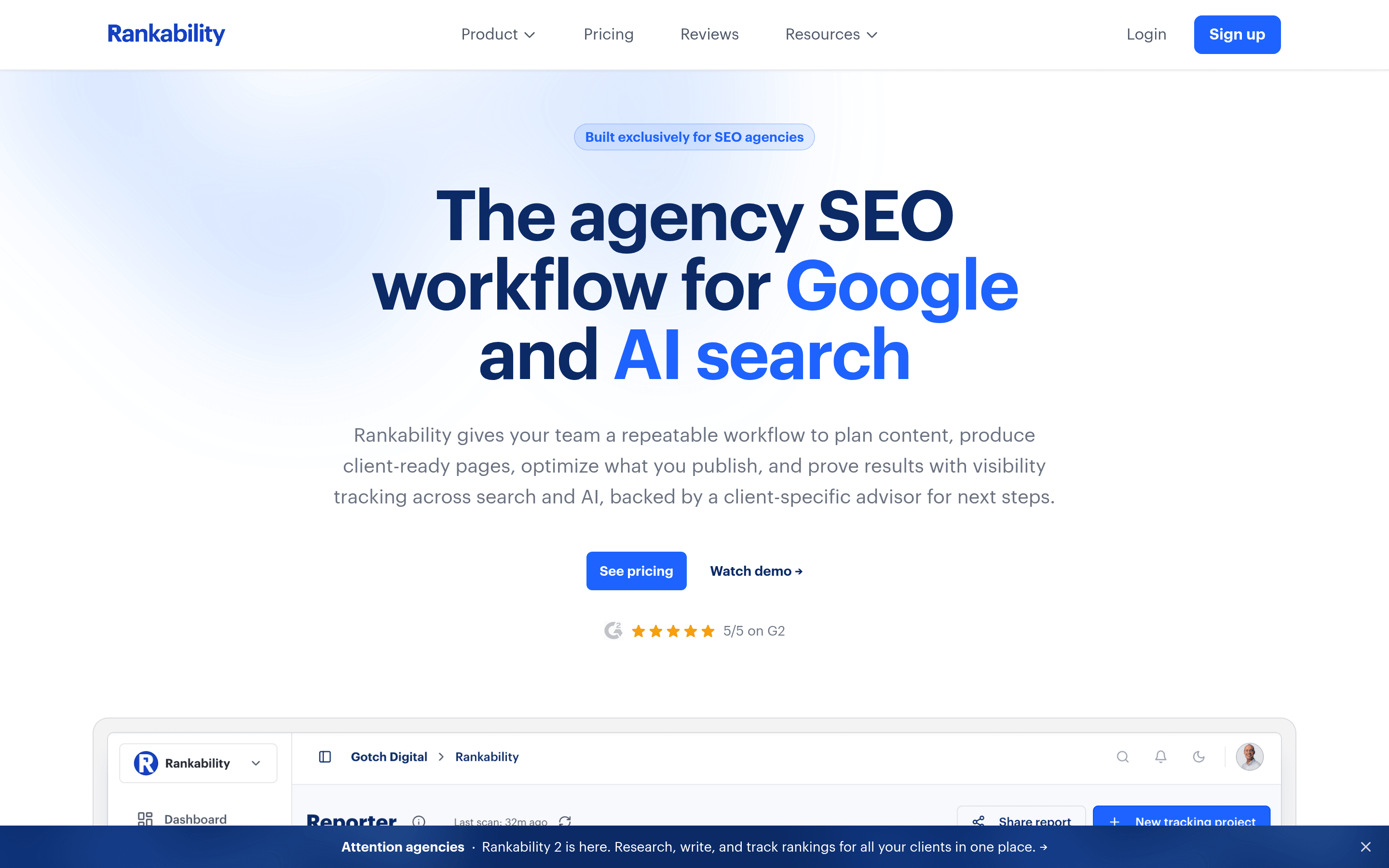
Rankability’s SPI, or Search Performance Index, is the proprietary metric that measures total search visibility across traditional search, local pack, AI answers, AI citations, and video search in one number. That matters because agencies and in-house marketing teams can report a single KPI instead of stitching together five dashboards that executives will not consistently interpret.
Rankability earns the top spot because it reflects how discovery actually works in 2026 across organic results, local results, and AI-mediated surfaces. A unified visibility score changes KPI design by connecting search performance to an executive dashboard, which makes weekly reporting faster and strategic decisions easier to defend — and its API-friendly workflows mean that same data can feed BI tools and custom reporting stacks.
Key features:
- SPI reporting across classic SERP positions, local pack, AI answers, AI citations, and video search
- API access for batch reporting and scheduled pulls
- JSON responses that fit BI tools and custom dashboards
- White-label reporting for agency delivery
- Built within a broader agency workflow covering research, writing, optimization, tracking, and advising
Pricing: Starter is $97/month, Agency $297/month, and Agency Pro $497/month. Annual totals are $970, $2,970, and $4,970. All paid plans include unlimited client workspaces, unlimited team members, branded reports, and API/MCP access. Content allowances are 20, 80, and 160 projects per month; tracked AI query allowances are 100, 300, and 500, respectively, across all 11 included AI platforms. Google keyword tracking and Local Pack scans have separate allowances. Gotch Inner Circle is included with Agency Pro annual plans. Get Started.
Ideal for: Agencies needing one KPI for SEO, AI discovery, and client-facing reporting.
Bottom line: Rankability is the strongest choice when reporting clarity matters as much as raw rank collection.
2. DataForSEO — Best for high-volume batch rank tracking
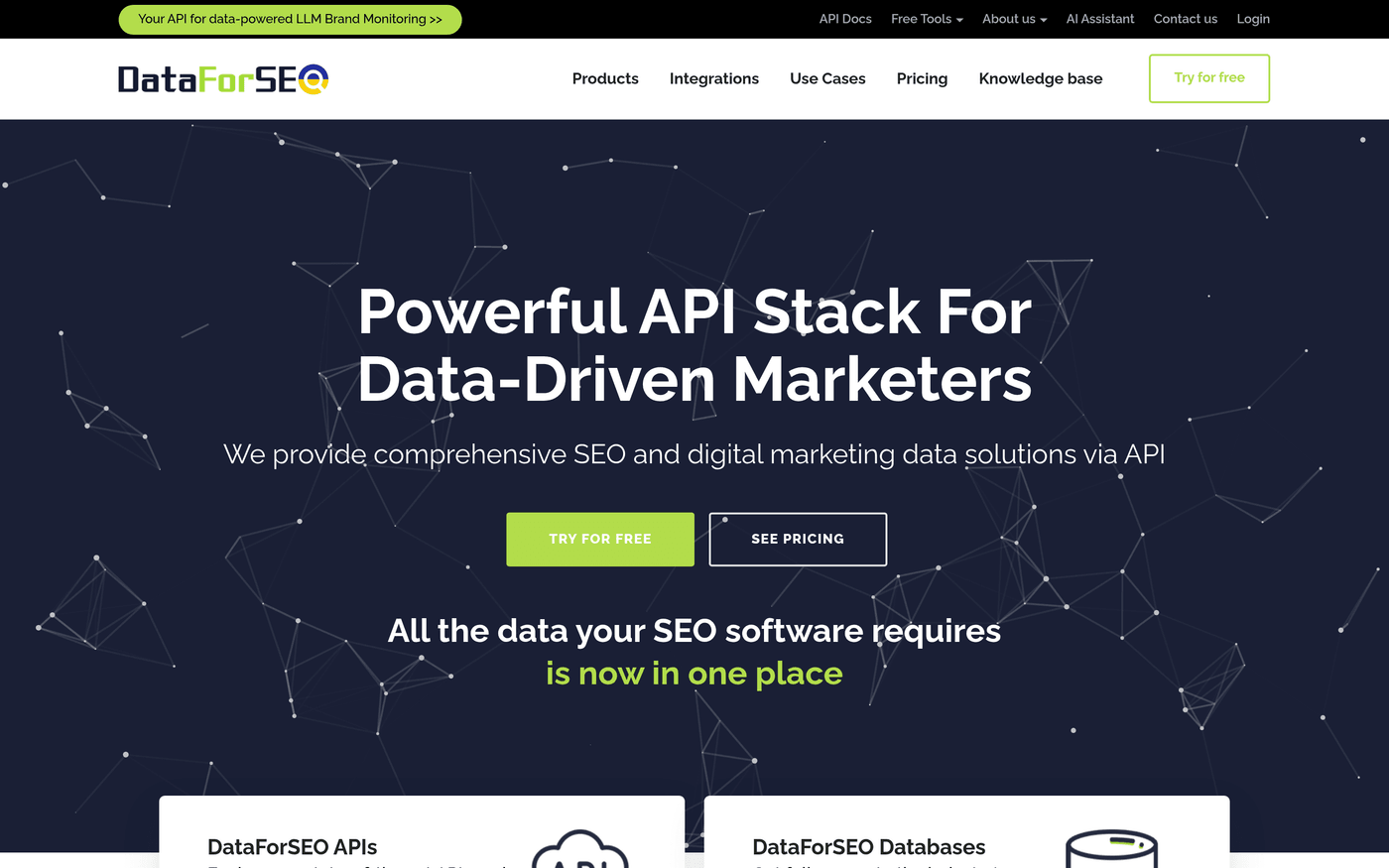
DataForSEO is built for agencies that need to process a large keyword set across many markets without forcing synchronous requests into jobs that should run in queues. Its keyword databases are among the largest in the industry, spanning billions of keywords across Google and Bing, and its asynchronous task-based architecture is designed for exactly the kind of high-throughput collection that recurring client reporting demands.
For teams managing multi-client white-label reporting, DataForSEO is attractive because structured JSON outputs and workload-based pricing support cost control at scale. Coverage across geo targeting, device targeting, engines, and SERP features makes it more adaptable than narrower APIs, especially when agencies need more than a single Google rank.
Key features:
- Batch API workflows for large keyword sets and recurring jobs
- Asynchronous processing for high-throughput collection
- Support for synchronous requests where lower-latency checks are needed
- Geo targeting and device targeting across broad monitoring scenarios
- SERP feature parsing that enriches rank datasets beyond blue links
Pricing: Pay-as-you-go; $50 minimum deposit
Ideal for: Agencies running large-scale rank pipelines, custom dashboards, or white-label reporting.
Our take: DataForSEO is the practical scale option when throughput and queue-based architecture matter more than all-in-one reporting.
3. SerpApi — Best for developer-friendly SERP parsing
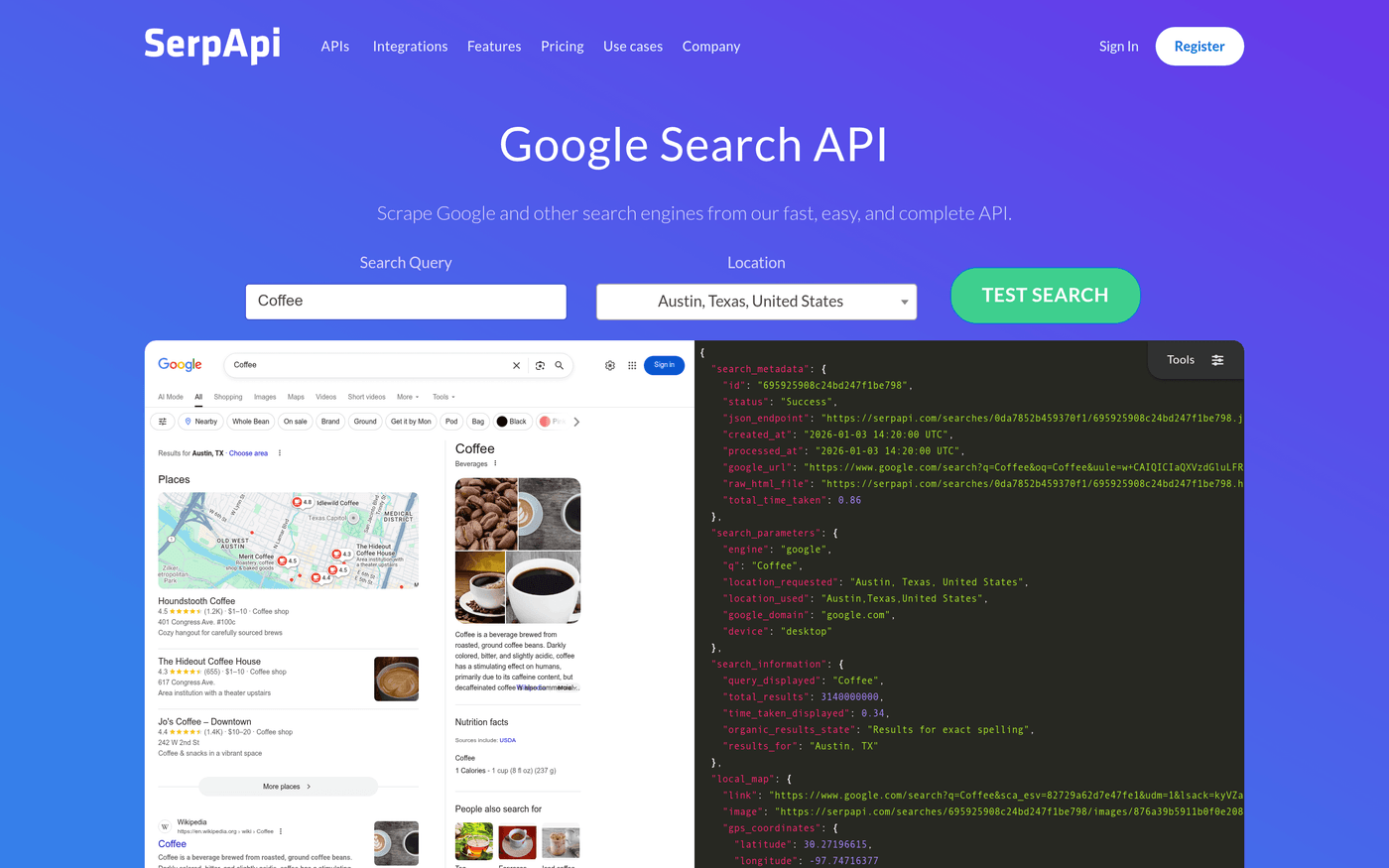
SerpApi is a strong fit for engineering-led SEO teams that want predictable JSON output and broad SERP coverage without building a parser from scratch. It provides structured, parsed SERP data and handles proxies, CAPTCHAs, and complex HTML parsing automatically, which removes the most fragile parts of running your own collection layer.
Agencies use SerpApi for rank checks, competitor snapshots, and SERP feature monitoring because stable schemas reduce maintenance overhead. Request success rate and anti-bot handling matter here, since a rank pipeline fails quietly when collection degrades, and SerpApi’s positioning is built around making that risk easier to manage.
Key features:
- Structured SERP JSON with rich result types
- Broad search coverage suitable for rank extraction and competitor tracking
- Location and device parameters for localized checks
- Client-side scheduling flexibility for custom orchestration
- Reliability profile centered on anti-bot handling and schema consistency
Pricing: Developer: $75/month; Production: $150/month
Ideal for: Developer teams that want clean SERP parsing with minimal parser maintenance.
Why it stands out: SerpApi is easier to operationalize than many raw scraping approaches because the output layer is already normalized.
4. Bright Data — Best for hard-to-get SERPs at scale
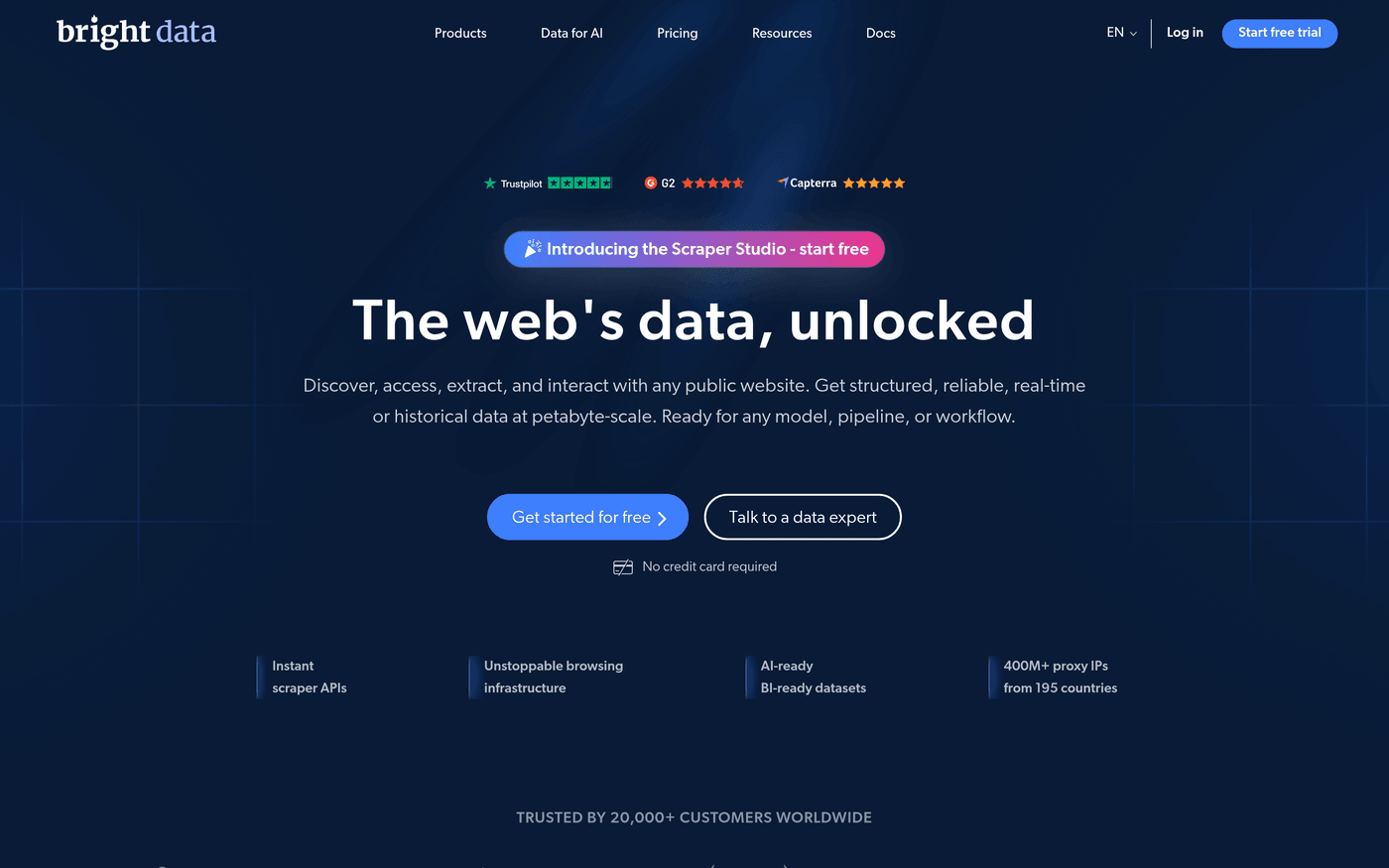
Bright Data’s rank tracking API is designed for situations where collecting rankings is itself the hard problem. Its proxy network and scalable infrastructure make it relevant for enterprises and large agencies that need difficult SERPs across many locales, devices, and engines.
This is the option to consider when city-level targeting, volatile result pages, or large-scale monitoring create collection friction. Operationally, Bright Data appeals to teams that care about request orchestration, compliance controls, and resilient access more than lightweight setup.
Key features:
- Multi-engine search results on demand
- Real-time SERP ranking data
- JSON and HTML output formats
- City-level and broader geo targeting support
- Infrastructure designed for scale-sensitive collection
Pricing: Custom pricing
Ideal for: Large agencies and enterprises collecting hard-to-fetch SERPs across complex geographies.
Worth noting: Bright Data is less about convenience and more about access reliability when standard SERP collection breaks down.
5. SearchApi — Best for synchronous rank checks and fast iteration
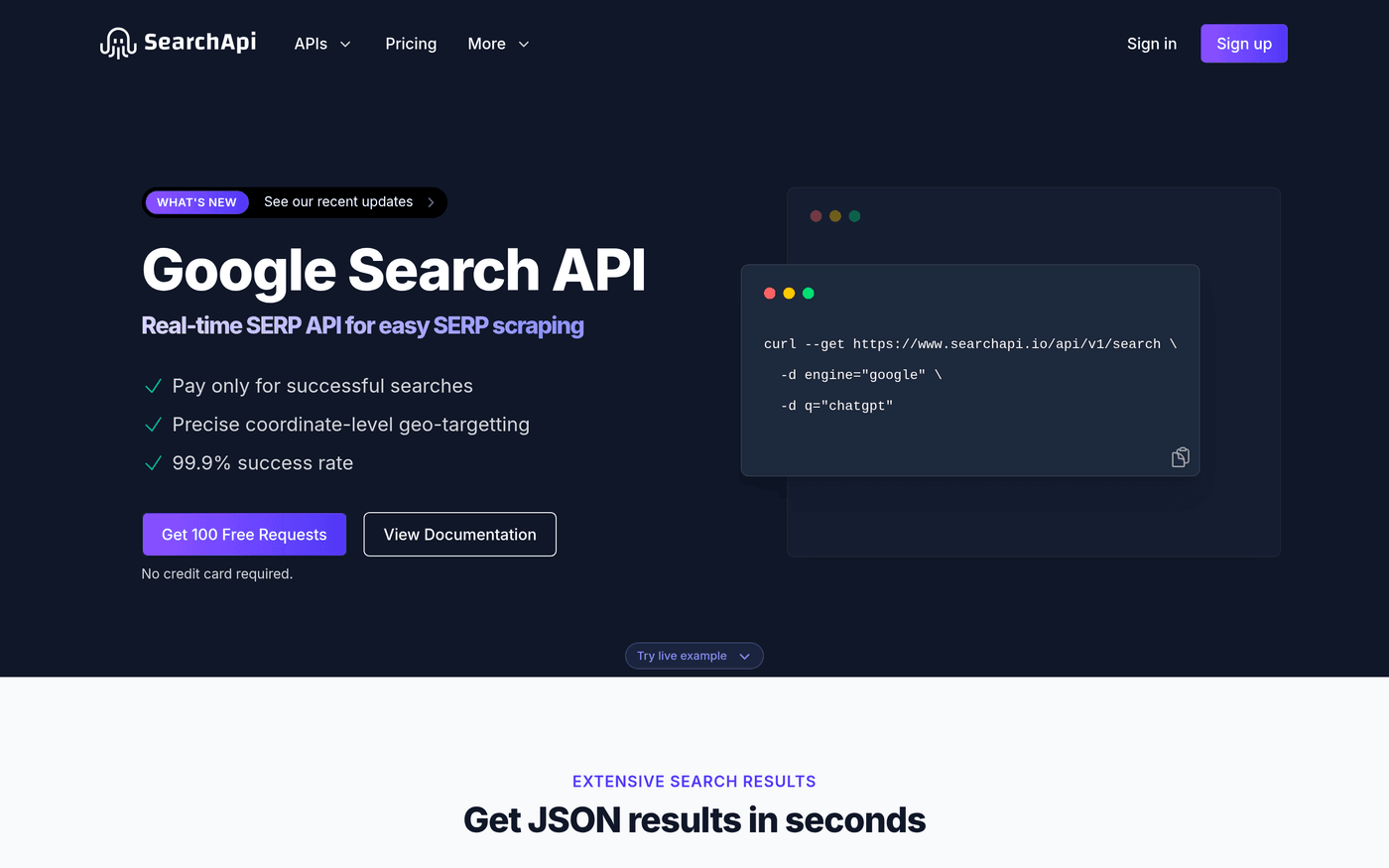
SearchApi works well when teams need near-real-time verification during site launches, migrations, or ranking incidents. Synchronous collection is useful in these moments because the answer is needed immediately, not after an asynchronous queue completes.
The tradeoff is that synchronous APIs are less efficient for very large batch workloads, but they are excellent for debugging a search query by device and geographic location. SearchApi strengthens that use case with coordinate-level geo targeting, stable JSON, and high-throughput options.
Key features:
- Clear parameters for search query, device, and geographic location
- Real-time SERP responses suited to incident response
- Built-in geo targeting with precise localization controls
- JSON outputs that fit internal reporting pipelines
- High-throughput options for scaling beyond ad hoc checks
Pricing: Developer: $40/month; Production: $100/month; BigData: $250/month; Scale: $500/month
Ideal for: Teams that need fast rank validation during launches, troubleshooting, or dashboard refreshes.
The verdict: SearchApi is the fastest route from request to answer when immediacy matters more than batch economics.
6. Similarweb Rank Tracking API — Best for pairing rankings with market intelligence
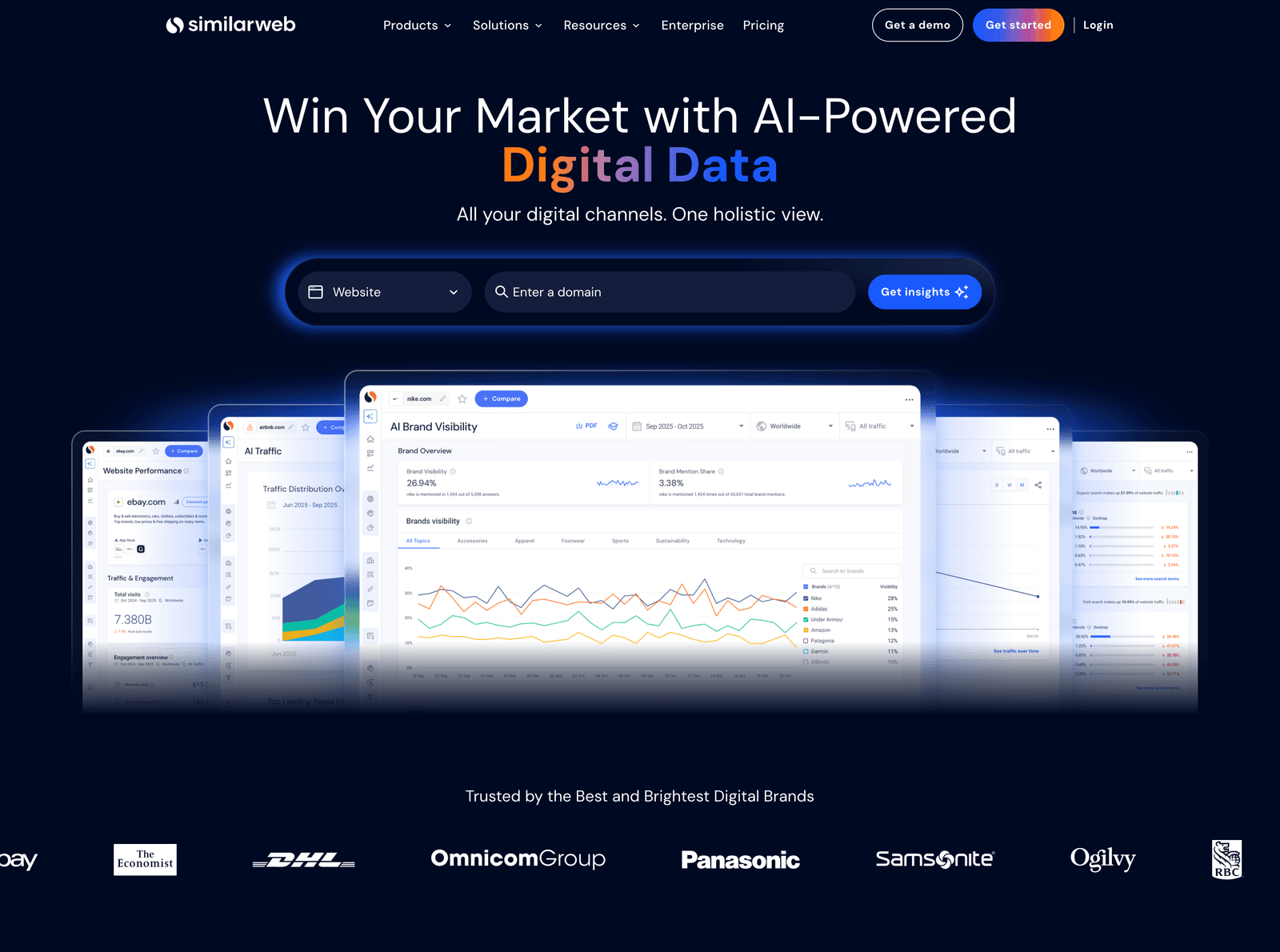
Similarweb stands out because ranking movement is more useful when paired with competitive context, traffic intelligence, and broader digital signals. That combination matters in executive reporting, where a position drop means more when it can be tied to market share shifts or competitor momentum.
Its appeal is less about pure rank extraction and more about datasets, batch API access, and integrations that support strategic analysis. For agencies presenting to CMOs, this wider frame often produces better decisions than a rank chart alone.
Key features:
- Batch API and dataset-driven access patterns
- Broader digital intelligence context around rankings
- Integrations for BI tools and reporting systems
- Data warehouse compatibility for centralized analytics
- Useful structure for competitive benchmarking workflows
Pricing: Contact for pricing
Ideal for: Teams that want rankings tied to market intelligence and executive storytelling.
Best if you need: Similarweb is strongest when ranking data needs business context, not just technical monitoring.
7. SE Ranking API — Best for SEO platform users who need API access
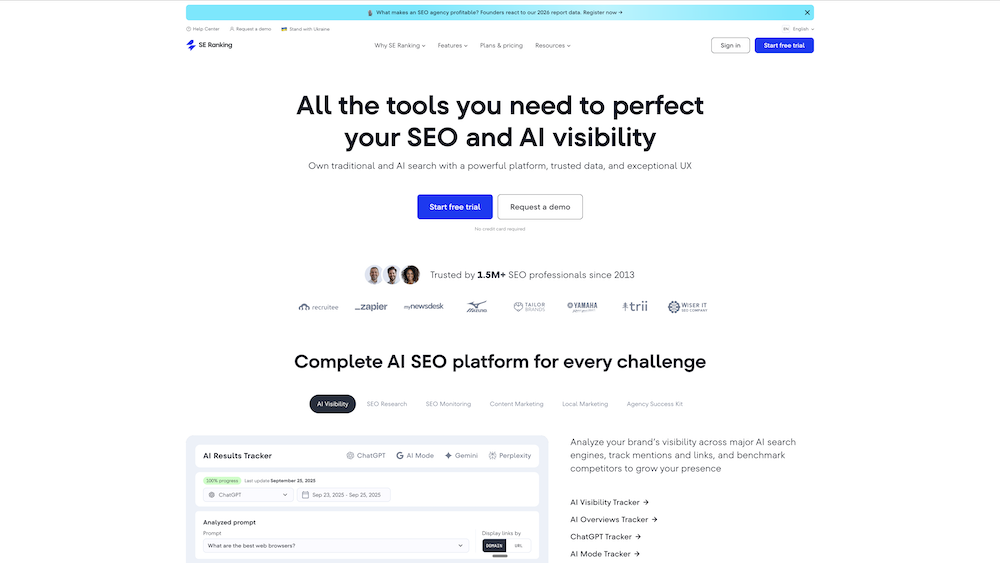
SE Ranking’s API is a pragmatic choice for teams already invested in the SE Ranking platform and looking to automate agency reporting, as our SE Ranking review covers in more depth. Project-based organization often mirrors client reporting structures, which reduces the work required to map rank position data into dashboards.
For in-house teams, the value is operational continuity rather than raw API novelty. A unified suite plus API connectivity can be more efficient than assembling separate vendors for tracking, exports, and KPI reporting.
Key features:
- Rank tracking automation through API-connected workflows
- Reporting exports for client reporting and internal dashboards
- Project-based organization aligned to client accounts
- Access to broader SEO and marketing data within one platform
- Useful fit for recurring KPI reporting
Pricing: API access available on the Business plan: $259/month
Ideal for: Existing SE Ranking users who want API automation without rebuilding their stack.
In short: SE Ranking makes the most sense when platform consolidation is a priority.
8. Zenserp — Best for simple SERP-to-rank pipelines
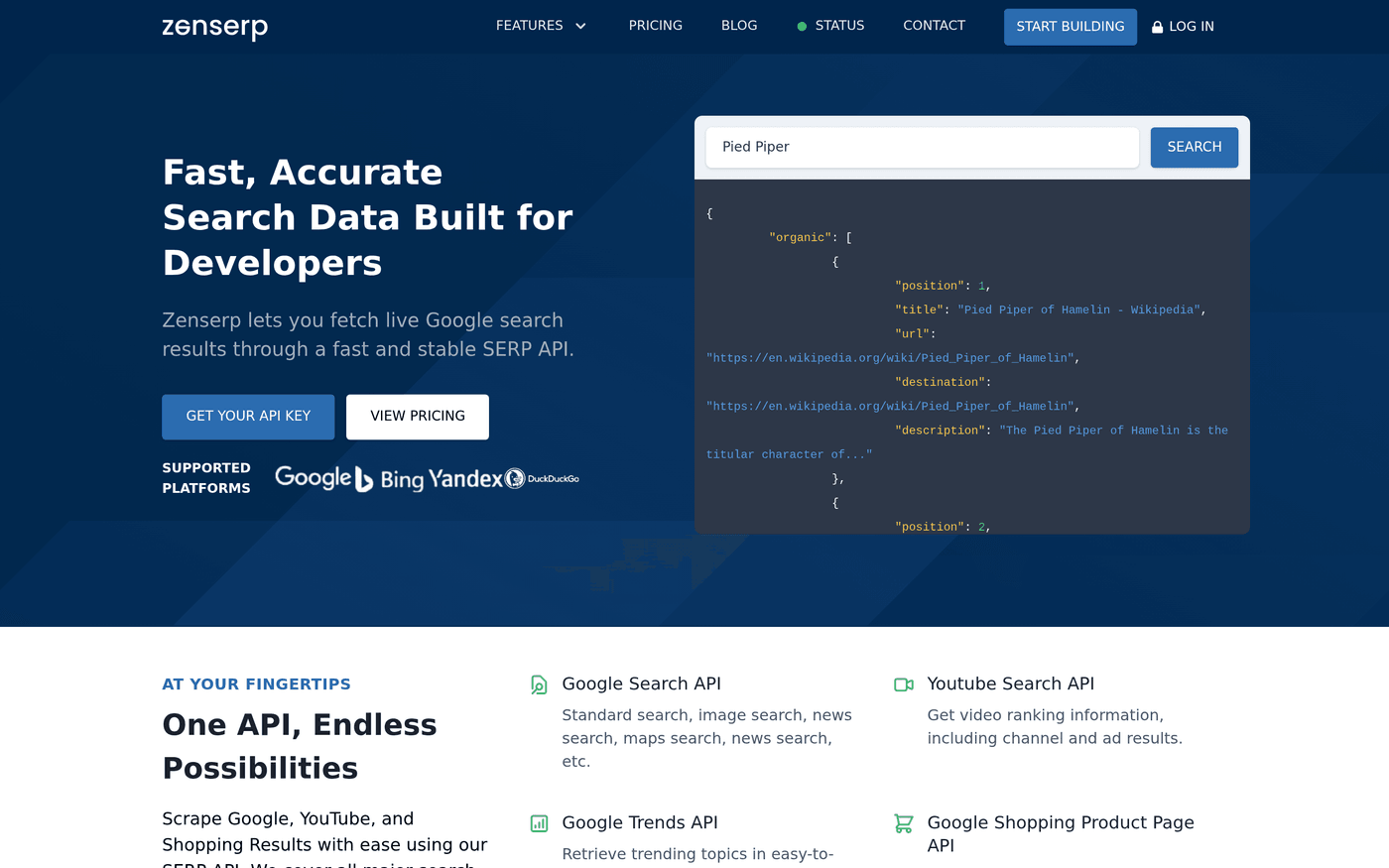
Zenserp fits agencies that want a straightforward SERP API for modest-scale rank pipelines. Its appeal is simplicity, which matters when the goal is to parse positions quickly rather than engineer a complex collection system.
Evaluation should focus on geo coverage, device handling, and response consistency because lightweight tools succeed only if their schemas stay stable. For smaller internal tools, Zenserp can be an efficient middle ground.
Key features:
- SERP parsing for rank positions and result types
- Developer-friendly endpoints
- JSON responses suitable for lightweight pipelines
- Useful fit for modest-scale keyword monitoring
- Practical option for fast integration
Pricing: Contact for pricing
Ideal for: Agencies building simple internal rank trackers or supplemental SERP monitors.
Quick take: Zenserp is a sensible lightweight option when you want implementation speed over platform depth.
9. Scale SERP — Best for budget-aware SERP collection
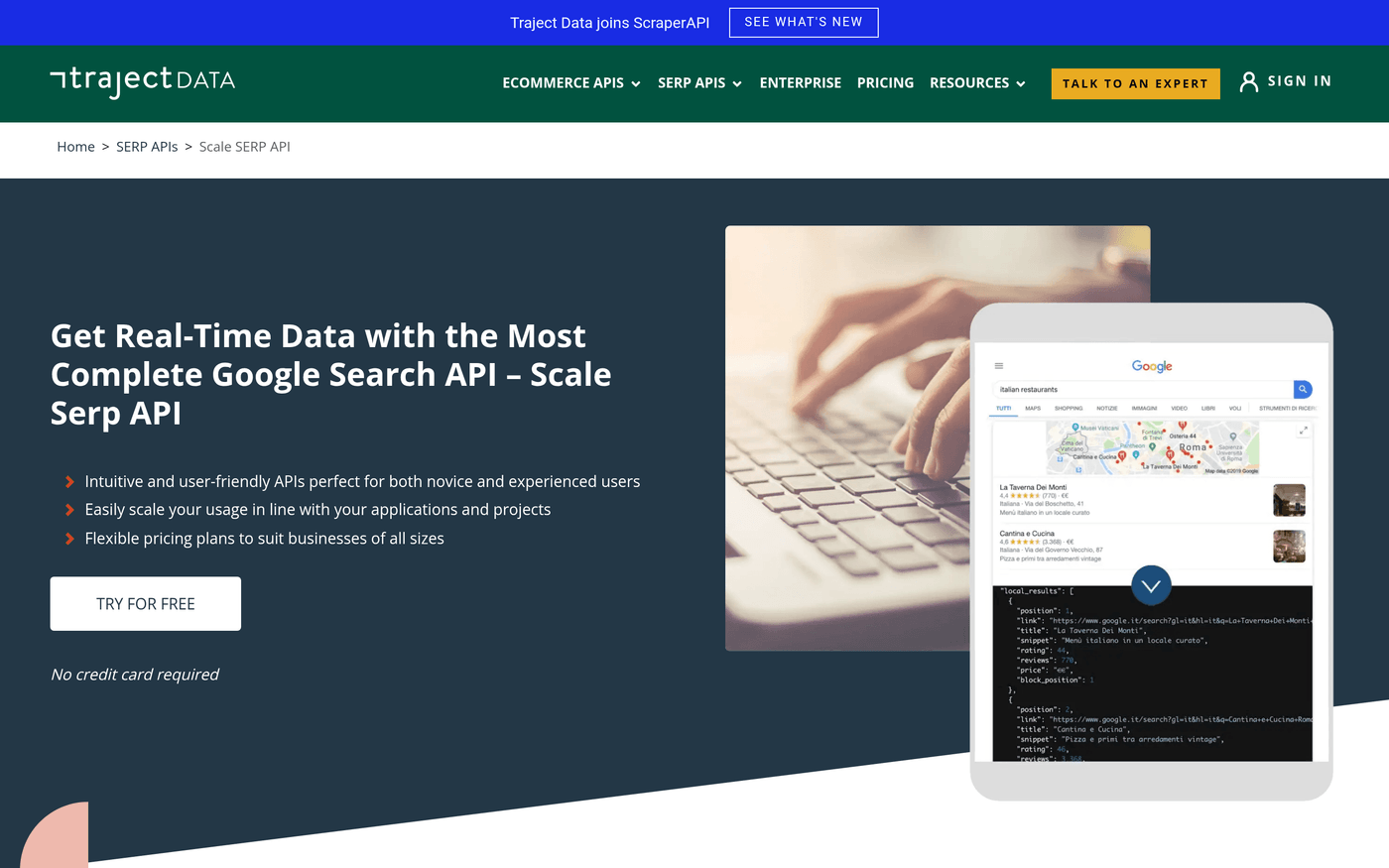
Scale SERP appeals to cost-sensitive monitoring programs that still need broad SERP coverage. The key issue is not just price, but whether throttling, concurrency, and geo precision hold up under actual reporting workloads.
That makes Scale SERP more of a value play than a premium infrastructure choice. Agencies should validate operational controls carefully before expanding usage across high-frequency accounts.
Key features:
- SERP API coverage with JSON responses
- Useful fit for broad keyword monitoring
- Attractive for cost-managed collection
- Operational considerations around rate limits
- Best evaluated with a batching strategy test
Pricing: Contact for pricing
Ideal for: Teams that need coverage at controlled spend and can validate performance internally.
Keep in mind: Scale SERP can lower collection costs, but the real test is whether its operational limits match your reporting cadence.
10. SerpWow — Best for multi-location SERP snapshots
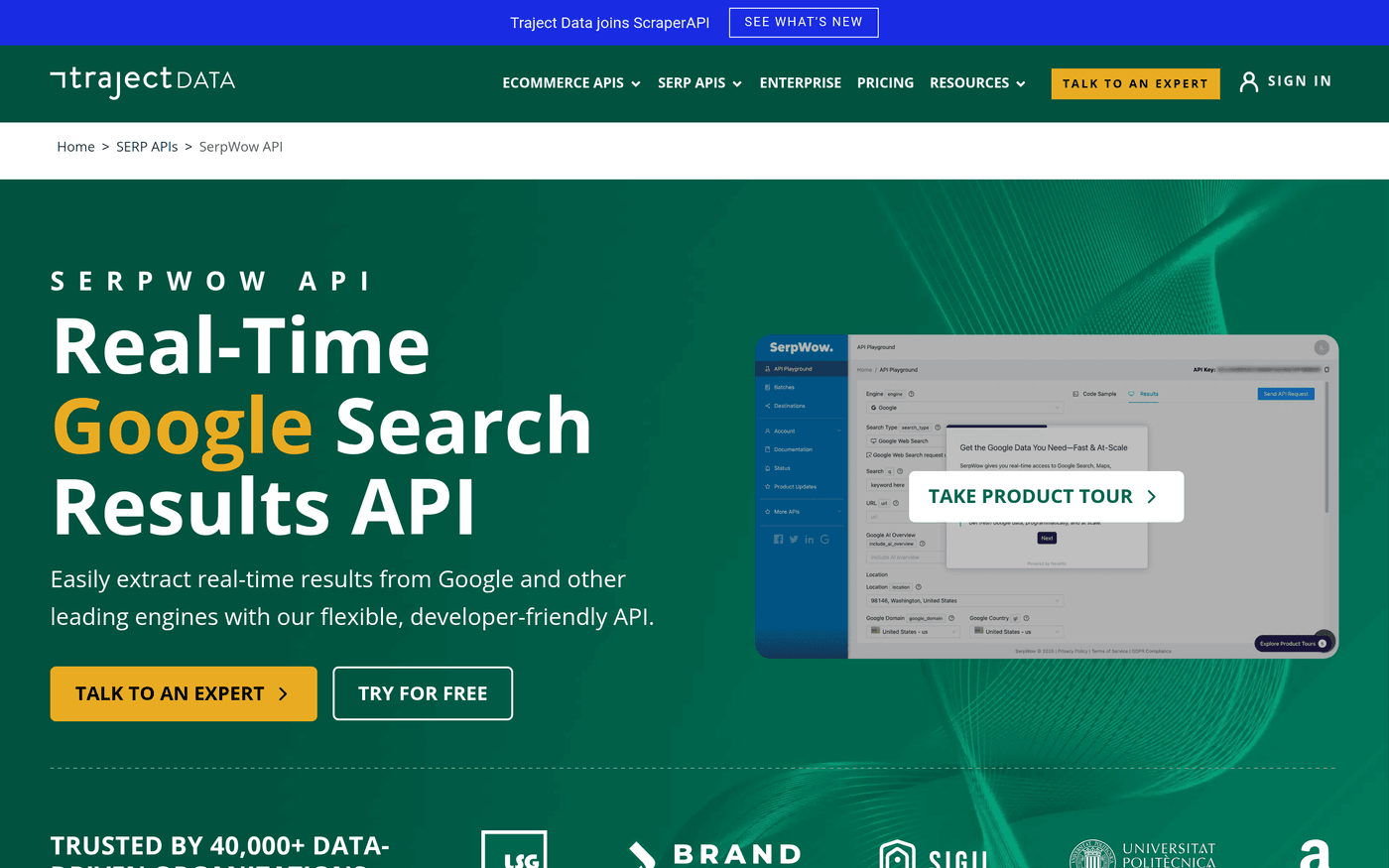
SerpWow is well suited to agencies that need consistent SERP snapshots across many locations and devices. That snapshot-first approach matters because storing the raw results lets teams reprocess rank logic later if a client disputes a reported URL position or a SERP feature interpretation.
It supports rank tracking by capturing URL, title, position, and feature context rather than only returning a derived metric. For QA and auditability, that is often the safer design.
Key features:
- Location and device parameters for consistent comparisons
- SERP parsing for position, URL, title, and feature data
- Snapshot-oriented workflows for auditing
- Useful for multi-location competitor tracking
- Strong fit for raw SERP retention strategies
Pricing: Contact for pricing
Ideal for: Agencies that prioritize traceable SERP history and cross-location comparisons.
Takeaway: SerpWow becomes more valuable when raw snapshots are part of your dispute-resolution and QA process.
11. Scrapingdog — Best for quick keyword rank extraction
Scrapingdog is an accessible option for straightforward rank pulls, especially for smaller clients or internal utilities. Its role in an agency stack is usually supplemental rather than central, which is often the right fit for simple monitoring jobs.
Buyers should validate localization accuracy, CAPTCHA handling, and schema stability before depending on it for executive reporting. Those factors determine whether a quick extraction tool can graduate into a dependable production feed.
Key features:
- SERP extraction endpoints with JSON output
- Straightforward implementation for internal tools
- Geo and device options for localized checks
- Useful for supplemental keyword monitoring
- Reliability considerations around parsing consistency
Pricing: Contact for pricing
Ideal for: Smaller-scale agency workflows and simple rank extraction needs.
Final word: Scrapingdog is a practical add-on when you need fast deployment more than deep reporting sophistication.
How We Chose the Best Rank Tracking APIs
This list prioritized production usefulness over feature sprawl. An API scored higher if its data could survive the questions clients and stakeholders actually ask: what moved, where it moved, why it moved, and whether the number can be reproduced when someone checks.
We evaluated each provider on six factors: accuracy and reproducibility, geo and device targeting precision, SERP feature coverage, architecture fit (batch versus real-time), schema stability, and total cost by workload. True cost matters more than sticker pricing because monthly spend is driven by keywords × locations × devices × frequency × engines, plus retries and storage.
We also weighed whether each provider reflects the current shape of search. Google rankings still matter, but local pack performance, AI answer visibility, and video modules now change what a “rank” actually means, so providers that acknowledge those surfaces — or, in Rankability’s case, unify them into one score — earned stronger placement.
We excluded APIs with inconsistent schemas, weak geo targeting, or UI-only products that lack real automation, because agency reporting requires programmatic access, not manual exports.
FAQs
What is a rank tracking API?
A rank tracking API programmatically returns keyword positions and related SERP features for specified engines, devices, and locations. It exists to automate monitoring and reporting instead of relying on manual checks or a free Google rank tracker alone.
How do rank tracker APIs work?
They fetch SERP results for a query using fixed geo and device settings, then parse the page into structured JSON. Your system derives ranks by matching domains or URLs and storing snapshots over time.
What makes a rank tracking API accurate?
Accuracy depends on city-level localization, device emulation, stable parsing, and reproducible request settings. SERP features such as local pack and AI answers can also shift how rank position should be interpreted.
How much do rank tracking APIs cost?
Costs are workload-driven: keywords × locations × devices × frequency × engines, plus retries and storage. Store raw SERP responses when possible, because reusing snapshots reduces re-fetching and improves auditability.
Should I use a SERP API or a dedicated rank tracking API?
Use a dedicated rank tracking API when ranks are the main output and reporting simplicity matters most. Use a SERP API when you need full snapshots, richer feature parsing, and custom logic across local, video, and AI surfaces.
Conclusion
Rankability is the strongest starting point for most agencies because it unifies classic SEO and AI discovery into one KPI. If your reporting has outgrown isolated Google rankings and now needs local pack, AI answers, AI citations, and video visibility in one framework, it is the clearest strategic fit.
Get started to see how the SPI model fits your reporting stack.
DataForSEO is the best choice for large-scale batch pipelines, SerpApi is the safest developer-friendly parsing option, and Bright Data is the specialist for hard-to-fetch SERPs. Reporting needs, localization precision, and engineering resources should drive the decision more than headline feature lists.
Start here: decide what your reporting audience needs to see before comparing request quotas. A single executive KPI, a raw SERP archive, and a high-throughput batch pipeline solve different problems, and the best API is the one that makes your next client conversation easier to defend.