

SEO PowerSuite can help with broader SEO tasks. Between Rank Tracker, SEO SpyGlass, LinkAssistant, and WebSite Auditor, it covers a lot of the classic workflow for SEO professionals.

But many people looking into SEO PowerSuite alternatives and competitors aren’t actually trying to replace every feature in the suite. They’re trying to find a better solution for planning, writing, optimizing, and improving content that has a stronger chance of performing in search.
That distinction matters. If your main priority is backlink tracking, site auditing, technical SEO, or broader SEO management, SEO PowerSuite may still be a viable option. But if your biggest bottleneck is content marketing, content strategy, and improving pages based on what is already winning in the search results, then a specialized optimizer is often the better choice.
This list focuses specifically on tools that are better suited for content optimization than SEO PowerSuite. Some are better for agencies. Some are better for small businesses or content creators.
Some have stronger AI and search coverage. Others are better for real-time editing, keyword ideas, or improving online visibility without adding more friction to your workflow. If you’re trying to improve SEO performance and build a more efficient SEO strategy, these are the best alternatives to consider.
Quick Picks
- Best overall for agencies: Rankability
- Best live optimization editor: Surfer
- Best for research and briefs: Frase
- Best premium editorial workflow: Clearscope
- Best for content strategy and planning: MarketMuse
- Best all-in-one writer plus optimizer: Scalenut
- Best simple content optimizer: Dashword
Comparison Table
Pricing changes often, so verify on vendor pages before purchase.
| Tool | Best for | Starting price* | AI & Search Coverage | Notes |
|---|---|---|---|---|
| Rankability | SEO agencies and teams that want optimization plus workflow support | $199/mo | AI-driven optimization, topical recommendations, briefs, AI search reporting | Strong agency fit with broader workflow value |
| Surfer SEO | Teams that want real-time optimization while writing | $99/mo | Live scoring, NLP guidance, AI search features, SERP-based recommendations | One of the most popular SEO tools in this category |
| Frase | Small teams that want research, writing, and optimization together | $49/mo | SERP research, AI briefs, optimization, AI visibility features | Good balance of value and workflow coverage |
| Clearscope | Editorial teams that want a clean premium optimizer | $129/mo | Topic coverage, content grading, AI search visibility support | Strong for quality control and collaboration |
| MarketMuse | Teams focused on planning and content depth | Free version available | Topic modeling, content inventory, optimization, SERP analysis | More strategy-heavy than editor-first |
| Scalenut | Teams that want AI writing and optimization in one place | $59/mo | AI drafting, optimization, content audits, keyword planning | More all-in-one and AI-forward |
| Dashword | Small teams that want a streamlined optimizer and brief builder | $99/mo | Briefs, scoring, monitoring, rank insights | Simple and easier to adopt than a larger SEO suite |
*Starting prices change often – verify current pricing before purchase.
What to Look for in an SEO PowerSuite Alternative
The biggest difference between SEO PowerSuite and these tools is use case. PowerSuite is closer to an SEO suite. These alternatives are designed to make content optimization a first-class workflow.
When evaluating the best SEO PowerSuite alternatives, here’s what matters most:
Real-time optimization
The best tools make it easy to improve a page while you’re writing, not after the draft is finished. Real-time guidance can speed up execution and reduce guesswork.
Better SERP analysis
A strong optimizer should help you understand what is ranking now, what topics competitors cover, and which content ideas deserve attention. This is especially useful for competitive analysis and prioritizing what to create next.
Workflow support
Great content tools don’t just surface keyword suggestions. They help with briefs, collaboration, SEO data, and execution. That becomes even more important for SEO agencies, content creators, and teams running multiple campaigns.
Integration into a broader stack
Most teams still use Google Search Console, Google Analytics, and sometimes tools like Screaming Frog for technical issues, traffic sources, and deeper SEO analysis. A content optimizer doesn’t need to replace every essential tool. It just needs to improve the weakest part of your workflow.
Ease of use
A lot of popular SEO tools lose people because of the learning curve. If a product isn’t intuitive, your team probably won’t use it consistently. Ease of use matters, especially for small business owners, digital marketers, and SEO specialists who want faster execution.
The Alternatives
1. Rankability
Rankability is the strongest option here if your biggest issue with SEO PowerSuite is that content optimization feels secondary to the broader suite. Instead of treating optimization as just one feature next to backlink checker tools, link outreach, or site auditing, Rankability is built around helping teams improve content in a more focused and scalable way.

It works especially well for SEO agencies because it connects optimization to a larger SEO workflow. You can move from content planning to briefs to optimization to reporting more smoothly than you can inside a traditional desktop SEO suite. That matters when you’re trying to build repeatable delivery systems for clients instead of just improving a single article.
Another strength is its positioning around semantic optimization and AI search coverage. Rather than only helping you hit terms or improve a page score, it supports a broader approach to search engine rankings and content performance. For agencies and advanced users, that makes it feel more like a strategic operating layer than just one of many keyword tools.
Rankability also fits naturally into a broader SEO campaign. Teams can use it alongside Google Search Console and Google Analytics to evaluate keyword rankings, keyword data, traffic sources, and SEO performance after content is published. So while it isn’t trying to replace every tool in your stack, it does help strengthen the part of the workflow that often matters most.
Best for: SEO agencies, consultants, and teams that want a stronger content optimization workflow tied to broader execution.
Potential downside: It’s not the cheapest option, so it makes the most sense for teams that will actually use the full workflow value.
2. Surfer
Surfer is one of the most well-known SEO PowerSuite alternattives for a reason. If your main goal is improving content while you write, Surfer remains one of the strongest real-time editors on the market.

Its biggest strength is usability. The interface is intuitive, the content score is easy to understand, and the workflow is built for fast iteration. That makes it attractive for content teams, SEO experts, and digital marketers who want clear actionable recommendations without digging through a more complex SEO suite.
Surfer is also useful when you’re trying to improve pages based on search results and not just gut instinct. It can help with keyword suggestions, SERP analysis, topic coverage, and identifying opportunities to improve a page for specific SERP feature visibility. That’s a big reason it’s often listed among the best SEO tools for on-page optimization.
Compared with SEO PowerSuite, Surfer is much better if your main focus is content creation and optimization. Compared with broader platforms like Moz Pro, SE Ranking, or a tool positioned more like Ahrefs, it feels more specialized. You’re not getting the same breadth of backlink data, site auditing, or position tracking, but you’re getting a much stronger editor for content work.
Best for: Teams that want live scoring, faster optimization, and an easier path to execution.
Potential downside: If you also need heavy technical audits, local SEO support, or backlink tracking, you’ll still need other software in your stack.
3. Frase
Frase is one of the best alternatives if you want research, briefs, AI writing, and optimization all together in one platform. That’s what makes it especially appealing for small businesses, solo operators, and lean teams that don’t want to juggle multiple tools.
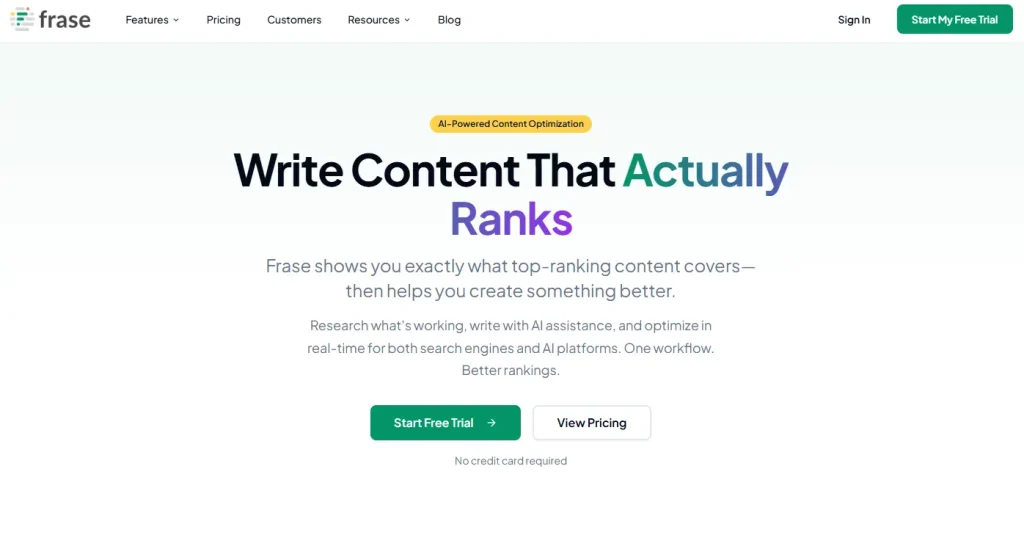
One of Frase’s biggest advantages is that it helps bridge the gap between content ideas and execution. You can research top-ranking pages, generate briefs, build outlines, and optimize content in a single environment. That makes it useful for SEO efforts where speed matters and where your team needs a cleaner workflow from idea to published asset.
Frase also tends to feel less intimidating than a full SEO suite. For people who don’t want a steep learning curve, that’s a meaningful advantage. It can be a strong fit for content creators, SEO specialists, and small business owners who want more help with optimization but don’t need every analysis feature that comes with a broader platform.
If you’re already handling SEO issues, backlink tracking, or position tracking elsewhere, Frase can slot in as a dedicated content layer. It won’t replace all your SEO tools, but it can simplify marketing efforts and support a more efficient content workflow.
Best for: Small teams and marketers who want research, briefs, and optimization together.
Potential downside: Power users may still prefer a more specialized optimizer for high-priority pages.
4. Clearscope
Clearscope is a premium content optimization tool designed for teams that care deeply about quality control, editorial consistency, and clean workflows. It’s less of an all-in-one SEO platform and more of a polished system for improving content at scale.

What makes Clearscope stand out is its simplicity. The interface is clean, the grading is easy to understand, and it’s approachable even for teams with non-SEO stakeholders. That makes it attractive for larger teams, SEO professionals, and content operations where user experience matters as much as the analysis itself.
Compared with SEO PowerSuite, Clearscope is a much better fit for editorial execution. You’re not choosing it for backlink checker functionality, backlink index depth, technical audits, or white-label reports. You’re choosing it because you want a more focused tool for improving content quality, topic coverage, and search relevance.
For brands with a serious content program, Clearscope can be one of the best software options in this space. It also works well for teams that want collaboration without the friction of a more complicated SEO suite.
Best for: Editorial teams, agencies, and brands that want premium content optimization with an intuitive interface.
Potential downside: Pricing is higher than several other options here, and it won’t replace broader SEO tools.
5. MarketMuse
MarketMuse is different from most of the tools on this list because it’s more strategy-heavy. While other products focus more on real-time optimization inside the editor, MarketMuse is stronger for planning, prioritization, and deciding what to create or improve across an entire site.
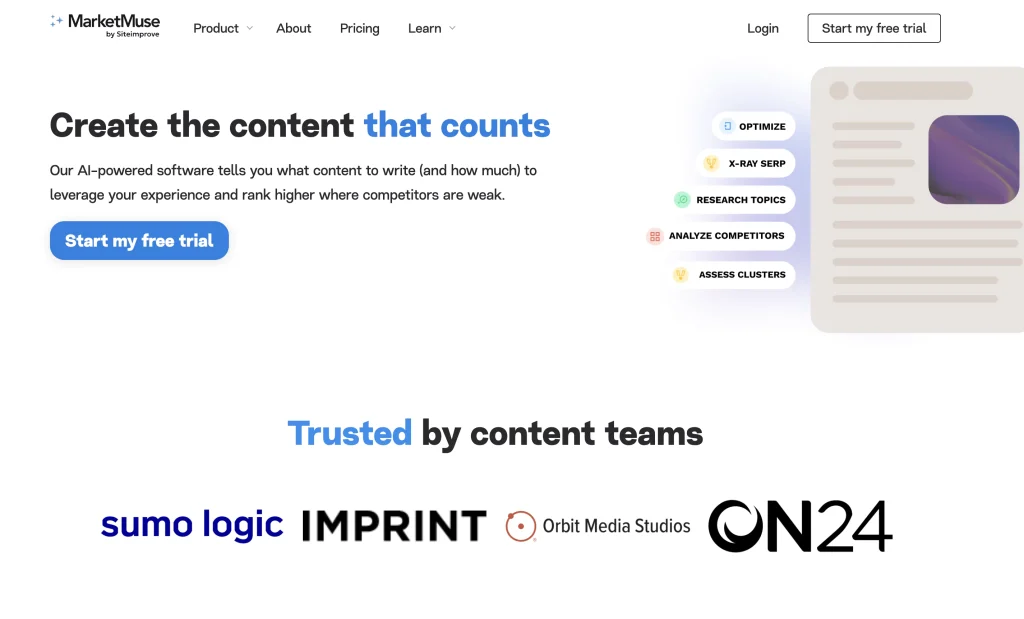
That makes it useful for teams with larger content libraries, more complex SEO campaigns, or a stronger focus on long-term SEO strategy. If your bottleneck is figuring out what to publish next, which pages to update, or how to strengthen topic authority, MarketMuse can be extremely valuable.
It’s also helpful for teams that publish heavily through an SEO Blog, learning center, or resource hub. Instead of only helping you optimize one page, it helps shape broader marketing strategy and content strategy decisions. It can uncover keyword ideas, reveal gaps in topical coverage, and help prioritize pages that deserve attention.
Compared with SEO PowerSuite, MarketMuse is far less about classic SEO management and much more about strategic planning. If your needs are centered on technical issues, link building, or broader SEO data collection, you’ll probably still need other essential tools. But if you’re trying to improve online presence through smarter planning and better content depth, it’s a very compelling choice.
Best for: Teams that care about content planning, topic authority, and long-term SEO performance.
Potential downside: It’s more strategic than editor-first, so it may feel heavier if all you want is a quick optimizer.
6. Scalenut
Scalenut is one of the better choices if you want drafting and optimization in one platform. It leans more heavily into AI than some of the other tools here, which makes it attractive for teams trying to move quickly while still improving content for search.

Its appeal comes from convenience. You can generate drafts, optimize content, run audits, and work through keyword ideas inside one system. For teams running multiple marketing initiatives, that kind of consolidation can save time and reduce complexity.
Scalenut is also relevant for teams that care about both traditional search and AI-driven discovery. If you’re trying to improve online visibility without building a much larger stack, it can be a useful middle ground between a dedicated optimizer and a more expansive marketing platform.
Compared with SEO PowerSuite, Scalenut is a better fit when the priority is content production speed and optimization rather than classic desktop SEO workflow. It won’t give you the same experience for backlink monitoring, site auditing, or broader SEO analysis, but it can be more practical for modern content teams.
Best for: Teams that want AI writing, optimization, and audits in one place.
Potential downside: Some teams may find it more AI-heavy than they want if they prefer a more traditional optimizer.
7. Dashword
Dashword is a good fit for teams that want a straightforward optimizer without the bulk of a larger SEO suite. Its value is in simplicity. You can create briefs, optimize content, monitor pages, and keep the workflow manageable without loading the team up with too many features.
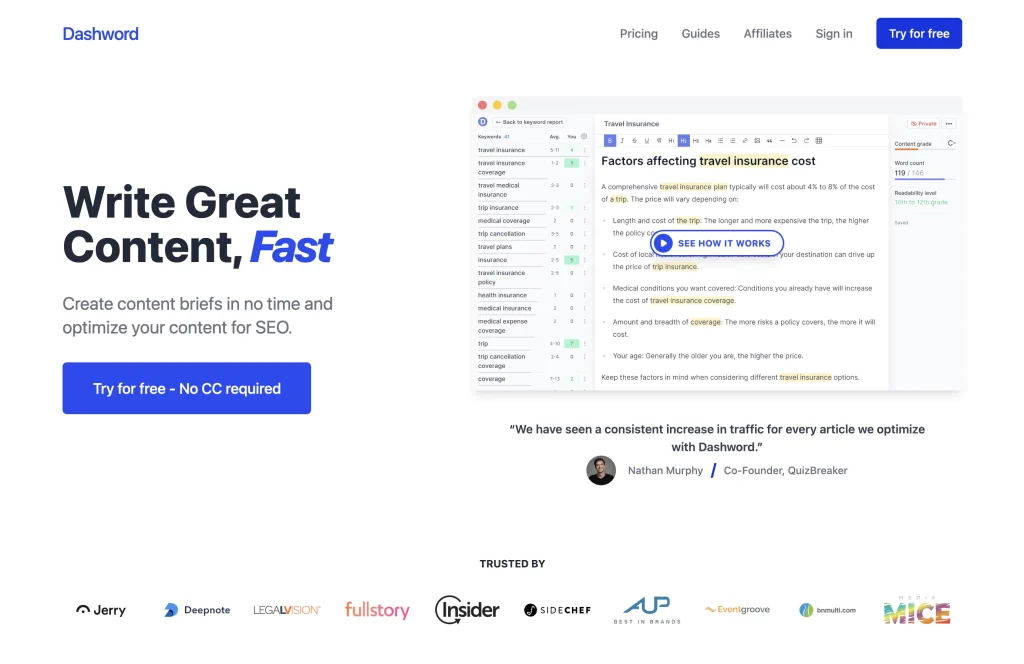
That simplicity makes Dashword attractive for smaller teams, content creators, and small business owners who want to improve pages without committing to a more complicated platform. It’s easier to adopt than many broader SEO suites, and that alone can make it more effective in practice.
Compared with SEO PowerSuite, Dashword is much narrower. You aren’t choosing it for local SEO, backlink tracking, site auditing, technical audits, or broader position tracking. You’re choosing it because you want one of the best alternatives for focused content work.
For teams that already rely on other free tools or established platforms for deeper SEO tasks, Dashword can be a nice complement. It won’t do everything, but it can improve the part of the workflow that directly influences page quality and content execution.
Best for: Small teams that want a practical, easy-to-use content optimizer.
Potential downside: It’s less robust than some of the more advanced options here.
How These Tools Compare to Broader SEO Platforms
It’s important to understand what these tools are and what they aren’t. Most of the products on this list aren’t trying to replace a full SEO suite with site auditing, backlink profile analysis, backlink tracking, rank tracking tool functionality, or detailed technical diagnostics.
If you still need support for technical SEO, local SEO, backlink monitoring, or broader SEO management, you may still use other tools in parallel. That could include Screaming Frog for crawling, Google Search Console for performance data, Google Analytics for traffic sources, and other platforms for keyword tracking, competitive analysis, or backlink data.
That’s not a weakness. It’s just a different use case.
In many cases, the smartest move is to keep the tools that already help with technical issues, SEO audits, and website SEO diagnostics, then add a stronger content optimization layer on top. That’s often more effective than forcing one platform to handle every job poorly.
Which SEO PowerSuite Alternative Is Best for You?
Choose Rankability if you want the strongest agency-oriented content workflow and a platform that fits naturally into a broader SEO campaign.
Choose Surfer if you want one of the most popular SEO tools for live optimization and fast feedback.
Choose Frase if you want a clean balance of content research, AI support, and optimization at a lower starting price.
Choose Clearscope if you care most about editorial quality, polish, and collaboration.
Choose MarketMuse if your top priority is planning, prioritization, and long-term content depth.
Choose Scalenut if you want AI drafting and optimization together in a more all-in-one system.
Choose Dashword if you want a simpler tool that improves content without overwhelming the team.
Final Verdict
SEO PowerSuite is still a powerful tool, but it’s better understood as a broader SEO suite than a best-in-class content optimization platform. If your top priorities are content marketing, stronger optimization workflows, better team collaboration, and improving pages based on real search behavior, these alternatives are usually a better fit.
The right choice depends on your workflow. Some teams want a simple optimizer. Some want a premium editorial system. Some want broader AI coverage. But for agencies and serious content teams, Rankability stands out because it doesn’t just help optimize pages. It helps turn optimization into a more repeatable system for execution, reporting, and growth.