

If you run an agency, the real question about Semrush isn’t “what does it do?” — it’s “is it worth it for managing multiple client campaigns, and what else should you compare before you commit?” This review answers both.
Semrush is the best-known all-in-one SEO and search marketing platform — but at $139.95 to $499.95 a month, the real question is whether it is worth it for you in 2026. This Semrush review breaks down what you actually get, what it costs, where it falls short, and who should choose something leaner instead.
Verdict: Semrush is worth it if you want one platform for keyword research, competitor analysis, rank tracking, backlinks, and reporting — and you will actually use most of it. Solo creators and lean teams often overpay for breadth they never touch, and Semrush’s newer AI-search features still lag dedicated tools. Best for: agencies and in-house SEO teams. Look elsewhere if: you mainly need content optimization, AI-search visibility, or a simple, low-cost toolset.
Semrush Review at a Glance
- What it is: an all-in-one SEO, content, PPC, and competitive-research suite.
- Pricing: Pro ~$139.95/mo, Guru ~$249.95/mo, Business ~$499.95/mo (annual billing is cheaper; verify current pricing).
- Strengths: deep keyword and backlink data, competitor analysis, rank tracking, and client reporting.
- Weaknesses: price, a learning curve, per-feature add-ons, and AI-search tracking that trails specialists.
- Best alternatives: Ahrefs for research, SE Ranking for value, and Rankability for content and AI-search execution.
Semrush Deep-Dive Reviews
Semrush is really a bundle of tools. If you are evaluating a specific module, start with these hands-on deep dives:
- Semrush AI Toolkit review — does its AI-visibility tracking justify $99/month per domain?
- Semrush SEO Writing Assistant review — how good is its content optimizer for real drafts?
- Semrush AI Toolkit alternatives — the best alternatives to Semrush for AI search visibility tracking.
- Semrush alternatives for agencies — full-suite replacements if Semrush is overkill.
What is Semrush?
“SEM” stands for “Search Engine Marketing,” and that’s exactly what Semrush focuses on. They created this tool to help both SEO and paid search professionals achieve even greater results in digital marketing.
In this guide, I’m going to show you how to use Semrush for SEO-driven purposes.
What Semrush Does Well: 6 Hands-On SEO Workflows
1. Analyze Trends + Competitor Analysis with Semrush
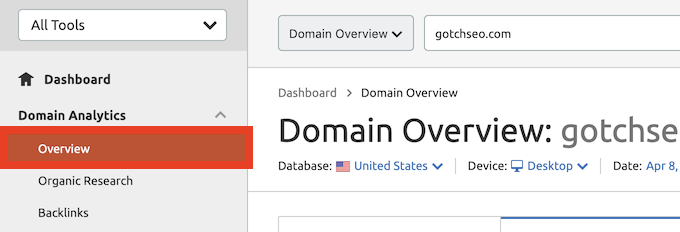
The “Overview” section within Semrush can give powerful insights at a glance. Enter your domain and click on “Overview.”
Traffic Trend Score
The first section to analyze is the traffic trend section.
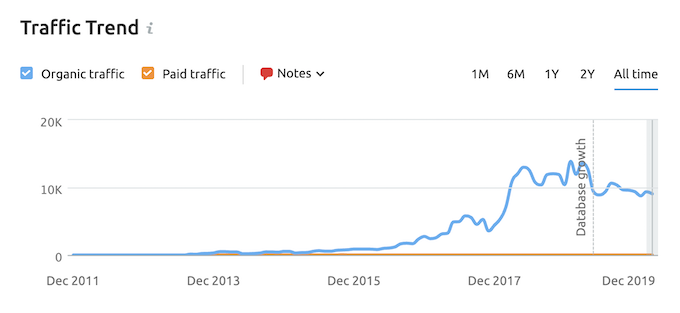
These traffic numbers are nothing more than estimates from Semrush based on the search volume and click-through rate of the keywords you’re ranking for. Take this section with a grain of salt.
However, it can be useful if you don’t have access to Google Analytics and you need a high-level overview of performance. That said, Google Analytics will show you your true organic search traffic numbers.
And not to be captain obvious, but you want to see these “Traffic Trend” numbers rising.
If they’re declining or flat, then you’ll need to investigate further. Conducting an SEO audit is a good first step.
Track Ranking Position Changes with Semrush
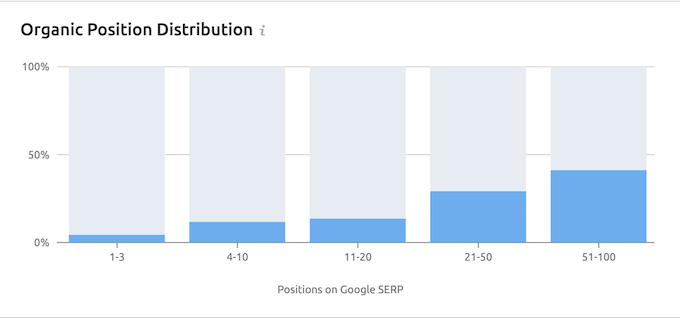
The next section worth investigating is “Top Position Changes.” This is useful to see what keywords are performing well and which ones are losing traction.
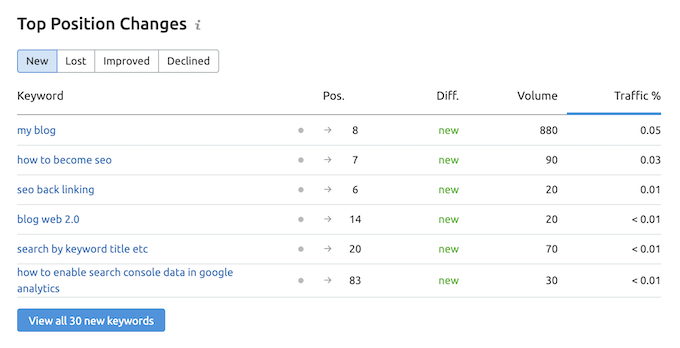
You can double down on the ones that are moving well and figure out why the others aren’t performing. I recommend reviewing this section on a weekly basis.
Analyze Branded Search Volume
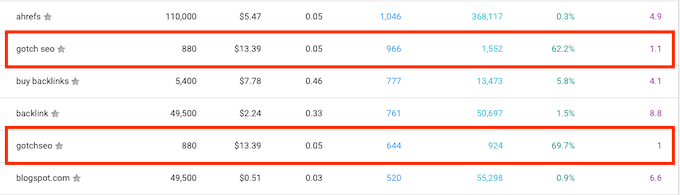
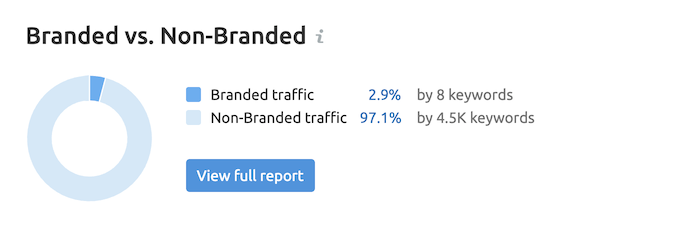
In the “Overview” section, you’ll find the “Branded Traffic Trend” chart.
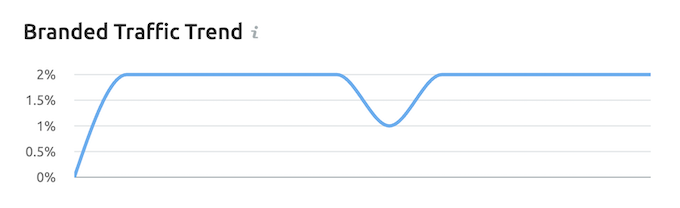
Your branded search volume is an indication of how well you’re marketing your internet company. In general, your goal should be to increase branded search volume over time.
That’s because it’s the most reliable type of organic search traffic.
For example, let’s take a doomsday scenario.
One day you wake, and Google decides to strip you of all your non-branded keyword rankings. If you hadn’t been working to grow branded search volume, your revenue from organic search would go to $0.
However, if you’ve been working to grow your branded search volume, you may still have 20-30% organic search traffic.
Branded search can be the difference between surviving and going out of business. It’s critical.
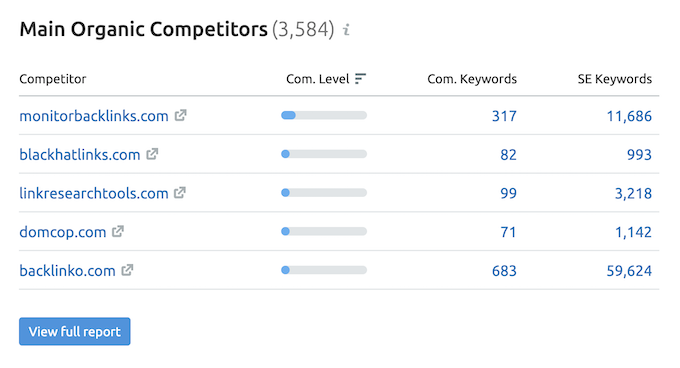
2. Find Low Hanging Fruits with Semrush
I classify “low-hanging fruits” as any keywords that are ranked from positions #2 – #15. These keywords often just need a little push.
That means you can grow your organic search traffic without a huge investment.
These types of keywords should ALWAYS be your targets at the onset of any campaign. That’s because you’ll be able to score some quick wins out of the gate.
Fortunately, Semrush provides a way to find these low-hanging fruits.
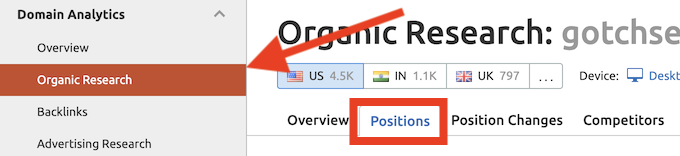
Click on “Organic Research” and then “Positions.”
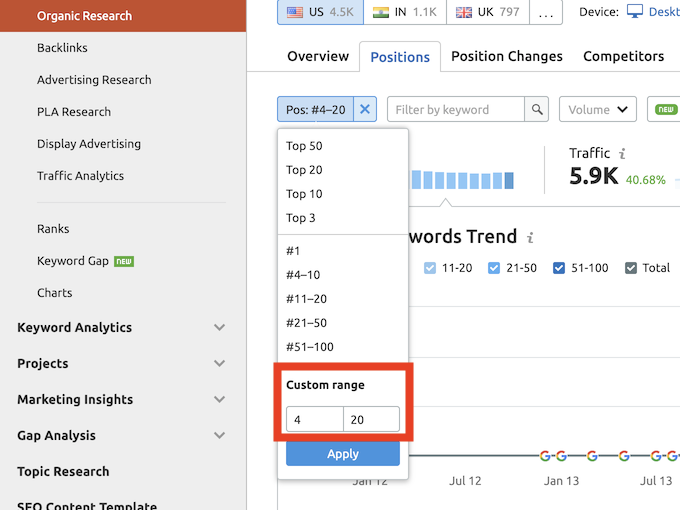
Then click the “Positions” dropdown and enter 4 – 20 in the “Custom Range.”
These keywords should be your targets at the beginning of any campaign.
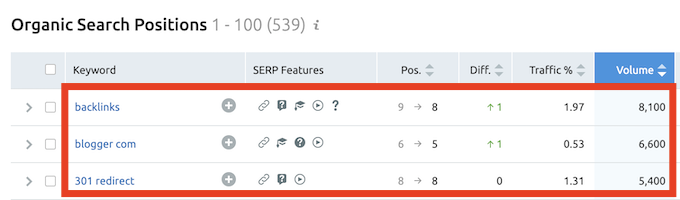
Sometimes some additional on-page SEO is enough to push these terms up. However, if they’re competitive, you’ll likely need to acquire more backlinks to these pages and perform competitive research.
If both of those actions don’t move the needle, then you should add more content to the page using the content marketing toolkit.
3. “Steal” Your Competitor’s Best Keywords with Semrush
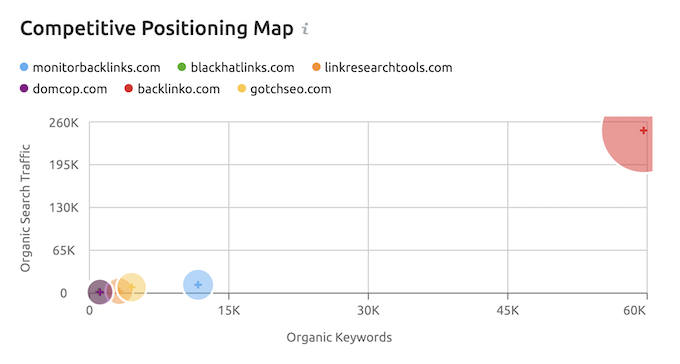
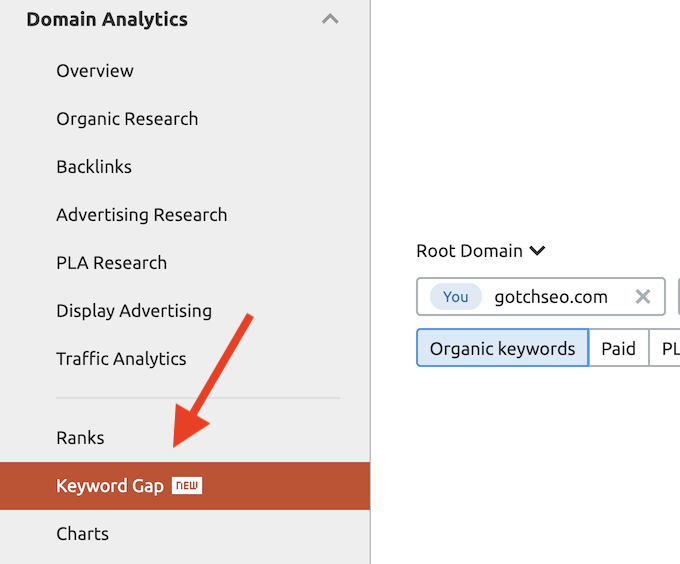
Some of your competitors are likely ranking for keywords that you aren’t. Semrush’s new Keyword Gap tool can help you narrow the gap.
Click on “Keyword Gap” under “Domain Analysis.”
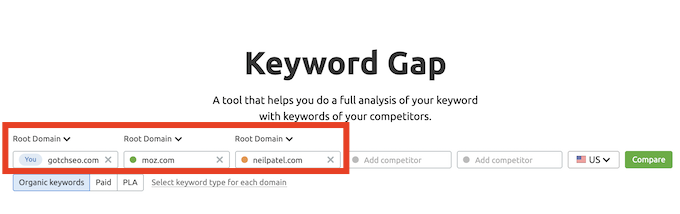
Then enter 1-4 of your competitor’s domains.
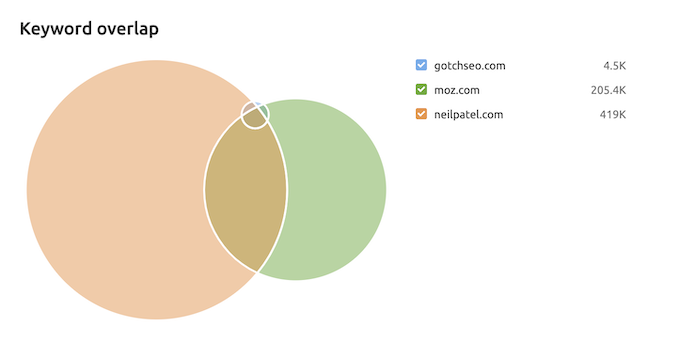
The “Keyword Overlap” section will give you an idea of how many opportunities you’re missing out on.
But the real value is when you scroll down and get to see all of the keywords that your competitors are ranking for. By default, the Semrush SEO tool will show you “Shared” keywords.
The “Missing” tab is where you should focus because these topics can become targets for future content and pages.
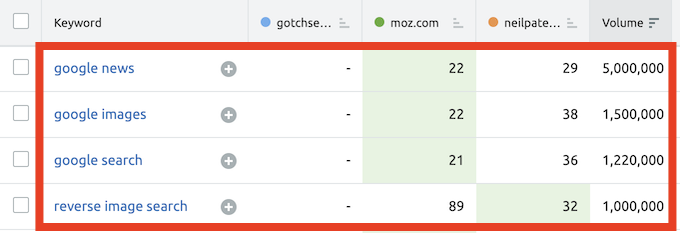
Keep in mind you still need to go through the process of keyword qualification. You also need to always compare your website against your competitors.
For example, Moz has a much more powerful and established domain than Gotch SEO.
Therefore, it makes sense that they can compete for some of these highly competitive keywords. It would be a waste of time and resources for Gotch SEO to attempt to compete on some of these, especially via SEO audits.
That’s why it’s critical that you always qualify your keywords.
4. Qualify Keywords with Semrush
Anyone can build a huge keyword database, but it takes skill to qualify and prioritize that keyword set. In fact, keyword qualification is 100x more critical than finding keywords, as well as in SEO audits.
That’s because going after keywords that your website isn’t capable of ranking for can burn resources and even waste time.
That is why it is important to perform a site audit.
This needs to be avoided.
Now Semrush is a powerful tool, but it alone isn’t enough to qualify your keywords to the fullest extent. It should be used to supplement your keyword qualification process (not replace it).
Here are a few ways to use Semrush to help qualify your keywords:
Find keywords with high CTR via Semrush
Keywords that have many SERP features will likely decrease your organic CTR. The opposite is true as well.
For example, fewer SERP features can increase your organic CTR. Now it’s becoming rarer and rarer to find SERPs without features, but here’s how to find them:
Enter a competitor’s domain in Semrush and click on “Positions.” Then click the “SERP Features” dropdown and select any of the SERP features.
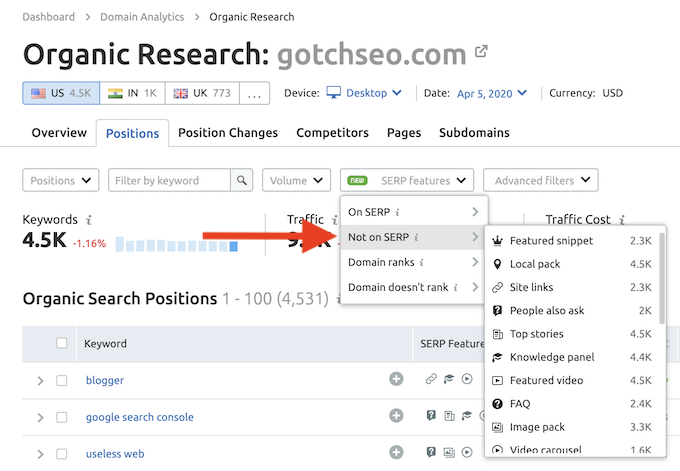
You can then mark what keywords have the least amount of SERP features.
You can then estimate that you’ll get a higher CTR (more traffic) when you rank for these keywords.
Keep in mind that it can change fast. SERPs are always changing.
Take Advantage of the Semrush “Keyword Difficulty” Tool
This Semrush tool can give you a nice high-level overview of the keyword competition. Go to “Keyword Analytics” and click on “Keyword Difficulty Tool.”
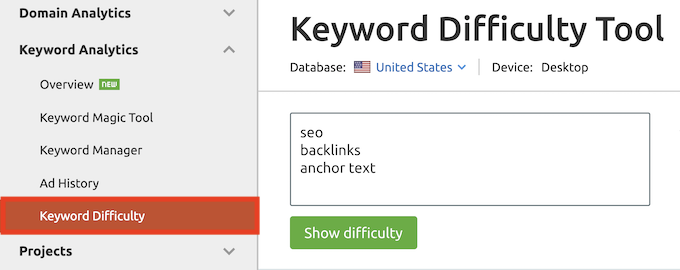
Just enter your target keywords into the box and start the analysis:
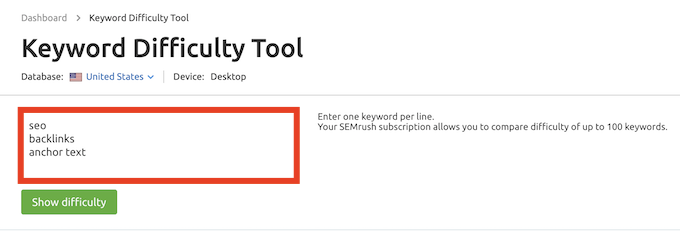
The Keyword Difficulty tool will show the estimated difficulty, the search volume, the total number of search results, the quantity of SERP features, and even how well the keyword is trending. That is why it is important to use search engines.

I recommend stacking Semrush’s and Ahrefs‘ keyword difficulty metrics to get a strong high-level overview of the competition.
5. Acquire More Backlinks with Semrush
Semrush has a lot of competition on the backlink analysis side of SEO. For example, I lean more toward Ahrefs when it comes to link analysis and research. However, Semrush has really improved its capabilities.
Here are a few ways you can use it to acquire more backlinks:
Use Semrush Backlink Gap
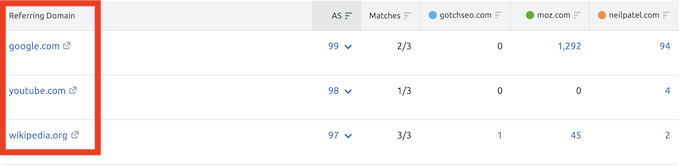
The “Backlink Gap” tool helps you identify link opportunities that your competitor has already secured, but you haven’t. This is super important because you want to narrow the gap between you and your competitor’s link profiles.
In other words, you need to acquire as many (if not more) backlinks as they have.
Just go to “Gap Analysis” and click on “Backlink Gap”.
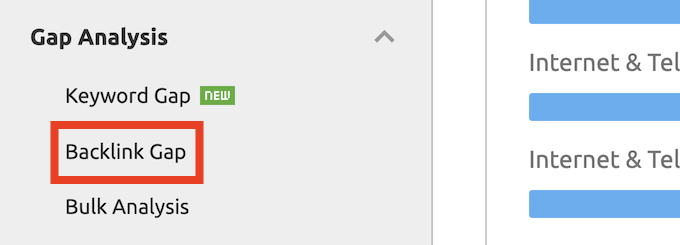
Then just enter your domain and a couple of your competitor’s domains:
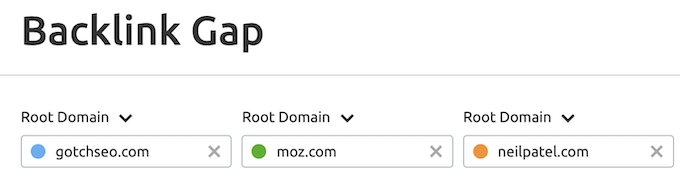
You can then see what domains are linking to your competitor’s domains (but aren’t linking to yours):
Qualify Your Link Opportunities with Semrush
For the remaining portion of this checklist, go to “Domain Analytics” and click on “Backlinks.”
Topical Relevance Analysis
The “Categories” feature is super useful. It does remind me of Majestic’s Topical Trust Flow Topics (which is great too). You can utilize Semrush’s Categories to review your own link profile.
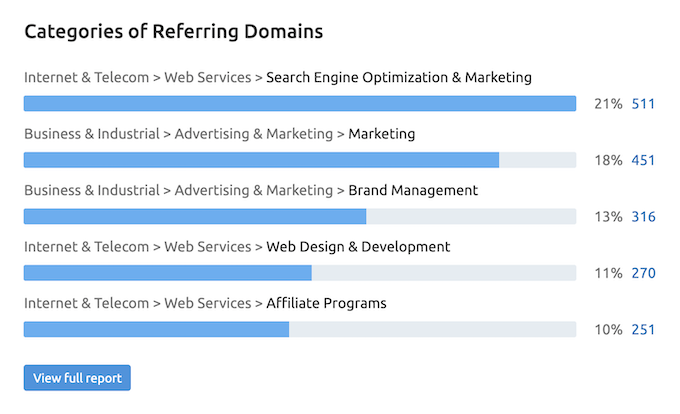
For example, if your link profile isn’t relevant to your niche, then you’ll want to focus more on relevant opportunities. This ties back to the concept I created years ago called The Relevancy Pyramid.
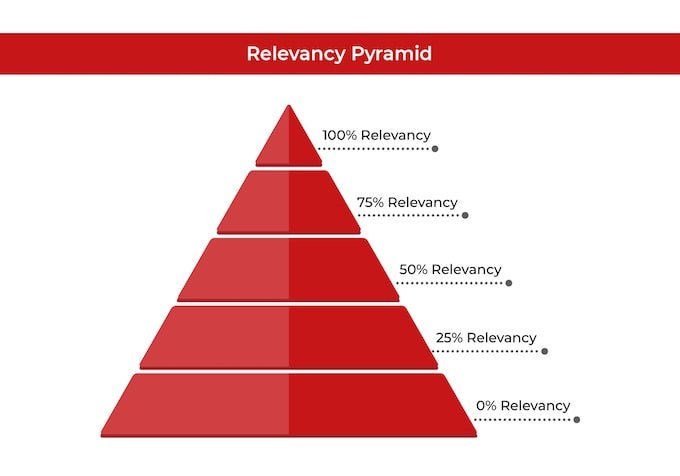
In short, you want to focus all of your time on acquiring links from your most relevant opportunities first. Then once those are tapped, move down the pyramid towards less relevant opportunities.
Naturally, there will be more opportunities as you descend down the pyramid.
Another way to utilize Semrush’s Categories feature is to qualify link opportunities. You can run any link opportunity you have through this tool to see if it’s relevant to your website.
Find Out Traffic Cost using Semrush
Relevance is king when it comes to link building, and the link building tool will aid you in this, but you should also aim to get links on websites that have organic search traffic.
Think about it: If Google is sending organic search traffic to the website, then it’s an indication that the website is doing something right. That means it will likely be a link opportunity worth pursuing.
Semrush’s “Traffic Cost” isn’t just based on total organic search traffic though.
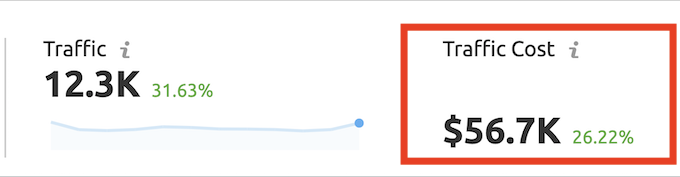
Semrush calculates the search volume and CPC for each keyword to settle on the traffic cost. That means that a website can have large organic search traffic numbers but have a low Traffic Cost and vice versa.
In other words, not all traffic is created equally. Some keywords are far more valuable than others. And how is the value determined? It’s determined by how much a company is willing to pay per click for Google Ads.
You should prioritize link opportunities that have higher traffic costs because the traffic is of high value.
Link Profile Analysis with Semrush
Link Authority Analysis
It’s normal for most of your backlinks to come from lower-authority websites. However, if your link profile lacks high-authority links, you’ll need to fix it.
Look at the Referring Domains by Authority Score section in Semrush to audit the strength of your link profile.
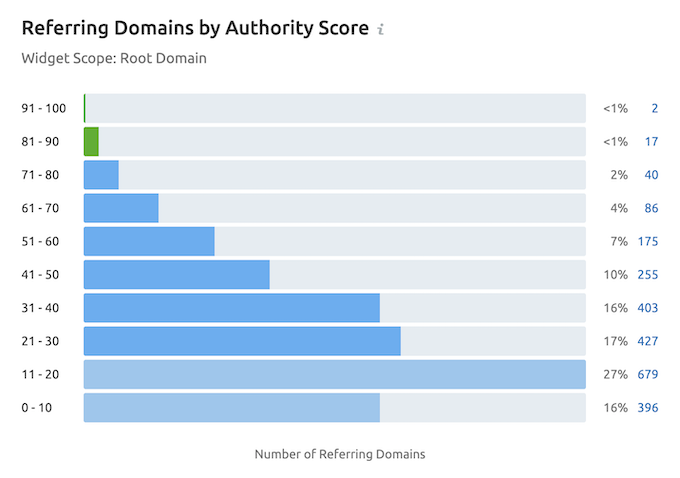
Semrush: Link Distribution Analysis
One thing that many people overlook is how backlinks are being distributed across your website. It’s natural for some pages to have a much larger number of backlinks. That’s because some pages will do better than others.
That said, you’ll often find a correlation between pages that aren’t performing well and a lack of backlinks to those pages.
That’s why it’s important to first identify what keywords aren’t performing well. Then see if those pages lack the necessary backlinks to perform.
You can see the number of links that each page on your website has under the “Top Pages” section.
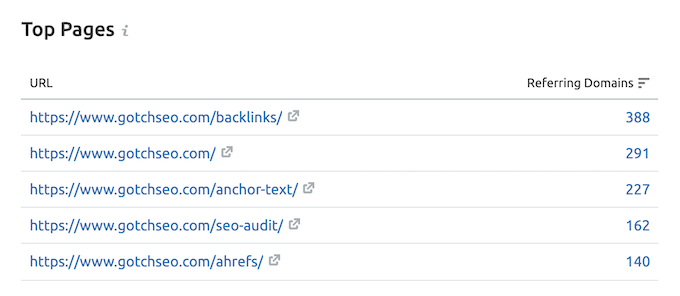
More often than not, low-performing pages/keywords just need more backlinks. There is one thing you need to consider, though.
Why doesn’t the page have backlinks?
Suppose it’s because of a lack of promotion; then you know what to do. But if you’ve been promoting the page to improve SEO results and you’re still not getting backlinks, then you may need to revisit the page itself.
Ask yourself a simple question: would YOU link to your page?
It’s important to be honest about your answer. Your page needs to be worth linking to. That means it needs to add tremendous unique value that impels websites to link to it.
If you’re getting enough backlinks, always go back to the page itself. If you believe it’s truly link-worthy, then work to promote it more.
Semrush Link Profile Growth Trend Analysis
Your backlinks profile should be growing steadily over time. Semrush gives a nice high-level overview of your link profile growth. Look under the “Referring Domains” section on Semrush dashboard:
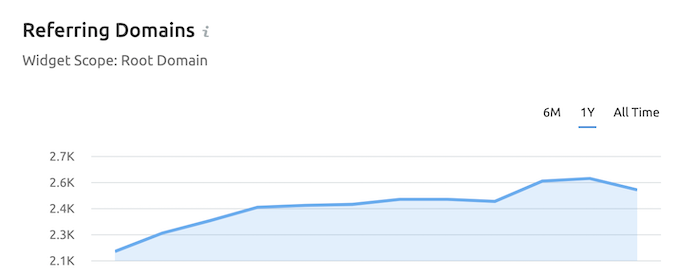
I recommend checking this on a quarterly basis to make sure you’re growing. If not, you’ll need to revise your link building strategy.
Link Profile Analysis
I recommend auditing your existing link profile at least bi-annually to make sure nothing low-quality has slipped in. That means you’ll need to manually analyze your link opportunities.
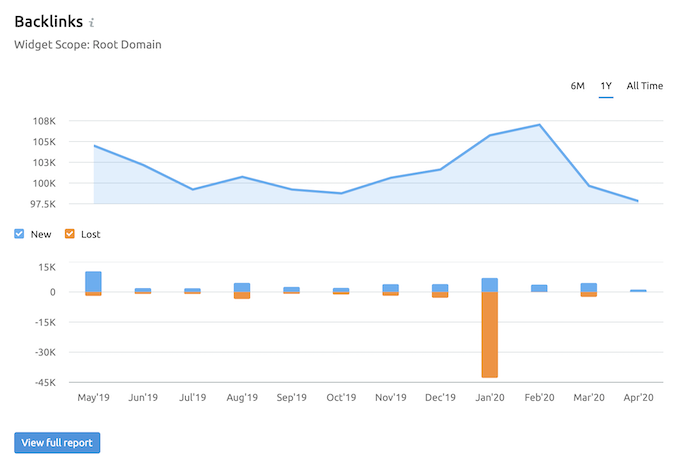
In most cases, you can just analyze new links that have popped up on Semrush. I’m a little obsessive, and I monitor new link activity on a daily basis. That helps me stay on top of negative SEO attacks that may occur. I recommend you do the same.
Anchor Text Analysis
Anchor text is the easiest thing to over-optimize in an SEO campaign. Most people think using keyword-rich anchor text is the best way to drive SEO results. It isn’t. In fact, it’s the best way to leave huge footprints of link building.
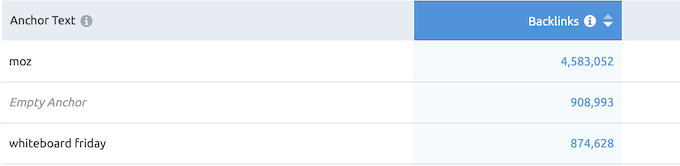
You can achieve great SEO results without having to use aggressive anchor text. I recommend using Semrush SEO plugin to analyze your anchor text to make sure you’re on the right path.
6. Rank in Featured Snippet Position with Semrush
You may have noticed that featured snippets appear on many Google search results. Landing in these featured snippets can produce huge organic search traffic gains. The cool part is that Semrush allows you to find all of the featured snippet opportunities you need.
The first step is to enter your domain:

Click on Semrush “Organic Research” > “Positions”:
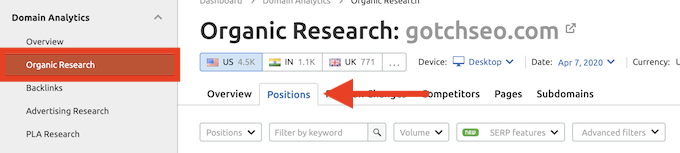
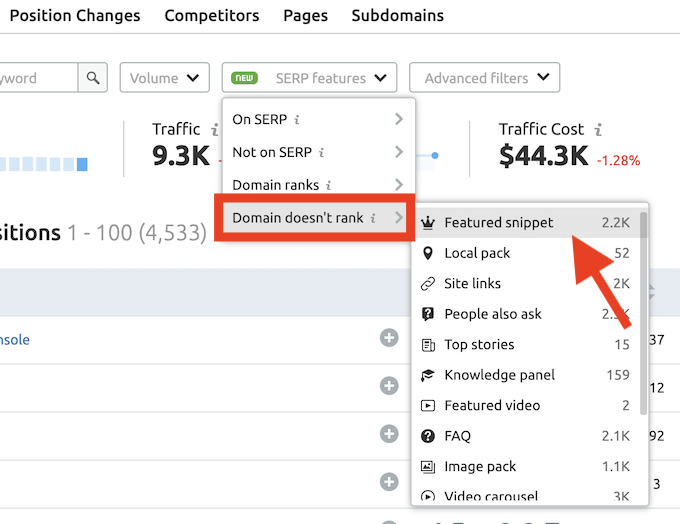
Click the “SERP Features” dropdown:
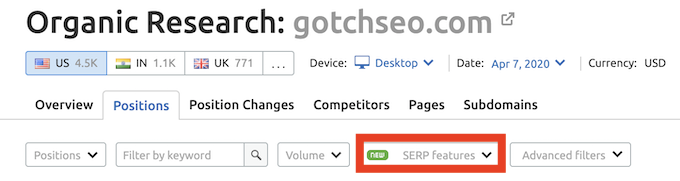
Select “Domain doesn’t rank” and click on “Featured Snippet”:
Set a filter, so you only see positions #1 – #10 because these are the low-hanging fruits to tackle
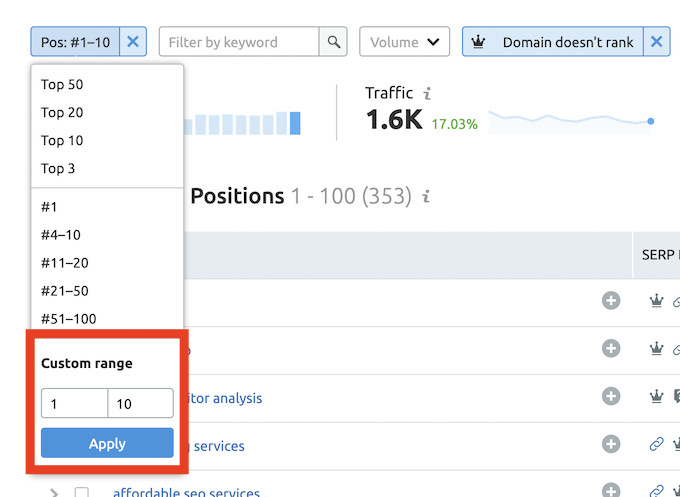
You’ll now have a nice list of featured snippet opportunities to attack.
Semrush Pricing: Is It Worth It?
Semrush’s three core plans (2026, monthly billing):
- Pro — ~$139.95/mo: for freelancers and startups; core keyword, competitor, and audit tools with lower limits.
- Guru — ~$249.95/mo: for growing teams; adds the Content Toolkit, historical data, and more projects.
- Business — ~$499.95/mo: for agencies and large sites; higher limits, API access, and share-of-voice features.
Most modern AI features — the AI Toolkit (~$99/mo per domain) and parts of the Content Toolkit — are paid add-ons on top of those plans, so budget for the plan plus the modules you need. Annual billing trims the sticker price. Verify current pricing on Semrush before you commit.
So is Semrush worth it? If your team will genuinely use keyword research, competitor analysis, rank tracking, backlinks, and reporting in one place, the all-in-one convenience usually pays for itself. If you only need one or two of those jobs, you are likely overpaying for breadth.
Semrush Pros and Cons
Pros
- Deep, reliable keyword and backlink databases
- Strong competitor and keyword-gap analysis
- Rank tracking, site audits, and client reporting in one suite
- A huge feature surface that covers most SEO and PPC jobs
Cons
- Expensive once you add the modules you actually want
- Learning curve and feature overload for small teams
- AI-search visibility tracking trails dedicated tools
- Per-seat and per-domain costs add up fast for agencies
Semrush Alternatives
If Semrush is more than you need, the strongest alternatives are covered in depth in our Semrush alternatives guide. The short version:
- Ahrefs — best for backlink and keyword research.
- SE Ranking — best value all-in-one suite.
- Rankability — best for content optimization and AI-search visibility execution, with agency-friendly reporting.
For the AI-search side specifically, see the best alternatives to Semrush for AI search visibility tracking.
Frequently Asked Questions About Semrush
Is Semrush worth the cost?
Exploring whether Semrush is worth the cost requires an assessment of its advantages and disadvantages. This SEO and digital marketing tool have many features, making it advantageous for businesses eager to increase their online visibility. However, the cost of Semrush depends on the plan chosen and can be expensive. Advantages include a comprehensive suite of SEO tools, ease of use, and cost savings; however, there is a learning curve, and customer support can be limited.
Is Semrush Russian owned?
Semrush, owned by American venture capital firm Cygnus, is based in Delaware, USA. It also has a Russian office in Moscow and offers a Russian version of its website with features tailored to the Russian market. In addition, some of its founders and executives are Russian nationals.
Is there anything better than Semrush?
Ahrefs is a close second to Semrush, but it doesn’t offer the same comprehensive suite of features and capabilities as Semrush. While Ahrefs does offer powerful SEO tools, such as its backlink analysis and keyword research, it mainly focuses on SEO. If you want a more comprehensive digital marketing tool, go with Semrush. On the other hand, if you want to focus 100% on SEO, then you can’t go wrong with either.