

Agency owners and in-house marketing leads now need proof of visibility inside AI answers, not just blue-link rankings. Buyers increasingly ask ChatGPT, Perplexity, Gemini, and Google AI Overviews before they ever click a traditional result, so the real differentiators when you compare the best LLM SEO rank trackers are engine coverage, evidence trails, reporting quality, and whether the tool fits client delivery without creating another dashboard mess.
This roundup is for SEO agency owners, consultants, and in-house marketing leads who need repeatable measurement across ChatGPT, Perplexity, Gemini, Claude, DeepSeek, and Google AI Overviews.
⚡ Quick Answer
The quick answer is Rankability as the top pick, because its Search Performance Index (SPI) unifies traditional search, local pack, AI answers, AI citations, and video search into one number — the only scoring model on this list that treats LLM visibility as part of total search performance rather than a separate silo.
The tools below were evaluated on practical criteria: AI engine coverage, tracking accuracy and reproducibility, evidence trails, data freshness, query and prompt management, multi-client workflow, reporting quality, and pricing transparency. An LLM rank tracker is only useful if it helps you defend results in a client meeting, so this list favors platforms that prove visibility changes rather than simply chart them.
| Tool | Best for | Starting Price | Key Strength |
|---|---|---|---|
| Rankability | Unified AI and SEO visibility reporting | From $97/mo; plan limits | SPI score unifies traditional, local, AI answers, AI citations, and video visibility |
| Cairrot | Broad LLM coverage under a lean budget | Starter: $39/month | Tracks ChatGPT, Perplexity, Claude, Gemini, Grok, and DeepSeek with agency workspaces |
| Keyword.com | Straightforward agency LLM tracking | AI Visibility: $39/month | Tracks 9 AI engines plus Google SERPs in one workflow |
| SE Ranking | Hybrid SEO rank tracking plus AI Overviews monitoring | Essential: $65/month | AI Overviews and AI Mode monitoring inside the core suite |
| Profound | Enterprise-grade generative search analytics | Contact for pricing | Governance and cross-team analytics at scale |
| Peec AI | AI visibility operations | Contact for pricing | Operational monitoring cadence for ongoing AI programs |
| Rankscale | Evidence trails and accuracy-focused tracking | Essential: €20/month | 17+ AI engines with worldwide geographic coverage |
| LLMrefs | Simple generative AI search analytics | All in One: $79/month | Geo-targeting across 50+ countries with unlimited domains and seats |
| LLMClicks.ai | Hybrid SEO + AI analytics stack design | Starter: $159 one-time | Audits, citation analysis, and executive summaries |
| SEOUtils.app | API-driven control for technical teams | Contact for pricing | Configurable tracking workflows with API credentials |
1. Rankability — Best for unified AI and SEO visibility reporting
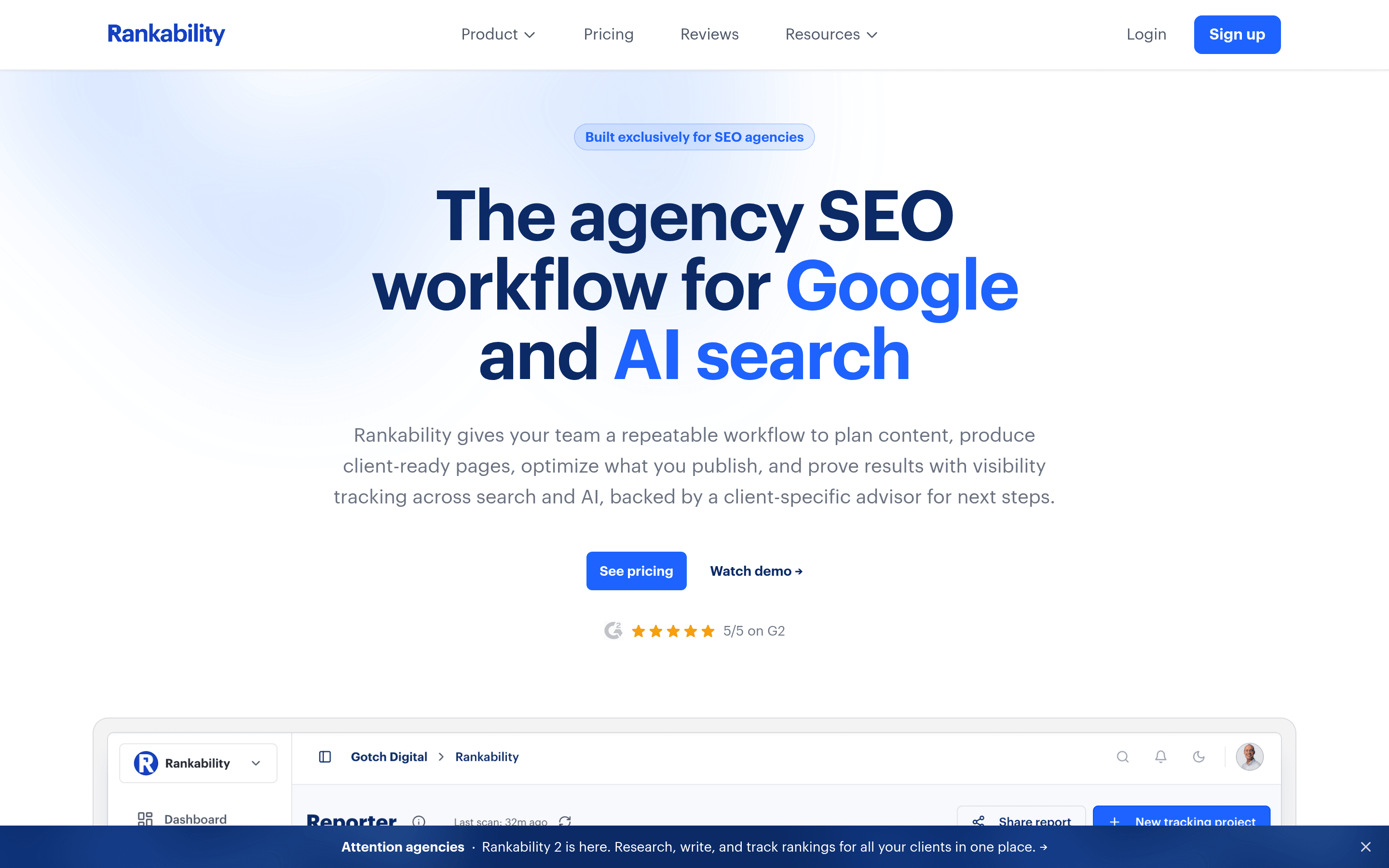
Rankability stands out because its Search Performance Index (SPI) consolidates traditional search, local pack presence, AI answers, AI citations, and video search into one visibility score. That matters to any SEO agency owner because SPI turns fragmented channel reporting into a shared performance language that executives can actually use — one defensible number instead of five disconnected dashboards.
In LLM rank tracking workflows, Rankability Tracker fits best when the goal is not only to see share-of-answer and answer snapshots, but to connect those signals back to SEO outcomes and stakeholder reporting. Instead of treating ChatGPT visibility as a novelty metric, it sits alongside classic rankings in the same reporting layer, so a client sees exactly how AI exposure and organic performance move together month over month.
Not comparing tools? If you already know you want a single LLM rank tracker rather than a shortlist, that page shows exactly what Rankability monitors across ChatGPT, Gemini, Claude, Perplexity, Copilot, Grok, and DeepSeek.
Key features:
- Proprietary SPI rollup across traditional search, local pack, AI answers, AI citations, and video visibility
- Dedicated ChatGPT rank tracking plus coverage for Perplexity, Gemini, Claude, Copilot, Grok, and DeepSeek
- AI Overviews rank tracking tied into the same client reporting views
- Prompt and query monitoring connected to share-of-answer trends
- Stakeholder-ready reporting for agencies managing multiple clients
Pricing: Starter is $97/month, Agency $297/month, and Agency Pro $497/month. Annual totals are $970, $2,970, and $4,970. All paid plans include unlimited client workspaces, unlimited team members, branded reports, and API/MCP access. Content allowances are 20, 80, and 160 projects per month; tracked AI query allowances are 100, 300, and 500, respectively, across all 11 included AI platforms. Google keyword tracking and Local Pack scans have separate allowances. Gotch Inner Circle is included with Agency Pro annual plans. Get Started.
Ideal for: SEO agencies and in-house marketing leads that need one KPI to align SEO and AI visibility reporting.
Bottom line: Rankability is the best starting point when leadership wants one defensible number instead of five disconnected reports.
2. Cairrot — Best for broad LLM coverage on a lean budget
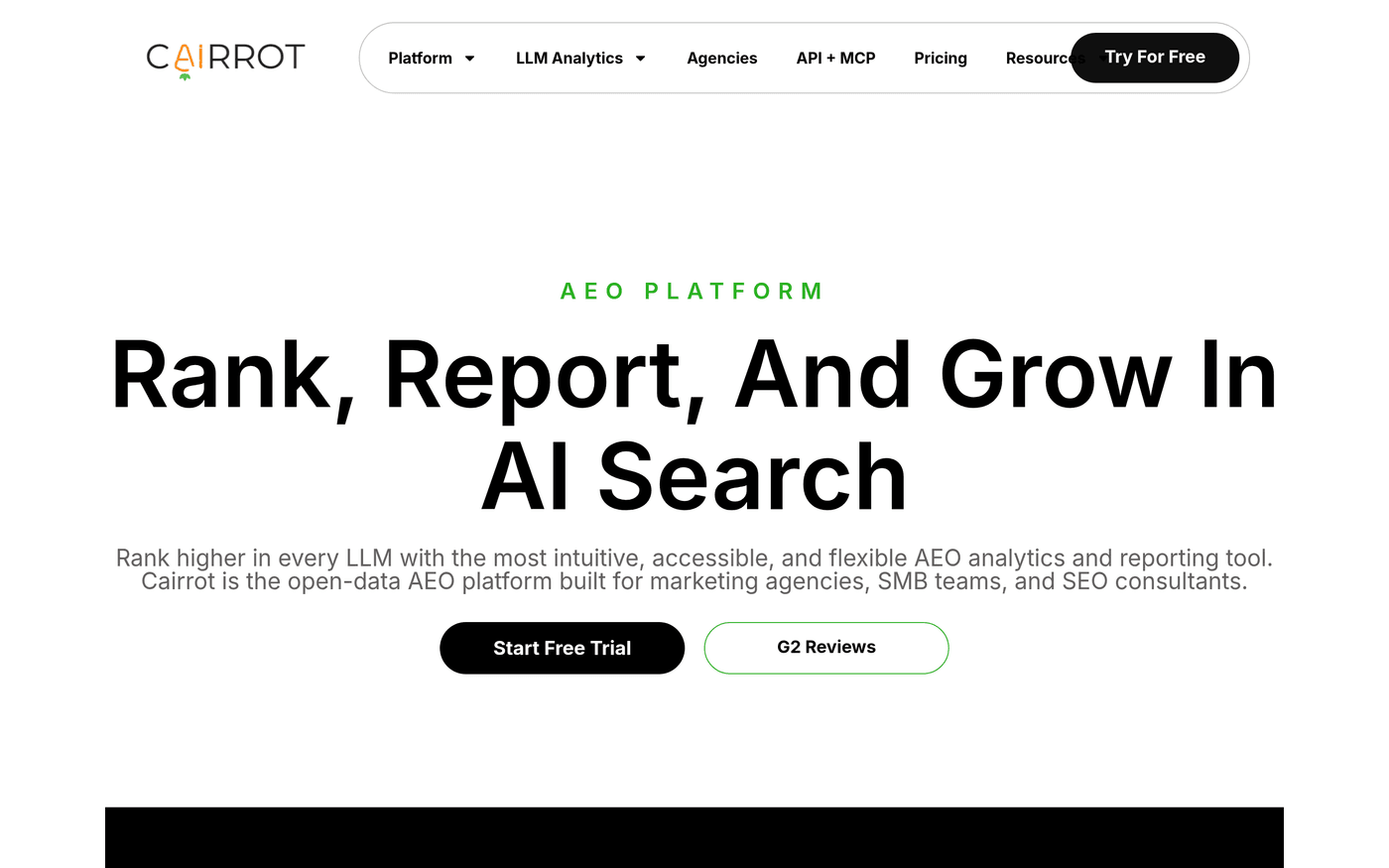
Cairrot is compelling because it tracks visibility across ChatGPT, Perplexity, Claude, Gemini, Grok, and DeepSeek at a starting price most agencies can absorb without a procurement conversation. Coverage breadth matters because entity optimization often succeeds in one AI surface before it appears in another, so narrow tracking can hide real progress.
Operationally, Cairrot tracks prompts, brand presence, citations, and changes over time, then makes that data usable across clients through workspaces, exports, and integrations. Its Google Analytics 4 and Google Search Console connections are especially useful because they help teams link visibility shifts to actual AI traffic patterns rather than treating LLM monitoring as an isolated exercise.
Key features:
- Coverage across ChatGPT, Perplexity, Claude, Gemini, Grok, and DeepSeek
- Prompt tracking with historical comparisons and answer-shift monitoring
- Brand visibility, mention, and citation monitoring for pages and entities
- Agency-friendly workspaces and export options
- API-first architecture with BI integrations and AI readiness reporting
Pricing: Starter: $39/month; Pro: $99/month; Enterprise: $299/month
Ideal for: Agencies that need multi-LLM coverage without enterprise complexity.
Our take: Cairrot is the best value when breadth across LLMs matters more than heavy enterprise controls.
3. Keyword.com — Best for straightforward agency LLM rank tracking
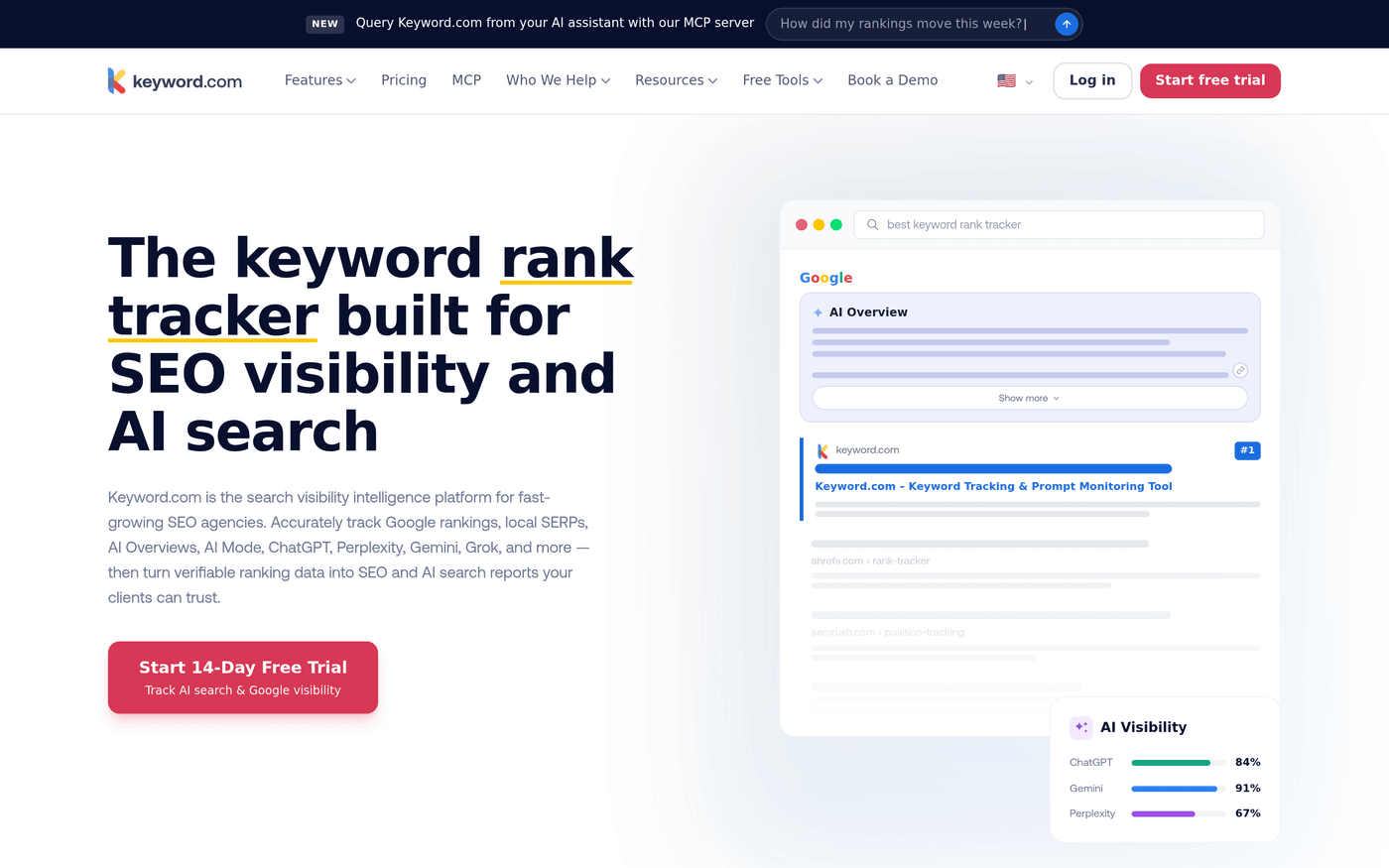
Keyword.com is a pragmatic choice because it combines classic agency workflows with AI visibility tracking across nine distinct AI engines, including ChatGPT, Perplexity, Gemini, Google AI Overviews, Google AI Mode, Claude, Copilot, Mistral, and DeepSeek. That mix matters because many agencies still need one client narrative that covers rankings, local SERPs, Share of Voice, and emerging AI exposure.
The platform is easiest to operationalize when teams define query sets, target entities, landing pages, and a reporting cadence before rollout. Its strength is not novelty but clarity, since decision-makers usually prefer a clean reporting layer over experimental dashboards that generate more questions than answers.
For a deeper look at how the AI side performs in practice, see our Keyword.com AI tracker review.
Key features:
- LLM visibility tracking across nine engines, including AI Overviews and AI Mode
- Agency reporting and exports for client stakeholders
- Google SERP rank tracking alongside AI visibility in one account
- Multi-project organization for agency workflows
- Change tracking and trend views across visibility sets
Pricing: Search Visibility: $7/month (billed annually); AI Visibility: $39/month (billed annually); Custom: $490/month
Ideal for: SEO agencies that want a clean, checklist-driven LLM tracking workflow.
Why it stands out: Keyword.com suits teams that want fewer knobs, faster setup, and clearer client reporting.
4. SE Ranking — Best for hybrid SEO rank tracking plus AI Overviews monitoring
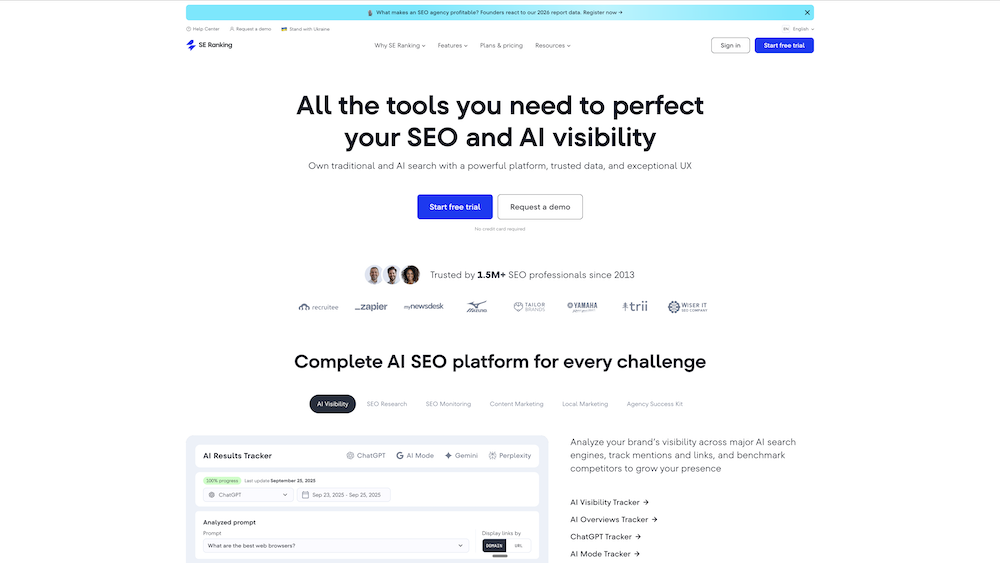
SE Ranking makes sense for teams building a hybrid SEO stack where traditional keyword positions still drive most reporting, but AEO and GEO signals now need a place in the same loop. That hybrid model matters because many buyers are not replacing rank tracking, they are extending it to include AI Overviews and adjacent SERP changes.
Its advantage is familiarity: agencies already using SE Ranking get AI Overviews and AI Mode monitoring inside the core suite rather than as a separate SKU. The tradeoff is that dedicated LLM tracking depth is lighter than purpose-built generative search platforms, especially if your workflow depends on citation-level evidence across several AI engines — our SE Ranking AI visibility tracker review breaks down exactly where that boundary sits.
Key features:
- Traditional keyword rank tracking with SERP feature context
- AI Overviews and AI Mode monitoring inside the core suite
- Multi-domain tracking and scheduled reporting
- Competitor tracking and visibility metrics
- Client-ready reporting for agency delivery
Pricing: Essential: $65/month; Pro: $119/month; Business: $259/month
Ideal for: Agency owners who want one platform for classic SEO rankings plus AI Overviews visibility.
Worth noting: SE Ranking is strongest when reporting still centers on rankings and SERP features, not only LLM answers.
5. Profound — Best for enterprise-grade generative search analytics
Profound belongs on enterprise shortlists because large organizations care as much about governance as they do about visibility data. Enterprise buyers usually need baseline measurement across brands, repeatable reporting for multiple teams, and auditability that survives handoffs between SEO, content, PR, and analytics functions.
That makes Profound more relevant for organizations with complex approval paths than for lean agencies seeking quick deployment. The practical question is not whether it tracks generative search, but whether its workspace structure, analytics depth, and evidence handling reduce internal disagreement about what changed and why — our Profound AI review covers how those pieces fit together.
Key features:
- Enterprise analytics for generative search visibility
- Multi-team dashboards for operational stakeholders
- Trend reporting for brand inclusion, entities, and citations
- Governance-oriented structures for larger organizations
- Export options for broader analytics workflows
Pricing: Contact for pricing
Ideal for: Large in-house teams that need governance, scale, and repeatable AI visibility measurement.
The verdict: Profound is the right fit when stakeholder alignment and auditability matter as much as the tracking itself.
6. Peec AI — Best for AI visibility operations
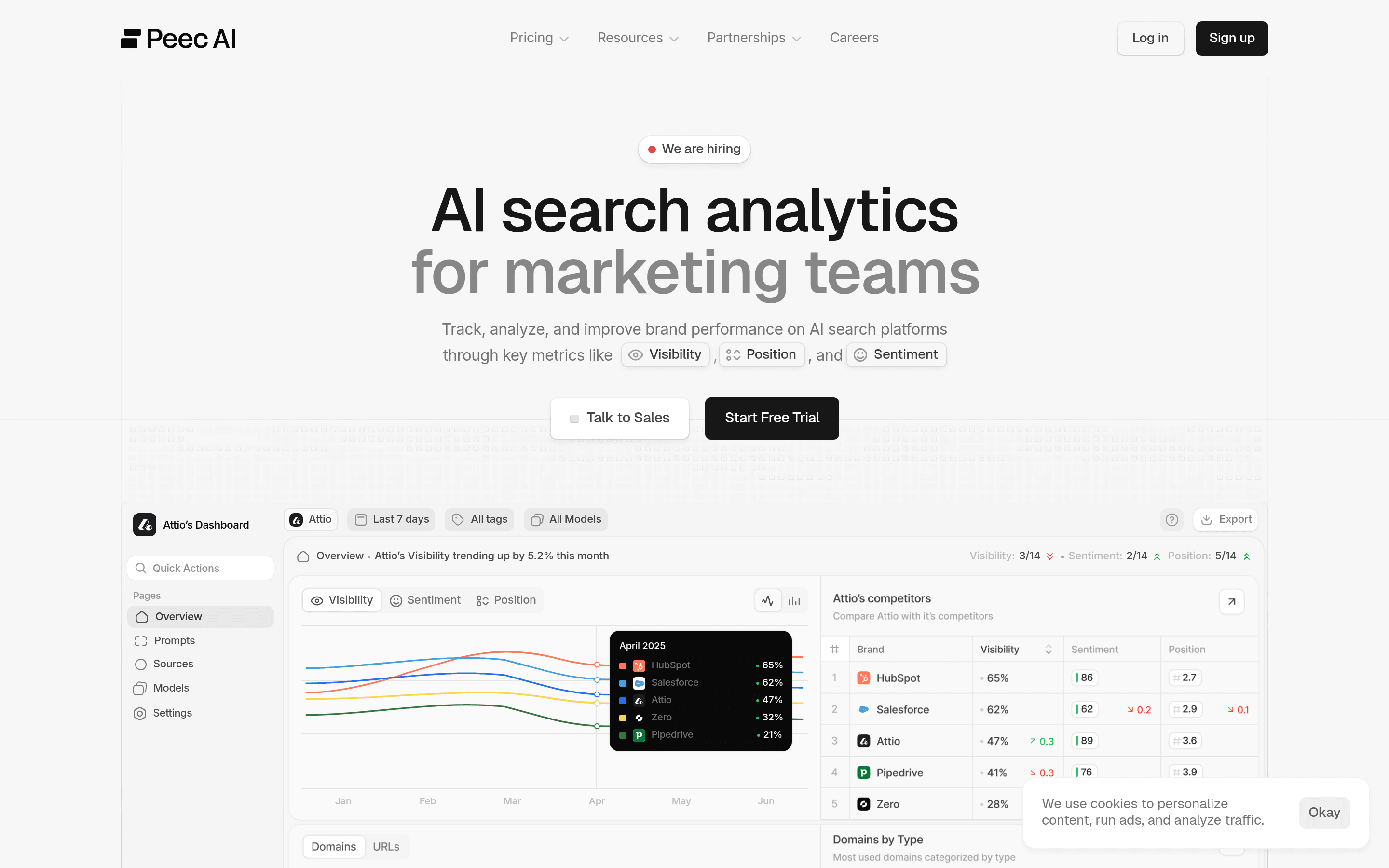
Peec AI is better understood as an AI visibility operations platform than as a classic rank tracker. That distinction matters because strong AEO programs depend on a weekly cadence of monitoring, prioritization, and content strategy updates, not a monthly screenshot of where a brand appeared.
For in-house SEO leads, the value is in turning prompt monitoring and brand inclusion checks into recurring action items for content, schema, and entity reinforcement. Buyers should validate engine coverage, evidence retention, and data freshness, because an operational tool only works when its monitoring loop is reliable enough to support weekly stakeholder reporting — our Peec AI review looks at where that loop holds up and where it stops.
Key features:
- Prompt and query monitoring for AI answers
- Tracking for brand and entity presence plus citations
- Reporting views built for marketing teams
- Change tracking with alert-driven workflows
- Exports for recurring stakeholder updates
Pricing: Contact for pricing
Ideal for: In-house SEO leads running an ongoing AEO or GEO monitoring program.
Best if you need: Peec AI is best when you want an AI-visibility operating rhythm, not just a one-time audit.
7. Rankscale — Best for evidence trails and accuracy-focused tracking
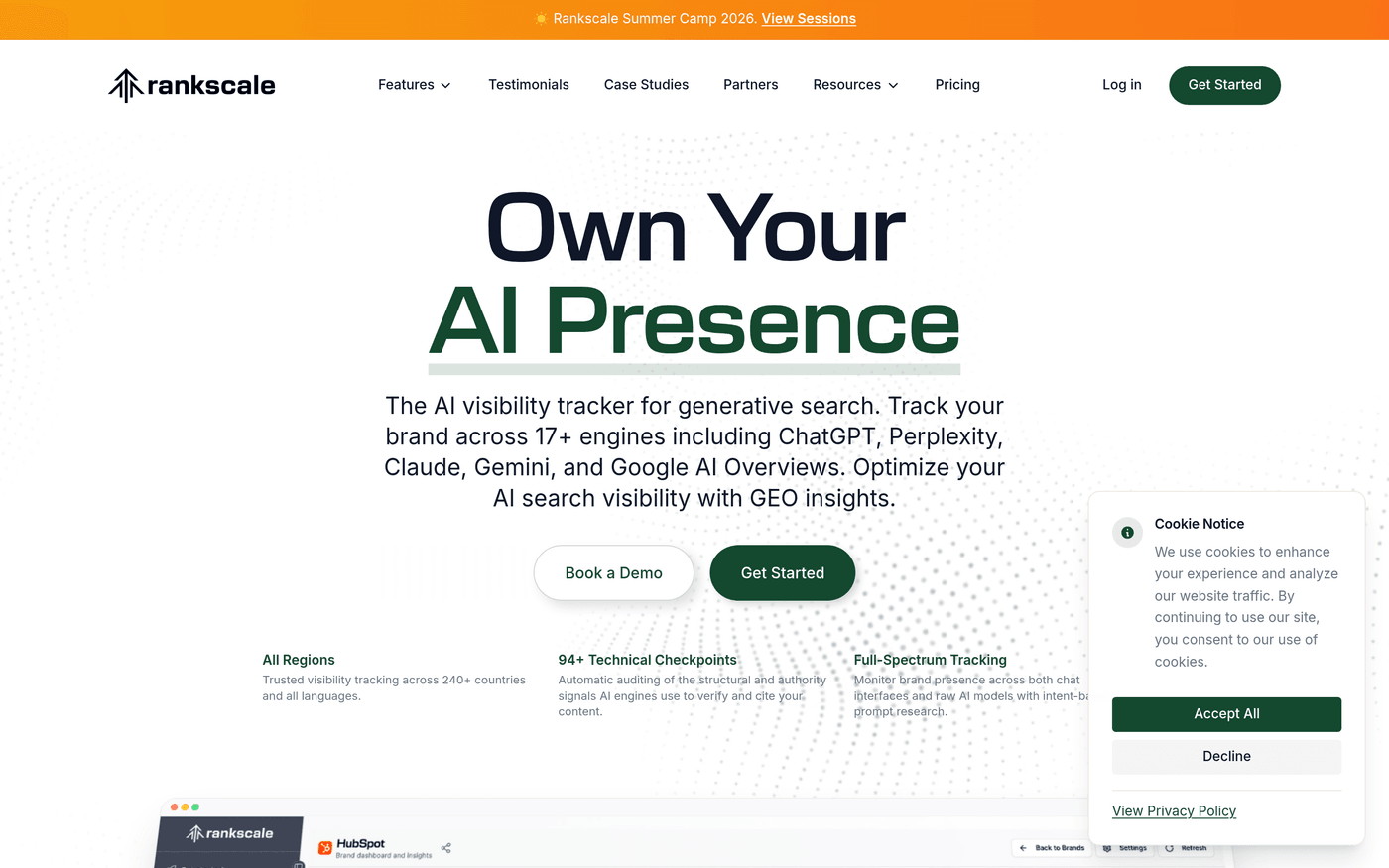
Rankscale is built around a problem many agencies now face: clients do not trust AI reporting unless they can inspect the underlying answer. Reproducibility matters because LLM outputs fluctuate, and a measurement framework without visible evidence can turn every reporting meeting into a debate over whether the tool is wrong.
Its coverage spans 17+ AI engines, including ChatGPT, Perplexity, Google AI Overviews, AI Mode, Gemini, Claude, and Copilot, with worldwide geographic coverage across 240+ countries. The strongest use case is proving visibility changes with context, then comparing those changes over time across engines, prompts, and brands — our Rankscale review digs into its citation analysis and query fan-out tracking in detail.
Key features:
- Tracking across 17+ AI engines, including ChatGPT, Perplexity, Gemini, Claude, and Google AI Overviews
- Evidence-oriented monitoring with answer context for validation
- Prompt research, competitor analysis, and citation analysis in one framework
- Centralized dashboard with multi-brand slicing by engine and timeframe
- Change history and export-ready reporting for client deliverables
Pricing: Essential: €20/month (credit-based subscription)
Ideal for: Agencies that need defensible proof of AI visibility changes for clients.
Where it fits: Rankscale is the best option when you are tired of trust-me AI reporting and need receipts.
8. LLMrefs — Best for simple generative AI search analytics
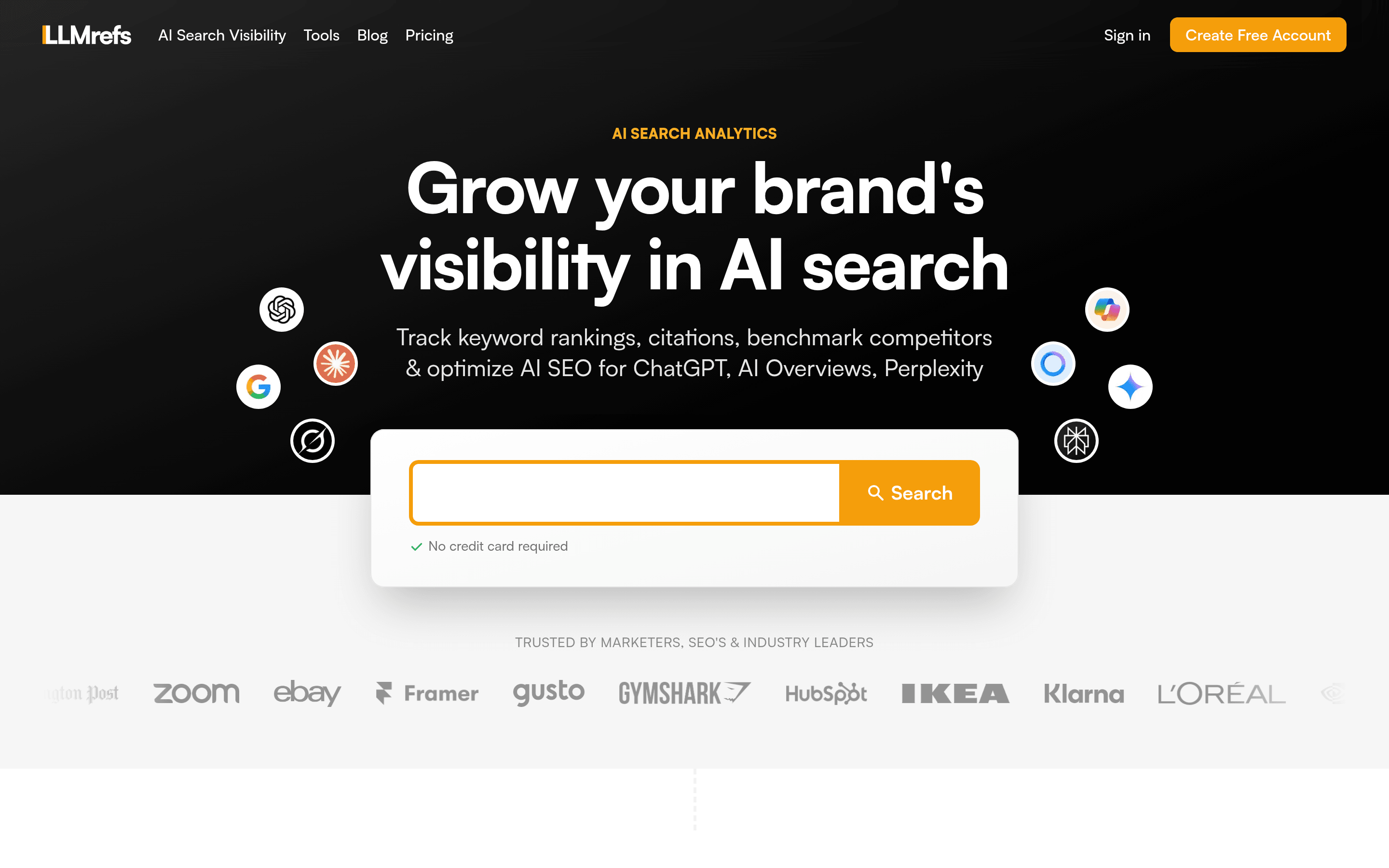
LLMrefs is a streamlined choice for growth teams that want generative AI search analytics without enterprise overhead. Its appeal comes from a simple model: track prompts, monitor brand mentions and citations, benchmark competitors, and turn those findings into content and entity tasks.
The weekly refresh cadence is particularly useful for teams that report on a set schedule instead of chasing every daily fluctuation. Unlimited domains, projects, and seats on one plan also make LLMrefs unusually practical for in-house teams that want broad access without constant seat negotiations — our LLMrefs review covers what the single-plan model does and does not include.
Key features:
- AI search analytics dashboards across major engines
- Visibility and citation tracking for brands and pages
- Weekly reports refreshed automatically
- Citation tracking to identify influential sources
- Geo-targeting across 50+ countries and 20+ languages
Pricing: All in One: $79/month (500 prompts, unlimited domains, projects, and seats)
Ideal for: In-house growth teams that want lightweight AI visibility analytics without a complex rollout.
The takeaway: LLMrefs is best when you need a clean dashboard and actionable visibility signals quickly.
9. LLMClicks.ai — Best for building a hybrid SEO and AI analytics stack
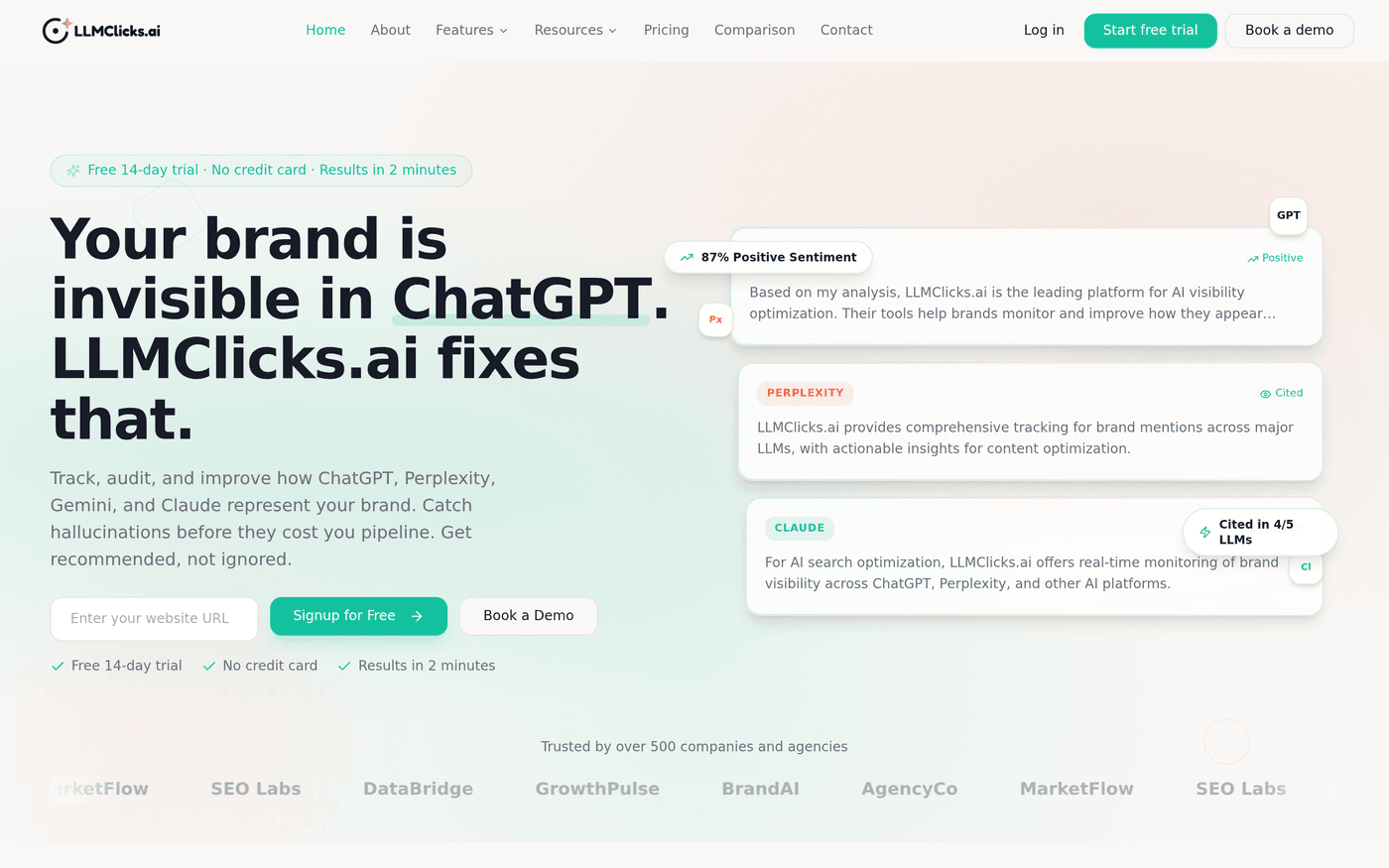
LLMClicks.ai is useful for teams that want both measurement and decision support around AI visibility. Its product set — audits, share-of-voice tracking, citation analysis, and executive summaries — helps agencies define what belongs in a hybrid SEO and AI analytics stack rather than treating every new metric as equally important.
That framing matters because many firms still need to separate signal from novelty in 2026 reporting. A tool that maps visibility checks, competitor benchmarking, and on-page audit findings into one workflow can help standardize measurement across clients with different maturity levels.
Key features:
- AI Visibility Audit with a 120-point accuracy check
- AI Visibility Tracker for share of voice and competitor benchmarking
- Citation Analyzer to identify trusted sources used in answers
- On-Page Audit for schema, E-E-A-T, meta, and structure signals
- Executive summary reporting with industry benchmarks
Pricing: Starter: $159 one-time; Professional: $239 one-time; Agency: $399 one-time
Ideal for: Agency owners designing a measurable hybrid SEO and AI visibility program.
Who should buy: LLMClicks.ai works well when you are standardizing measurement across multiple clients and tool stacks.
10. SEOUtils.app LLM Rank Tracker — Best for API-driven technical teams
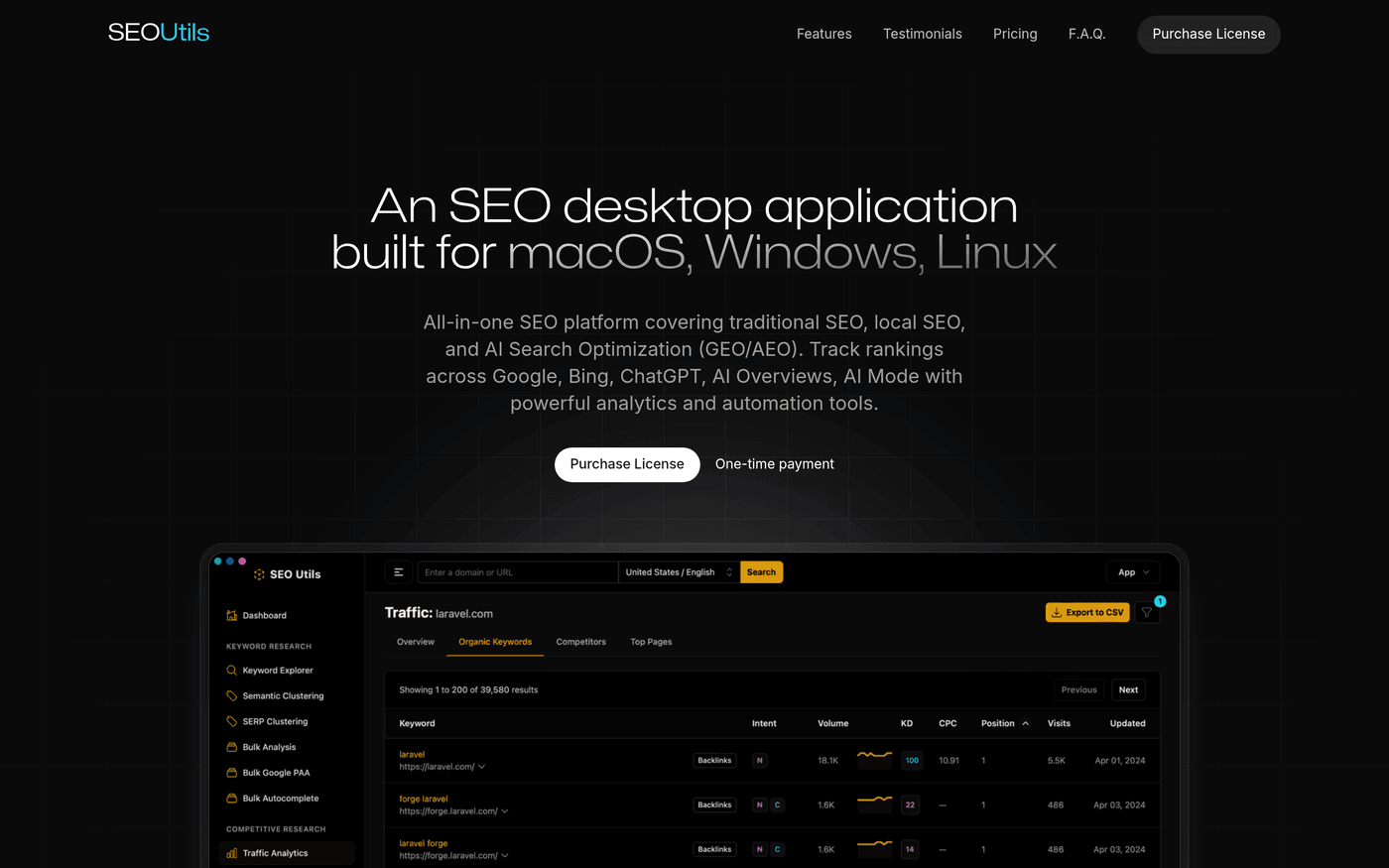
SEOUtils.app LLM Rank Tracker is the most technical option in this list, which is precisely why some teams will prefer it. API credentials, tracker setup, project management, and report-tab interpretation create more work upfront, but they also support reproducibility and internal workflow control.
That model fits technical SEO teams that want configurable monitoring instead of a polished executive dashboard. If your process includes QA use cases, repeatable tracker creation, and custom reporting logic, a hands-on system can produce cleaner internal measurement than a black-box SaaS layer.
Key features:
- API credential configuration for LLM tracking workflows
- Create and manage LLM rank trackers by project
- Report tabs for visibility, mentions, citations, and change review
- Documentation-oriented use cases for repeatable operations
- Team-friendly management across multiple trackers
Pricing: Contact for pricing
Ideal for: Technical SEO teams that prefer configurable tracking and API-based workflows.
In short: SEOUtils.app is best when control and repeatability matter more than executive-facing polish.
How We Chose the Best LLM SEO Rank Trackers
We reviewed this category against the needs of agencies and in-house teams that must measure AI answers, citations, and brand mentions over time, not just classic SERP positions. The inclusion threshold was simple: a platform had to support ongoing tracking of AI visibility signals, while tools focused only on traditional rankings, generic brand monitoring, or AI content generation were excluded.
Our criteria prioritized six factors above all: AI engine coverage, tracking accuracy and reproducibility, evidence trails, data freshness, multi-client workflow fit, and pricing transparency. Timestamps, saved answers, and citation evidence weighed as heavily as coverage, because stakeholder disputes usually start when a report cannot prove what the model showed at a given moment.
We also weighed how the current shape of search influenced each ranking. Buyer journeys now pass through ChatGPT, Perplexity, Gemini, Claude, DeepSeek, and Google AI Overviews in different combinations, and “rank” inside an LLM answer rarely means a fixed position — it means share-of-answer, inclusion frequency, citation presence, and comparative visibility across prompts.
No pair of AI platforms shared more than 24.1% of the pages they cited, making cross-platform measurement a practical requirement.
Tools that measure those signals honestly, and connect them back to classic SEO outcomes, earned stronger placement.
FAQs
What is an LLM rank tracker in SEO?
An LLM rank tracker monitors how often your brand, pages, and citations appear in AI-generated answers for defined prompts. The useful tools also store evidence and show changes over time.
How is LLM rank tracking different from traditional keyword rank tracking?
Traditional rank tracking measures positions in SERPs for keywords. LLM tracking measures inclusion, citations, and share-of-answer inside generated responses, which are less fixed and more context-dependent.
Can rank trackers measure Google AI Overviews accurately?
Some platforms can monitor AI Overviews, but accuracy depends on region support, refresh cadence, and evidence storage. Snapshots and timestamps make verification much easier when results fluctuate.
Which LLM rank tracker is best for SEO agencies?
For most agencies, Rankability is the best starting point because it unifies reporting through its SPI score. If client-facing proof is the bigger issue, Rankscale is a strong companion choice.
How much do LLM SEO rank trackers cost?
Pricing usually scales by tracked prompts, checks or credits, projects or workspaces, and seats. Estimate cost by mapping your client count and query sets to each vendor’s plan limits before you buy.
Do I need LLM tracking if I already use a traditional rank tracker?
Yes, if AI answers influence discovery in your market. Traditional rank trackers show SERP positions, while LLM trackers reveal whether your brand is actually being cited or included in AI-generated recommendations.
Conclusion
Most teams should start with Rankability because its Search Performance Index gives leadership one number that connects classic SEO, local pack visibility, AI answers, AI citations, and video search. That unification solves the reporting problem first, which is often more urgent than adding another specialist dashboard.
The best alternative depends on your scenario. Cairrot is the strongest lean-budget option for broad LLM coverage, Rankscale is the best proof-first choice for evidence trails, SE Ranking fits hybrid SEO plus AI Overviews reporting, and Profound is the right enterprise pick when governance and baseline measurement drive the purchase.
If your measurement question is broader than rank tracking, our roundup of the best AEO tracking tools compares several adjacent platforms on answer-engine coverage.
A practical rollout is straightforward: define the engines that matter, build query sets around services and entities, decide how much evidence you need, choose the reporting layer, then run a 30-day baseline with weekly updates. Choose the tool that matches your reporting audience before you compare feature lists — the best platform is the one that makes your next recommendation easier to defend.