

SEO PowerSuite covers a lot of the classic SEO workflow. Between Rank Tracker, SEO SpyGlass, LinkAssistant, and WebSite Auditor, it gives a single user a deep desktop toolkit for one machine.
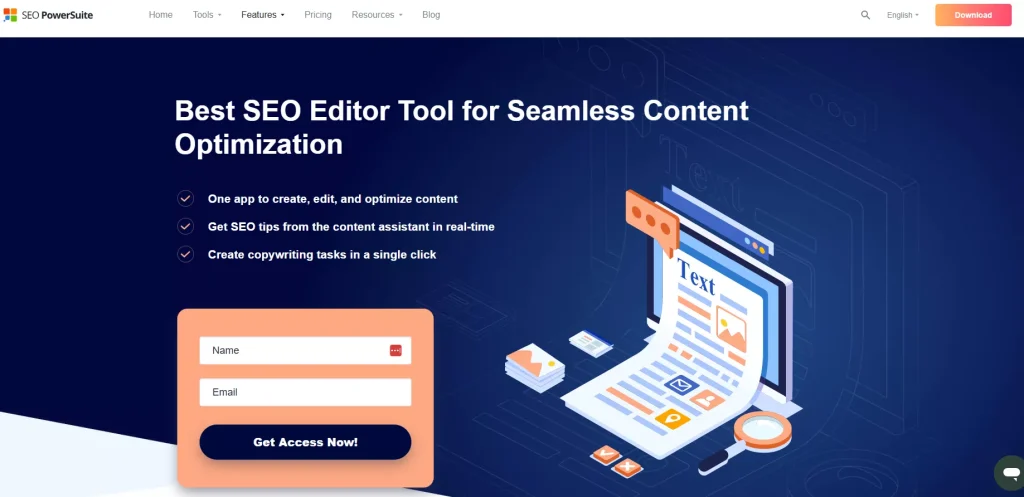
The problem for agencies isn’t the feature list. It’s the architecture. SEO PowerSuite is desktop software. There is no true cloud, so your data and projects live on one computer instead of a shared workspace. There is no real-time collaboration, so two team members can’t work in the same project at the same time. And there is no native white-label client reporting baked into a live dashboard the way cloud-first platforms deliver it.
For a solo SEO on a budget, a desktop license can make sense. For an agency running multiple clients, that model creates friction fast. You end up emailing project files, rebuilding reports by hand, and managing one license per seat instead of inviting a whole team into a shared, multi-client workspace. (If you came here searching “seo powersuite cloud,” that gap is exactly why.)
This list focuses on the best SEO PowerSuite alternatives for agencies that need a cloud, collaborative, white-label workflow across many clients. Rankability leads it as the agency-first option, and the rest cover the strongest cloud tools for optimization, research, and reporting.
Quick Picks
- Best overall for agencies: Rankability
- Best live optimization editor: Surfer
- Best for research and briefs: Frase
- Best premium editorial workflow: Clearscope
- Best for content strategy and planning: MarketMuse
- Best all-in-one writer plus optimizer: Scalenut
- Best simple content optimizer: Dashword
Comparison Table
Pricing changes often, so verify on vendor pages before purchase.
| Tool | Best for | Starting price* | AI & Search Coverage | Notes |
|---|---|---|---|---|
| Rankability | SEO agencies and teams that want optimization plus workflow support | From $97/mo; plan limits | AI-driven optimization, topical recommendations, briefs, AI search reporting | Strong agency fit with broader workflow value |
| Surfer SEO | Teams that want real-time optimization while writing | $99/mo | Live scoring, NLP guidance, AI search features, SERP-based recommendations | One of the most popular SEO tools in this category |
| Frase | Small teams that want research, writing, and optimization together | $49/mo | SERP research, AI briefs, optimization, AI visibility features | Good balance of value and workflow coverage |
| Clearscope | Editorial teams that want a clean premium optimizer | $129/mo | Topic coverage, content grading, AI search visibility support | Strong for quality control and collaboration |
| MarketMuse | Teams focused on planning and content depth | Free version available | Topic modeling, content inventory, optimization, SERP analysis | More strategy-heavy than editor-first |
| Scalenut | Teams that want AI writing and optimization in one place | $59/mo | AI drafting, optimization, content audits, keyword planning | More all-in-one and AI-forward |
| Dashword | Small teams that want a streamlined optimizer and brief builder | $99/mo | Briefs, scoring, monitoring, rank insights | Simple and easier to adopt than a larger SEO suite |
Rankability plan limits: Starter is $97/month, Agency $297/month, and Agency Pro $497/month. Annual totals are $970, $2,970, and $4,970. All paid plans include unlimited client workspaces, unlimited team members, branded reports, and API/MCP access. Content allowances are 20, 80, and 160 projects per month; tracked AI query allowances are 100, 300, and 500, respectively, across all 11 included AI platforms. Google keyword tracking and Local Pack scans have separate allowances. Gotch Inner Circle is included with Agency Pro annual plans. Get Started.
*Starting prices change often – verify current pricing before purchase.
What to Look for in an SEO PowerSuite Alternative
The biggest difference between SEO PowerSuite and these tools is architecture. PowerSuite is a desktop suite built around a single license on a single machine. These alternatives are cloud-first platforms designed for teams and multiple clients.
When evaluating the best SEO PowerSuite alternatives for an agency, here’s what matters most:
Cloud, not desktop
A cloud platform keeps every client, project, and report in one shared workspace you can reach from any browser. Nothing is trapped on one analyst’s laptop, and onboarding a new team member is an invite, not a fresh install and a re-download of project files.
Real-time collaboration
Agencies run on shared work. The best tools let strategists, writers, and account managers work in the same project at the same time, leave feedback, and hand off without exporting files back and forth. That’s the exact workflow desktop software can’t offer.
White-label client reporting
For agencies, reporting is the deliverable. Look for native white-label reports and live dashboards you can brand as your own, plus a clean path to Looker Studio so clients see progress without you rebuilding a deck every month.
Multi-client management
Running ten clients shouldn’t mean ten disconnected project files. A strong alternative handles many clients in one place with per-client workspaces, permissions, and reporting, so your team scales delivery instead of juggling licenses.
Real-time optimization and SERP analysis
Beyond architecture, the best tools still help you improve a page while you write, understand what’s ranking now, and prioritize what to create next. Cloud platforms layer that guidance directly into a collaborative editor instead of a desktop export loop.
The Alternatives
1. Rankability
Rankability is the strongest SEO PowerSuite alternative for agencies because it fixes the exact things desktop software can’t: it’s cloud-first, collaborative, white-label, and built for managing many clients in one place. Where PowerSuite ties projects to a single license on a single machine, Rankability puts your whole team into a shared workspace they can reach from any browser.
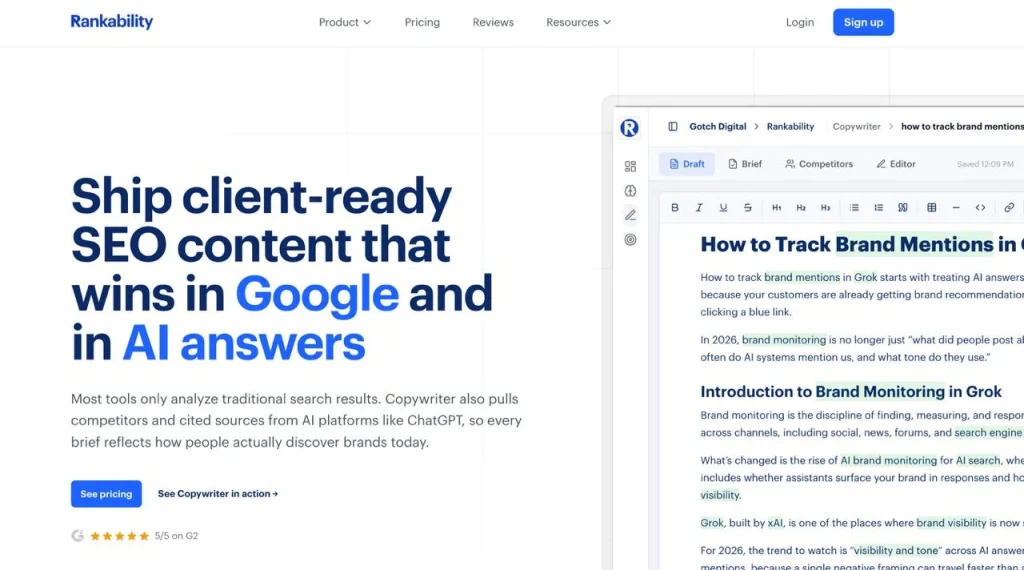
That cloud, multi-client model is the real wedge. Strategists, writers, and account managers can work in the same project at the same time, hand off without emailing files around, and onboard a new client or teammate with an invite instead of a fresh install. For an agency, that’s the difference between a tool one person uses and a platform a whole team runs delivery on.
Reporting is where the gap shows most. Rankability includes native white-label client reporting and a clean path to Looker Studio, so you can hand clients branded, live dashboards covering traditional rankings plus AI search visibility, instead of rebuilding a deck from desktop exports every month. It also connects research, briefs, optimization, and reporting into one repeatable workflow built for scale.
Rankability still fits alongside the rest of your stack. Teams can use it with Google Search Console and Google Analytics to evaluate rankings, traffic, and SEO performance after content is published. But unlike a desktop suite, it’s designed from the ground up for cloud, collaborative, multi-client agency delivery.
Best for: SEO agencies and teams that need a cloud, collaborative, white-label platform for managing many clients.
Potential downside: It’s not the cheapest option, so it makes the most sense for agencies that will use the full multi-client workflow rather than a solo desktop user on a budget.
2. Surfer
Surfer is one of the most well-known SEO PowerSuite alternattives for a reason. If your main goal is improving content while you write, Surfer remains one of the strongest real-time editors on the market.
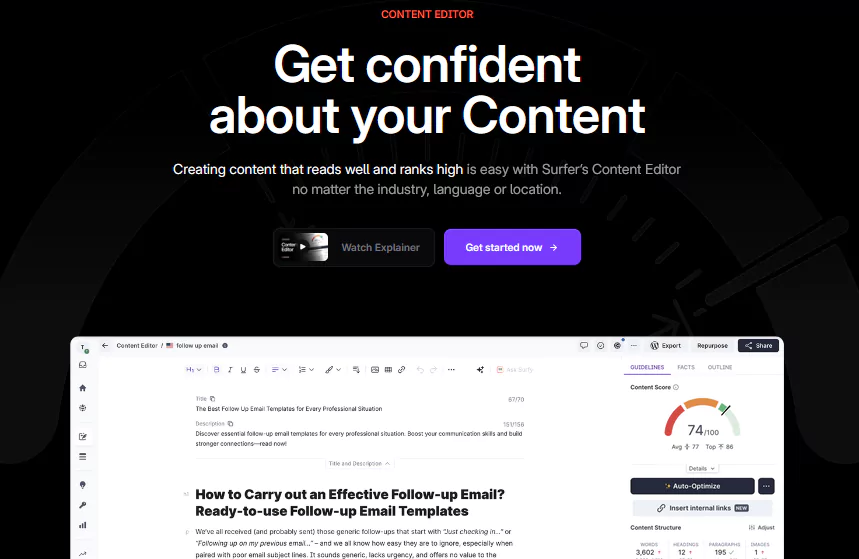
Its biggest strength is usability. The interface is intuitive, the content score is easy to understand, and the workflow is built for fast iteration. That makes it attractive for content teams, SEO experts, and digital marketers who want clear actionable recommendations without digging through a more complex SEO suite.
Surfer is also useful when you’re trying to improve pages based on search results and not just gut instinct. It can help with keyword suggestions, SERP analysis, topic coverage, and identifying opportunities to improve a page for specific SERP feature visibility. That’s a big reason it’s often listed among the best SEO tools for on-page optimization.
Compared with SEO PowerSuite, Surfer is much better if your main focus is content creation and optimization. Compared with broader platforms like Moz Pro, SE Ranking, or a tool positioned more like Ahrefs, it feels more specialized. You’re not getting the same breadth of backlink data, site auditing, or position tracking, but you’re getting a much stronger editor for content work.
Best for: Teams that want live scoring, faster optimization, and an easier path to execution.
Potential downside: If you also need heavy technical audits, local SEO support, or backlink tracking, you’ll still need other software in your stack.
3. Frase
Frase is one of the best alternatives if you want research, briefs, AI writing, and optimization all together in one platform. That’s what makes it especially appealing for small businesses, solo operators, and lean teams that don’t want to juggle multiple tools.
One of Frase’s biggest advantages is that it helps bridge the gap between content ideas and execution. You can research top-ranking pages, generate briefs, build outlines, and optimize content in a single environment. That makes it useful for SEO efforts where speed matters and where your team needs a cleaner workflow from idea to published asset.
Frase also tends to feel less intimidating than a full SEO suite. For people who don’t want a steep learning curve, that’s a meaningful advantage. It can be a strong fit for content creators, SEO specialists, and small business owners who want more help with optimization but don’t need every analysis feature that comes with a broader platform.
If you’re already handling SEO issues, backlink tracking, or position tracking elsewhere, Frase can slot in as a dedicated content layer. It won’t replace all your SEO tools, but it can simplify marketing efforts and support a more efficient content workflow.
Best for: Small teams and marketers who want research, briefs, and optimization together.
Potential downside: Power users may still prefer a more specialized optimizer for high-priority pages.
4. Clearscope
Clearscope is a premium content optimization tool designed for teams that care deeply about quality control, editorial consistency, and clean workflows. It’s less of an all-in-one SEO platform and more of a polished system for improving content at scale.
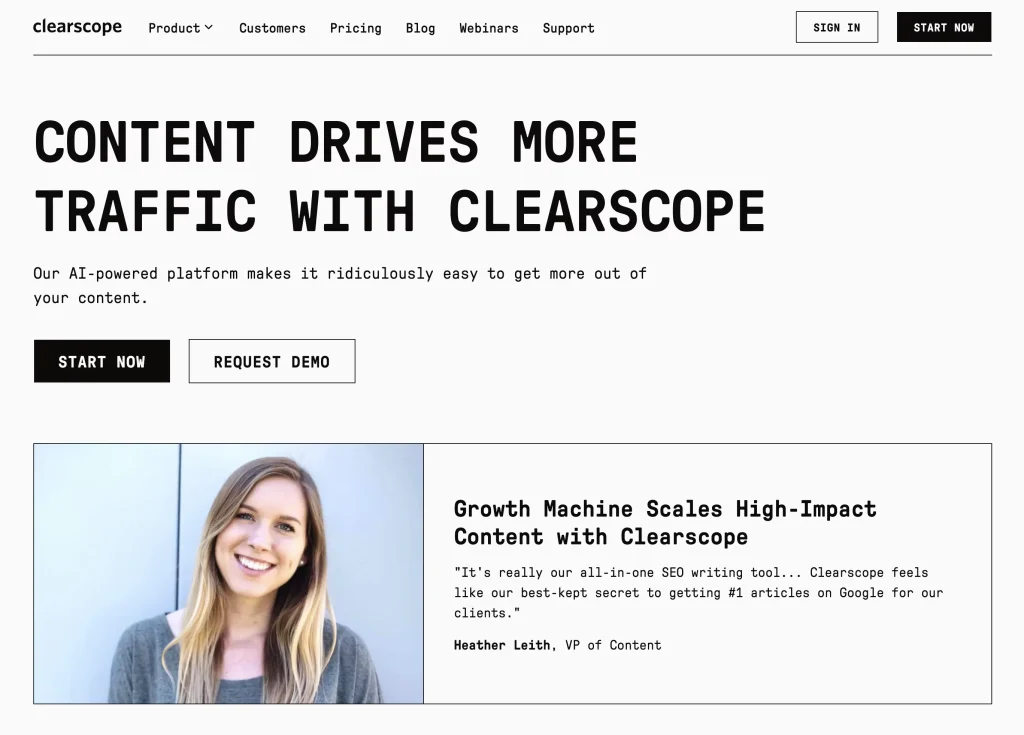
What makes Clearscope stand out is its simplicity. The interface is clean, the grading is easy to understand, and it’s approachable even for teams with non-SEO stakeholders. That makes it attractive for larger teams, SEO professionals, and content operations where user experience matters as much as the analysis itself.
Compared with SEO PowerSuite, Clearscope is a much better fit for editorial execution. You’re not choosing it for backlink checker functionality, backlink index depth, technical audits, or white-label reports. You’re choosing it because you want a more focused tool for improving content quality, topic coverage, and search relevance.
For brands with a serious content program, Clearscope can be one of the best software options in this space. It also works well for teams that want collaboration without the friction of a more complicated SEO suite.
Best for: Editorial teams, agencies, and brands that want premium content optimization with an intuitive interface.
Potential downside: Pricing is higher than several other options here, and it won’t replace broader SEO tools.
5. MarketMuse
MarketMuse is different from most of the tools on this list because it’s more strategy-heavy. While other products focus more on real-time optimization inside the editor, MarketMuse is stronger for planning, prioritization, and deciding what to create or improve across an entire site.
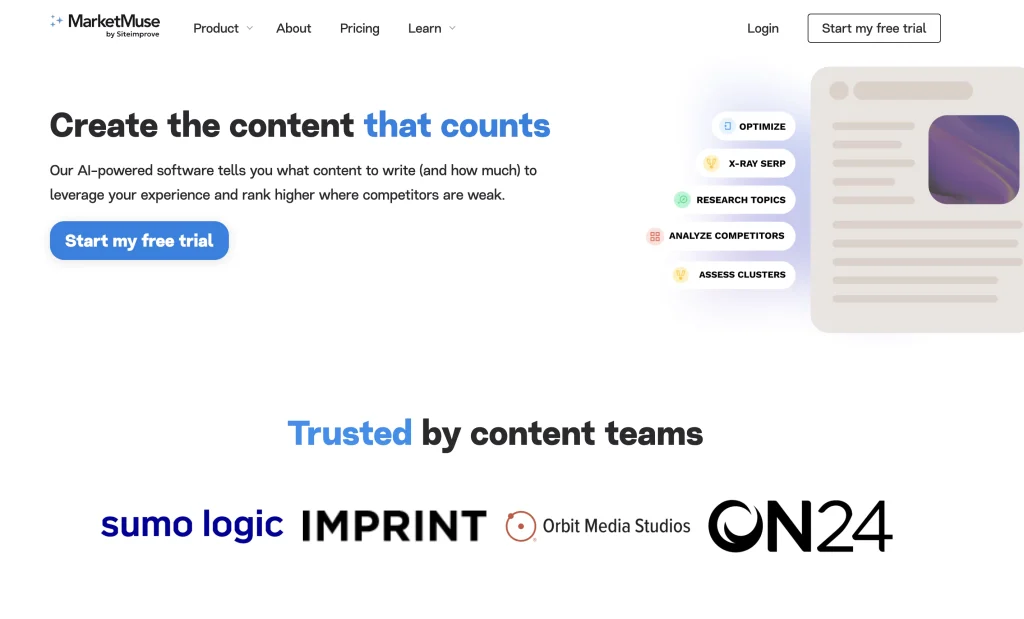
That makes it useful for teams with larger content libraries, more complex SEO campaigns, or a stronger focus on long-term SEO strategy. If your bottleneck is figuring out what to publish next, which pages to update, or how to strengthen topic authority, MarketMuse can be extremely valuable.
It’s also helpful for teams that publish heavily through an SEO Blog, learning center, or resource hub. Instead of only helping you optimize one page, it helps shape broader marketing strategy and content strategy decisions. It can uncover keyword ideas, reveal gaps in topical coverage, and help prioritize pages that deserve attention.
Compared with SEO PowerSuite, MarketMuse is far less about classic SEO management and much more about strategic planning. If your needs are centered on technical issues, link building, or broader SEO data collection, you’ll probably still need other essential tools. But if you’re trying to improve online presence through smarter planning and better content depth, it’s a very compelling choice.
Best for: Teams that care about content planning, topic authority, and long-term SEO performance.
Potential downside: It’s more strategic than editor-first, so it may feel heavier if all you want is a quick optimizer.
6. Scalenut
Scalenut is one of the better choices if you want drafting and optimization in one platform. It leans more heavily into AI than some of the other tools here, which makes it attractive for teams trying to move quickly while still improving content for search.
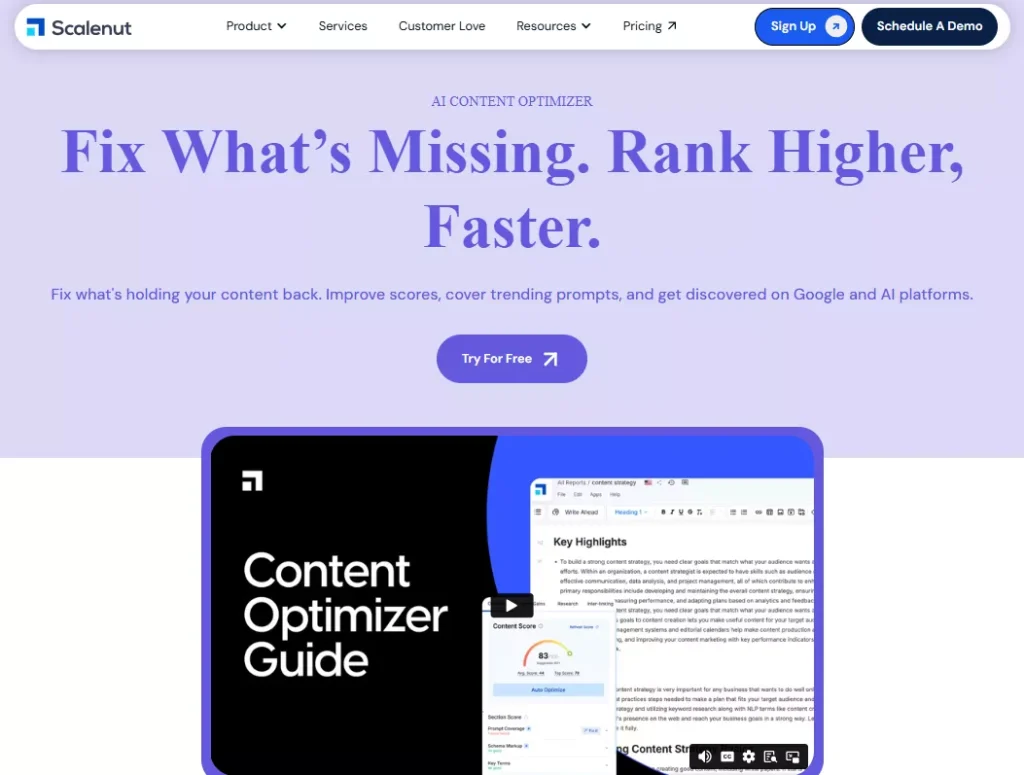
Its appeal comes from convenience. You can generate drafts, optimize content, run audits, and work through keyword ideas inside one system. For teams running multiple marketing initiatives, that kind of consolidation can save time and reduce complexity.
Scalenut is also relevant for teams that care about both traditional search and AI-driven discovery. If you’re trying to improve online visibility without building a much larger stack, it can be a useful middle ground between a dedicated optimizer and a more expansive marketing platform.
Compared with SEO PowerSuite, Scalenut is a better fit when the priority is content production speed and optimization rather than classic desktop SEO workflow. It won’t give you the same experience for backlink monitoring, site auditing, or broader SEO analysis, but it can be more practical for modern content teams.
Best for: Teams that want AI writing, optimization, and audits in one place.
Potential downside: Some teams may find it more AI-heavy than they want if they prefer a more traditional optimizer.
7. Dashword
Dashword is a good fit for teams that want a straightforward optimizer without the bulk of a larger SEO suite. Its value is in simplicity. You can create briefs, optimize content, monitor pages, and keep the workflow manageable without loading the team up with too many features.
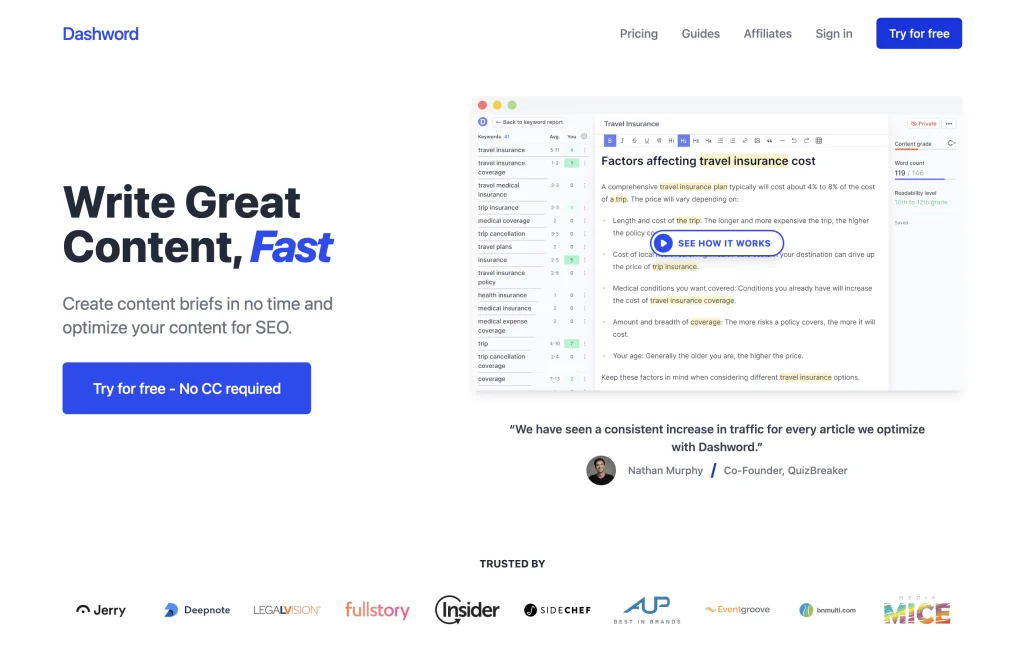
That simplicity makes Dashword attractive for smaller teams, content creators, and small business owners who want to improve pages without committing to a more complicated platform. It’s easier to adopt than many broader SEO suites, and that alone can make it more effective in practice.
Compared with SEO PowerSuite, Dashword is much narrower. You aren’t choosing it for local SEO, backlink tracking, site auditing, technical audits, or broader position tracking. You’re choosing it because you want one of the best alternatives for focused content work.
For teams that already rely on other free tools or established platforms for deeper SEO tasks, Dashword can be a nice complement. It won’t do everything, but it can improve the part of the workflow that directly influences page quality and content execution.
Best for: Small teams that want a practical, easy-to-use content optimizer.
Potential downside: It’s less robust than some of the more advanced options here.
How These Tools Compare to a Desktop Suite
It’s important to understand what these cloud platforms are and what they aren’t. Most of the products on this list aren’t trying to replicate every desktop module in SEO PowerSuite, like deep standalone backlink indexing, toxic-link audits, or local-machine site crawling.
If you still need that kind of technical or backlink depth, you may keep a specialist tool in parallel. That could include Screaming Frog for crawling, Google Search Console for performance data, Google Analytics for traffic sources, and other platforms for backlink data.
That’s not a weakness. It’s a deliberate trade. What these alternatives give an agency in return is the thing a desktop suite structurally can’t: cloud access, real-time team collaboration, and white-label client reporting across many clients.
In many cases, the smartest move is to run a cloud, collaborative platform as your agency’s operating layer, then add a specialist tool only where you need extra depth. That scales far better than asking every team member to install and sync the same desktop software.
Which SEO PowerSuite Alternative Is Best for You?
Choose Rankability if you want the strongest agency-first platform: cloud, collaborative, white-label, multi-client, with reporting that bridges to Looker Studio.
Choose Surfer if you want one of the most popular SEO tools for live optimization and fast feedback.
Choose Frase if you want a clean balance of content research, AI support, and optimization at a lower starting price.
Choose Clearscope if you care most about editorial quality, polish, and collaboration.
Choose MarketMuse if your top priority is planning, prioritization, and long-term content depth.
Choose Scalenut if you want AI drafting and optimization together in a more all-in-one system.
Choose Dashword if you want a simpler tool that improves content without overwhelming the team.
Final Verdict
SEO PowerSuite is still a capable desktop toolkit, especially for a solo SEO on a budget. But for an agency, the desktop model is the constraint: no true cloud, no real-time collaboration, and no native white-label client reporting. Once you’re running multiple clients with a team, that friction compounds.
The right choice depends on your workflow. Some teams want a simple optimizer, some want a premium editorial system, and some want broader AI coverage. But for agencies, Rankability stands out because it’s built for exactly the model PowerSuite can’t serve: a cloud, collaborative, white-label platform that manages many clients and turns research, optimization, and reporting into one repeatable system, with a clean bridge to Looker Studio.