
Surfer SEO still solves a real problem: page-level optimization guidance that’s easier to act on than raw SERP data. But its workflow, pricing tiers, and reporting outputs don’t always fit a growing SEO agency.
This guide is for agency owners and in-house marketing leads comparing realistic replacements. Rankability is our top pick because it connects optimization to reporting and AI search visibility in one agency workflow.
We evaluated each tool on agency workflow fit, optimization depth, briefs and production speed, reporting, AI and search coverage, and cost control. Pricing and packaging change often, so verify current terms on each vendor site.
| Tool | Best for | Starting Price | Key Strength |
|---|---|---|---|
| Rankability | Agencies that need workflow, optimization, and proof in one system | $99/month | End-to-end agency workflow with AI visibility tracking |
| Content Harmony | Brief-led production and writer handoffs | $10 for 10 workflows | Structured briefs that standardize editorial handoffs |
| Clearscope | Editorial-grade optimization scoring | $129/month | Scoring clarity writers adopt quickly |
| Frase | Fast SERP research, outlines, and AI drafting | $49/month | Speed from query analysis to first draft |
| MarketMuse | Enterprise strategy and topic modeling | Contact for pricing | Content inventory analysis and roadmap planning |
| NeuronWriter | Budget-conscious optimization | $23/month | Surfer-style scoring at a fraction of the price |
| WriterZen | Keyword clustering and content planning | $75 one-time (keyword tool) | Topic clusters connected to production |
| Semrush SEO Writing Assistant | Existing Semrush users | See vendor site | Lightweight optimization inside a familiar stack |
Why Agencies Are Rethinking Surfer SEO
When agencies compare alternatives, the issue is usually fit, not failure: lower pricing, better briefs, cleaner client reporting, or a workflow that scales across accounts.
The 2025 acquisition by Positive Group added another reason to reassess, because ownership changes often trigger procurement reviews and packaging shifts. Those shifts matter most when your margins depend on predictable software costs.
For the full platform picture before you switch, read our Surfer SEO review.
1. Rankability — Best overall Surfer SEO alternative for agencies
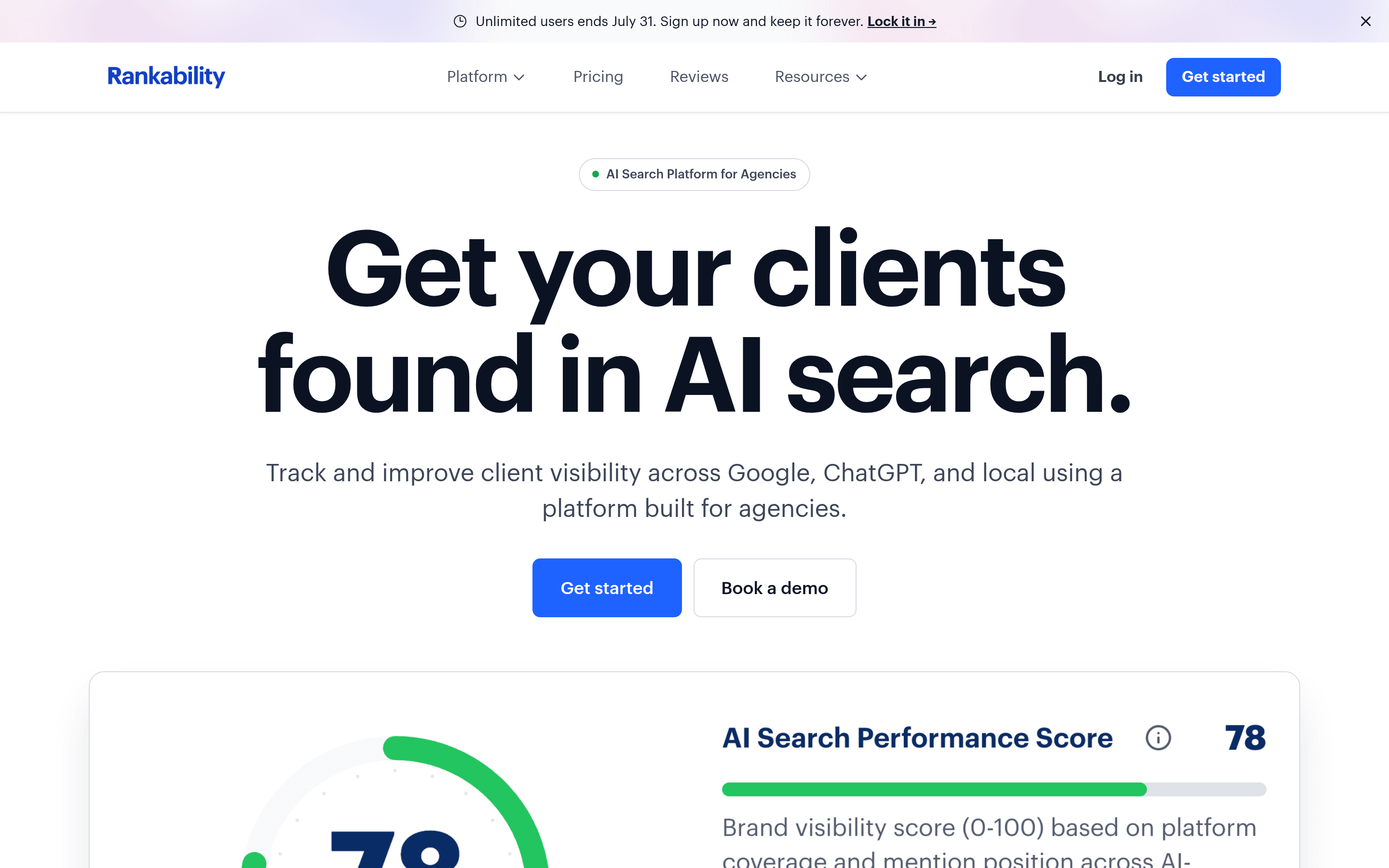
Rankability is built as the agency SEO workflow for Google and AI search, which is a different promise from a standalone content editor. It covers the full path from research to draft to optimization to reporting, so it does more than score a page after the writing is done.
It’s also one of the few options here built around agency operations instead of individual writers. Content scoring against real competitors, prioritized checklists, and client-ready reporting make it easier to standardize delivery across accounts.
Key features:
- Content scoring against real competitors with prioritized optimization checklists
- Multi-source keyword research with clustering, gap analysis, and client-ready exports
- AI- and Google-based content briefs and drafting grounded in client knowledge bases
- Tracker reporting that follows rankings plus AI mentions and citations across 11 platforms, packaged as white-label reports
- Unlimited users and unlimited seats on every plan
Pricing: Starts at $99/month.
Ideal for: Agencies, consultants, and content teams that want an all-around Surfer replacement with reporting built in.
Bottom line: Rankability is built for agency execution and proof, not just on-page suggestions — the strongest fit when your real challenge is consistency across a delivery team.
2. Content Harmony — Best for content briefs and writer handoffs
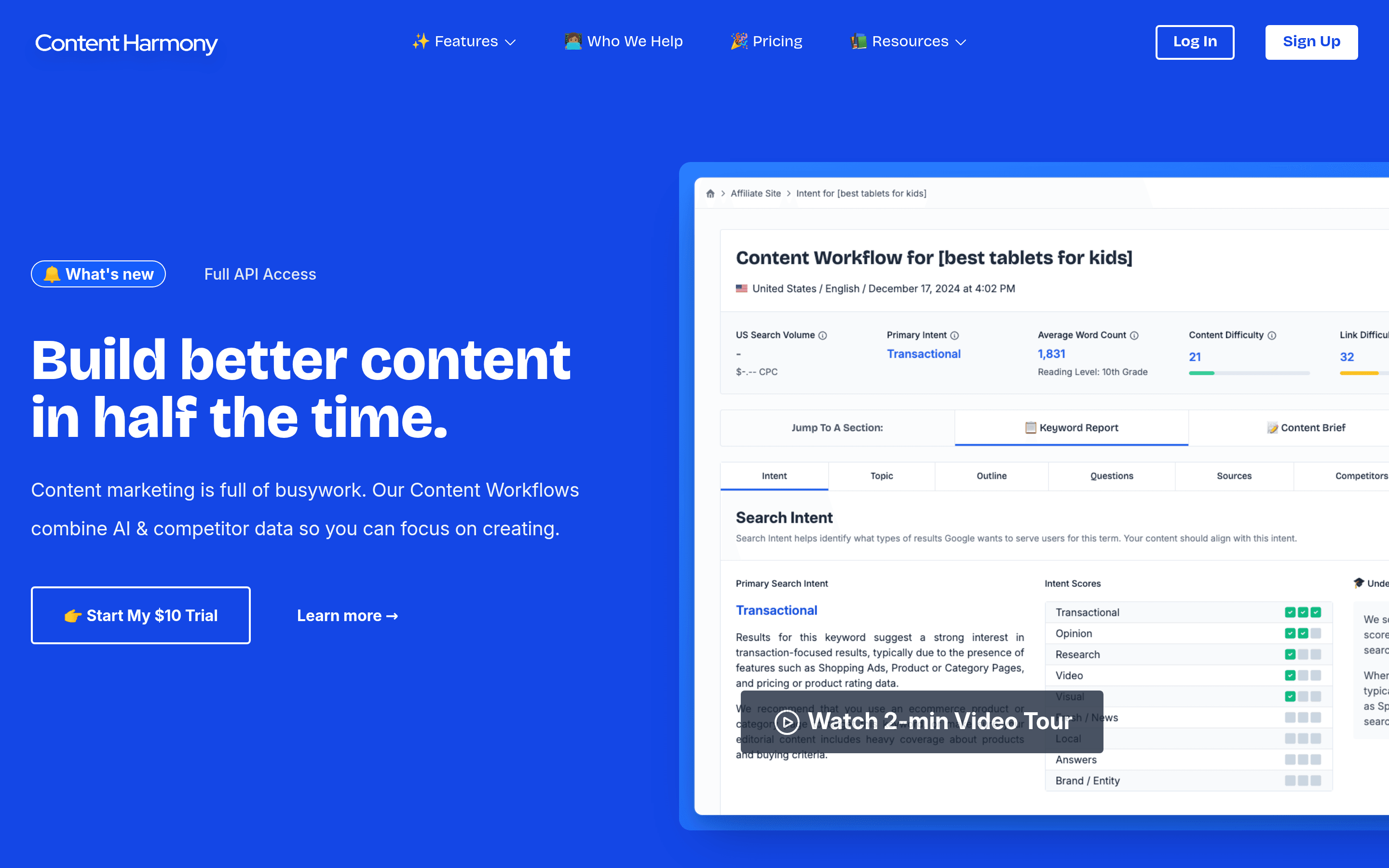
Content Harmony fits better than Surfer when your process starts with research, intent analysis, and structured briefs. Its research packets and templates help strategists create consistent deliverables writers can execute without long clarification loops.
That workflow-first design matters because agencies often lose margin between strategy and production, not during optimization itself. If your writers live in Google Docs and your managers care most about brief quality, Content Harmony fits that model well.
Key features:
- Comprehensive keyword research reports that consolidate critical SEO data
- Standardized, shareable content brief templates for writer-ready delivery
- AI-driven content grading for topic coverage and consistency
- Intent analysis, competitor review, and visual content planning
Pricing: Starts with 10 content workflows for $10; see the vendor site for full plans.
Ideal for: Agencies producing high volumes of brief-led content with clear editorial handoffs.
Worth noting: Content Harmony is excellent for briefs, but you may still need separate rank tracking and client reporting in your stack.
3. Clearscope — Best for premium editorial teams
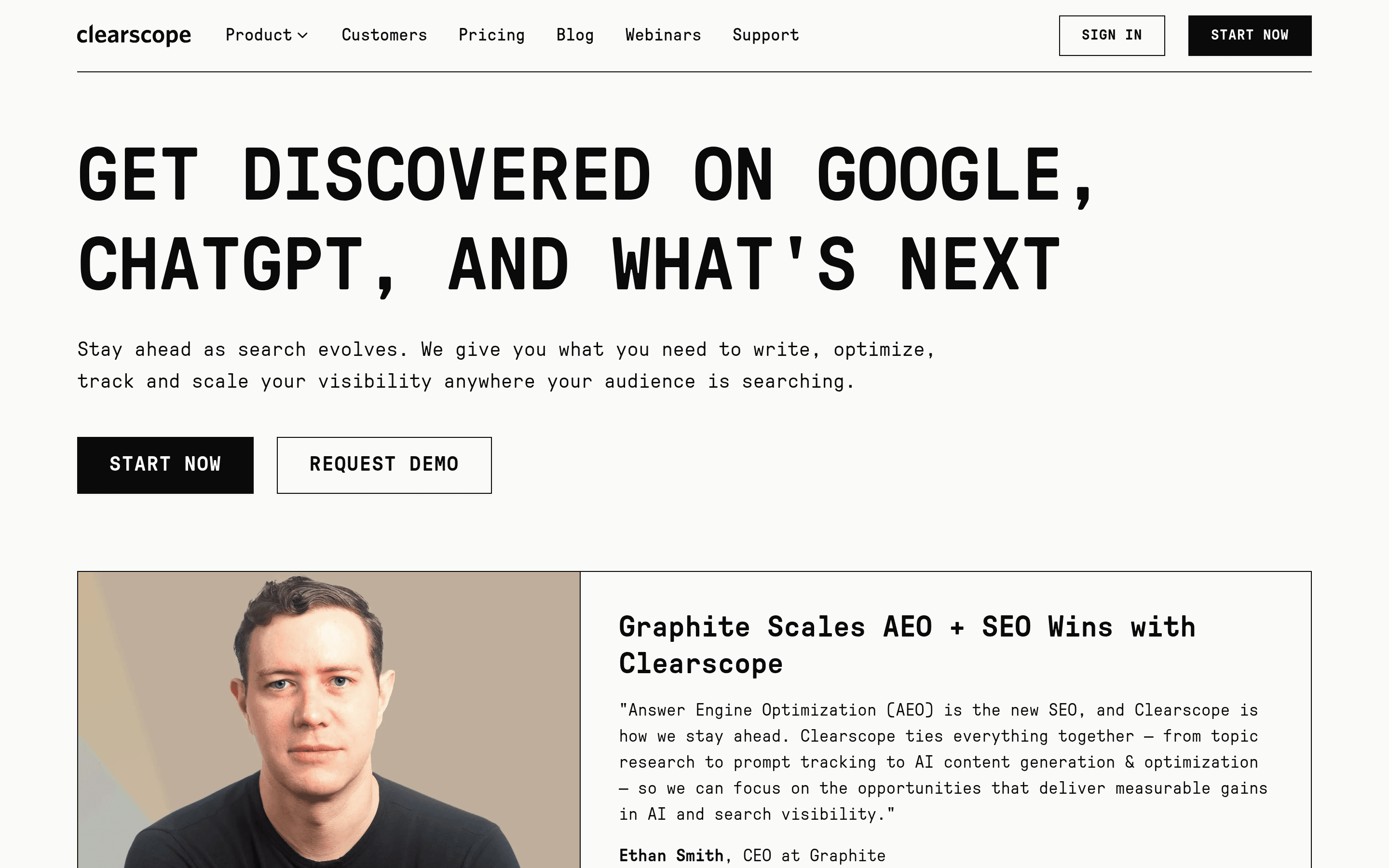
Clearscope remains the preferred option for agencies that want scoring clarity and editorial consistency across many writers. Its optimization model is easy to operationalize when editors need a clear quality threshold rather than a heavier workflow platform.
Its positioning now extends across search and AI visibility, keeping it current beyond legacy term counting. Topic research, clustering, and content performance analytics connect optimization to longer-term quality control.
Key features:
- Content grading and scoring tied to top-ranking pages
- Keyword and term recommendations in a writer-friendly editor
- Topic research, clustering, and search intent analysis
- Content performance analytics and AI-assisted drafting support
Pricing: Essentials: $129/month.
Ideal for: Teams that want a straightforward optimization score and editorial consistency.
Why it stands out: Writers understand the score quickly and editors can enforce standards without heavy training. For a three-way agency view, see our Clearscope vs Surfer vs Rankability comparison.
4. Frase — Best for fast SERP research and AI drafting
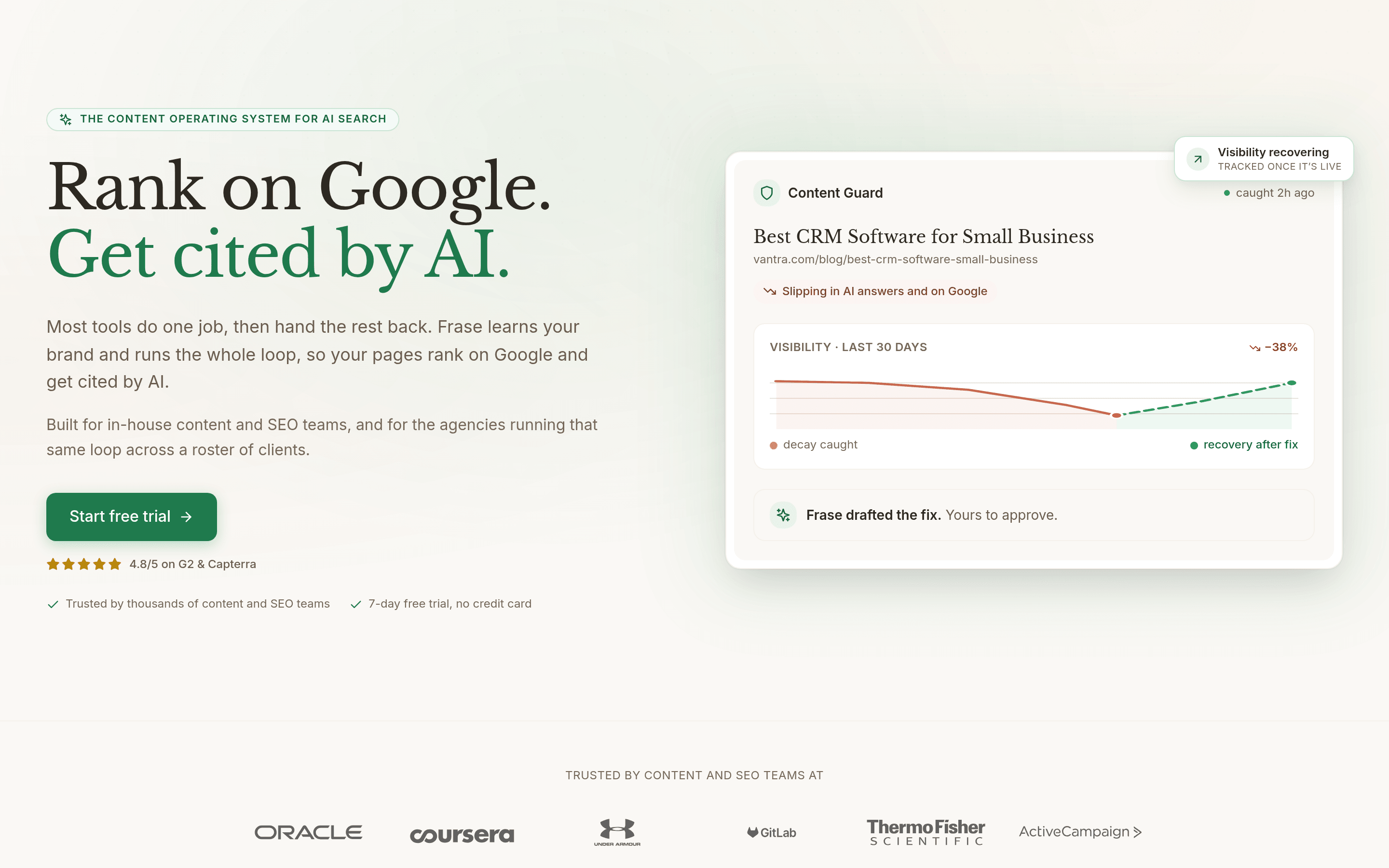
Frase is the pick when you want a SERP-driven research and drafting engine rather than a pure optimizer. Its workflow covers research, writing, publishing, and monitoring, which shortens the path from query to live page.
It also monitors Google rankings and AI answer citations with alerts and fix suggestions. That gives it a broader operational footprint than most content editors at its price.
Key features:
- SERP-based content research and outline generation
- Integrated drafting, publishing, and monitoring workflow
- Google ranking and AI citation alerts with automated fix suggestions
- Real-time SEO and GEO scoring across 8 AI platforms
Pricing: Starts at $49/month.
Ideal for: Solo marketers, lean teams, and agencies that need faster SERP research, outlines, and draft acceleration.
The verdict: Strong on speed-to-draft and lifecycle support — just validate how its reporting outputs fit your client review process before standardizing.
5. MarketMuse — Best for content strategy and topical authority
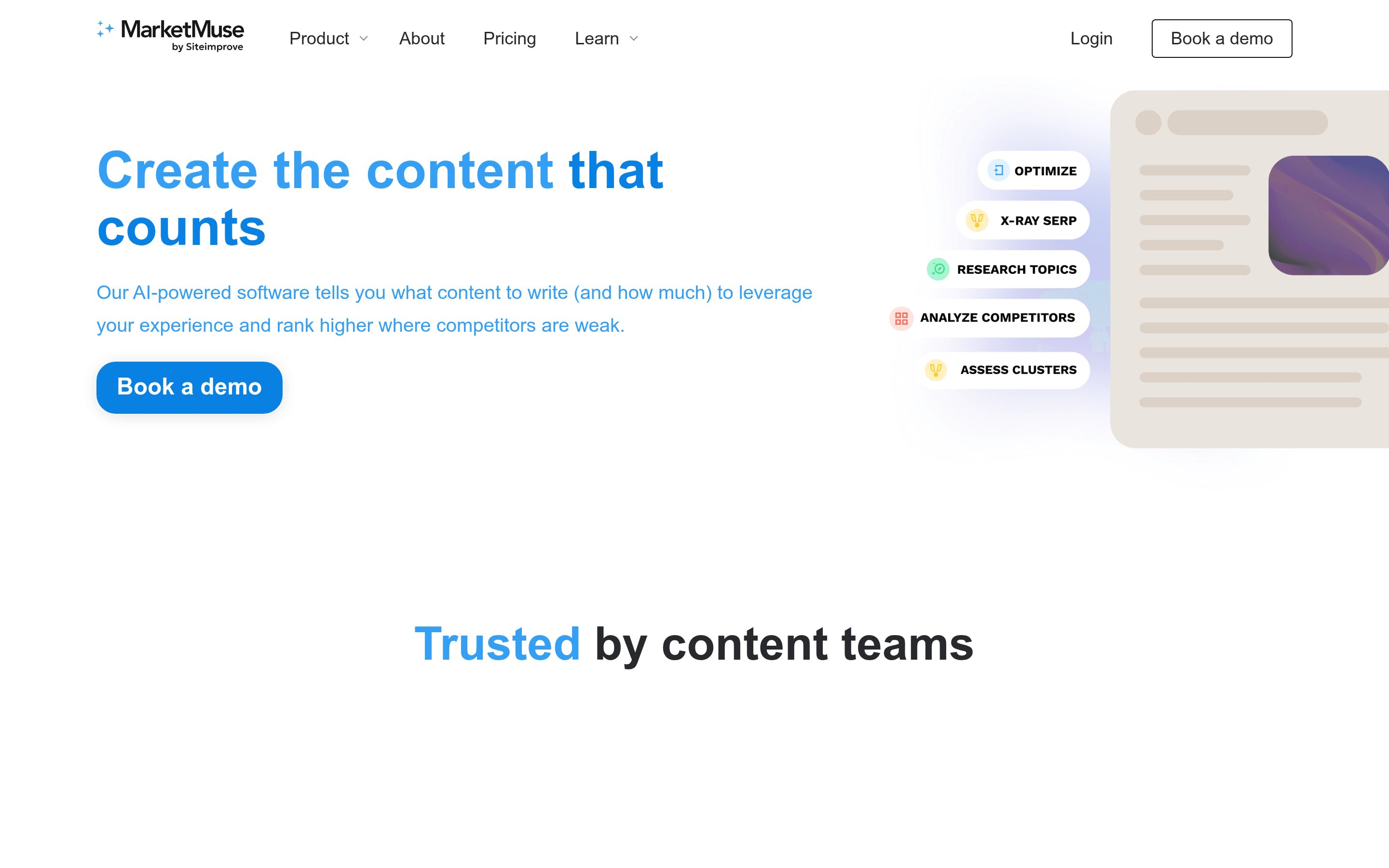
MarketMuse is not just a page optimizer; it’s a strategy platform for agencies managing large content inventories. Its AI emphasizes topic authority, competitor gap analysis, and personalized difficulty scoring.
That distinction matters for enterprise accounts where the question isn’t “how do we improve this page?” but “which topics should we update, create, or deprioritize next?” MarketMuse turns content strategy into a defensible planning function.
Key features:
- AI-driven content inventory analysis and quick-win identification
- Competitor content gap detection and opportunity scoring
- Personalized difficulty scoring for prioritization
- Automated content plans for updates and net-new topics
Pricing: Contact for pricing.
Ideal for: Strategy-led teams managing large sites that need roadmaps, not just page-level optimization.
Best if you need: Strategy outputs that become a client roadmap — its value grows with site size and content complexity.
6. NeuronWriter — Best budget Surfer replacement
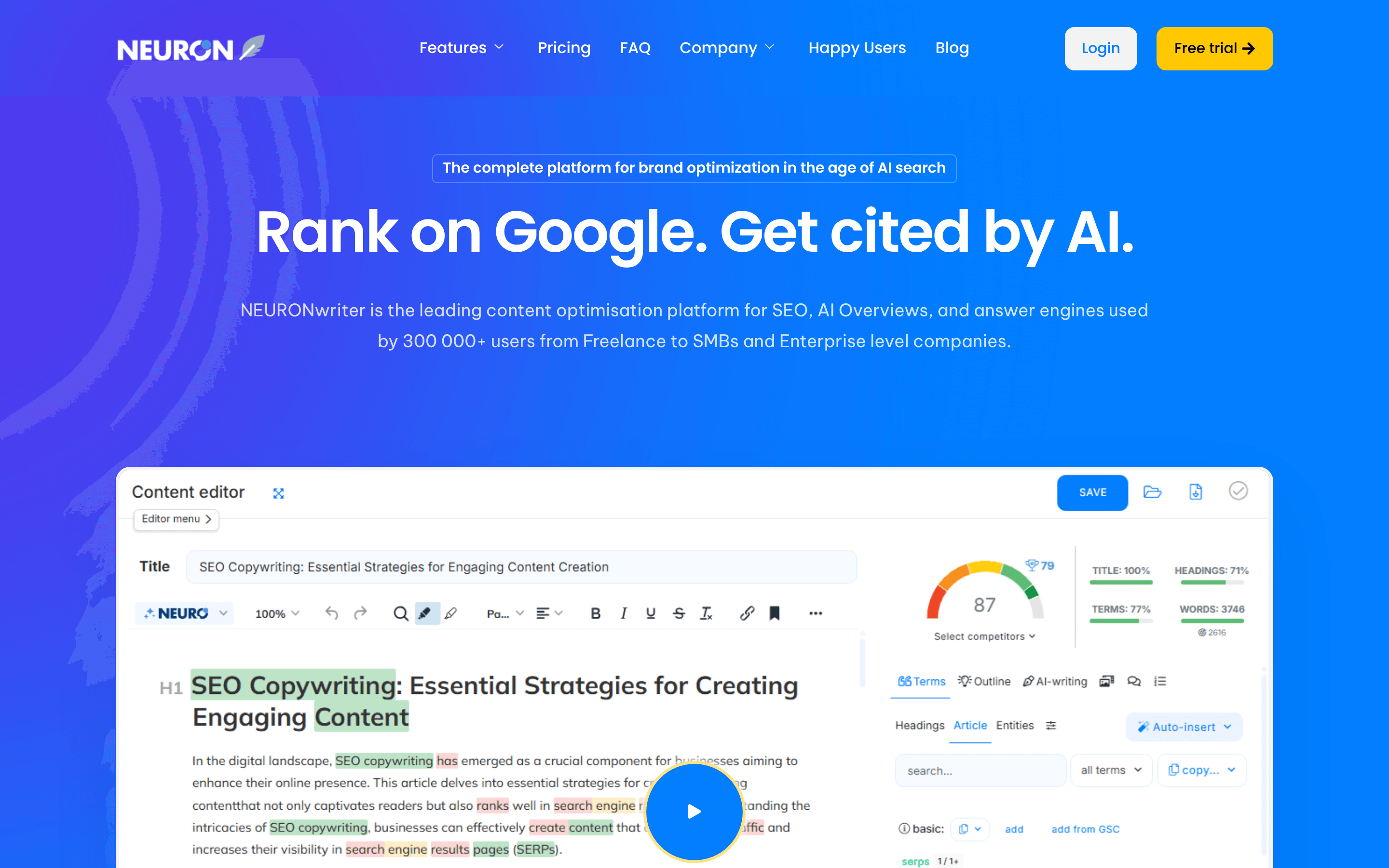
NeuronWriter covers the practical needs agencies expect from Surfer-style optimization at a much lower entry price. You get content scoring, SERP-informed guidance, and useful integrations without premium pricing.
Its feature set extends into article generation, internal link suggestions, and plagiarism checks. For agencies balancing output volume against software spend, that breadth improves margin.
Key features:
- Content editor with real-time SEO guidance and quality scoring
- Keyword and competitor analysis with coverage checks
- Internal link suggestions, plagiarism checks, and AI image support
- Integrations with WordPress, Google Search Console, Shopify, and API access
Pricing: Starts at $23/month for the Bronze plan.
Ideal for: Budget-conscious freelancers, affiliate site owners, and small teams.
Our take: Strong value per seat, but confirm project limits and multi-client organization before standardizing across a growing client roster.
7. WriterZen — Best for keyword-first content workflows
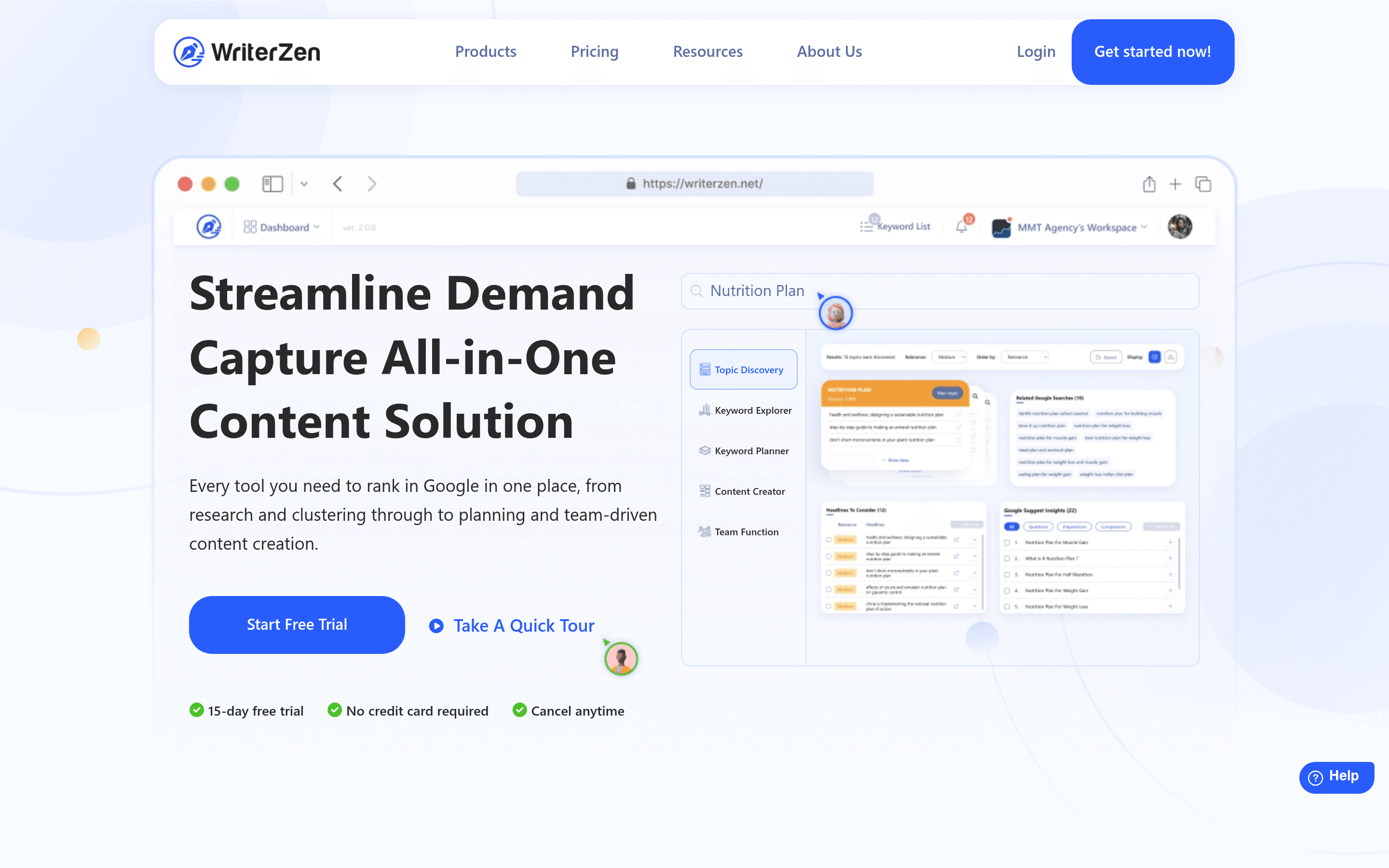
WriterZen fits agencies that start with keyword research, topic discovery, and clustering before writing begins. Its Topic Discovery and Keyword Explorer simplify planning for pillar-and-spoke strategies across client campaigns.
That planning orientation matters because content success often depends on cluster architecture before optimization begins. WriterZen moves teams from spreadsheets to a connected workflow for discovery, planning, and drafting.
Key features:
- Topic Discovery for clustered content opportunities
- Keyword Explorer and Planner using Google data
- Content Creator workflow for building articles
- AI assistant, team management, and plagiarism checking
Pricing: Keyword Explorer: $75 one-time; see the vendor site for suite plans.
Ideal for: SEO teams that want keyword research, clustering, and creation in one place.
Worth a look if: Clustering and planning are your main bottlenecks — if your editorial process already runs smoothly, a stronger optimization or reporting layer may matter more.
8. Semrush SEO Writing Assistant — Best for existing Semrush users
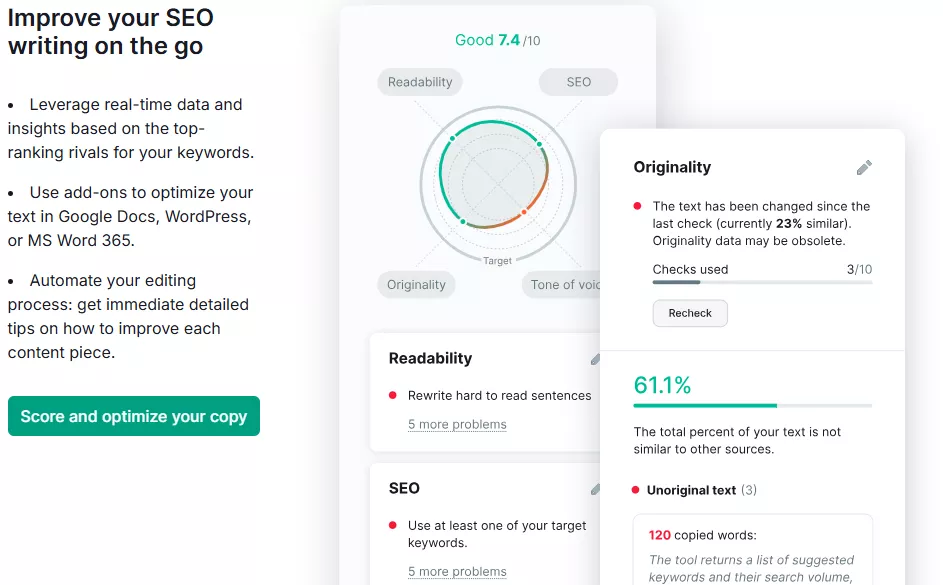
Semrush SEO Writing Assistant is the convenience pick for teams already standardized on Semrush. It provides enough on-page guidance for agencies that want simple checks inside an existing ecosystem.
That ecosystem fit is the real advantage. If you already use Semrush for research, audits, and competitive work, lightweight optimization there may reduce friction more than adopting another standalone product.
Key features:
- Real-time SEO recommendations based on top Google competitors
- Readability and tone-of-voice analysis in one editor
- Plagiarism detection and AI paraphrasing
- Integrations with Google Docs, MS Word, and WordPress
Pricing: Included with Semrush plans; see the vendor site.
Ideal for: Semrush-first teams that want lighter optimization without another subscription.
The trade-off: Convenience over depth — if you’re weighing a full switch instead, start with our Semrush alternatives roundup.
How We Chose the Best Surfer SEO Alternatives
These rankings put agency priorities first: multi-client workflow, content operations, and reporting rather than solo-blogger convenience. Tools with stronger white-label reporting and API access scored better than products aimed mainly at individual writers.
We weighed six factors: agency workflow fit, content optimization depth, briefs and production speed, reporting and proof, AI and search coverage, and cost control. A platform can score content well and still fail an agency if account structure and handoffs break under load.
We also gave extra weight to visibility across traditional search and AI platforms like ChatGPT and Gemini. Modern discovery spans classic SERPs, AI Overviews, and assistant answers, so blind spots now hide in more places.
How to Choose the Right Surfer SEO Alternative
Match the tool to the bottleneck in your workflow:
- Closest all-around replacement for Surfer SEO: Rankability
- Bottleneck is research and briefing: Content Harmony
- Premium editor for larger teams: Clearscope
- SERP research to AI draft fast: Frase
- Content strategy and topical authority: MarketMuse
- Price is the main issue: NeuronWriter
- Keyword clustering with content support: WriterZen
- Already living in Semrush: SEO Writing Assistant
Standardize on one primary workflow tool whenever possible. Tool sprawl increases training time, weakens accountability, and makes client deliverables harder to explain.
What if You Used Surfer SEO Mainly for Briefs or Optimization?
If Surfer mainly produced your briefs, a brief-first platform can replace most of your workflow. Content Harmony is the strongest fit for structured briefs and handoffs, while Frase wins when briefs need to flow straight into fast AI drafts.
If Surfer was mostly your optimizer, scoring-first tools may be enough. Clearscope gives editors stronger control, and NeuronWriter covers refresh and update workflows at a lower price.
If your service now includes AI search visibility and clearer client proof, a workflow platform like Rankability becomes more relevant. It connects optimization to reporting and visibility tracking instead of treating them as separate jobs.
FAQs
What is the main competitor to Surfer SEO?
Common competitors include Rankability, Clearscope, Frase, Content Harmony, MarketMuse, NeuronWriter, and WriterZen. The best choice depends on whether you care most about optimization, briefs, strategy, or price.
Is Surfer SEO the best?
Surfer is strong for on-page content optimization, but it isn’t automatically the best fit for every agency. Teams often move when they need better reporting, multi-client workflow, or simpler adoption across writers and editors.
Is Surfer SEO better than Clearscope?
They solve overlapping but different problems. Surfer appeals to optimization-workflow teams, while Clearscope is chosen for editorial scoring consistency and easier writer alignment.
Is there a free alternative to Surfer SEO?
Fully free alternatives are limited. If budget is the issue, look at a lower-cost plan like NeuronWriter or a tool you already pay for like Semrush SEO Writing Assistant.
Which Surfer SEO alternative is best for agencies?
Rankability is the strongest all-around option because it combines research, optimization, reporting, and AI search tracking in one workflow. Content Harmony is also strong if your agency depends heavily on detailed briefs.
Conclusion
For most agencies, Rankability is the best Surfer SEO alternative because it offers the strongest balance of optimization quality, workflow coverage, and reporting across Google and AI search. It’s built around producing, optimizing, and proving content performance, not just scoring drafts.
The niche fits are real: Content Harmony for briefing, Clearscope for premium editorial simplicity, Frase for speed, and NeuronWriter for budget. If you’re choosing among the editors specifically, our Surfer vs Frase vs Clearscope vs NeuronWriter comparison goes deeper.
Choose based on how your agency actually delivers work before comparing feature lists. When software matches your process, adoption improves and client outcomes become more repeatable. Ready to consolidate your stack? Get started.