

You are not choosing a keyword tool in isolation. You are choosing the system that will shape how your team finds demand, judges competition, builds briefs, and proves results across Google, AI Overviews, ChatGPT, and Gemini.
This roundup is for SEO agency owners and in-house marketing leads, and the quick answer is Rankability as the top pick. Its Search Performance Index ties keyword research directly to visibility tracking across traditional search, local pack, AI answers, AI citations, and video — so research connects to proof, not just spreadsheets.
We prioritized database depth, intent clarity, competitor research, reporting fit, local SEO support, and whether a tool helps you move from plan to proof without rebuilding the process in bolt-ons. Exact search volumes matter less in 2026 than directional prioritization plus intent fit.
| Tool | Best for | Starting Price | Key Strength |
|---|---|---|---|
| Rankability | Unified keyword research across Google and AI search | From $97/mo; plan limits | SPI score unifies traditional, local, AI, citation, and video visibility |
| Semrush Keyword Magic Tool | Large-scale keyword discovery and clustering | Pro: $139.95/month | Massive keyword expansion with intent and SERP context |
| Ahrefs Keywords Explorer | Competitor-first keyword research | Lite: $129/month | Strong competitor page analysis and SERP inspection |
| Google Keyword Planner | PPC-informed keyword demand signals | Free | Closest-to-source Google Ads demand and CPC data |
| Moz Keyword Explorer | Straightforward prioritization for small-to-mid teams | Starter: $49/month | Clean Priority scoring with practical SERP analysis |
| Mangools KWFinder | Local SEO and quick-win keywords | Entry: $29/month | Fast keyword discovery with approachable SERP metrics |
| KeywordTool.io | Autocomplete-based keyword expansion | Pro Basic: $89/month | Broad long-tail discovery from Google Autocomplete and other platforms |
| WordStream Free Keyword Tool | Quick keyword ideas when you need a starting point | Free | Fast seed-list generation with volume and CPC hints |
| AlsoAsked | People Also Ask topic expansion and content briefing | Basic: $12/month | Visual question trees for outline building |
| Answer Socrates | Natural-language query mining | Lite: $9/month | Conversational question discovery for long-tail coverage |
1. Rankability — Best for unified keyword research across Google and AI search
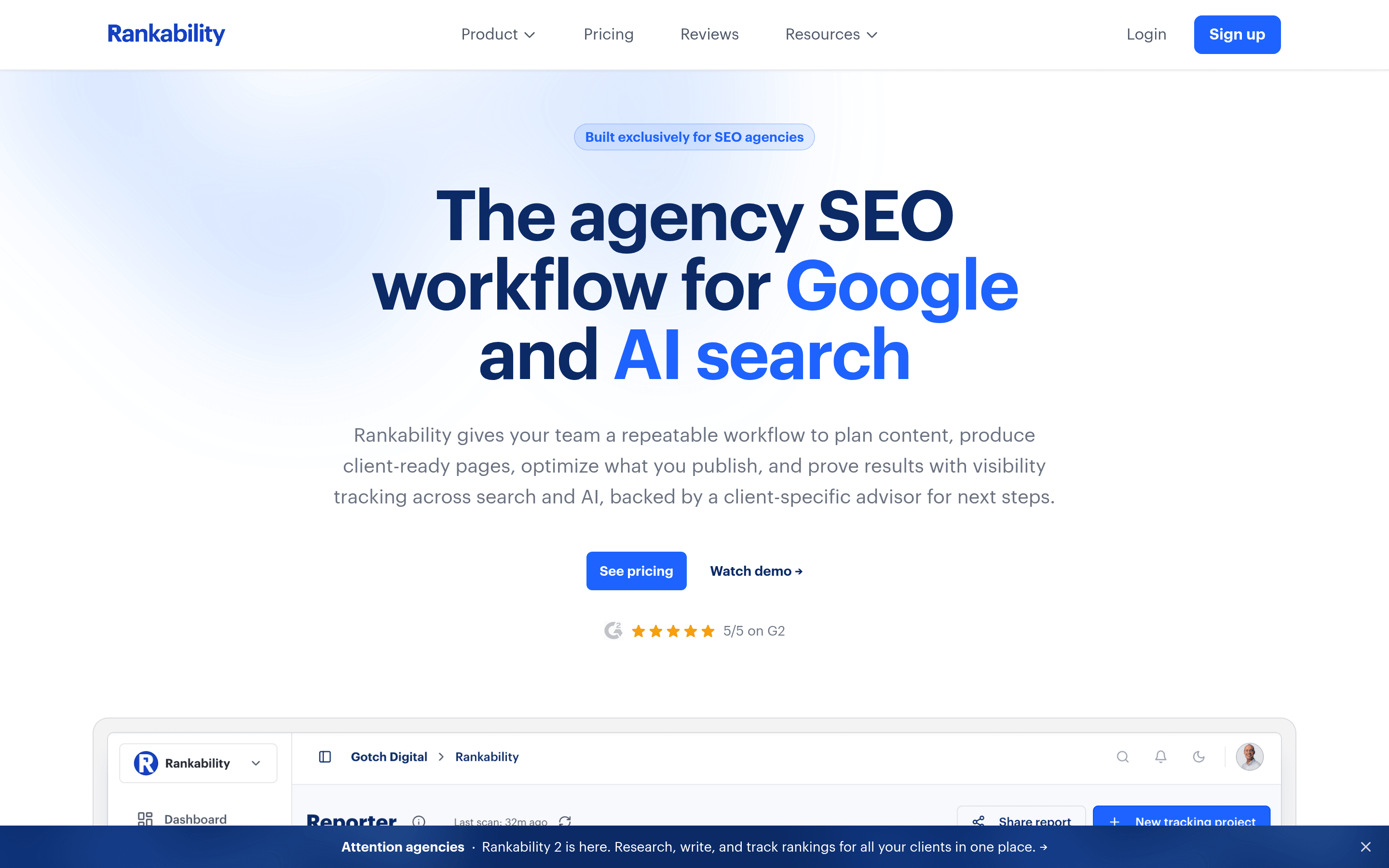
Rankability’s Search Performance Index, or SPI, is the clearest headline metric in this category because it rolls traditional rankings, local pack visibility, AI answers, AI citations, and video search into one number. For agencies managing multiple clients, that single KPI removes the reporting fragmentation created as Google AI Overviews and answer engines change where visibility happens.
Rankability also connects keyword discovery to writing, content optimization, and reporting in one workflow, so you can move from seed keywords to proof of impact without switching systems. That integration is what makes it more operational than a standalone keyword database, especially when you are targeting long-tail keywords, question keywords, and local pages at the same time.
Key features:
- SPI (Search Performance Index) reporting across Google rankings, local pack, AI answers, AI citations, and video visibility
- Keyword discovery built on seed keywords, Google Autocomplete patterns, and question keywords via Rankability Researcher
- Integrated research, copywriting, optimization, and reporting inside one platform
- Knowledge base support that keeps client context centralized across campaigns
- White-label reporting and API access for scalable agency delivery
Pricing: Starter is $97/month, Agency $297/month, and Agency Pro $497/month. Annual totals are $970, $2,970, and $4,970. All paid plans include unlimited client workspaces, unlimited team members, branded reports, and API/MCP access. Content allowances are 20, 80, and 160 projects per month; tracked AI query allowances are 100, 300, and 500, respectively, across all 11 included AI platforms. Google keyword tracking and Local Pack scans have separate allowances. Gotch Inner Circle is included with Agency Pro annual plans. Get Started.
Ideal for: SEO agencies and in-house leads who need one system to research keywords and prove impact across Google plus AI platforms.
Bottom line: If you want one platform that turns keyword research into measurable visibility across Google and AI search, Rankability has the strongest agency workflow.
2. Semrush Keyword Magic Tool — Best for large-scale keyword discovery and clustering
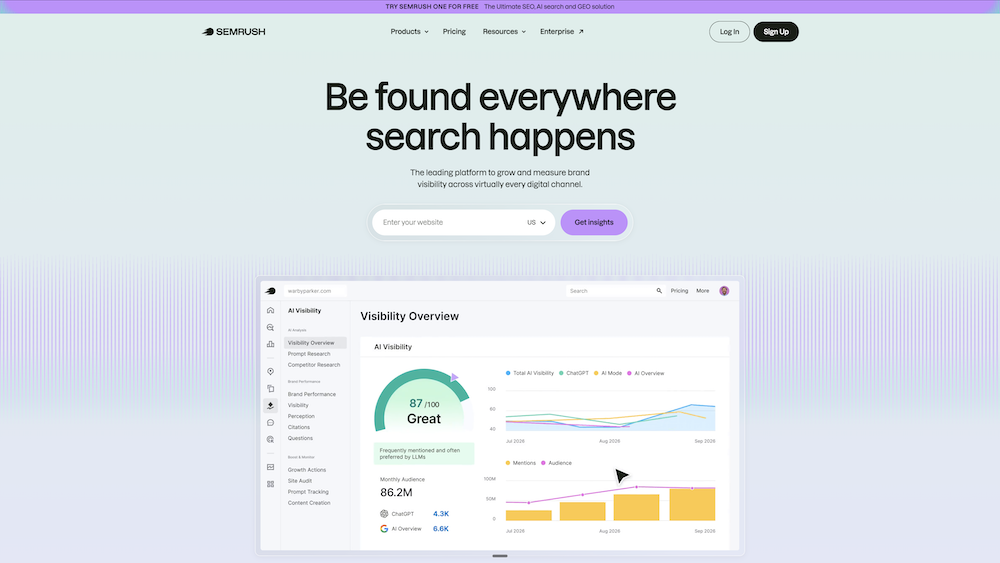
Semrush Keyword Magic Tool is the broadest database-style option here when your agency needs rapid keyword clustering, large exports, and a content calendar built from thousands of related terms. Semrush states its Keyword Magic database includes 27.8 billion keywords across 142 geo-databases, and it can generate up to 20 million keyword ideas from a single seed.
The interface adds filters, search intent labels, SERP features, and prioritization signals that help you avoid building content around terms with weak ranking paths. If the suite feels heavier than your team needs, our Semrush alternatives roundup compares the lighter-weight options.
Key features:
- Large-scale keyword expansion for clusters, hubs, and supporting articles
- Intent segmentation separating informational, commercial, and transactional terms
- SERP feature visibility for prioritizing snippets, local packs, and other result types
- Position tracking, site audit, and AI visibility reporting in the broader platform
- API data integration and multi-location tracking for larger agency operations
Pricing: Pro: $139.95/month; Guru: $249.95/month; Business: $499.95/month
Ideal for: Agencies that need fast, high-volume keyword expansion and keyword prioritization.
Our take: Semrush beats lighter tools when scale, filters, clustering, and database breadth matter more than simplicity.
3. Ahrefs Keywords Explorer — Best for competitor-first keyword research
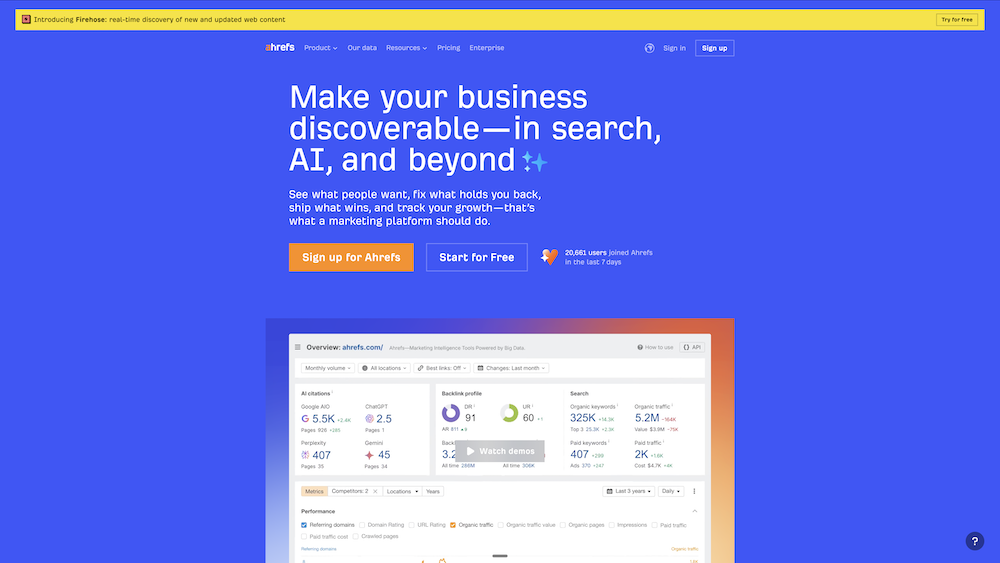
Ahrefs Keywords Explorer is strongest when your process starts with competitor keyword research and proven ranking pages rather than brainstorming from scratch. That workflow is efficient because it grounds your keyword list in URLs that already win traffic, links, and topical authority.
Its click-focused metrics and deep SERP inspection help you avoid chasing terms that look attractive on volume alone but deliver weak traffic potential. If its pricing or tracking model comes up short for your stack, our Ahrefs alternatives guide covers the strongest replacements.
Key features:
- Competitor top-pages analysis that turns real ranking URLs into target keyword lists
- Click and traffic-potential metrics that add context beyond raw search volume
- SERP inspection for judging content type, authority thresholds, and intent fit
- Keyword difficulty data paired with backlink context for realistic planning
- Broad research environment that supports repeatable agency workflows
Pricing: Lite: $129/month; Standard: $249/month; Advanced: $449/month; Enterprise: $1,499/month
Ideal for: Teams doing heavy competitor analysis and link-aware content planning.
Why it stands out: Ahrefs is at its best when you build strategy from competitor winners and validate every target against the live SERP.
4. Google Keyword Planner — Best for PPC-informed keyword demand signals
Google Keyword Planner remains the closest-to-source option for advertiser demand signals, which makes it useful for validating commercial terms, CPC patterns, and budget-sensitive topics. In practice it returns search volume ranges and ballpark CPC estimates, with more precision when an active Google Ads campaign is running.
Its limits are equally important because grouped volumes and advertiser-first metrics do not give you a full SEO picture. The “competition” column reflects Google Ads competition, not organic difficulty, so treat it as a secondary validator and layer in SEO-specific difficulty and SERP context elsewhere.
Key features:
- Keyword ideas based on Google Ads demand data
- Search volume ranges for validating commercial keyword demand
- CPC and competition signals for revenue-oriented term selection
- Geographic and campaign-oriented filtering for local and paid alignment
- Useful overlap between PPC planning and SEO targeting
Pricing: Free with a Google Ads account.
Ideal for: Marketers aligning SEO targeting with PPC and budget signals.
Worth noting: Keyword Planner is best for validation, not full SEO prioritization.
5. Moz Keyword Explorer — Best for straightforward prioritization for small-to-mid teams
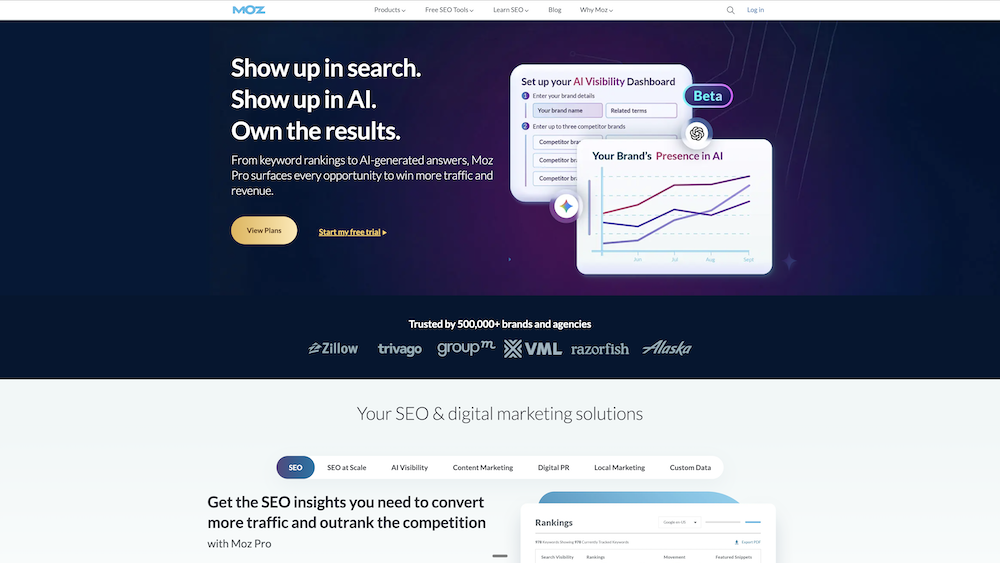
Moz Keyword Explorer is a practical fit when you want clear prioritization without committing to a more complex suite. For in-house marketing teams and smaller agencies, its value comes from making keyword metrics easier to interpret and turn into an actual roadmap.
Its prioritization is built around a Priority score that blends volume, difficulty, and expected organic CTR into a single metric, which surfaces terms that are both reachable and valuable. Moz also bases volume estimates on clickstream data and intentionally shows volume as a range to reflect uncertainty.
Key features:
- Keyword research with difficulty scores, search volumes, and SERP analysis
- Priority scoring that blends volume, difficulty, and expected CTR
- Competitive research for identifying keyword gaps and related opportunities
- Rank tracking across 170+ search engines in the broader Moz suite
- Clean prioritization views that help smaller teams act faster
Pricing: Starter: $49/month; Standard: $99/month; Medium: $179/month; Large: $299/month
Ideal for: In-house teams and smaller agencies that want a simpler workflow.
The verdict: Moz is a strong fit when you value clear prioritization over maximum feature density.
6. Mangools KWFinder — Best for local SEO and quick-win keywords
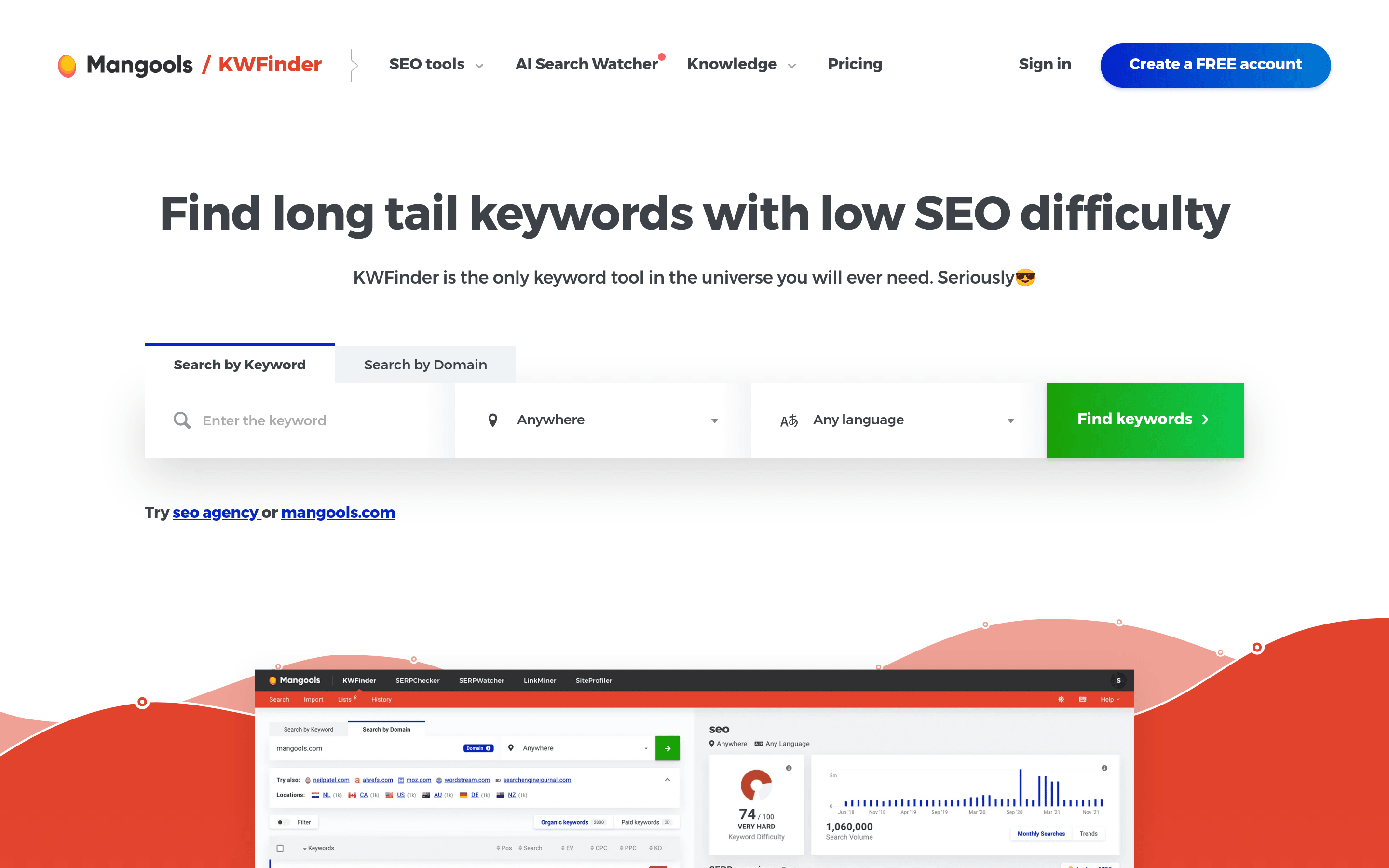
Mangools KWFinder works well for agencies that want a lightweight keyword finder with a clear local SEO angle. Mangools highlights precise search volume data across roughly 50,000 local locations and a database of 2.5 billion related keywords.
That makes it effective as a quick research layer for smaller sites, niche topics, and near-term opportunities where speed matters more than an enterprise suite. A fast interface often improves execution because teams actually use it during live planning instead of postponing research.
Key features:
- Keyword research and suggestions built for fast exploration
- Location-specific volume data for local SEO campaigns
- SERP analysis with 45+ SEO metrics for competition review
- Rank tracking with Search Console import in the broader Mangools stack
- Useful support for service-plus-city expansion and low-competition modifiers
Pricing: Entry: $29/month; Basic: $49/month; Premium: $69/month; Agency: $129/month
Ideal for: Local SEO campaigns and teams that want speed over deep suites.
Best if you need: Simple keyword discovery plus local intent targeting for location pages and quick wins.
7. KeywordTool.io — Best for autocomplete-based keyword expansion
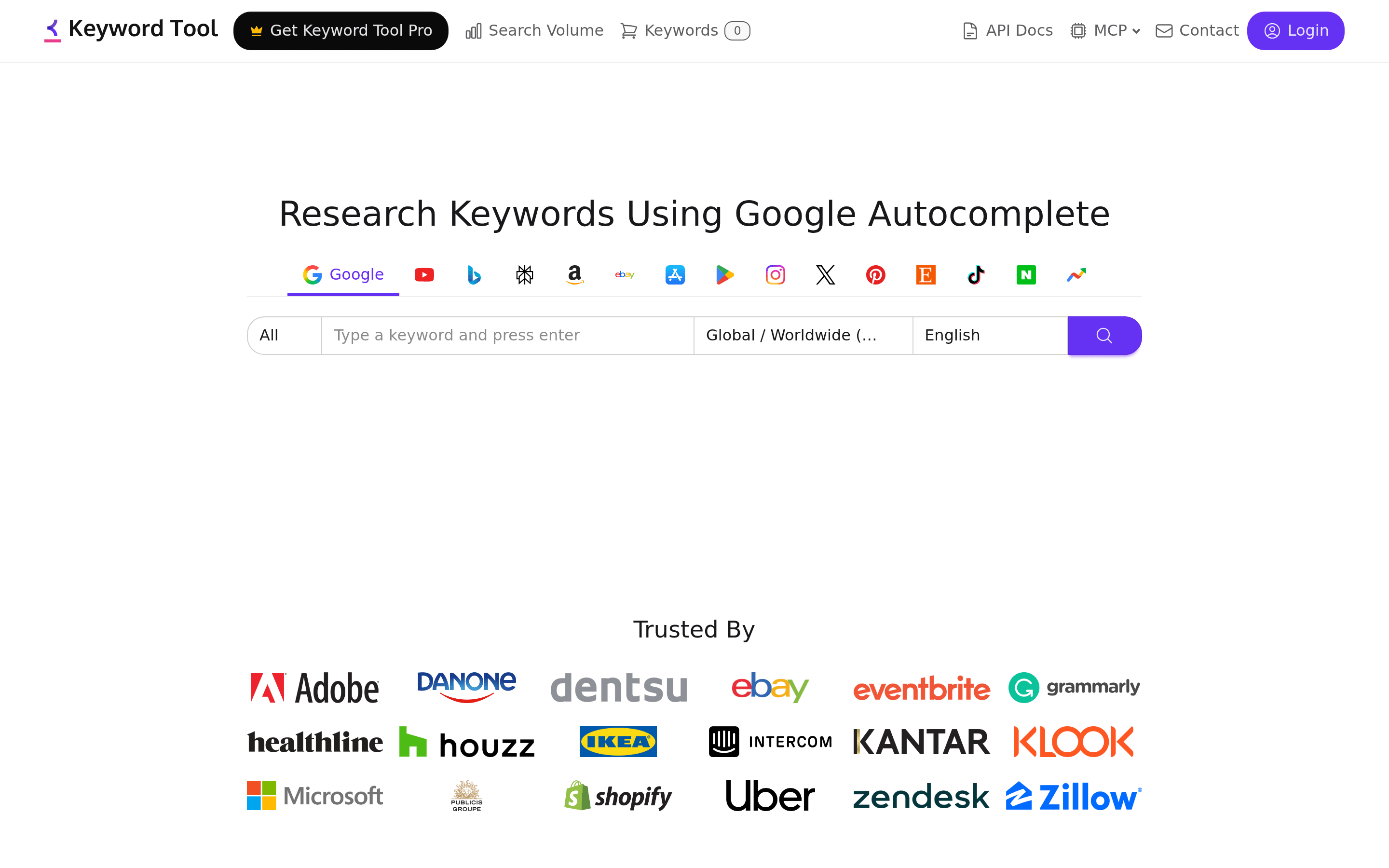
KeywordTool.io is a strong seed-to-long-tail expander because it pulls suggestion data from Google Autocomplete and more than a dozen other platforms, including YouTube, Bing, Amazon, and Instagram. Its best place in an agency workflow is ideation and coverage, not final prioritization.
Paid plans add search volumes sourced from Google and Bing keyword planners, while volumes for other platforms are modeled estimates. That distinction matters when you hand numbers to a client, so pair it with a primary platform for final targeting.
Key features:
- Generates 750+ long-tail keyword suggestions per search term
- Uses Google Autocomplete and other platform data sources for expansion
- Supports Google, YouTube, Bing, Amazon, Instagram, and more
- Paid plans add search volume and CPC data
- Free access without account creation for quick ideation
Pricing: Pro Basic: $89/month; Pro Plus: $99/month; Pro Business: $199/month
Ideal for: Content teams building outlines and FAQ-heavy pages from real query patterns.
Bottom line: KeywordTool.io is one of the fastest ways to expand a topic into long-tail coverage candidates.
8. WordStream Free Keyword Tool — Best for quick keyword ideas
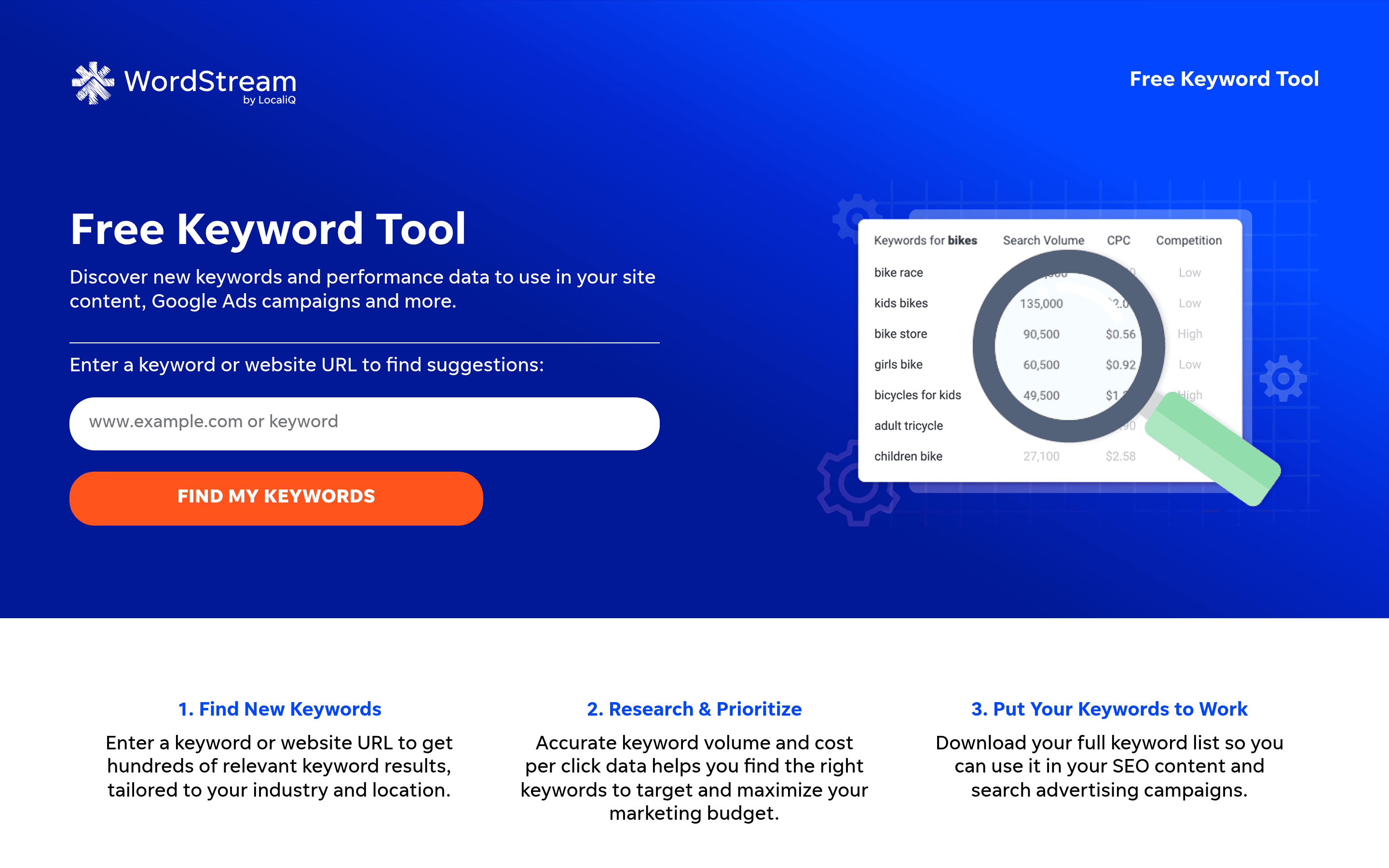
WordStream Free Keyword Tool is useful when you need a fast first-pass list while scoping a new client, vertical, or service line. As a lightweight keyword analysis layer, it gets you from zero to a working seed list without opening a larger platform too early.
You should still treat it as a brainstorming layer rather than the final source of truth. Once the list exists, move it into a primary platform for SERP analysis, prioritization, and reporting that can stand up in client conversations.
Key features:
- Hundreds of relevant keyword suggestions per query
- Industry and location-tailored outputs
- Keyword volume and cost-per-click data
- Draws on current Google Search data
- Simple interface for early-stage discovery
Pricing: Free.
Ideal for: Early-stage discovery and lightweight ideation.
Our take: WordStream is a useful kickoff tool, but serious client SEO still needs a deeper platform afterward.
9. AlsoAsked — Best for People Also Ask topic expansion and content briefing
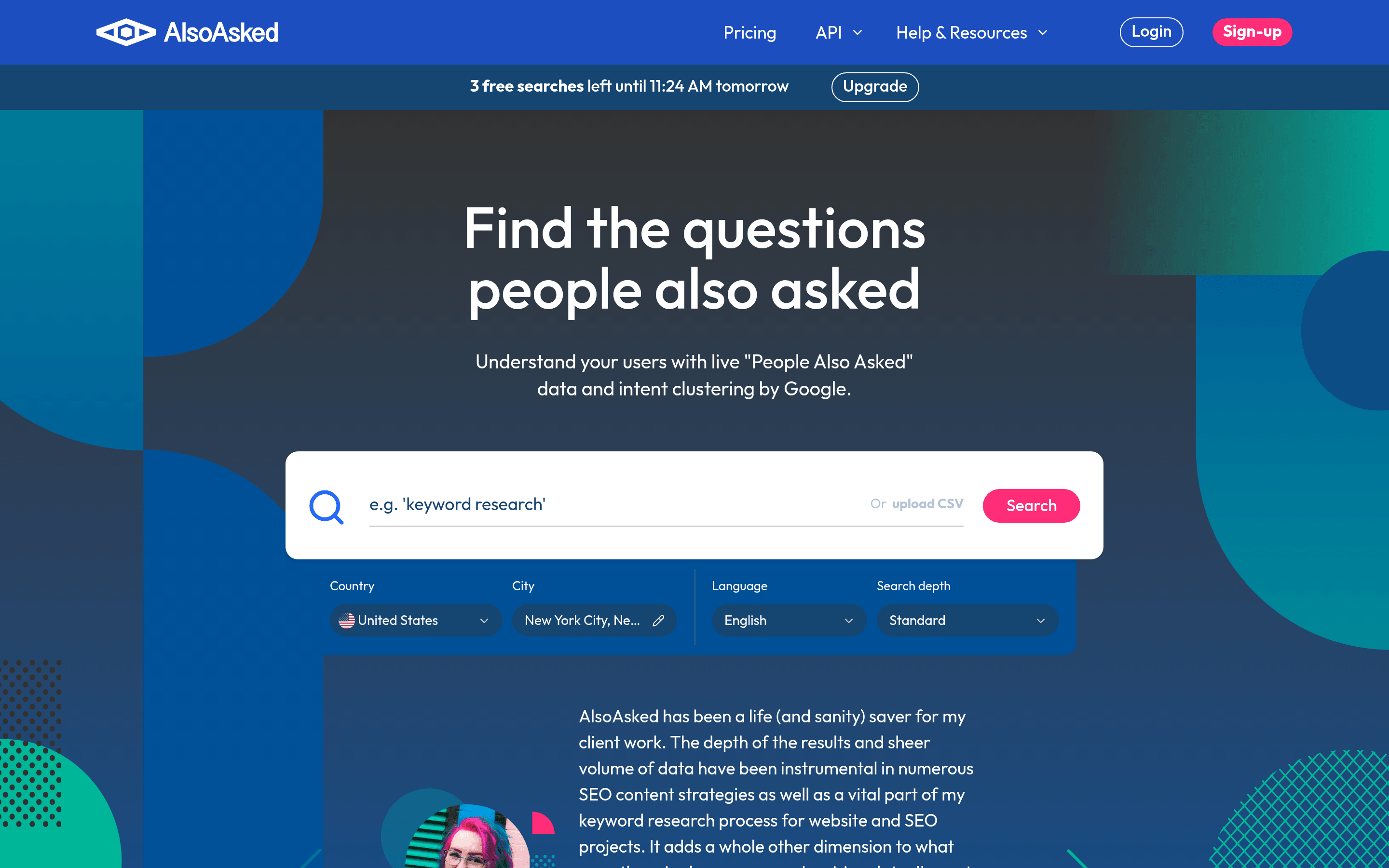
AlsoAsked maps People Also Ask relationships so you can see how users branch from a core topic into adjacent questions. That structure is valuable because informational intent unfolds in sequences, and pages that mirror those sequences tend to brief and interlink better.
It is especially strong for turning question trees into publishable outlines. Instead of guessing what supporting sections belong under a topic, you can build H2s, H3s, and FAQ modules from the way Google surfaces question paths — and Rankability’s free People Also Ask tool is a handy no-cost companion for quick checks.
Key features:
- People Also Ask question-tree visualization
- Topic expansion for section-level content planning
- Useful input for FAQ modules and internal linking
- Intent mapping across informational and commercial questions
- Turns raw queries into structured briefing outputs
Pricing: Basic: $12/month; Lite: $23/month; Pro: $47/month
Ideal for: Editorial teams creating high-coverage pages and FAQ modules.
Why it stands out: AlsoAsked turns PAA data into a usable outline faster than most general-purpose keyword tools.
10. Answer Socrates — Best for natural-language query mining
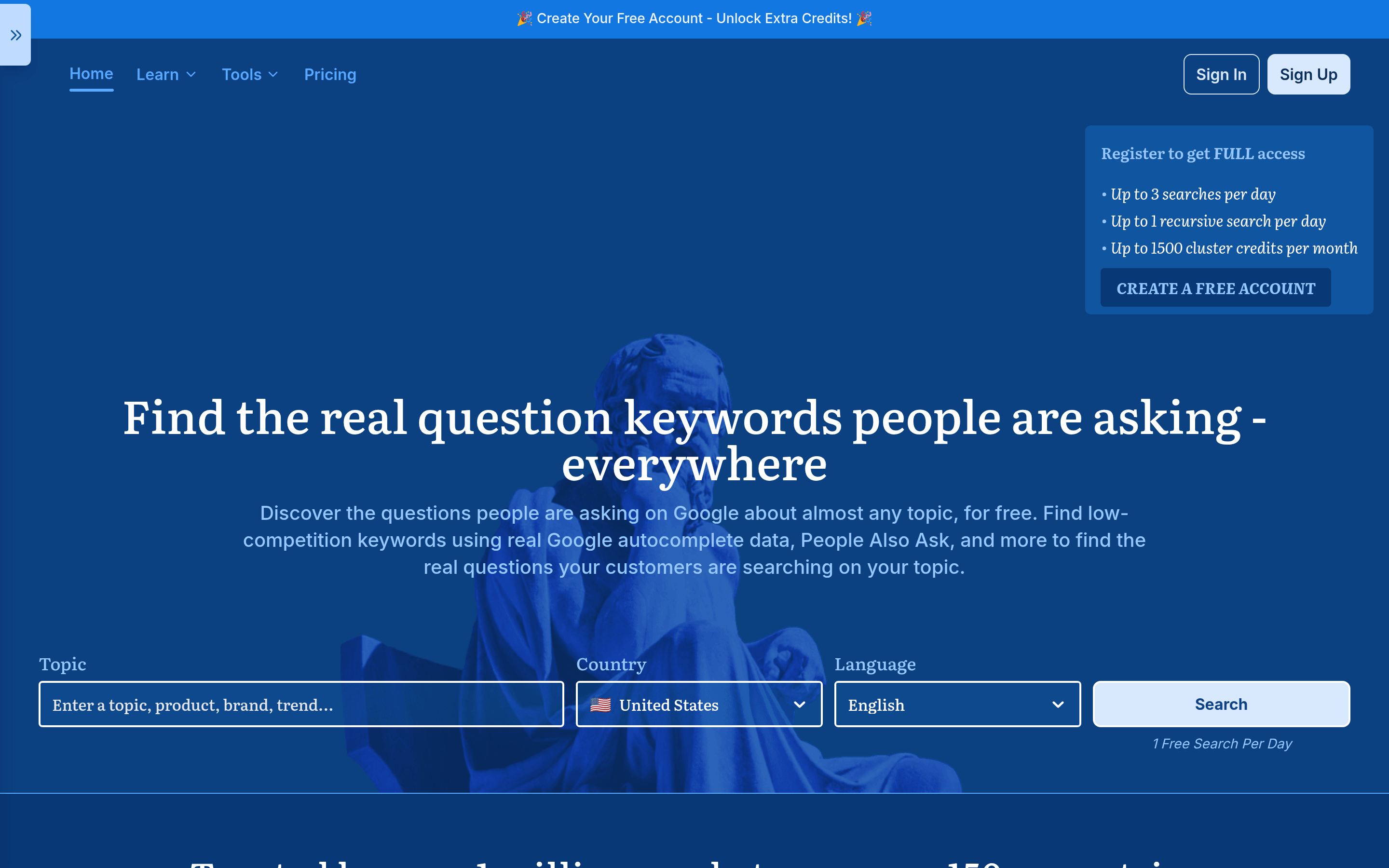
Answer Socrates is effective when you want conversational query mining that resembles how prospects ask questions in AI tools and search interfaces. That matters because AI answer formats favor precise, natural-language prompts over blunt keyword strings.
Its outputs are most useful when converted into concise on-page sections and supporting articles, not dumped into bloated copy. Agencies that use question phrasing selectively improve topical coverage while increasing the chance a page aligns with answer-oriented retrieval and citation patterns.
Key features:
- Natural-language question discovery around a topic
- Strong support for long-tail intent and Q&A coverage
- Helpful source for section ideas and supporting article angles
- Useful for identifying phrasing that fits AI answer formats
- Keyword clustering and recursive search on paid plans
Pricing: Lite: $9/month; paid tiers range up to $49/month
Ideal for: Agencies optimizing for long-tail intent and Q&A coverage.
Worth noting: Answer Socrates is a sharp add-on when you want to reduce missed intents and strengthen citation-friendly sections.
How We Chose the Best SEO Keyword Research Tools
We reviewed 25+ tools and shortlisted the platforms agencies can operationalize repeatedly across multiple clients. Hobbyist features mattered less than whether a tool survives real multi-client delivery.
The evaluation centered on six factors: keyword discovery quality, keyword metrics, SERP and intent clarity, competitor research depth, workflow speed, and reporting fit for multi-client environments. We excluded overlapping tools when one option already covered the same workflow more effectively, plus products without credible SERP or keyword metrics.
We also weighed how each platform reflects the current shape of search. Google rankings still matter, but AI answers and citation surfaces now influence discoverability, so tools that connect keyword research to those surfaces — or unify them into one metric — earned stronger placement.
FAQs
What are the best SEO keyword research tools?
For agency-grade work, Rankability, Semrush, and Ahrefs are the strongest primary platforms. AlsoAsked and Answer Socrates are useful specialist add-ons for question expansion and briefing.
Which platform is best for keyword research?
The best platform is the one you can standardize across clients without breaking your workflow. Rankability fits unified Google plus AI visibility, Semrush fits scale, and Ahrefs fits competitor-first research.
What is the most accurate keyword research tool?
No platform is perfectly accurate because keyword data is modeled differently across providers. Accuracy improves when you combine volume, difficulty, SERP inspection, and live competitor-page review.
Is Google Keyword Planner good for SEO keyword research?
Yes, but mainly as a validator for demand and commercial value. It works best when paired with an SEO-focused platform that adds difficulty, SERP features, and content prioritization.
Should I use free or paid keyword tools for client SEO?
Free tools are useful for ideation and first-pass discovery. Paid platforms are usually necessary for repeatable client work because they provide stronger prioritization, competitor context, and reporting.
Conclusion
Most agencies should start with Rankability if they want one system for research, writing, optimization, and reporting across Google and AI visibility. Its SPI model turns keyword research into a measurable outcome your clients can actually read.
If your team also needs deeper database scale, Semrush is the specialist layer; for a competitor-first motion, Ahrefs fits best. KWFinder pairs well for local campaigns, while AlsoAsked and Answer Socrates strengthen briefs, and Keyword Planner validates commercial demand.
Standardize on one primary platform across clients, then add one specialist tool only where it fills a real gap. If a unified, modern research-to-reporting workflow is what you need, get started with Rankability.