
If you are comparing SEO tools right now, you probably do not need a beginner’s guide to SEO. You need a practical view of Outranking alternatives that can improve workflow, content quality, optimization depth, and day-to-day value for agencies.
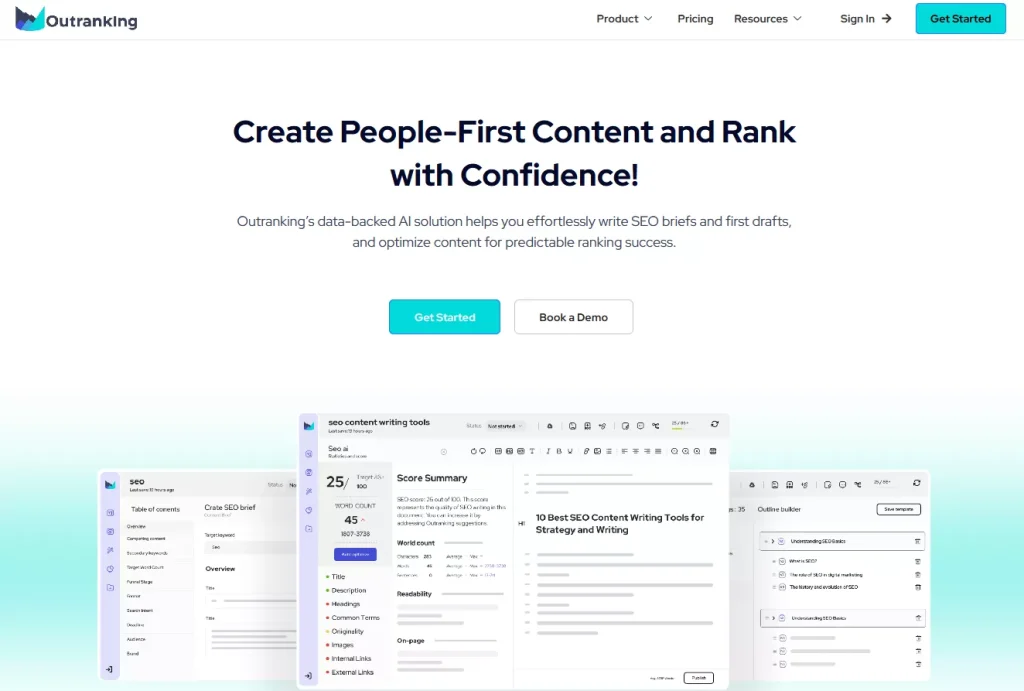
This guide is built for that decision. The short version is simple: Rankability stands out as the strongest overall alternative for most agencies and marketing teams, but the right fit still depends on how you research, write, optimize, report, and scale.
Quick Picks
If you want the shortest path to a decision, start here.
- Best overall for agencies: Rankability
- Best for content optimization depth: Surfer SEO
- Best for brief-first workflows: Frase
- Best for premium editorial guidance: Clearscope
- Best for lower-cost optimization: NeuronWriter
What This Outranking Comparison Covers for Agencies
This comparison is for buyers who are actively evaluating Outranking against other content optimization software. It focuses on real workflow fit, not just long feature lists or surface-level optimization scores.
You will see where each platform helps with content briefs, SERP analysis, AI SEO writing, SEO writing, collaboration, and reporting. You will also see where some tools add extra complexity without adding much practical SEO value.
For most teams, Rankability is the best overall option because it balances usability, optimization guidance, and repeatable execution. It is especially relevant if you want one system for research, AI content generation, optimization workflow, visibility tracking across Google and AI search, and client reporting.
Who This Guide Is For
This guide is useful if you run agencies that manage multiple client campaigns and need consistent output across writers, editors, and account teams. It also fits in-house SEO teams, content marketers, and consultants who need better workflow automation without moving into heavy enterprise SEO software.
How to Read the Comparison
Do not judge these SEO tools by feature count alone. Use case matching matters more than whether a platform includes every adjacent feature under the sun.
If you care most about briefs, one tool may fit better than a platform built around optimization. If you care most about AI writing, reporting, or scale, your best choice may be different again.
Why Teams Look for Alternatives to Outranking
Teams usually switch from Outranking for a few repeat reasons. The most common are content quality concerns, workflow friction, pricing fit, and the feeling that other platforms cover similar ground with a smoother experience.
The market has also shifted. Many buyers no longer want a tool that only produces an optimization score or rough draft, because they need support across content planning, writing, updating, internal linking, and performance tracking.
That matters even more for agencies and B2B marketing teams. When you are handling approvals, revisions, and client expectations, you need software that saves time and creates visible value instead of adding another layer of work.
Common Frustrations With Outranking
Some users find Outranking has a steeper learning curve than expected. That can slow writer adoption and make onboarding harder for larger editorial workflow teams.
Its output can also need substantial editing before it matches brand voice, search intent, and publishing standards. For teams that want practical SEO guidance, that extra cleanup can cancel out the time savings.
What Buyers Usually Want Instead
Most buyers want cleaner content briefs, easier content optimization, and more reliable AI writing support. They also want SERP-driven recommendations that are easier to act on inside a usable content editor.
Agencies often look for stronger collaboration, white label options, scalable reporting, and simpler workflows for multiple stakeholders. That is where alternatives like Rankability, Surfer SEO, Frase, and Clearscope tend to enter the conversation.
The Best Outranking Alternatives
Below is a quick comparison table that prioritizes workflow fit, content quality support, and practical use across agencies, consultants, and in-house SEO teams.
| Tool | Best for | Standout strength | Possible drawback | Pricing position |
|---|---|---|---|---|
| Rankability | Best overall for agencies and SEO teams | Repeatable workflow across research, writing, optimization, reporting, and AI search tracking | Some teams may want a narrower specialist tool instead | Mid-to-premium value |
| Surfer SEO | Mature optimization workflows | Familiar interface and broad adoption | Can feel score-driven | Mid-range |
| Frase | Fast briefs and drafting | Strong research support and quick content briefs | Less depth for broader strategy | Mid-range |
| Clearscope | Premium editorial optimization | Clear recommendations and strong content quality focus | Higher pricing | Premium |
| MarketMuse | Strategy and topic authority | Deep content planning and authority analysis | Can feel heavy for smaller teams | Premium |
| Scalenut | Combined AI writing and optimization | Broad production support | May feel less specialized in some areas | Mid-range |
| Byword | High-volume publishing | Efficient AI content generation for scale | Less editorial control | Mid-range |
| NeuronWriter | Cheaper alternatives | Budget-friendly SERP analysis and optimization | Less polish and support depth | Lower-cost |
| Jasper | Brand voice and AI writing | Flexible writing support | Weaker deep SEO optimization | Mid-to-premium |
| Search Atlas Content Genius | Broader SEO stack | Wide feature set across SEO automation | Can be more platform than some teams need | Mid-to-premium |
| RankYak | Automated publishing support | Helpful for steady output | Less known for collaborative optimization depth | Mid-range |
*Pricing should be verified on each vendor site because plans, limits, and starting price details change over time.
Comparison Criteria
The most useful feature comparison looks at content brief quality, SERP analysis, optimization guidance, AI writing support, collaboration, reporting, and ease of use. For teams, especially agencies, workflow fit across multiple stakeholders matters just as much as raw feature depth.
Why Rankability is the Top Alternative to Outranking for Agencies
Rankability is the strongest all-around alternative because it supports the full agency SEO workflow for Google and AI search. It gives you a repeatable system to research, write, optimize, track visibility, and prove results without forcing your team into a clunky process.
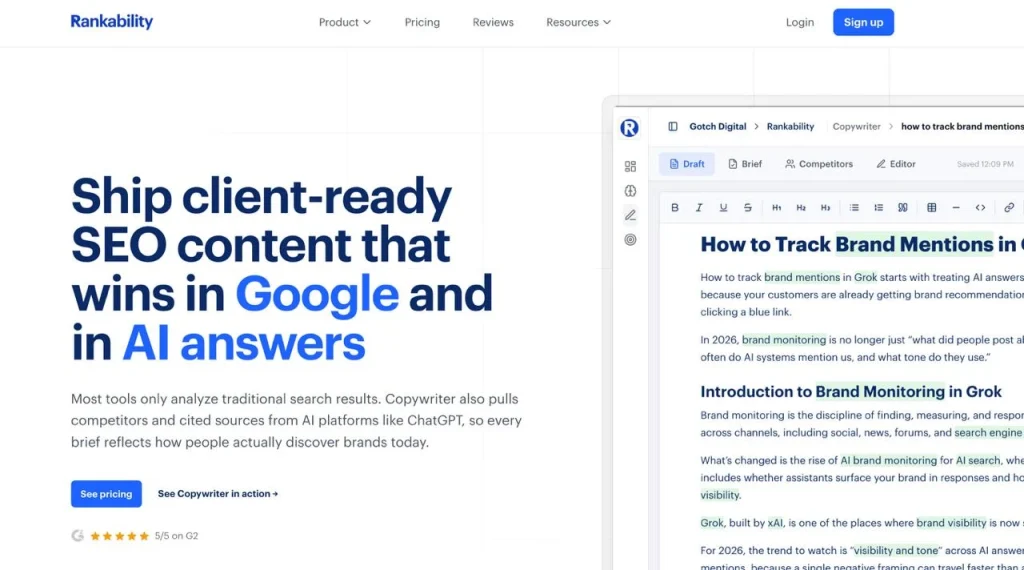
Compared with Outranking, Rankability feels more practical for daily production. Its recommendations are cleaner, its content scoring is easier to interpret, and its optimization feedback is more usable for agencies managing many pages and revisions.
It also goes beyond a narrow content optimizer. Rankability includes tools for keyword research, copywriting, optimization, reporting, AI visibility tracking across platforms like ChatGPT and Gemini, and a client-specific advisor with weekly plans and recommendations.
Where Rankability Stands Out
Its on-page SEO and content optimization workflow are easier to act on. You get direction that helps writers and editors move faster instead of getting buried in complexity.
It is also built for agencies producing SEO content at scale. White label reporting and API access make it a strong fit if you need scalable client reporting and operational consistency.
Best-Fit Use Cases
If you run an SEO agency and manage multiple pages, revisions, and clients, Rankability is the clearest first choice. It also fits content teams that want a practical alternative instead of an all-in-one platform with extra overhead that slows execution.
How Other Leading Alternatives Compare
The best alternatives each solve a different problem. Here is the balanced version of where they fit, where they fall short, and when they are worth choosing over Outranking.
Surfer SEO
Best for teams that want a mature content optimization platform with broad market familiarity. Its strengths are optimization workflow, team familiarity, and a large user base, though some teams find it too focused on scoring mechanics.
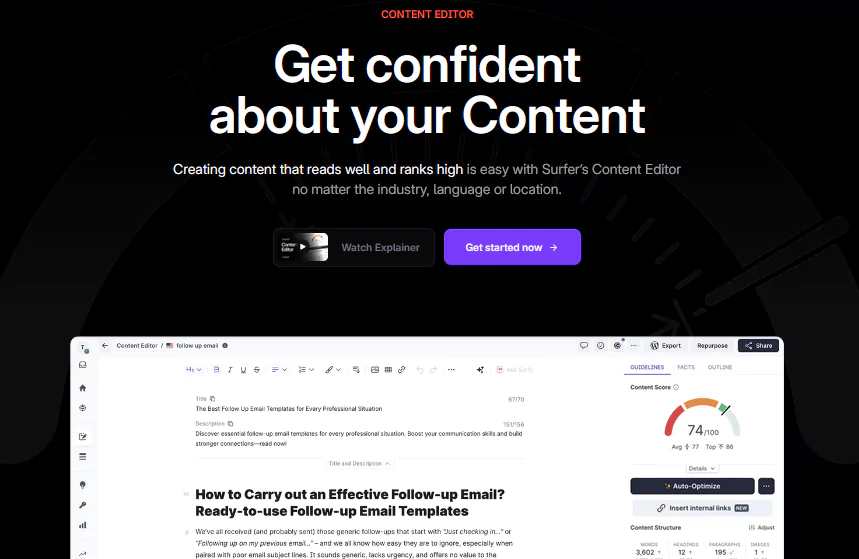
Choose Surfer SEO over Outranking if you want a proven on-page SEO tool with a familiar interface. It is a safe option for agencies that value adoption and predictable workflows.
Frase
Best for fast content briefs, question research, and drafting support. It is useful when speed matters more than deeper strategy or advanced enterprise SEO planning.
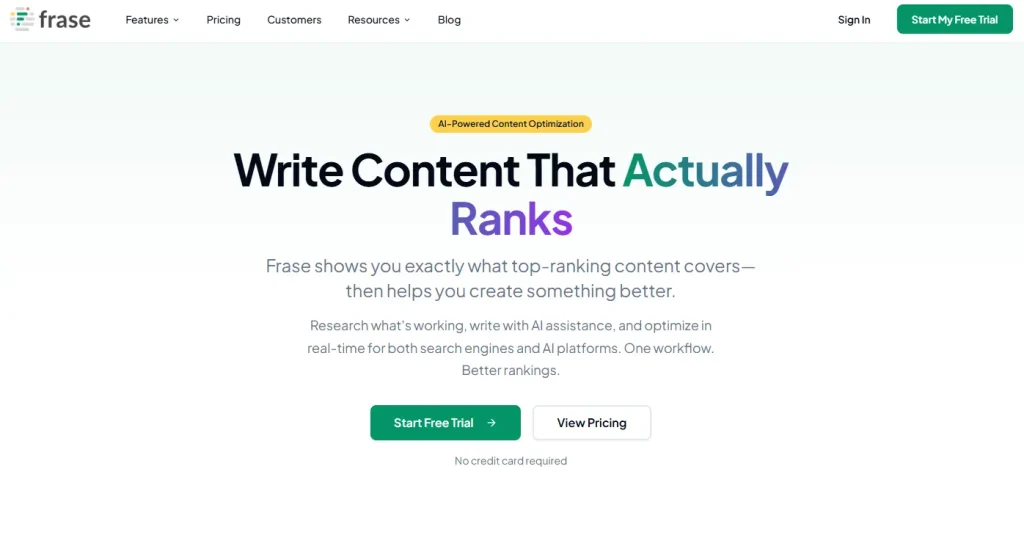
Choose Frase over Outranking if your bottleneck is research and brief creation. It works well for content marketers who want to move from keyword research to draft production quickly.
Clearscope
Best for editorial teams that care deeply about content quality and clarity. Its recommendations are usually easy to understand, but pricing can put it out of reach for smaller teams.
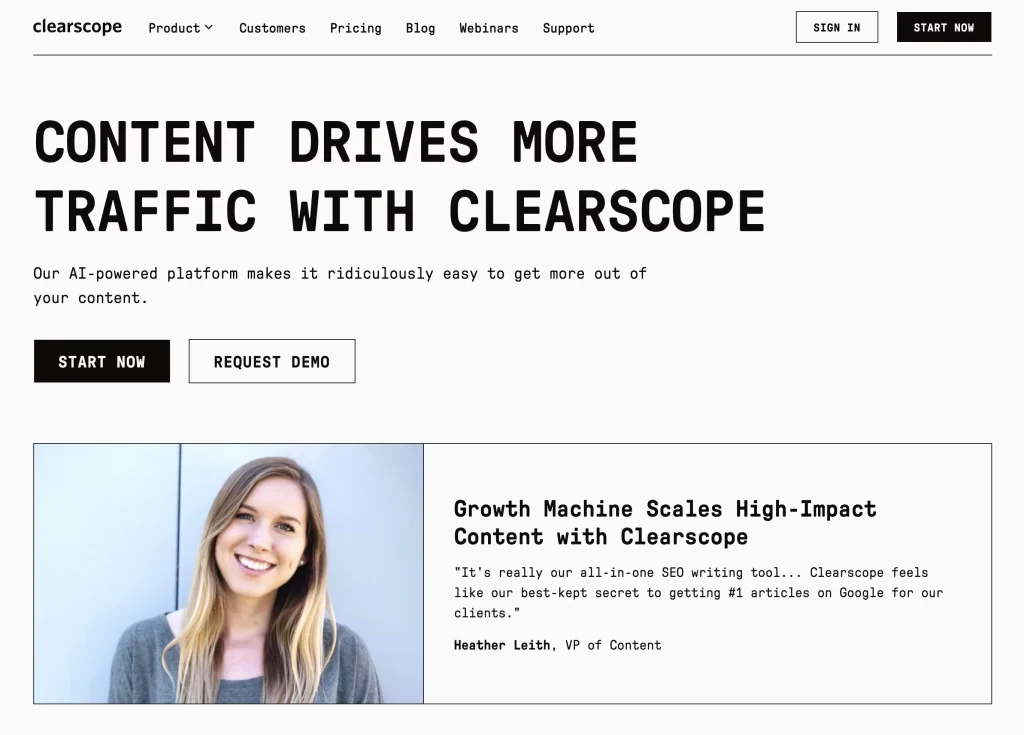
Choose Clearscope over Outranking if you have the budget and want premium optimization with a cleaner editorial feel. It is especially useful for teams with strong writers and strict publishing standards.
MarketMuse
Best for content strategy, topic authority, and long-range planning. It can be powerful, but smaller teams may find it heavier than needed for weekly production.
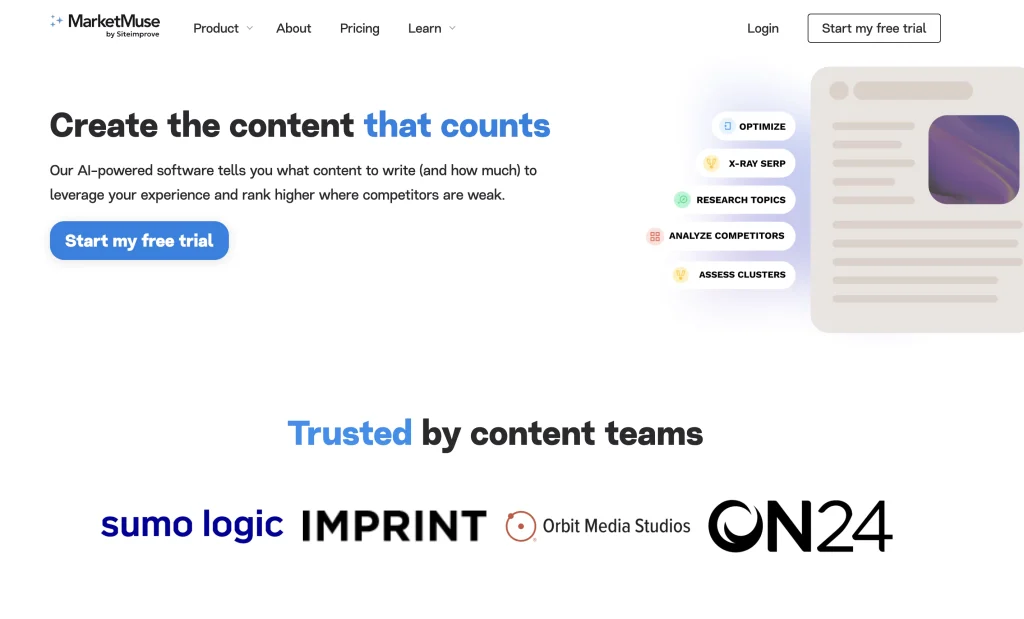
Choose MarketMuse over Outranking if you are building authority across topics and want deeper planning support. It fits larger content programs better than lean production teams.
Scalenut
Best for teams that want AI writing and optimization in one workflow. It supports broader content production, though some users may prefer a more focused optimization platform.
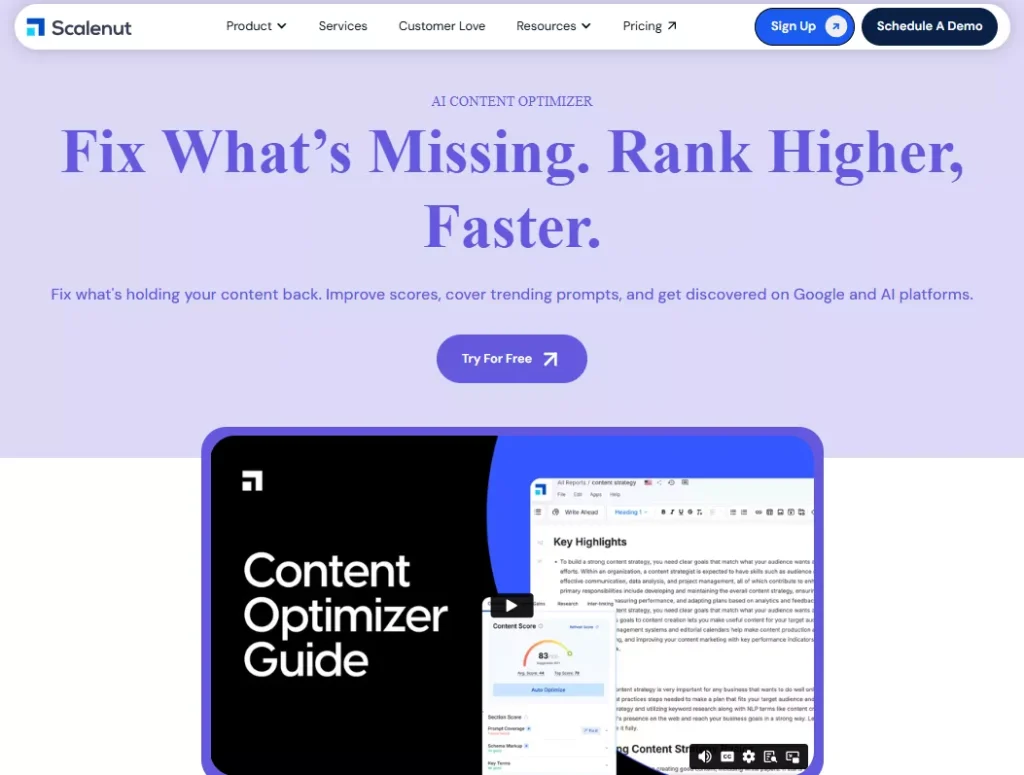
Choose Scalenut over Outranking if you want a blended AI content generation and optimization setup. It can help teams that need faster output without stitching multiple tools together.
Byword
Best for programmatic SEO and high-volume publishing. Its main value is scale, but that speed can come with tradeoffs in editorial control and refinement.
Choose Byword over Outranking if your model depends on publishing large numbers of pages efficiently. It is less ideal when every page needs detailed human review and nuanced brand voice.
NeuronWriter
Best for budget-conscious buyers looking for SERP-driven recommendations. It often appeals to smaller teams that want useful optimization without premium pricing.
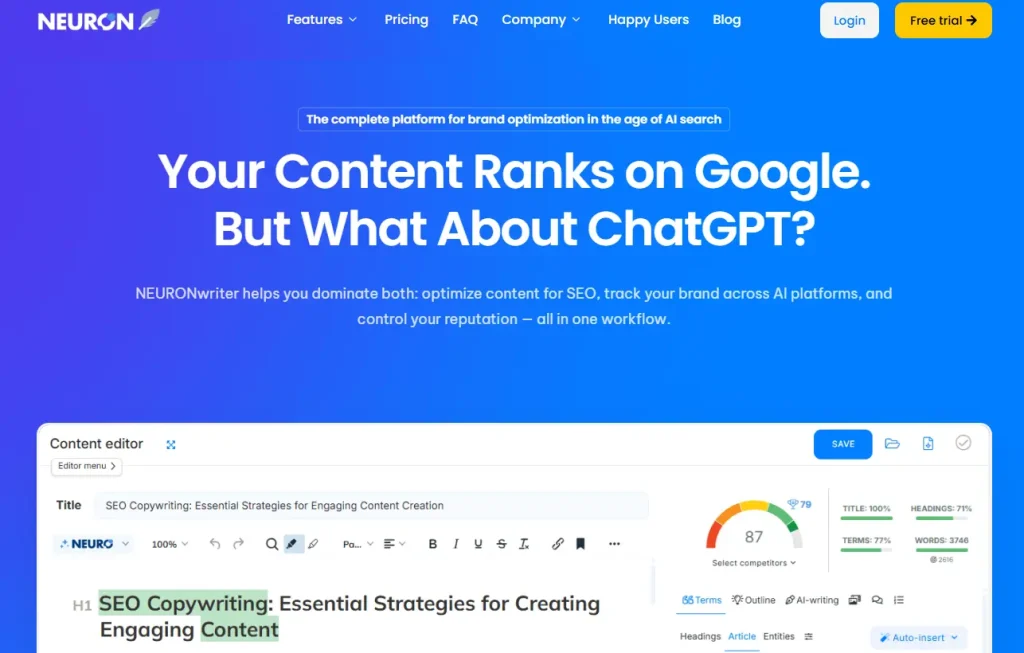
Choose NeuronWriter over Outranking if cost is a major factor. Just expect some tradeoffs in polish, support, and broader workflow depth.
Jasper
Best for AI writing and brand voice support rather than deep SEO optimization. It is strong when the writing process matters more than detailed content scoring.
Choose Jasper over Outranking if you already have another SEO stack and need better AI writing help. It is not the first pick for teams centered on content optimization software.
Feature Comparison That Matters Most
A useful comparison table should separate core SEO functions from adjacent features that sound impressive but may not affect rankings. That keeps you focused on what improves output, revision load, and performance.
| Tool | Research | Briefs | Optimization | AI writing | Collaboration | Integrations/reporting | Simple verdict |
|---|---|---|---|---|---|---|---|
| Rankability | Strong | Strong | Strong | Strong | Strong | Strong | Best for agencies |
| Surfer SEO | Moderate | Moderate | Strong | Moderate | Moderate | Moderate | Best for optimization-first teams |
| Frase | Strong | Strong | Moderate | Strong | Moderate | Moderate | Best for writers and briefs |
| Clearscope | Moderate | Strong | Strong | Limited | Moderate | Moderate | Best for premium editorial teams |
| MarketMuse | Strong | Strong | Strong | Limited | Moderate | Moderate | Best for enterprise strategy |
| Scalenut | Moderate | Moderate | Moderate | Strong | Moderate | Moderate | Best for blended production |
| Byword | Limited | Limited | Limited | Strong | Limited | Moderate | Best for high-volume publishing |
| NeuronWriter | Moderate | Moderate | Moderate | Moderate | Limited | Limited | Best for budget |
| Jasper | Limited | Limited | Limited | Strong | Moderate | Strong | Best for brand voice |
| Search Atlas | Strong | Moderate | Strong | Moderate | Moderate | Strong | Best for broader SEO stack |
| RankYak | Limited | Limited | Moderate | Strong | Limited | Moderate | Best for automated publishing |
Core SEO Workflow Features
The features that matter most are SERP analysis, keyword clustering, content scoring, NLP terms, internal linking support, and search intent guidance. Some tools are strongest before writing during content planning, while others are strongest inside the content editor during optimization.
Operational Features
Seats, collaboration, exports, workflow automation, and client-ready reporting matter more than many buyers expect. For agencies, the ability to handle approvals, revisions, and client reporting often decides whether a platform becomes part of the real process or gets abandoned.
Which Alternative to Choose Based on Your Use Case
You should choose based on your workflow, not on who has the loudest marketing. Rankability remains the best overall recommendation for the widest range of users, but different scenarios call for different strengths.
For Agencies
If you run an agency, start with Rankability. It is built for repeatable optimization workflow, multi-client execution, visibility tracking across traditional search and AI search, and white label reporting.
Surfer SEO is the familiar alternative if your team already knows its interface. Clearscope is the stronger premium option if your agency leans heavily on editorial quality and can support higher pricing.
For In-House Content Teams
If your internal team needs speed, Frase is a strong option for content briefs and workflow efficiency. If your priority is content strategy and topic authority over time, MarketMuse is the better fit.
For High-Volume Publishing
If you publish at scale, look at Byword or Scalenut. Both support high-volume publishing, but the tradeoff is that speed can reduce editorial control unless you keep a strong human review layer.
For Budget-Conscious Buyers
If cost is the main issue, NeuronWriter is one of the more practical cheaper alternatives. Just remember that lower pricing can also mean less polish, less support, and a shallower workflow fit for larger teams.
How to Evaluate Outranking Alternatives Fairly
Before switching tools, use a simple framework and test with real work. A polished demo article is not enough to show whether a platform fits your actual process.
Look at measurable outcomes such as time saved, content quality, revision load, writer adoption, and ranking movement. That gives you a clearer view than feature pages alone.
Run a Real-World Trial
Test one existing article update and one new brief side by side. This shows whether the tool improves speed without lowering content quality or weakening search intent alignment.
Score the Tools on Practical Criteria
Score each tool on ease of use, recommendation clarity, writer adoption, reporting value, and stack fit. If a platform looks powerful but your team avoids using it, the practical value is low.
SEO, AEO, and the Shift in Content Optimization
A lot of buyers now ask whether they should evaluate tools for SEO, AEO, or both. That is a fair question because AI search, answer engines, and AI citations are changing how content gets discovered.
Traditional SEO still focuses on ranking in search engines. AEO focuses on making content clear, structured, and trustworthy enough to be selected, cited, or surfaced in AI-generated answers.
This shift matters when choosing a content optimization platform. Rankability is notable here because it is positioned as the agency SEO workflow for Google and AI search, with visibility tracking across traditional search and AI platforms.
SEO vs AEO in Plain English
SEO is about improving visibility in search results through keyword targeting, on-page SEO, and better content quality. AEO is about helping answer engines and AI systems understand, summarize, and cite your content.
Why This Matters When Choosing a Tool
Most buyers still need SEO first because rankings remain the core source of organic traffic. But AI visibility is now part of the evaluation, so tools that support structured, trustworthy pages and track AI search performance are becoming more relevant.
Final Verdict Comparing Outranking Alternatives
If you want the clearest recommendation, Rankability is the best overall choice for most teams, comparing Outranking with other platforms. It offers the strongest balance of usability, optimization value, workflow fit, reporting, and support for both search and AI-era visibility.
The main runners-up are also easy to place by scenario. Surfer SEO is the familiar option, Frase is strong for briefs and speed, Clearscope fits premium optimization, and MarketMuse is the pick for deeper strategy and enterprise SEO planning.
Your next step should be simple. Shortlist two tools, run the same content workflow through both, and compare how much time they save, how much editing they create, and how usable the output is for your team.
Best Overall Recommendation
Rankability is the strongest all-around alternative for most agencies and SEO teams. It gives you a practical system for research, writing, optimization, reporting, and AI search visibility without adding unnecessary processes.
FAQ
What is SEO vs AEO?
SEO focuses on improving visibility in search engine results. AEO focuses on making your content easy for answer engines and AI systems to surface, summarize, or cite.
Is SEO being phased out?
No, SEO is still essential. It is evolving, which means teams now need strong search fundamentals plus content that is clear, structured, and useful in AI-driven experiences.
What is the 80/20 rule for SEO?
It means a small set of actions often drives most results. In practice, that usually means choosing the right keywords, matching search intent, updating core pages, and improving on-page SEO.
What’s better than SEO?
Nothing replaces SEO for organic visibility. A stronger approach is combining SEO with content strategy, UX, and AEO practices so your pages can rank and also earn visibility in AI answers.