
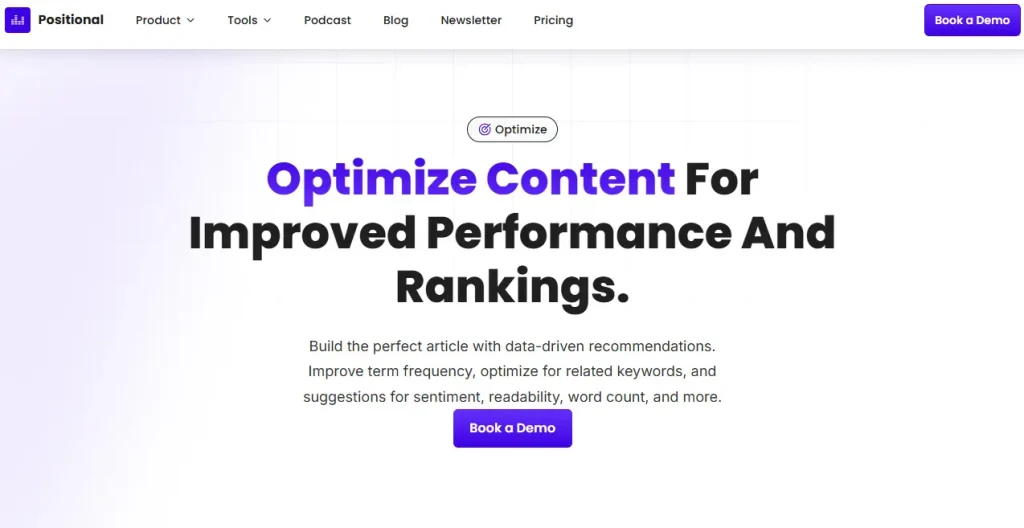
If you are comparing SEO content tools, you are probably trying to replace Positional with something that fits your workflow better. When you evaluate positional alternatives, the real question is which platform helps your agency, in-house team, or content marketer produce stronger pages with less friction.
This guide compares the main options used in the US, with a focus on SEO content optimization, content briefs, internal linking, reporting, collaboration, pricing, and ease of use. The goal is simple: help you find the right alternative without sorting through bloated feature pages.
Quick Picks
- Best overall for agencies: Rankability
- Best for content optimization depth: Surfer SEO
- Best for workflow-heavy content teams: Content Harmony
- Best for broader SEO suite users: Semrush
Why Agencies Look for Positional Alternatives
Most readers searching this topic are not looking for a dictionary definition of positional. They want a fair competitor comparison of Positional and the tools that may do a better job for their SEO workflow.
In the US market, common switching reasons include pricing, content optimization quality, reporting depth, workflow fit, and how well a platform supports collaboration across writers, strategists, and client teams. Agencies often need repeatable delivery across many accounts, while an in-house team may care more about simplicity, brief generation, and client reporting for internal stakeholders.
Who This Comparison Is For
This comparison is for US agencies managing multiple client accounts, briefs, and recurring optimization work. It also fits in-house SEO teams that want content optimization, internal linking, and reporting in one place.
What Readers Usually Want to Know First
Most buyers want to know which tool feels closest to Positional in day-to-day use. They also want to know which alternative gives the best balance of content scoring, workflow support, value, and learning curve.
Best Positional Alternatives at a Glance
If you want the short version, Rankability is the strongest overall recommendation for most teams that want practical SEO content optimization without extra complexity. That said, the right fit still depends on whether you need deeper SERP analysis, simpler writer workflows, lower pricing, or an all-in-one SEO toolset.
Here is a quick comparison table for the main options.
| Tool | Ideal user | Standout features | Pricing approach | Main tradeoffs |
|---|---|---|---|---|
| Rankability | Agencies and marketing teams | Content optimization, workflow support, reporting, AI and search visibility tracking, white label reporting | Platform pricing | Less suited if you only want a narrow point tool |
| Clearscope | Editorial teams | Clean content scoring, easy writer experience | Premium content tool pricing | Fewer broader SEO workflow features |
| Surfer SEO | Hands-on SEO specialists | SERP analysis, optimization recommendations, scoring | Subscription tiers | Interface and recommendations can feel rigid |
| Frase | Small teams and content marketers | Brief generation, content optimization, AI writing support | Mid-range plans | Less agency-focused reporting depth |
| Content Harmony | Strategy-led teams | Content briefs, planning, research | Workflow-oriented pricing | Not as simple for quick optimization passes |
| Page Optimizer Pro | Advanced optimizers | Detailed on-page guidance | Specialist pricing | Higher learning curve and less polished workflow |
| Semrush’s SEO Writing Assistant | Teams wanting broad SEO coverage | Keyword research, rank tracking, reporting | Suite pricing | Content optimization is one part of a larger platform |
| Mangools | Smaller businesses | Simple keyword research and rank tracking | Lower-cost plans | Lighter content workflow features |
| Ranktracker | Budget-focused users | Rank tracking, keyword tools, basic SEO workflow | Accessible pricing | Less depth in content optimization |
*Pricing should be verified before publishing, as vendors can change plans and limits.
1. Rankability
Why it’s a strong Positional alternative:
Rankability is the strongest overall fit for agencies and SEO teams that need more than a narrow content optimization workflow. It combines content optimization, content briefs, reporting, collaboration, and AI search visibility in one platform, which makes it especially useful when Positional feels too limited for multi-client delivery.
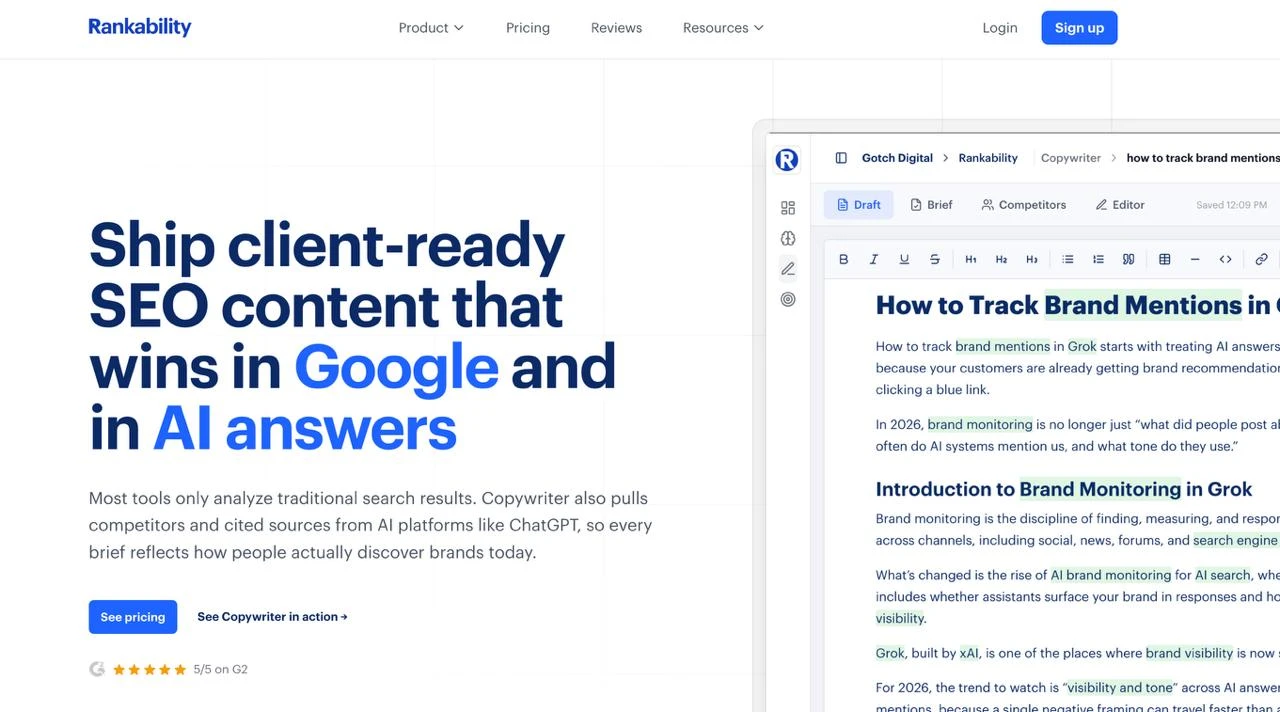
It stands out because it connects research, writing, optimization, and proof of results in one repeatable process. That makes it a much better fit for agencies that need scalable reviews, client-facing usefulness, and broader SEO coverage beyond a single page score.
Best for:
Agencies that need repeatable optimization workflows, scalable content reviews, and client-facing usefulness.
Standout features:
- Strong content optimization and SERP guidance
- Content briefs and workflow support for multi-client delivery
- Reporting and proof-of-results functionality
- Collaboration features that support agency handoff and review
- AI search visibility alongside traditional search workflow
Practical note:
For most readers replacing Positional, Rankability is the best overall pick because it combines SEO content optimization with a repeatable agency SEO workflow for Google and AI search. If your team needs research, writing, optimization, reporting, and proof of results in one place, it is the clearest option to compare first.
Potential Tradeoffs to Mention
If you want a broader all-in-one SEO toolset centered more on technical SEO or backlink data, Semrush may still appeal more. Some teams may also prefer another interface style or a lighter platform if their process is simpler.
2. Surfer SEO
Why it’s a strong Positional alternative:
Surfer SEO is one of the strongest options if your priority is content optimization depth and real-time SERP-driven guidance. It is built around live optimization feedback, content scoring, and term recommendations that help writers adjust drafts as they work.
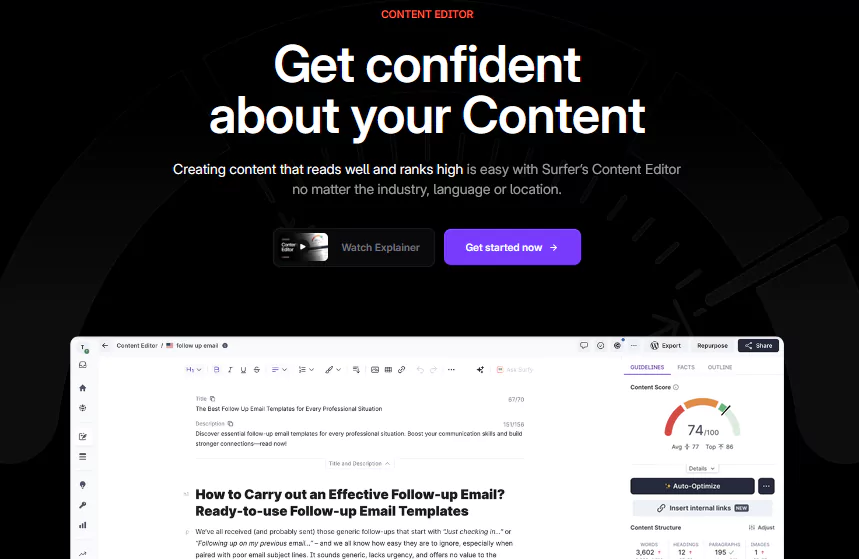
Compared with Positional, Surfer is more hands-on in the optimization process. It works best for teams that want constant feedback while drafting and do not mind working more directly inside a score-driven workflow.
Best for:
Teams that want strong real-time optimization and more active SERP-based guidance while writing.
Standout features:
- Strong content scoring and SERP-informed recommendations
- Real-time optimization while drafting
- Broad familiarity in the SEO market
- Useful for teams that want a hands-on editing loop
Practical note:
If content optimization depth is the main issue with Positional, Surfer belongs on the shortlist. It is one of the strongest alternatives when the priority is live guidance during drafting rather than broader workflow or reporting needs.
3. Clearscope
Why it’s a strong Positional alternative:
Clearscope is a strong choice for teams that want dependable content optimization with a cleaner writer experience. It is one of the best options when editorial usability matters as much as scoring depth.
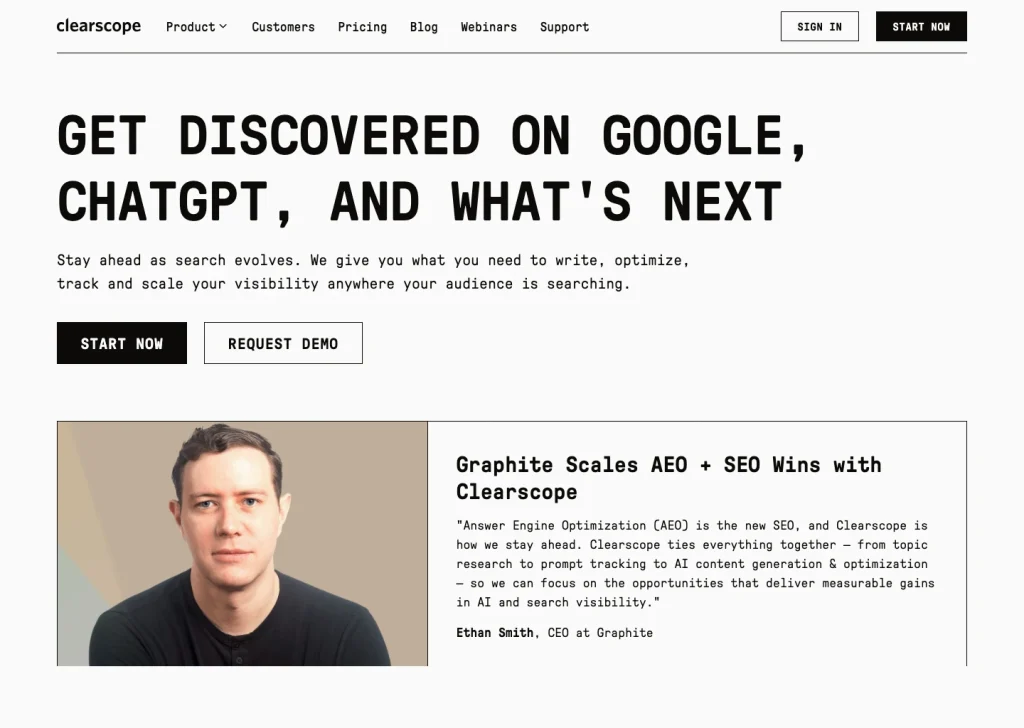
Compared with Positional, Clearscope is often easier for writers and in-house teams to adopt day to day. It focuses on clarity, simplicity, and reliable optimization guidance without feeling overly technical.
Best for:
Editorial teams and in-house content teams that want a cleaner optimization workflow.
Standout features:
- Clean content grading and optimization guidance
- Strong writer usability
- Easier day-to-day adoption for in-house teams
- Premium editorial experience
Practical note:
If your team wants optimization quality but dislikes noisy interfaces or overcomplicated workflows, Clearscope is a strong option. It is especially good for teams where editorial adoption matters more than advanced agency reporting.
4. Page Optimizer Pro
Why it’s a strong Positional alternative:
Page Optimizer Pro is one of the strongest tools in the group for technical, SERP-informed content optimization. It is especially useful for users who want more direct optimization guidance and are comfortable with a more technical workflow.
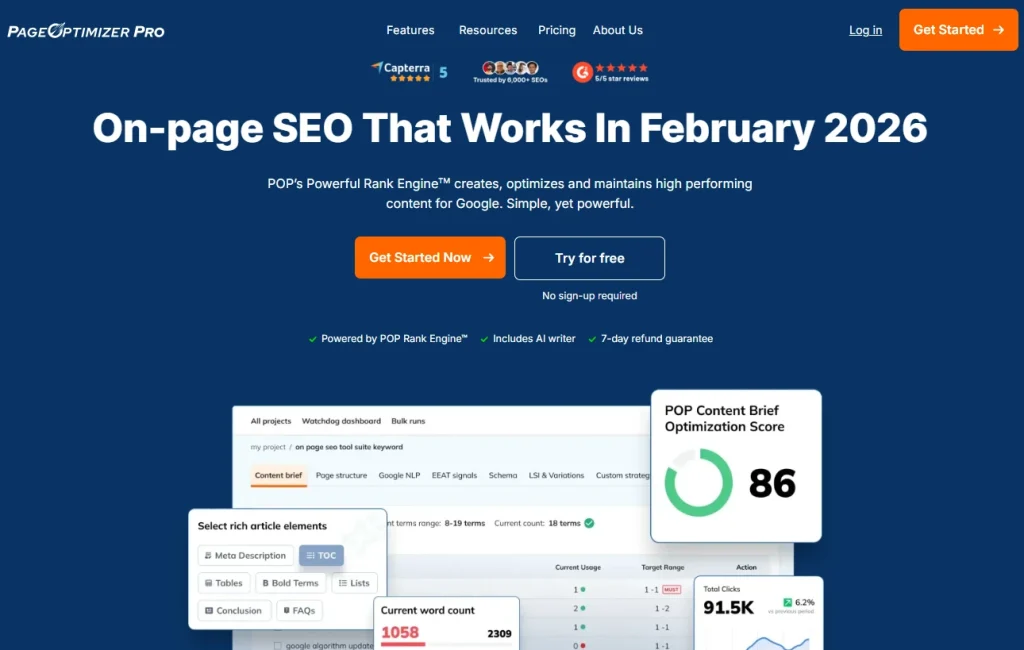
Compared with Positional, it leans harder into on-page SEO analysis and technical recommendation depth. It is not as workflow-oriented as Rankability and not as polished for writers as Clearscope, but it is strong where optimization depth is the priority.
Best for:
Users who want highly technical content optimization guidance and SERP-driven recommendations.
Standout features:
- Strong on-page optimization depth
- Technical approach to content guidance
- Useful for SEO users who want granular optimization input
- Well suited for scorecard-based comparisons focused on optimization quality
Practical note:
If you care most about how deeply a tool translates SERP analysis into optimization recommendations, Page Optimizer Pro deserves a close look. It is one of the best alternatives when workflow simplicity matters less than technical SEO depth.
5. Frase
Why it’s a strong Positional alternative:
Frase is a strong fit for smaller teams and in-house marketers that want content briefs, optimization, and writing support in one workflow. It is often easier to adopt than more agency-oriented platforms and works well for teams that value speed and day-to-day usability.
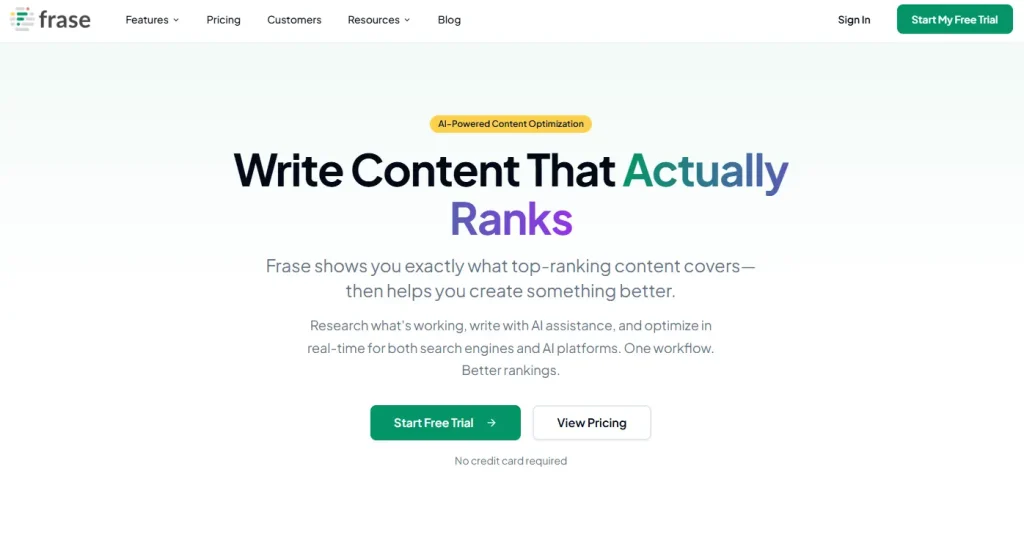
Compared with Positional, Frase is often a better fit when the workflow starts with research and brief generation. It can help content teams move faster without requiring the broader agency reporting or client delivery functionality that larger teams might need.
Best for:
In-house teams, solo marketers, and smaller teams that want content briefs and optimization in one place.
Standout features:
- Content brief generation
- Helpful for research-forward workflows
- Easier day-to-day usability for smaller teams
- Good fit for teams focused on publishing efficiency
Practical note:
For in-house teams, Frase is often one of the easiest alternatives to adopt and manage. If the main goal is improving briefs, speeding up production, and simplifying optimization, it is a strong option.
6. Content Harmony
Why it’s a strong Positional alternative:
Content Harmony is a strong option when the real bottleneck is briefing, planning, and handoff rather than pure content scoring. It is especially useful for content teams that need better structure before the draft is written.
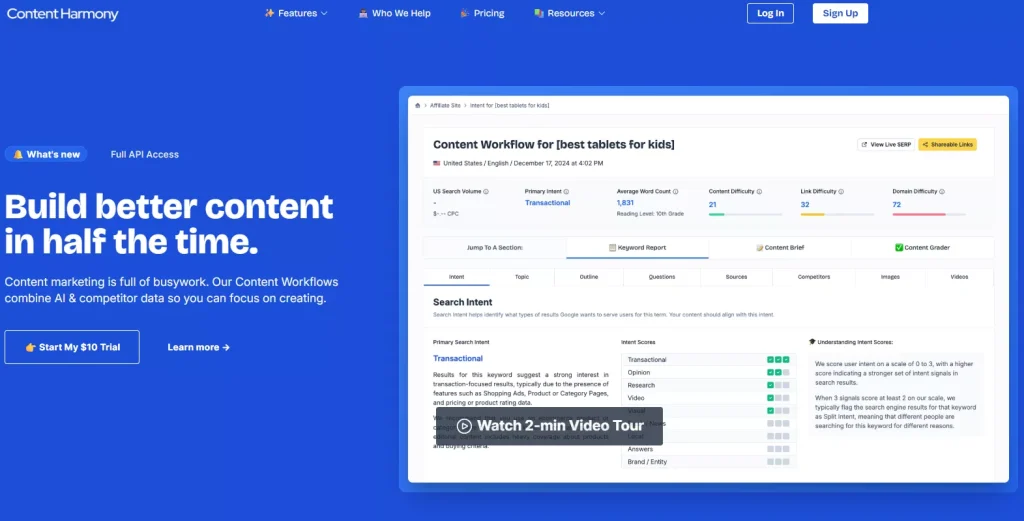
Compared with Positional, Content Harmony is more workflow-oriented around briefs and collaboration. It can help agencies and content teams move faster through planning and handoff, even if it is not always as strong for white-label or multi-client delivery as Rankability.
Best for:
Content teams and agencies that need stronger brief creation and planning workflows.
Standout features:
- Strong content brief workflow
- Better handoff between strategy and writing
- Useful for planning and collaboration
- Helps teams move faster before drafting starts
Practical note:
If your biggest issue with Positional is not optimization quality but weak briefing or inefficient planning, Content Harmony is worth comparing. It is strongest when better inputs lead to better drafts.
7. Semrush
Why it’s a strong Positional alternative:
Semrush is the main broader platform to compare if Positional feels too narrow and you want wider SEO coverage.
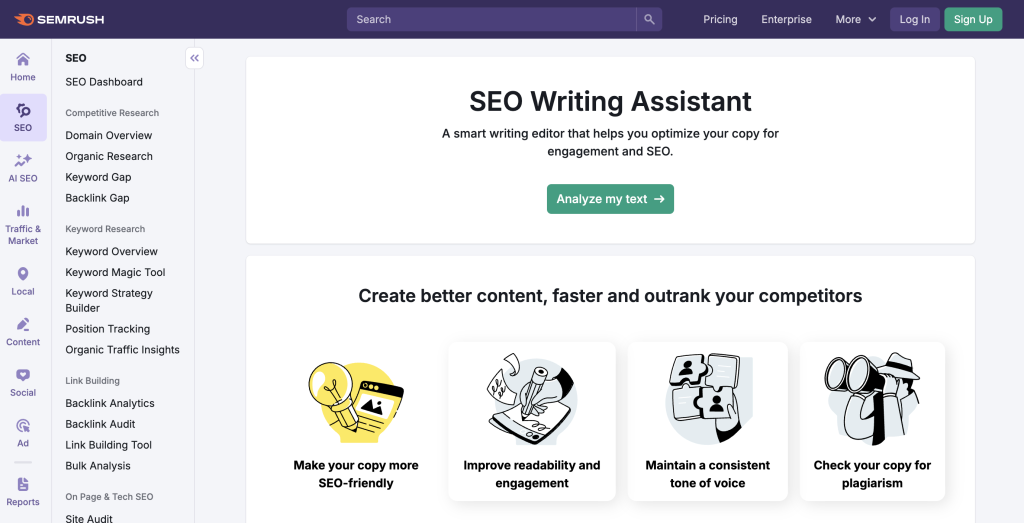
It is not just a content optimization tool, which is exactly why it can be attractive for agencies that want keyword research, rank tracking, and broader search marketing functionality in one ecosystem.
Compared with Positional, Semrush is the better fit when the goal is not just replacing a content workflow, but expanding into a more complete SEO stack.
Best for:
Agencies that want broader SEO coverage beyond content optimization.
Standout features:
- Broader SEO suite beyond content optimization
- Useful for teams that want keyword research and rank tracking in one platform
- Well known option for agencies comparing full-stack SEO tools
- Good comparison point when workflow scope is expanding
Practical note:
If your priority is broader SEO coverage, compare Rankability with Semrush. It is the main alternative when Positional feels too limited not just in content, but in overall SEO workflow coverage.
8. Mangools
Why it’s a strong Positional alternative:
Mangools is a good fit for smaller businesses and lean teams that want a simpler SEO toolkit without the complexity of a more advanced content optimization platform. It is most useful when the primary need is keyword research, rank tracking, and basic SEO workflow support rather than deep optimization, collaboration, or reporting.
Compared with Positional, Mangools makes more sense for users who want a lighter toolset and do not need an agency-grade content workflow. It is not the strongest option for advanced optimization, but it can be enough for smaller teams with narrower SEO needs.
Best for:
Smaller businesses and lean teams that want a simple SEO toolkit focused on research and tracking.
Standout features:
- Simpler workflow for smaller teams
- Useful for keyword research and rank tracking
- Lower complexity than broader SEO platforms
- Better fit for lighter SEO use cases
Practical note:
If your team does not need advanced content optimization and mainly wants straightforward SEO research and tracking, Mangools can be a practical alternative to Positional.
9. Ranktracker
Why it’s a strong Positional alternative:
Ranktracker is a solid option for users who care more about keyword tracking, SERP monitoring, and broader SEO visibility than advanced content optimization workflows. It works best for teams that want core SEO functionality without needing the collaboration, reporting depth, or content scoring sophistication of more agency-oriented tools.
Compared with Positional, Ranktracker is a better fit when the real priority is tracking performance rather than improving a full content production workflow. It is not the strongest choice for content optimization depth, but it can be enough for businesses with simpler needs.
Best for:
Teams that prioritize keyword tracking and SEO visibility over advanced content workflow features.
Standout features:
- Stronger fit for rank tracking focused workflows
- Useful for monitoring keyword visibility
- Good for simpler SEO use cases
- More practical when optimization depth is not the top priority
Practical note:
If your needs center more on keyword tracking and search visibility than advanced content optimization, Ranktracker can be a reasonable Positional alternative.
Key Differences That Matter Most
The fastest way to compare tools is to use a simple scorecard. Rate each option on content optimization, content briefs, reporting, collaboration, ease of use, pricing transparency, and fit for your use case.
Content Optimization and SERP Guidance
Some tools rely heavily on SERPs, related terms, and content scoring to guide updates. The best ones turn SERP analysis into optimization recommendations that feel actionable instead of forcing you to write for a score alone.
Rankability, Surfer SEO, Clearscope, and Page Optimizer Pro are the strongest group here, but they differ in style. Rankability is more workflow-oriented, Clearscope is cleaner for writers, Surfer is more hands-on, and Page Optimizer Pro is more technical.
Workflow, Collaboration, and Reporting
If you run an agency, the tool has to help you build briefs, review drafts, and share outputs with clients efficiently. That is where collaboration, client reporting, and recurring reporting workflows matter more than isolated features.
Rankability has a clear edge for agency communication because it combines optimization, reporting, and advisor support in one system. Frase and Content Harmony can also help content teams move faster, though they are not always as strong for white label or multi-client delivery.
Which Positional Alternative Fits Your Use Case
The best choice depends on how your team publishes content and proves results. A good alternative for a solo content marketer may not be the right one for a multi-client agency.
Best for Agencies
Rankability is the best fit for agencies that need repeatable optimization workflows, scalable content reviews, and client-facing usefulness. If your agency wants broader SEO coverage beyond content, Semrush is the main alternative to compare alongside it.
Best for In-House Teams and Smaller Businesses
For in-house teams, Frase and Clearscope are often easier to adopt and manage day to day. For smaller businesses with tighter budgets, Mangools or Ranktracker may be enough if your needs center on keyword research and rank tracking more than advanced content optimization.
Pricing and Value Considerations
Monthly cost matters, but value usually comes from time saved per deliverable and the quality of the output. For US agencies, a tool that shortens reviews, improves briefs, and simplifies reporting can justify a higher price quickly.
What to Check Before Switching
Before you switch, compare the pricing model, seat limits, content credits, reporting access, and contract flexibility. You should also check onboarding effort, export options, and how well the platform fits your current writing process and SEO stack.
Final Verdict on the Best Positional Alternative
For most readers looking to replace Positional, Rankability is the best overall pick because it combines SEO content optimization with a repeatable agency SEO workflow for Google and AI search. It is especially strong when you need research, writing, optimization, reporting, and proof of results in one place.
If your priority is broader SEO coverage, compare Rankability with Semrush. If you want a different mix of writer experience, content scoring, or brief generation, shortlist Rankability, Surfer SEO, Clearscope, and Frase, then test them against a real content workflow before you commit.
FAQ
What is the best Positional alternative for agencies?
For most agencies, Rankability is the strongest alternative because it combines content optimization, workflow support, reporting, and AI search visibility in one platform. If you want a broader SEO suite, Semrush is also worth comparing.
Which Positional alternative is best for content optimization?
If content optimization depth is the priority, Rankability, Surfer SEO, Clearscope, and Page Optimizer Pro are the strongest options. The best fit depends on whether you want cleaner writer workflows, more hands-on SERP analysis, or a broader agency process.
Is Rankability better than Positional for agencies?
For many agencies, yes. Rankability is a better fit when you need repeatable workflows across multiple clients, clearer reporting, and support for research, writing, optimization, and proof of results in one system.
What should you compare before switching from Positional?
Check pricing, seat limits, content credits, reporting features, collaboration options, export flexibility, onboarding effort, and how well the tool fits your current content workflow.
Which Positional alternative is best for in-house teams?
For in-house teams, Frase and Clearscope are often easier to adopt. They can work well when the priority is content briefs, optimization, and day-to-day writer usability.
Should you choose a point solution or a broader platform?
Choose a point solution if you only need a narrow content optimization workflow. Choose a broader platform if your team also needs reporting, collaboration, search visibility tracking, and a more complete SEO process.
Need Better Workflow Than Positional?
If Positional feels too narrow for the way your team handles content and SEO, the next step is to compare the best tools for SEO agencies. If your decision is mostly about on-page optimization quality, then the better follow-up is our guide to the top SEO content optimization software.