
Your clients are asking the same question every agency hears in 2026: “Why is our competitor showing up in ChatGPT and we’re not?” Here’s what that looks like for AEO agencies for SaaS.
Answer engine optimization (AEO) is how you answer it. But most AEO tools were built for in-house brand teams, not agencies.
They charge per domain, cap your workspaces, and force you to stitch monitoring data into a separate reporting tool before a client ever sees it.
This guide ranks the 7 best AEO tools for agencies based on what actually matters when you manage multiple clients: multi-client management from one workspace, white-label reporting, pricing that doesn’t punish growth, and the ability to act on the data — not just stare at it. Here’s the shortlist:
| Tool | Best for | Starting Price | Unlimited clients? |
|---|---|---|---|
| Rankability | All-in-one AEO + SEO workflow for agencies | From $97/mo; plan limits | Yes |
| Profound | Enterprise-grade AI visibility depth | $99/mo (Growth $399/mo) | No (one workspace per account) |
| Peec AI | Multi-market and multilingual tracking | ~$95/mo (agency plans ~$245/mo) | Client-seat based |
| Scrunch AI | AI crawler content delivery (AXP) | ~$250/mo | Tiered |
| Semrush AI Visibility | Agencies already on Semrush | $99/mo add-on (Semrush One $199/mo) | Per-domain |
| HubSpot AEO | Teams getting started inside HubSpot | $50/mo | Tiered |
| Otterly.ai | Budget-friendly AI mention monitoring | $29/mo | Prompt-based limits |
Pricing verified July 2026; confirm current rates on each vendor’s site.
What makes an AEO tool agency-ready?
Before the reviews, the criteria. An AEO tool earns a spot on this list by handling four jobs:
- Multi-client management. One login, every client. If you need a separate account per brand, the tool wasn’t built for you.
- Measurement that clients understand. Raw mention counts don’t survive a monthly business review. You need a score, a trend line, and a clear “here’s what we’re doing about it.”
- A path from data to action. Tracking AI citations is step one. The real value is knowing what content to create or fix to win those citations — inside the same platform.
- Pricing that scales with your roster. Per-domain and per-prompt pricing models get expensive fast at 15, 30, or 50 clients.
Pages cited across eight or more queries had a 43.3% top-10 AI citation rate, versus 15.5% for pages cited for one query, so agency reporting should reveal repeatable visibility rather than isolated wins.
With that lens, here’s how the market shakes out.
1. Rankability — Best AEO tool for agencies overall
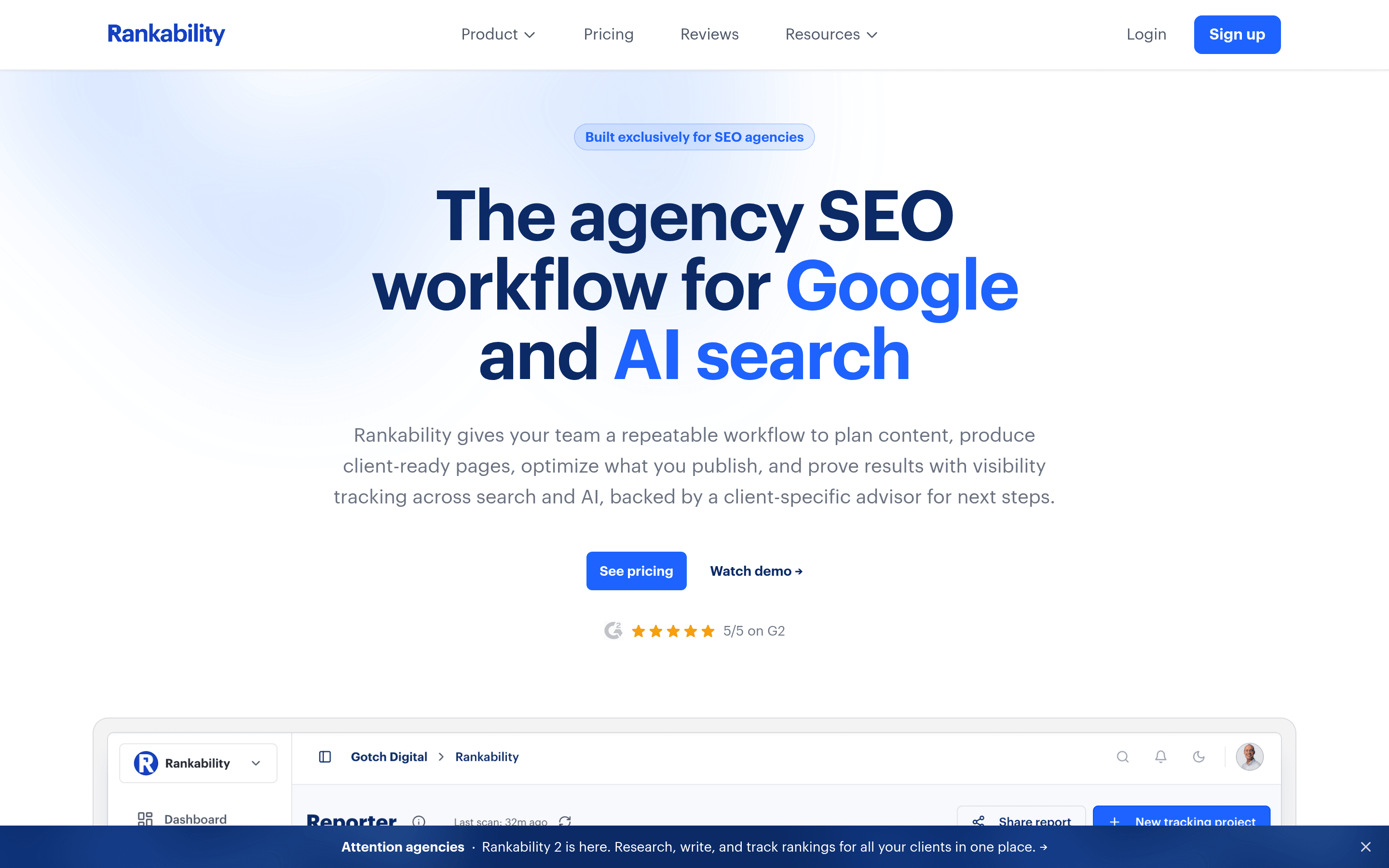
Rankability is the only platform on this list built exclusively for agencies, and its Search Performance Index (SPI) is what sets it apart: a single 0–100 score per keyword that rolls traditional rankings (Google, Bing, DuckDuckGo, Brave), local pack visibility, video search, AI mentions, and AI citations into one number. When a client asks “how are we doing in AI search?”, you have one number, one trend line, and one dashboard — instead of nine screenshots.
Most AEO tools tell you whether AI platforms mention your client. Rankability tells you that and gives you the content engine to change the answer, connecting the full AEO loop — tracking, research, content creation, auditing, and client reporting — in a single workflow so there are no handoffs between the strategist, the writer, and the account manager.
Key features:
- AI visibility tracking across up to 9 platforms — ChatGPT, Google AI Overviews, Google AI Mode, Gemini, Perplexity, Claude, Grok, Brave Summaries, and Bing Deep Answers, with an AI Citations tab showing which sources each platform cites
- Search Performance Index (SPI) that unifies traditional rankings, local pack, video, AI mentions, and AI citations into one 0–100 score
- Content optimization that closes citation gaps — the Copywriter builds the brief, drafts the content, and optimizes it with NLP-driven relevance scoring
- White-label client reporting with your agency’s logo, colors, optional password protection, and automated branded email reports
- Agency economics: plan-based client capacity and unlimited team members, no per-domain fees, with 1/5/15 client workspaces and 100/300/500 active tracked prompts
Pricing: Starter is $97/month, Agency $297/month, and Agency Pro $497/month. Annual totals are $970, $2,970, and $4,970. All paid plans include unlimited client workspaces, unlimited team members, branded reports, and API/MCP access. Content allowances are 20, 80, and 160 projects per month; tracked AI query allowances are 100, 300, and 500, respectively, across all 11 included AI platforms. Google keyword tracking and Local Pack scans have separate allowances. Gotch Inner Circle is included with Agency Pro annual plans. Get Started.
Ideal for: Agencies that want AEO tracking, content execution, and client reporting in one workflow at a price that scales with their roster.
Limitations: Purpose-built for agencies, so solo bloggers or enterprise in-house teams that need compliance-grade data exports may be better served elsewhere; credit-based usage also means very high-volume tracking requires a higher tier.
Bottom line: If you’re an agency, this is the strongest combination of AEO tracking, content execution, and client reporting at a price that scales.
2. Profound — Best for enterprise-grade depth
Profound is the best-known name in AI visibility, with the broadest AI surface coverage in the category and audit-ready data depth. It tracks 10+ AI platforms — more than anything else on this list.
Enterprise plans add ChatGPT Shopping visibility, SSO/SAML, SOC2 compliance, Google Analytics integration, and a dedicated account team, while conversation-volume data shows what users actually ask AI about your category. That depth makes it a fit for enterprise brands with dedicated AEO analysts rather than lean multi-client agencies.
Key features:
- Tracks 10+ AI platforms — the broadest surface coverage in the category
- ChatGPT Shopping visibility on enterprise plans
- SSO/SAML, SOC2 compliance, and Google Analytics integration
- Conversation-volume data showing what users ask AI about your category
- Dedicated account team on enterprise tiers
Pricing: Starter $99/mo; Growth $399/mo; Enterprise custom (no self-serve checkout on higher tiers)
Ideal for: Enterprise brands with dedicated AEO analysts who need maximum data depth.
Limitations: No multi-account management — one workspace per account, so five clients can mean five accounts — and there’s no content-creation layer, so it stops at insight.
Our take: Excellent for enterprise depth, but the single-workspace model fights you on multi-client agency work.
3. Peec AI — Best for multi-market tracking
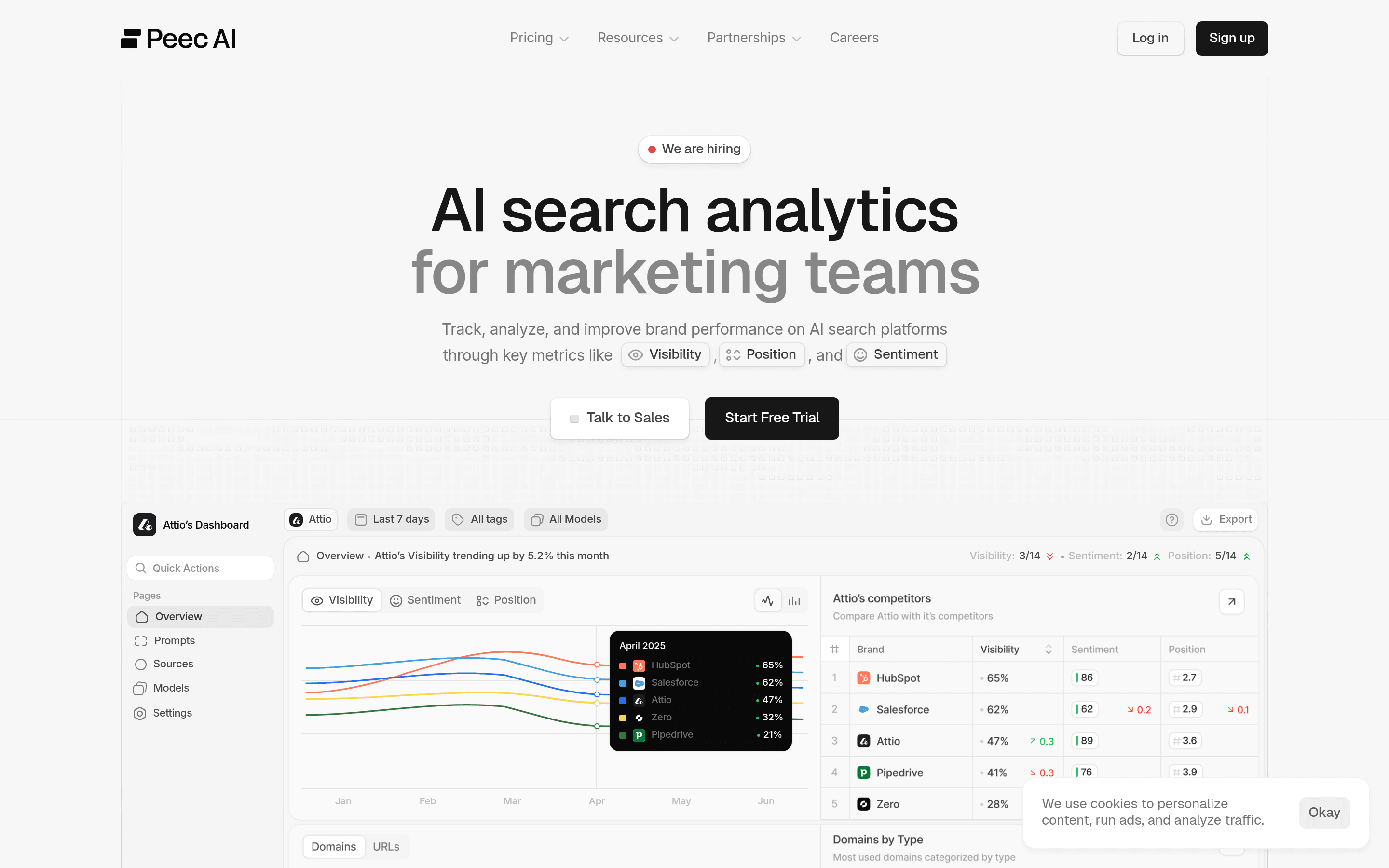
Peec AI is a fast-moving European platform with genuinely strong multi-language and multi-country tracking across up to 10 AI models.
Its agency pricing is built around credits, client seats, and free pitch workspaces that are useful for prospecting, and every plan includes white-label reporting, API access, unlimited users, and an agency partner directory. It’s the strongest pick when your clients span multiple countries and languages and you only need the tracking layer.
Key features:
- Multi-language, multi-country tracking across up to 10 AI models
- Agency pricing built around credits and client seats
- Free pitch workspaces for prospecting
- White-label reporting and API access
- Unlimited users on all plans plus an agency partner directory
Pricing: Brand plans from ~$95/mo; agency plans from ~$245/mo
Ideal for: Agencies whose clients span multiple countries and languages and that only need the tracking layer.
Limitations: Monitoring-focused — no content optimization or SEO workflow, so you’ll pair it with other tools — and costs scale with prompts and client seats.
Why it stands out: The strongest tracking pick for multi-market, multilingual client rosters.
4. Scrunch AI — Best for AI crawler delivery
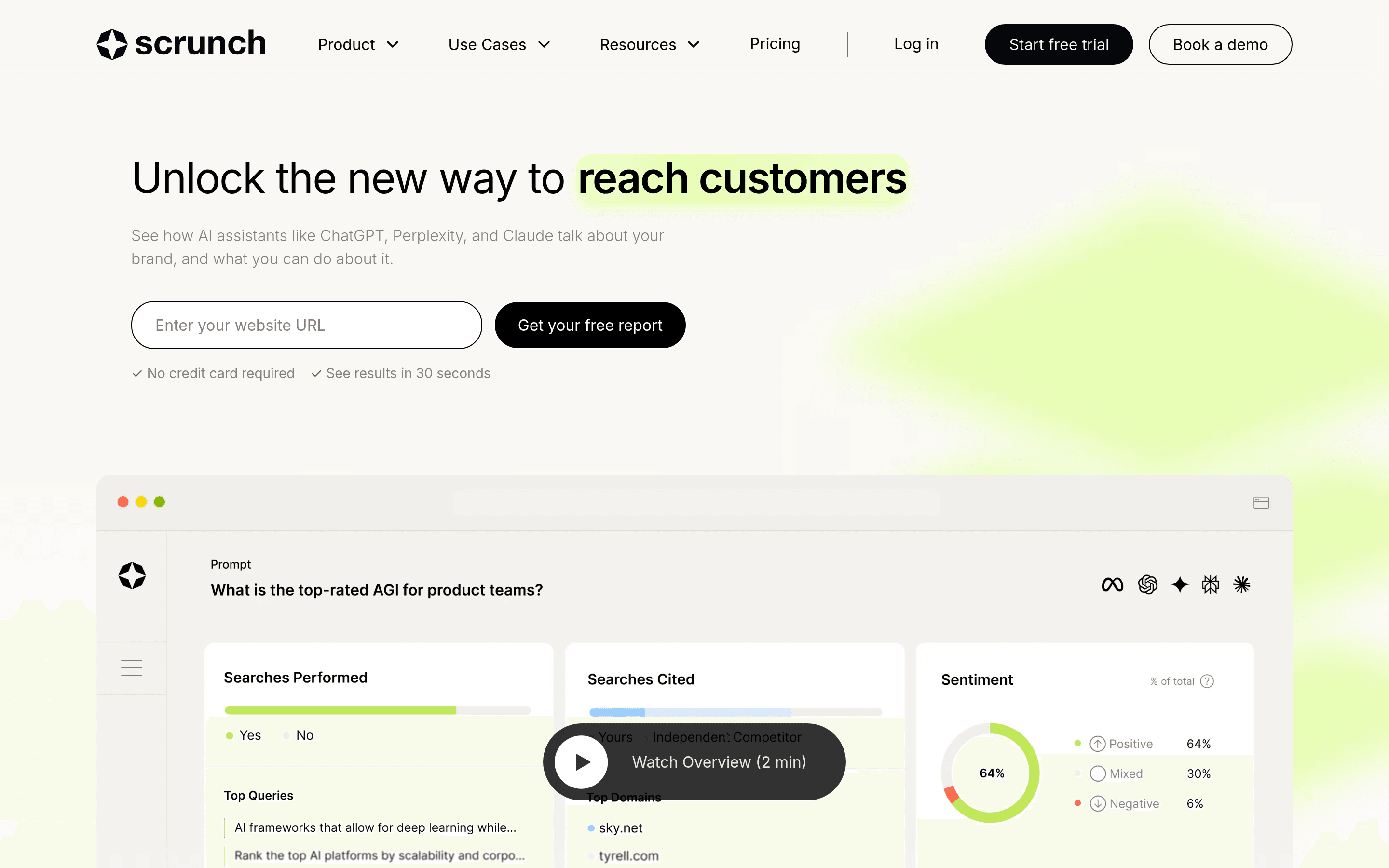
Scrunch AI pairs multi-LLM monitoring with a unique technical layer: its Agent Experience Platform (AXP) serves compressed, structured versions of your client’s content directly to AI crawlers.
Alongside AI visibility monitoring and auditing, it offers a dedicated agency program and agency-specific pricing tiers, which makes it a smart choice for technically sophisticated agencies that want infrastructure-level AEO on top of monitoring.
Key features:
- Multi-LLM AI visibility monitoring and auditing
- Agent Experience Platform (AXP) that serves structured content to AI crawlers
- Dedicated agency program
- Agency-specific pricing tiers
Pricing: From ~$250/mo (Core, annual billing); agency and enterprise tiers scale up significantly
Ideal for: Technically sophisticated agencies that want infrastructure-level AEO on top of monitoring.
Limitations: The AXP approach is newer and works best for clients whose sites you control technically; content strategy and traditional SEO still happen elsewhere.
Best if you need: Infrastructure-level AEO delivery layered on top of multi-LLM monitoring. For a closer look at how Profound and Scrunch stack up against an agency-first option, see our Profound vs Scrunch vs Rankability comparison.
5. Semrush AI Visibility — Best for Semrush-native agencies
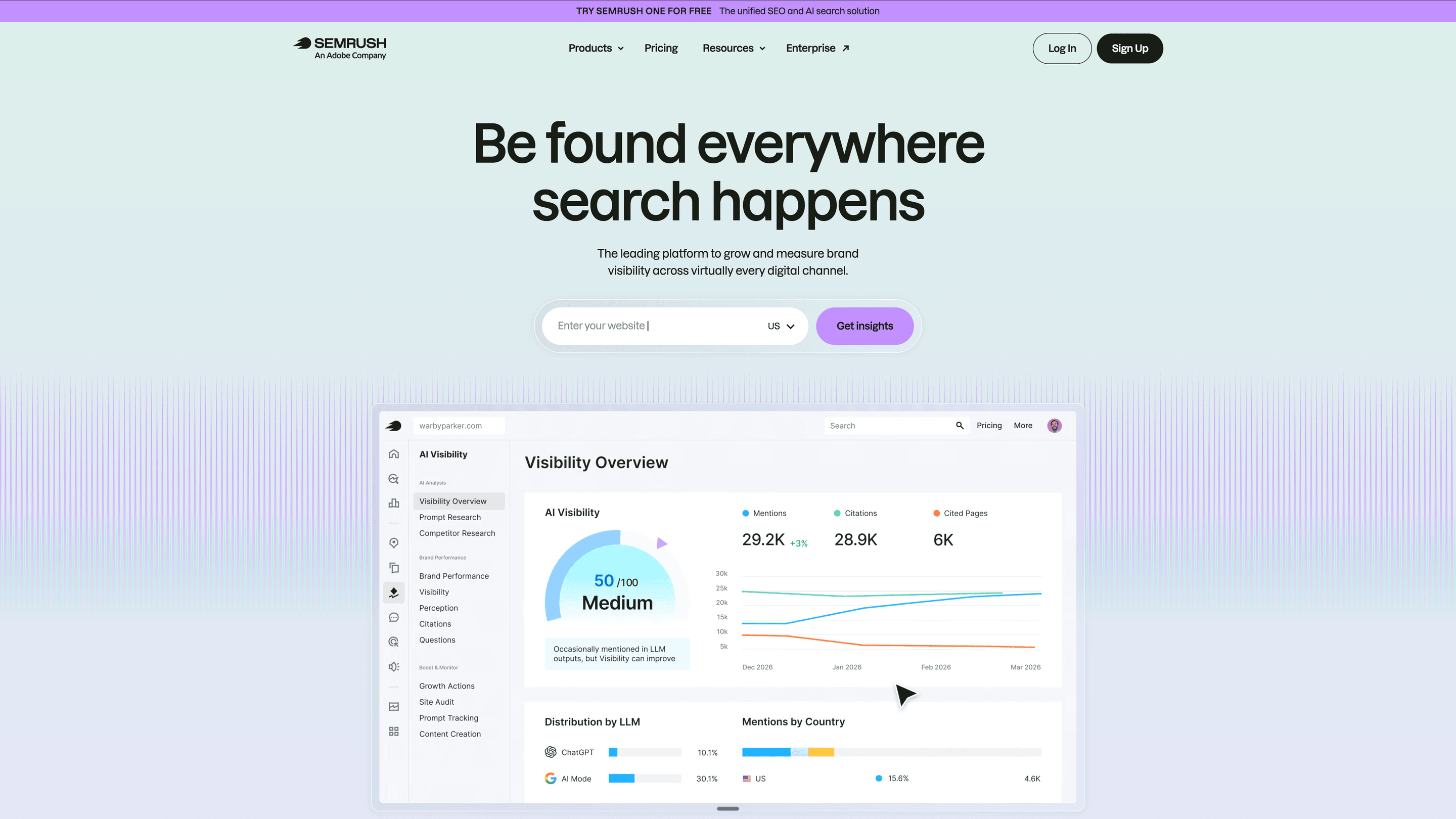
If your agency already lives in Semrush, its AI visibility tooling is the path of least resistance — prompt tracking across major AI platforms, share-of-voice measurement, and integration with the keyword and competitive data you already use.
Semrush One bundles SEO and AI visibility from $199/mo, while the AI Visibility Toolkit is also available as a $99/mo per-domain add-on, and Enterprise AIO adds large-scale prompt tracking and multi-brand reporting. It’s fine if you already pay for Semrush and have a handful of clients, but per-domain pricing multiplies with every client you add.
Key features:
- Prompt tracking across major AI platforms
- Share-of-voice measurement
- Integration with Semrush’s keyword and competitive data
- Semrush One bundle for SEO + AI visibility
- Enterprise AIO for large-scale prompt tracking and multi-brand reporting
Pricing: $99/mo per domain (add-on) or Semrush One from $199/mo; Enterprise AIO custom
Ideal for: Agencies already invested in Semrush with a handful of clients.
Limitations: Per-domain pricing is the agency killer — costs multiply with every client — and AI visibility is an add-on to a general platform, not a purpose-built agency workflow.
Worth noting: Convenient if you’re already on Semrush, but expensive at scale.
6. HubSpot AEO — Best for getting started
HubSpot’s AEO tool offers brand visibility tracking, prompt tracking, and prioritized recommendations starting at $50/mo.
Simple setup, clean recommendations, and native integration with HubSpot’s CRM and content tools make it attractive if your clients already run on HubSpot — though most agencies will outgrow it.
Key features:
- Brand visibility and prompt tracking
- Prioritized recommendations
- Native integration with HubSpot CRM and content tools
- Simple, fast setup
Pricing: From $50/mo
Ideal for: HubSpot-centric teams getting started with AEO.
Limitations: Light on agency infrastructure — no real multi-client architecture or white-label reporting, and depth trails the dedicated platforms.
The verdict: A low-risk entry point for HubSpot-centric teams; most agencies will outgrow it.
7. Otterly.ai — Best budget AI mention monitoring
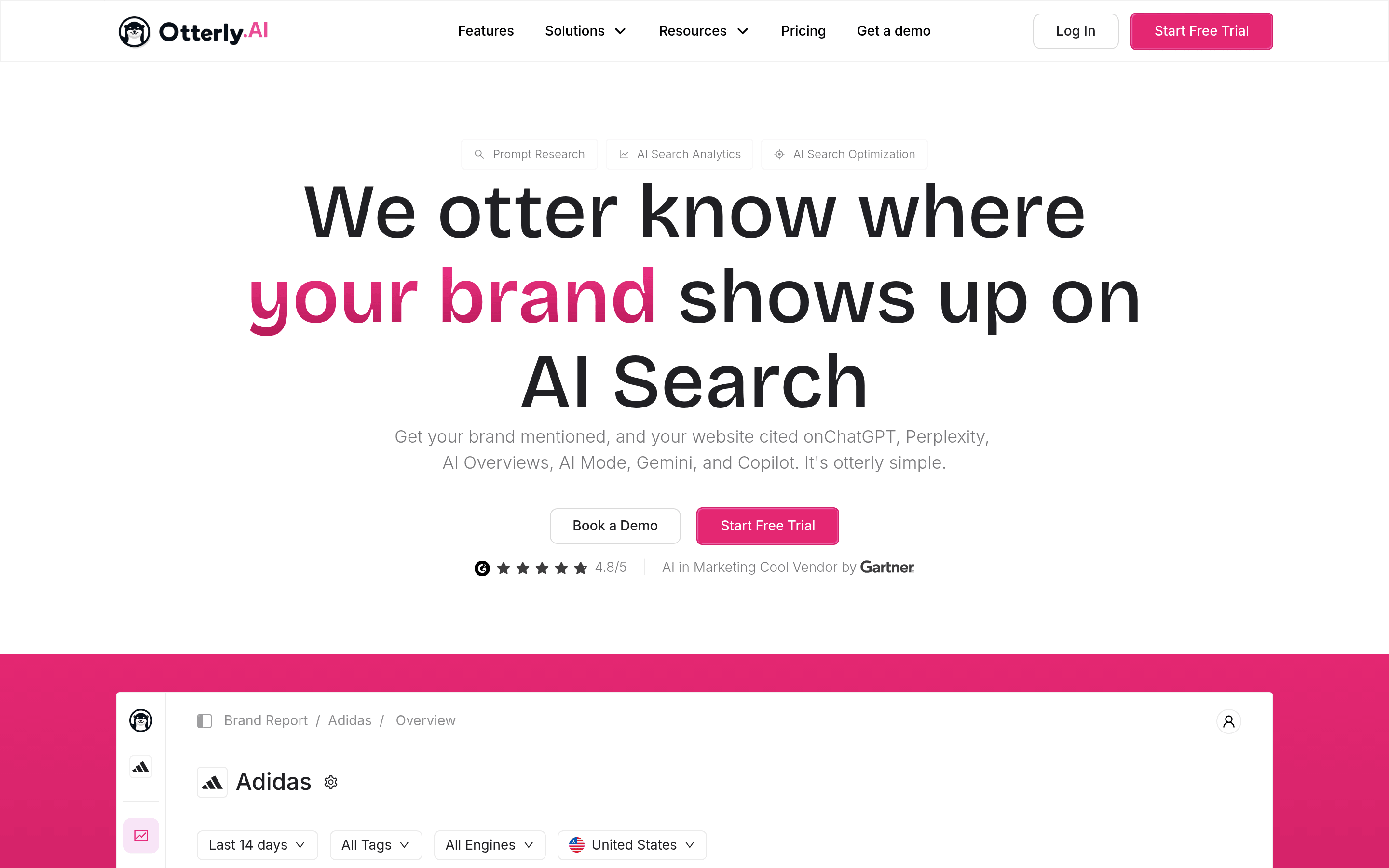
Otterly.ai is the affordable entry point: AI mention monitoring across ChatGPT, Google AI Overviews, Perplexity, and Copilot from $29/mo.
Simple prompt-based tracking, link and mention monitoring, and the lowest credible starting price in the category make it good for testing AEO demand with one or two clients before committing to a platform.
Key features:
- AI mention monitoring across ChatGPT, Google AI Overviews, Perplexity, and Copilot
- Simple prompt-based tracking
- Link and mention monitoring
- The lowest credible starting price in the category
Pricing: Lite $29/mo (15 prompts); Standard $189/mo (100 prompts); Premium $489/mo (400 prompts)
Ideal for: Agencies testing AEO demand with one or two clients before committing.
Limitations: Prompt limits make multi-client coverage expensive quickly, and there’s no content workflow or white-label reporting at lower tiers.
In short: A cheap way to test AEO demand before committing to a platform.
How to choose an AEO tool for your agency
Match the tool to your agency’s model:
- You sell content + SEO retainers and want AEO baked into the same deliverable → Rankability. Tracking, content, and reporting in one workflow, with plan-based client capacity and unlimited team members.
- You serve enterprise brands that need maximum data depth → Profound, budget permitting.
- Your clients span markets and languages → Peec AI.
- You want technical AEO infrastructure → Scrunch AI.
- You’re testing the waters → Otterly.ai or HubSpot AEO, then graduate.
And if you want software that goes beyond monitoring and actually does the work, see our guide to the best AI SEO agents — it covers the execution agents that make verified changes, not just dashboards.
One more thing: avoid paying twice. Most agencies that buy a monitoring-only tool end up adding a content optimization tool, a rank tracker, and a reporting tool on top.
Total that stack against an all-in-one before you commit. If a rank tracker is one of those add-ons, our guide to the best SEOmonitor alternatives for agencies weighs the trackers that also cover AI visibility.
Choosing AEO tools for SaaS clients
For a SaaS client, evaluate visibility across the buying journey, not just whether the brand appears in a few generic prompts. Build a test set covering the product category, specific use cases, integrations, comparisons, and alternatives. Separate branded questions from non-branded discovery so existing awareness does not hide a visibility gap.
- Match the buyer and market. Include the industries, company sizes, countries, and languages the client sells to. Keep these consistent when comparing scans.
- Inspect the sources. Look at whether answers cite the client’s product pages, documentation, integration pages, or third-party reviews. A brand mention and a citation answer different questions.
- Connect findings to content. Check that your workflow can turn missing coverage into a brief, a reviewed product explanation, or an improvement to a comparison page.
- Keep attribution separate from visibility. AI appearances are not leads or revenue. Use available referral and conversion data alongside sales feedback to assess business impact.
- Check operating costs. Confirm how tracked queries, platforms, markets, scan frequency, and client accounts affect the quote. Pilot the actual workload before committing.
The tools above remain candidates, but the right choice depends on the SaaS client’s research depth, content workflow, reporting needs, and budget. Avoid choosing solely from a single aggregate visibility score.
FAQs
What is AEO?
Answer engine optimization is the practice of making a brand visible — mentioned, cited, and recommended — in AI-generated answers from platforms like ChatGPT, Google AI Overviews, Gemini, and Perplexity, in addition to traditional search results.
Is AEO different from GEO?
Mostly terminology. Generative engine optimization (GEO) and AEO describe the same discipline; AEO emphasizes answer placement, GEO emphasizes generative platforms.
Agencies should treat them as one service line.
Do agencies need a separate AEO tool, or is SEO software enough?
Traditional rank trackers only see blue links. You need a tool that records actual AI answers and citations at the keyword level.
The best option for agencies is a platform that does both, so AI visibility becomes part of your existing reporting instead of a second stack.
How do I report AEO results to clients?
Use a composite score with a trend line. Rankability’s SPI is the cleanest example: one 0–100 number combining traditional rankings, local, video, AI mentions, and AI citations, delivered through a white-labeled dashboard the client can open anytime.
How much should an agency budget for AEO tooling?
$29–$99/mo for entry-level monitoring of a couple of clients; $99–$399/mo for full multi-client platforms; $500+/mo for enterprise depth. Watch per-domain and per-prompt pricing — that’s where costs quietly triple as you add clients.
The bottom line
The best AEO tools for agencies in 2026 do more than count mentions — they connect measurement to action and make the results client-presentable. Profound wins on enterprise depth, Peec on multi-market tracking, and Otterly on price.
But for agencies, Rankability is the clear #1: it’s the only platform that combines AI visibility tracking across 9 platforms, an SPI score clients actually understand, a content engine that closes citation gaps, and white-label reporting — with plan-based client capacity and unlimited team members from $97/month.
Ready to turn “why aren’t we in ChatGPT?” into a deliverable you can sell? Get started and make AEO a service line your clients renew on.